 Anacortes Window
 Old Town Anacortes Decks Face a Different Set of Problems
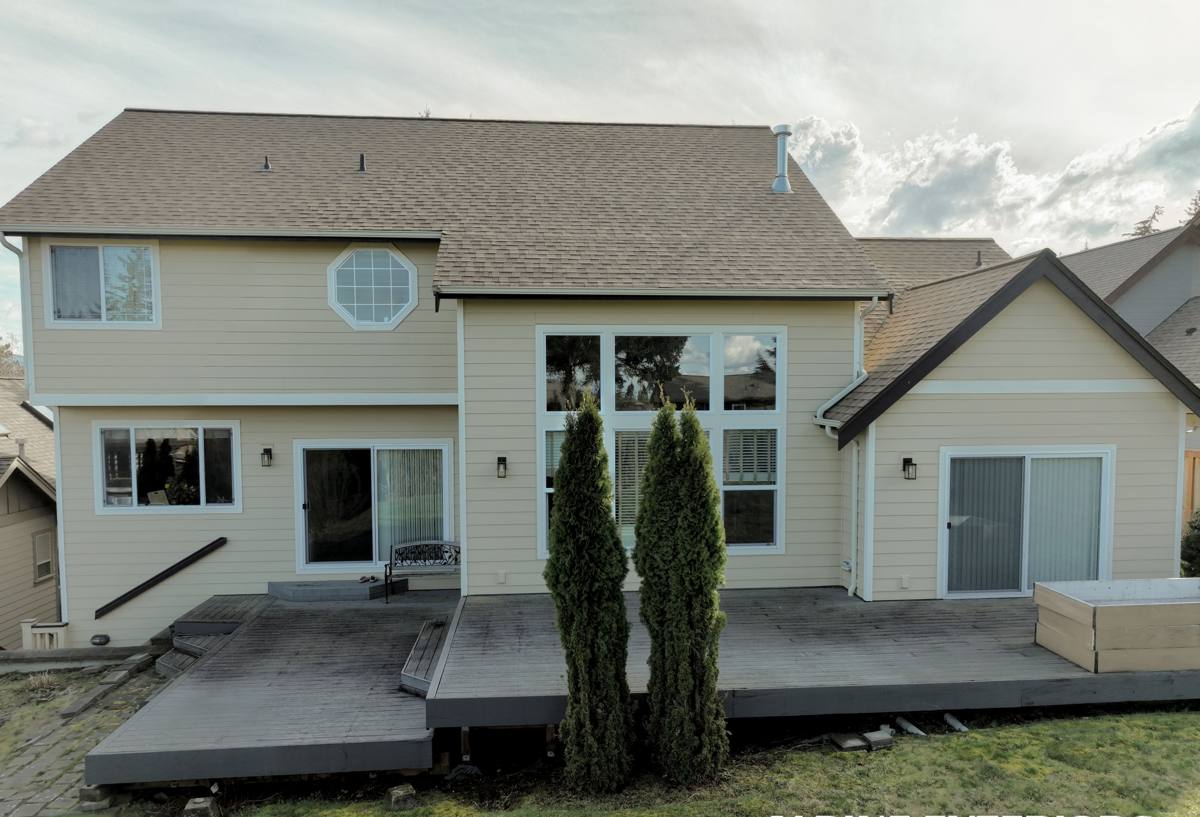
Old Town Anacortes is one of the older residential pockets in the city, with mature trees, close-set lots, and homes that have been through decades of Fidalgo Island weather. A deck built here doesn't fail the way a deck fails in a dry inland climate. It fails at the fasteners first, then the framing, then the surface — usually in that order, and usually because the original build didn't account for what this specific location does to wood and metal over time. We build and repair decks in this neighborhood on a regular basis, and the patterns repeat often enough that we've stopped treating them as surprises.
What Salt Air, Rain, and Moss Actually Do to a Deck
Salt Air and Metal Fatigue
Being close to Puget Sound means airborne salt is a constant, low-level presence, even a few blocks inland. It doesn't show up dramatically — it shows up as rust bleeding out of a screw head, a hinge that seizes, or a railing bracket that corrodes from the inside before the wood around it shows any damage. Standard galvanized fasteners are rated for general outdoor use, not for sustained coastal exposure, and in a marine-influenced climate that difference shows up in five to eight years instead of twenty.
Driving Rain and Trapped Moisture
Skagit County gets sustained wet stretches, and wind-driven rain finds every gap in flashing, every unsealed fastener hole, and every spot where a ledger board meets the house. The damage that matters isn't the rain itself — it's what happens when water gets behind a board or into a joint and has no way to drain or dry out before the next storm arrives. That's when rot starts, and it almost always starts from the inside, out of view, long before it's visible on the surface.
Shade, Moss, and Surface Decay
Mature landscaping is part of what makes Old Town Anacortes a nice place to live, but it also means a lot of decks sit in partial shade for much of the year. Shade plus moisture is exactly what moss needs, and moss holds water against the decking surface long after the rest of the yard has dried. Left alone, that turns into slick, slippery boards in winter and slow surface breakdown in wood decking over several seasons.
Choosing the Right Decking Material
There's no single "best" decking material — there's a best material for this climate, this budget, and how much upkeep the homeowner actually wants to do. Here's how the common options compare for a coastal, shaded, high-rain lot like the ones typical of this neighborhood.
| Material | Upfront Cost | Moisture & Rot Resistance | Maintenance Needed | Typical Lifespan Here |
|---|---|---|---|---|
| Pressure-treated pine | Lowest | Fair — depends on sealing and drainage | Annual cleaning and re-sealing | 10–15 years |
| Cedar | Moderate | Good naturally, but surface still needs upkeep | Regular cleaning, periodic oil or stain | 15–20 years |
| Capped composite | Higher | Very good — resists rot and moss staining | Occasional washing, no sealing or staining | 25–30 years |
| PVC decking | Highest | Excellent — fully synthetic, no wood to rot | Minimal — occasional washing | 30+ years |
Cost matters, but so does what a homeowner is realistically willing to do every year. A cedar deck that never gets re-oiled in a shaded, wet spot will underperform its own material rating. A composite or PVC deck costs more up front but removes moisture and moss from most of the maintenance equation, which is often the deciding factor for homes in Old Town Anacortes where shade and dampness are working against wood year-round.
The Substructure Is Where Most Decks Actually Fail
Homeowners tend to judge a deck by its surface boards, but the framing underneath is what determines whether the deck lasts fifteen years or forty. This is also where corners get cut on lower-quality builds, because it's the part nobody sees once the decking goes down.
Ledger Board Flashing
The ledger board — where the deck attaches to the house — is the single most common point of hidden rot on any deck in a wet climate. If it isn't properly flashed to shed water away from the house band joist, water works its way behind it slowly, and by the time it's visible, there's often structural damage to the house framing, not just the deck.
Joist Hangers and Fasteners
Every hanger, screw, and bolt in contact with treated lumber needs to be rated for that lumber's chemical treatment, and in a coastal climate we go a step further with stainless steel or heavy-duty coated hardware in the highest-exposure spots. Mismatched or under-rated hardware corrodes and weakens years before the wood around it shows any sign of a problem.
Footings and Post Bases
Posts sitting directly on or too close to wet soil are a slow-motion failure. Correct footing depth, proper post bases that keep wood off the concrete, and drainage away from the post are basic steps that get skipped more often than they should, especially on older decks built before current best practices were standard.
Railings and Hardware Built for the Coast
Railings take direct weather exposure on all sides, which makes them one of the first places coastal corrosion shows up. We spec stainless steel or marine-grade coated fasteners and brackets on railing systems in this neighborhood as a standard practice, not an upgrade — it's cheap insurance against the kind of rust staining and hardware failure that shows up early in salt-air locations. Cable and metal-baluster railing systems in particular need hardware rated for this exposure, since a rusted cable end or corroded bracket is both an appearance problem and, eventually, a safety one.
Our Deck Building Process
- On-site assessment — we look at sun exposure, drainage, existing structure (for rebuilds), and how the deck ties into the house before recommending anything.
- Material and layout planning — we walk through decking material trade-offs, railing options, and layout based on how the space will actually be used.
- Permitting — decks typically require a permit; we handle the paperwork and inspections as part of the job rather than leaving it to the homeowner.
- Demolition or site prep — old decking, damaged framing, and any hidden rot from a previous build gets addressed before new material goes down, not covered over.
- Framing and structural work — footings, posts, ledger flashing, and joists built to current code, not just to match what was there before.
- Decking, railing, and finish work — surface material installed with proper spacing and fastening for drainage and expansion.
- Final walkthrough — we go over the finished deck together and cover basic maintenance specific to the material installed.
A Maintenance Checklist for Old Town Anacortes Decks
Whatever material a deck is built from, a little seasonal attention goes a long way in this climate. This is the routine we recommend to homeowners after a build:
- Sweep off leaves and debris regularly in fall — trapped organic matter holds moisture and feeds moss growth.
- Rinse or wash the deck surface at least once or twice a year to remove moss spores and grime before they take hold.
- Check railing posts and hardware annually for rust bleed or looseness, especially in shaded or wind-exposed corners.
- Inspect where the deck meets the house for any signs of water staining or soft wood around the ledger board.
- Re-oil or re-stain wood decking on the manufacturer's recommended schedule — don't wait until it looks obviously weathered.
- Keep gutters and downspouts near the deck clear so runoff isn't dumping extra water directly onto or under the structure.
- Trim back overhanging branches where practical to reduce shade and speed up drying time after rain.
Why a Crew That Already Works Old Town Anacortes Matters
Anyone can frame a deck. Framing one that's still solid in fifteen years, in a neighborhood this close to the water, with this much shade and this much rain, takes knowing which details actually matter here versus in a drier inland town. A crew that already works in Old Town Anacortes has already seen how the local combination of salt air, moisture, and moss plays out on real decks over real years — which fastener grades hold up, which flashing details actually keep water out, and which shortcuts show up as callbacks a few winters later. That's not something you get from a generic spec sheet; it comes from building and repairing decks in this specific environment, repeatedly.
If you're planning a new deck or need an honest look at one that's showing its age, we're happy to come take a look. Estimates are free, there's no pressure, and you'll get a straight answer about what your deck actually needs — just fill out the form below to get started.