 Anacortes Window
 Why Oak Harbor Roofs Take a Different Kind of Beating
Oak Harbor sits right on the water, just across Deception Pass from Anacortes, and that location comes with a roofing reality that inland homes never have to deal with. Salt-laden air off the sound works on metal fasteners and flashing year-round. Driving rain, pushed sideways by wind off the strait, finds every gap a dry-climate roof could get away with. And the long, wet, mild winters that define this part of the region give moss month after month to take hold on shaded, north-facing slopes. None of this means an Oak Harbor roof is doomed — it means repairs here have to account for conditions that a generic roofing checklist doesn't cover.
We work on roofs across this corridor regularly, and the repair calls we get from Oak Harbor tend to follow a pattern: a leak that started small and got ignored through one wet season, moss that's been left to grow past the point of simple removal, or flashing that corroded quietly for years before it finally let water through. Catching these problems early — and fixing them correctly the first time — is almost always cheaper than waiting.
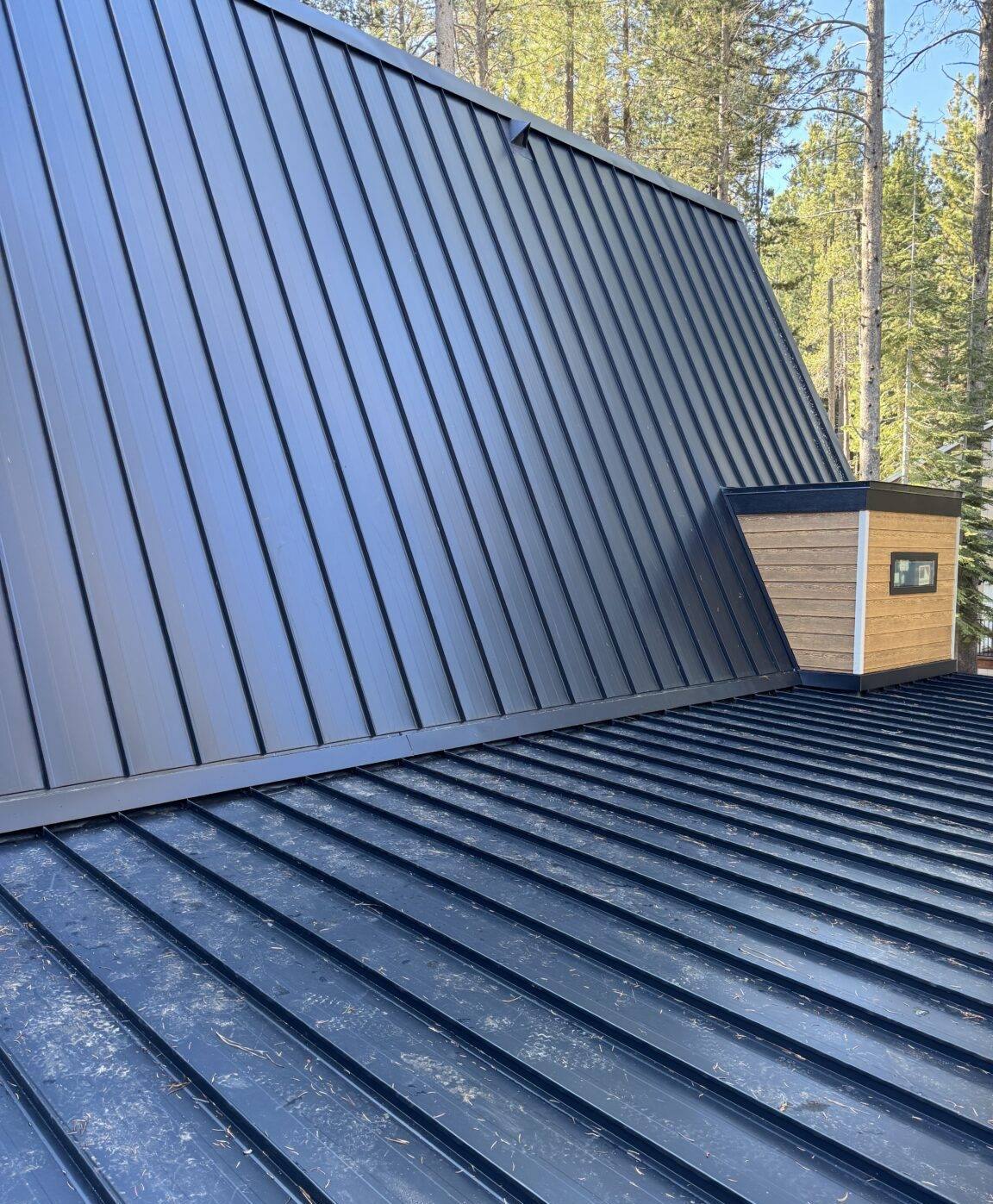
What Salt Air, Rain, and Moss Actually Do to a Roof
Salt Air and Corrosion
Airborne salt accelerates corrosion on anything metal: nail heads, flashing, drip edge, valley metal, and the fasteners holding shingles or panels down. Once a fastener or flashing seam starts to corrode, it stops sealing the way it was designed to, and water finds its way underneath. This happens faster on roofs facing open water or prevailing wind, and it's often invisible from the ground until a leak shows up inside the house.
Driving Rain and Wind-Driven Leaks
Rain that falls straight down is easy for any roof to shed. Rain that's being pushed sideways by wind off the water behaves differently — it can work its way up under shingle laps, into valleys, and around chimney or vent flashing that would hold up fine in calmer conditions. Repairs that don't account for wind-driven rain — using standard lap patterns and minimal flashing where extra protection is warranted — tend to fail again in the next big storm.
Moss and Moisture Retention
The region's mild, wet winters give moss a long growing season, especially on shaded slopes and roofs under tree cover. Moss isn't just a cosmetic issue. It holds moisture directly against the roofing material, keeps shingles from drying out between rains, and its root structure can lift shingle edges and granules over time. Left unchecked, moss shortens the useful life of an otherwise sound roof and often hides the early signs of a leak until damage has already spread to the decking underneath.
Where Repairs Typically Start: The Weak Points on a Coastal Roof
Valleys
Valleys concentrate more water than any other part of the roof, and in driving rain that volume gets pushed sideways instead of just running downhill. Worn or improperly lapped valley flashing is one of the most common repair points we find.
Chimneys and Skylights
Anywhere a roof plane meets a vertical surface relies entirely on flashing to stay watertight — there's no shingle overlap to fall back on. Corroded step flashing or dried-out sealant around a chimney or skylight is a frequent, and usually fixable, source of leaks.
Roof-to-Wall Transitions
Where a roof meets a second-story wall or an addition, wind-driven rain can push water up and under the flashing if it wasn't installed with enough lap and coverage for this climate.
Vents and Penetrations
Plumbing and exhaust vents use rubber or metal boots that break down over time, especially with UV and salt exposure. A cracked vent boot is a small, inexpensive repair if caught early — and a bigger problem if it's left through a few wet seasons.
Signs an Oak Harbor Roof Needs Repair, Not Replacement
Most of the roofs we're called out to look at don't need to be torn off — they need specific, correctly diagnosed repairs. Here's what we check during an inspection:
- Water stains on interior ceilings or walls, especially near chimneys, skylights, or where two roof planes meet
- Missing, cracked, or curling shingles, particularly on the side of the roof facing prevailing wind
- Rust streaks or visible corrosion at flashing, valleys, or fastener heads
- Thick moss or algae growth on shaded slopes, or moss that's started lifting shingle edges
- Granules collecting in gutters, a sign the shingle surface is wearing thin
- Soft or spongy spots underfoot on the roof deck, indicating trapped moisture below the surface
- Daylight visible through the roof deck from inside the attic
- Sagging along the roofline or in a valley
Any one of these can usually be repaired. Several of them together, or damage that's spread into the decking, is when we'll tell you honestly that a repair is only a short-term fix and replacement is the better investment.
What a Correct Repair Actually Involves
A roof repair done right in this climate isn't just replacing what's visibly broken — it's making sure the fix holds up to the same salt, wind, and moisture that caused the original failure. That generally means:
- Finding the real source of the leak, which is often several feet away from where the water actually shows up inside the house
- Removing and replacing corroded flashing and fasteners with materials suited to a marine environment, not just matching what failed
- Checking and repairing underlayment in the affected area, since a new shingle over failed underlayment is a repair that won't last
- Matching shingles or roofing material as closely as possible so the repair doesn't stand out or create a new water path at the seam
- Clearing moss and treating the area to slow regrowth, rather than just repairing around it
- Confirming attic ventilation is working correctly, since poor ventilation traps moisture and accelerates both rot and moss growth
Skipping any of these steps is how a "repaired" roof ends up leaking again in the same spot a year or two later.
Repair or Replace? What Actually Drives the Decision
| Factor | Leans Toward Repair | Leans Toward Replacement |
|---|---|---|
| Age of roofing material | Well within its expected service life | Near or past the end of its expected life |
| Extent of damage | Localized to one area or feature | Spread across multiple slopes or the deck itself |
| Decking condition | Solid, dry decking under the damaged section | Soft, rotted, or delaminated decking |
| Moss and algae history | Recent growth, still surface-level | Long-term growth that's degraded material underneath |
| Repair history | First or second repair in this area | Repeated repairs in the same spot |
We'll walk you through where your roof falls on this before recommending anything. Our estimate will always say plainly whether repair makes sense or whether you'd be paying to patch a roof that's already at the end of its life — that call should be based on the roof's actual condition, not on which answer is easier to sell.
Our Process for Oak Harbor Roof Repairs
- Inspection — we get on the roof, not just a look from the ground, and check flashing, valleys, ventilation, and the areas most exposed to wind and salt
- Diagnosis — we trace the actual source of the leak or damage, which isn't always where the symptom shows up inside
- Written estimate — a clear scope of work and an honest repair-versus-replace recommendation, no pressure either direction
- Repair — done with materials chosen for a marine climate, not just whatever matches on the shelf
- Cleanup and walkthrough — we show you what we found and what we did before we consider the job finished
Why a Crew That Already Works Oak Harbor Matters
Roofing crews that mostly work drier, inland areas don't always think in terms of wind-driven rain and salt corrosion by default — it's not that they're wrong, it's just not what they see every day. A crew that regularly works the Anacortes and Oak Harbor waterfront knows which flashing details need extra attention on an exposed slope, which fastener materials hold up and which corrode early, and how long moss can be left before it's doing real damage versus just cosmetic damage. That local pattern recognition is the difference between a repair that lasts one season and one that lasts the life of the roof.
It also matters for timing. Roof repairs in this region are weather-dependent, and a crew already working the area can usually get to a leak faster during the wet months, when a delay of even a few weeks can mean the difference between a contained repair and water damage spreading into insulation, drywall, or framing.
After the Repair: Keeping Moss and Moisture From Coming Back
A good repair buys you time, but a few habits stretch that further in this climate:
- Keep gutters and downspouts clear so water isn't backing up under the roof edge
- Have shaded or north-facing slopes checked for moss regrowth at least once a year
- Trim back overhanging branches where practical — shade and debris are what let moss establish in the first place
- Address small leaks and missing shingles right away rather than waiting for the next dry stretch
None of this requires a big budget or a lot of time — it's mostly about not letting small issues sit through an entire wet season.
If you're dealing with a leak, visible moss damage, or just want an honest read on where your roof stands, we're glad to take a look. The estimate is free, there's no pressure to sign anything, and you'll get a straight answer about what your roof actually needs — just fill out the form below.