 Anacortes Window
 Why Metal Roofing Gets a Serious Look in Oak Harbor
Oak Harbor sits close enough to the water that salt air, wind-driven rain, and a long stretch of damp, low-sun months are just part of owning a home here. A roof in this area isn't just shedding water — it's fending off corrosion, resisting moss and algae growth for months at a time, and taking wind loads off open water that inland roofs rarely see. Metal roofing has become a popular answer to that combination because, done correctly, it handles all three better than most other roofing materials.
That "done correctly" part matters. Metal roofing is unforgiving of shortcuts in a way that asphalt shingles are not. A panel system installed with the wrong fasteners, poor flashing detail, or no thought given to salt exposure can fail years before it should — and often in ways that are hard to spot from the ground. This page walks through what we look at, what we install, and why the details matter more here than they would on a roof twenty miles inland.
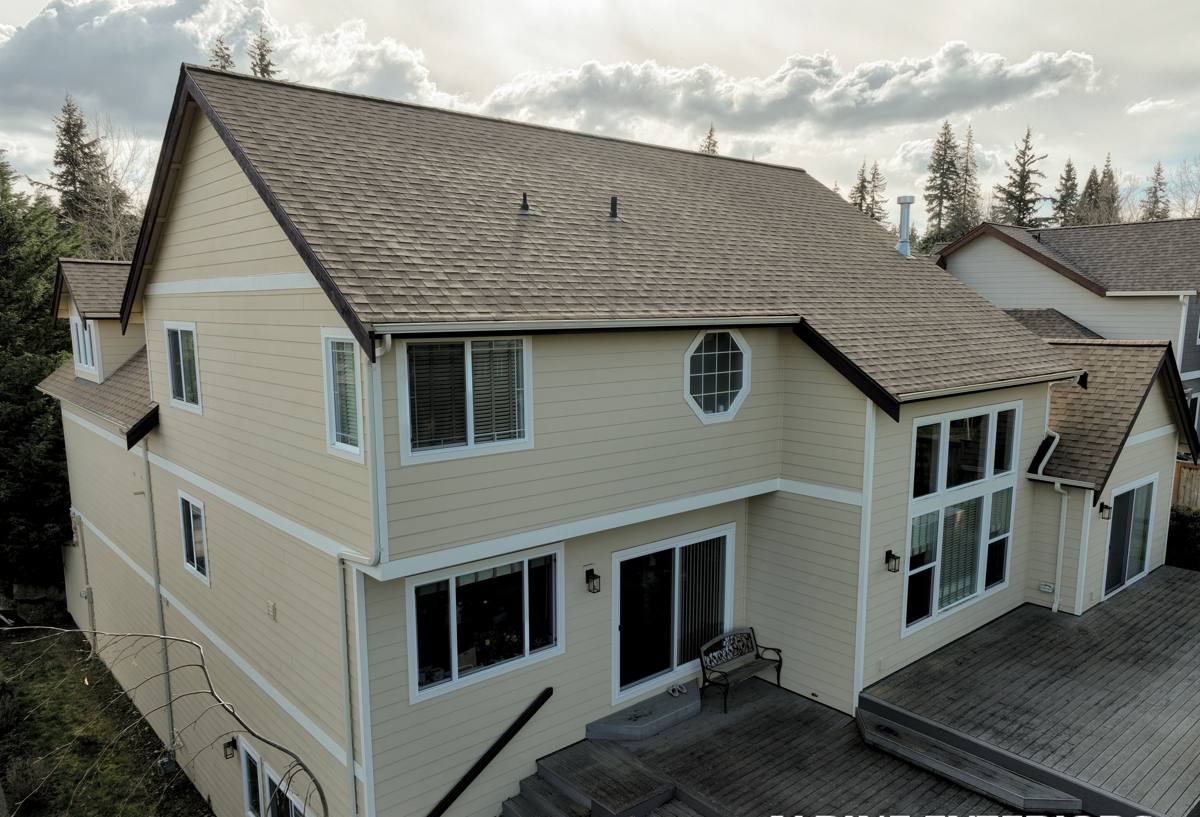
What Oak Harbor's Climate Actually Does to a Roof
Salt Air and Corrosion
Proximity to Puget Sound means airborne salt is a constant, low-level presence on exterior surfaces. Over years, that accelerates corrosion on any metal component that isn't rated or coated for coastal exposure — fasteners, flashing, panel edges, and exposed cut ends are usually where it shows up first.
Driving Rain and Wind
Storms coming off the water bring rain that hits roofs at an angle instead of falling straight down. That means water gets pushed under laps, into fastener heads, and along ridge and valley lines that would stay dry in calmer weather. Wind uplift on exposed roof planes is also a real factor, especially on homes with larger unbroken roof surfaces or minimal tree cover.
Moss and Algae Season
Cool, wet, and shaded conditions for a large part of the year are ideal for moss and algae growth. On roofing materials with any texture or organic content, that growth holds moisture against the surface and shortens the material's working life. Metal doesn't feed moss the way some materials do, but growth can still take hold in dirt and debris that collects in valleys, behind vents, or along north-facing slopes that don't get much sun.
Panel Types We Work With
Not every metal roofing product is built for the same job, and the right choice depends on the home, the roof pitch, and the budget. Here's how the common options compare for a coastal Skagit County / Whidbey-adjacent home:
| Panel Type | Best For | Coastal Notes |
|---|---|---|
| Standing seam (concealed fastener) | Most homes, especially higher-visibility roofs and lower pitches | No exposed fastener heads for salt to attack; best long-term performance near water |
| Exposed-fastener panel | Outbuildings, shops, budget-conscious projects | Lower upfront cost, but fastener gaskets and washers need periodic checking and eventual replacement |
| Stone-coated steel | Homes wanting a shake or tile look with metal's durability | Good wind and impact resistance; coating and fastener quality matter more in salt air |
We'll walk through the honest trade-offs for your specific roof rather than pushing one product for every job. On a coastal exposure like Oak Harbor, we lean toward concealed-fastener systems more often than not, simply because there are fewer penetration points for salt-laden moisture to work on over time.
What a Correct Metal Roof Installation Actually Involves
The panels themselves get most of the attention, but they're only part of what makes a metal roof perform for decades instead of years. A correct installation includes:
- A proper deck inspection and repair of any soft or damaged sheathing before anything goes down
- A high-quality synthetic or self-adhered underlayment as a true water barrier beneath the panels
- Fasteners, clips, and flashing rated for coastal or marine-grade exposure — not standard hardware store stock
- Correct panel overlap and seam direction relative to prevailing wind and rain
- Properly detailed flashing at valleys, penetrations, chimneys, and roof-to-wall transitions, since these are the most common failure points on any roof
- Ridge and eave ventilation sized correctly for the attic space, to control condensation from beneath
Skipping any one of these doesn't usually show up as a problem in year one. It shows up in year seven or eight, as a leak that traces back to a flashing detail or fastener choice that was wrong from the start. On a home this close to salt water, we treat those details as non-negotiable, not optional upgrades.
Our Process for an Oak Harbor Metal Roof
1. On-Site Assessment
We look at the existing roof condition, deck integrity, ventilation, and how exposed the roof is to wind and driving rain from the water side of the property. This is also where we talk through panel options honestly, based on the roof's pitch, visibility, and your budget.
2. Tear-Off or Overlay Decision
In most cases we recommend a full tear-off so we can inspect and repair the deck underneath — you can't properly address moss staining, soft sheathing, or old flashing failures without seeing what's under the existing roofing. Overlay installations are sometimes appropriate on newer, sound roofs, but we'll tell you plainly if we think it's a mistake for your home.
3. Installation
Underlayment, flashing, and panels go on in that order, with attention paid to lap direction against the prevailing weather and correct fastener spacing and torque. Coastal-rated hardware is used throughout, not just at the edges.
4. Final Walkthrough
We check flashing details, fastener lines, and ventilation before we consider the job finished, and we walk the roof with you (from the ground or via photos, depending on access) so you know what was done and why.
Maintenance in a Wet, Salty Climate
A well-installed metal roof needs far less maintenance than asphalt shingles, but "far less" is not "none." A short annual checklist goes a long way toward protecting the investment:
- Clear moss, needles, and debris from valleys and behind vent stacks before they hold moisture against panel seams
- Check exposed-fastener systems for loose screws or worn washers, since gaskets degrade faster in salt air
- Rinse accumulated salt and grime off the roof surface periodically, especially on homes with direct water exposure
- Have gutters and downspouts checked so water isn't backing up against eave flashing during heavy rain
- Watch for any staining on interior ceilings near valleys or penetrations, which is often the first visible sign of a flashing issue
Cost Factors for Metal Roofing in This Area
Every roof is different, and we'll give you an actual number after seeing the job, but the main variables that move the price are consistent:
| Factor | Why It Matters Here |
|---|---|
| Panel type | Standing seam costs more upfront than exposed-fastener panel, but needs less long-term maintenance in salt air |
| Roof complexity | Valleys, dormers, and multiple roof planes mean more flashing work and labor time |
| Deck condition | Rot or soft sheathing found during tear-off adds repair cost but prevents a bigger problem later |
| Fastener and coating grade | Marine-rated hardware and coatings cost more than standard-grade materials but resist salt corrosion far longer |
| Access and pitch | Steeper roofs or homes with limited equipment access add labor and safety-related costs |
We'd rather walk you through these variables in person than throw out a number that doesn't hold up once we're actually on your roof.
Why It Matters to Hire a Crew That Already Works This Area
Metal roofing installed correctly in a dry inland climate can still fail early near the water if the crew didn't account for salt exposure and driving rain in their fastener choices and flashing details. A crew that regularly works Oak Harbor and the surrounding coastal areas of Skagit and Island County knows which details can't be treated as optional — where wind exposure tends to be worse, which roof orientations collect moss fastest, and which hardware actually holds up rather than just meeting a minimum spec. That local pattern recognition is hard to substitute with a generic installation checklist.
It also means we're a known, reachable crew if a question or issue comes up after the job is done — not a name from an out-of-area company that's hard to get back on-site.
Get a Straight Answer for Your Roof
If you're weighing metal roofing for a home in Oak Harbor or the surrounding area, we're happy to take a look and give you an honest read on condition, options, and realistic cost — no pressure, no upsell. Use the form below to request a free estimate and we'll go from there.