 Anacortes Window
 Windows That Actually Hold Up Near the Water
Oak Harbor sits close enough to the strait and the sound that homes here take a different kind of beating than houses further inland. Salt-laden air corrodes hardware that would last decades in a drier climate. Driving rain off the water finds every weak seal, every tired caulk line, every window that was installed a little too fast. And the long stretch of gray, wet months every year keeps wood surfaces damp long enough for moss and mildew to take hold on sills, trim, and anything with a flat surface for spores to settle on. None of this is unusual for the North Puget Sound region — it's just the tradeoff for living somewhere this good-looking. But it means a window that works fine in Spokane or Yakima can fail early here if it wasn't built or installed with this specific climate in mind.
Custom windows aren't about luxury upgrades or unusual shapes, though we do plenty of that too. Mostly it's about getting the sizing, materials, and installation details right for a house that's going to sit exposed to marine weather for the next 20-30 years. That's the standard we hold every Oak Harbor job to.
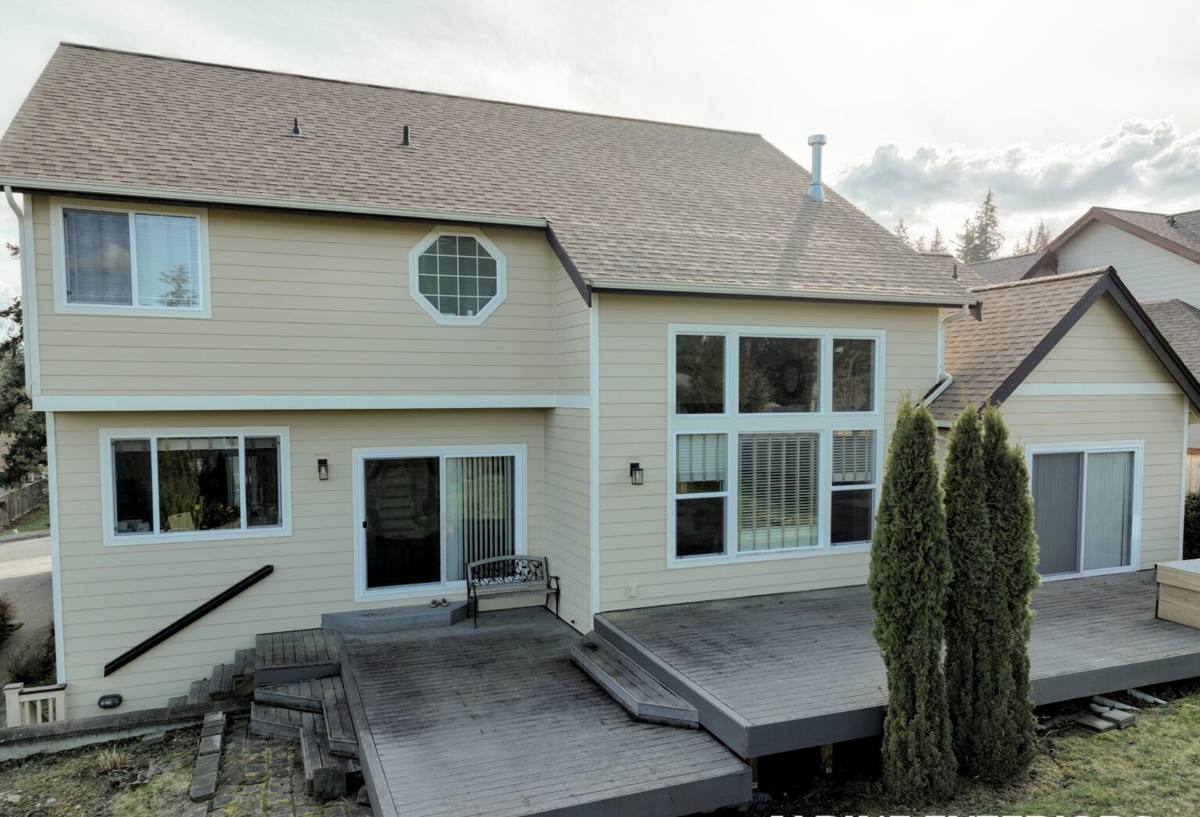
What "Custom" Actually Means for a Correct Job
A lot of window companies use "custom" loosely to mean "we can special-order a size." That's part of it, but a correct custom window job covers more ground:
- Exact opening measurements — not a stock size forced into an opening that's slightly off, which leaves gaps that get packed with extra sealant instead of fixed properly
- Frame material matched to exposure — a wall that takes direct weather off the water needs a different frame than a sheltered side yard
- Glass package matched to sun and wind exposure — orientation matters more here than most homeowners expect
- Flashing and drainage built for wind-driven rain, not just standard perimeter caulk
- Trim and casing that match the age and style of the house, especially on older Oak Harbor homes where mismatched trim stands out immediately
Skip any one of these and you can end up with a window that looks right on install day and starts showing problems — fogging, staining, drafts — within a couple of wet seasons.
Frame Materials: What Holds Up Locally
We install several frame materials, and the right one depends on the specific wall, its sun exposure, and how much upkeep you want to take on. Here's how the common options actually perform in this climate, plainly:
| Material | Salt air / corrosion | Moisture behavior | Upkeep |
|---|---|---|---|
| Vinyl | Doesn't corrode; hardware is the main concern | Won't rot; seals are the failure point over time | Low — occasional cleaning |
| Fiberglass | Very resistant, dimensionally stable in temperature swings | Excellent — doesn't absorb moisture | Low |
| Wood-clad | Exterior clad handles weather; interior wood needs care | Good if maintained; vulnerable where cladding is breached | Moderate to higher |
| Aluminum | Prone to corrosion near salt air unless properly coated | Conducts cold, can condense in our damp winters | Moderate |
We're honest with clients about tradeoffs rather than pushing one product. Wood-clad windows can look beautiful and we install them, but we tell people upfront that the maintenance burden is real this close to the water — if a clad seam gets compromised and moisture reaches the wood core, it's a harder repair than with vinyl or fiberglass. That's not a knock on the product; it's just what marine exposure does to any wood-based building material, and it's the kind of thing an installer should tell you before you buy, not after.
Signs Your Current Windows Are Losing the Battle
Most homeowners don't think about their windows until something's obviously wrong, but there are earlier signs worth catching:
- Fogging or a hazy film between the panes — the seal has failed and the gas fill is gone
- Soft or discolored trim and sill wood, especially on the side of the house that catches the most weather
- Visible moss or green film building up on sills or exterior trim faster than you can keep it cleaned off
- Drafts you can feel near the frame on windy days, even with the window latched
- Hardware that's stiff, corroded, or won't latch tight anymore
- Paint or finish that's peeling specifically around the window frame rather than the wall generally
Any one of these on its own isn't an emergency. Several together, or any sign of soft wood at the sill, usually means it's worth having someone look before it becomes a bigger repair behind the wall.
How We Approach an Oak Harbor Job
1. On-site assessment
We look at more than the window itself — the wall assembly, the exposure direction, existing flashing condition, and whether there's any hidden moisture damage around the current opening. This is where a lot of the "custom" decisions get made.
2. Product and material selection
Based on exposure and your priorities (upkeep, budget, appearance, energy performance), we walk through which frame material and glass package actually fits the specific opening — not a one-size answer for the whole house.
3. Precise measurement and ordering
Every opening gets measured individually. Houses settle and shift over the decades, and two windows that look identical from the yard can have openings that are a quarter inch off from each other.
4. Removal and inspection
When we pull the old window, we check the framing and sheathing behind it before anything new goes in. This is the point where hidden water damage from a bad seal shows up — better to find and fix it now than seal it back in.
5. Installation with weather-appropriate flashing and sealing
We install flashing and drainage paths built to shed wind-driven rain, not just rely on a bead of caulk. This step matters more here than in drier parts of the state.
6. Final fit, trim, and cleanup
Trim gets matched to the house, operation gets tested, and the site gets cleaned up before we consider the job done.
What Drives Cost
We don't quote pricing blind over the phone because the honest answer depends on real factors specific to your house. What we can tell you is what actually moves the number:
| Factor | Why it matters |
|---|---|
| Frame material | Vinyl is typically the most budget-friendly; fiberglass and wood-clad cost more upfront |
| Number and size of openings | More glass and larger openings mean more material and labor |
| Condition behind the existing window | Rot or water damage found during removal adds repair work before the new unit goes in |
| Glass package | Higher-performance glass for sun or wind exposure costs more than standard |
| Trim and casing complexity | Matching custom or older-style trim takes more time than standard trim replacement |
| Access and site conditions | Second-story or hard-to-reach openings take longer and require more setup |
A broad range for a straightforward single-window replacement is different from a whole-house project with hidden repairs, so the only reliable number is one based on an actual look at your house.
Keeping Windows Ahead of Salt Air and Moss Season
Even a well-installed window benefits from a little seasonal attention out here. A short annual routine goes a long way:
- Rinse sills and exterior frames a couple times a year to clear salt residue before it works into hardware and finishes
- Clear moss and debris off sills and tracks before it holds moisture against the frame — a stiff brush and plain water usually does it
- Check that weep holes (the small drainage openings at the base of the frame) aren't clogged with dirt or moss, especially heading into the wet season
- Test locks and latches once a year; stiff hardware is often the first sign of corrosion starting
- Look at exterior caulk lines each fall and touch up anything that's cracked or pulled away before winter rain arrives
- Wipe down interior sills where condensation collects on cold, damp mornings so moisture doesn't sit there
None of this takes long, and it's the difference between windows that look and perform well for decades versus ones that start showing their age after a handful of wet winters.
Why Local Experience Matters for This Job
A crew that mostly installs in drier inland areas doesn't always think about drainage paths, corrosion-resistant hardware, or moss buildup the same way a crew that works this specific stretch of Puget Sound coastline does every week. We're based in Anacortes and work throughout Skagit County and the surrounding water-exposed communities, including Oak Harbor, so we're accounting for marine exposure as a default, not an afterthought. That shows up in small decisions — which flashing detail to use, which hardware finish holds up, how tight to build in drainage — that don't show up on a spec sheet but matter a lot ten years down the road.
Get a Free, No-Pressure Estimate
If your windows are showing their age, fogging, drafting, or just due for an honest look, we're happy to come take a look and give you a straight assessment — no pressure, no hard sell. Fill out the form below and we'll set up a time to come by.