 Anacortes Window
 Why Fidalgo Island Roofs Wear Differently
Fidalgo Island sits right where the Salish Sea meets the marine air moving in off Rosario Strait and the Guemes Channel, and that setting shapes how roofs age here. Homes on and around Fidalgo Island deal with a steady mix of salt-laden air, wind-driven rain that gets pushed sideways under poorly flashed edges, and a long, damp shoulder season that keeps roof surfaces wet for days at a time. Add in heavy tree cover in many neighborhoods, and you get an environment where moss, algae, and slow moisture intrusion do more damage over the years than any single storm.
A roof built for a drier inland climate often doesn't hold up the same way out here. Ventilation gaps that would be a minor issue elsewhere become a path for trapped moisture. Flashing that's "close enough" on a house in a low-humidity region can leak within a few winters on Fidalgo Island. New roof installation in this area has to be planned around these conditions from the first shingle down, not patched around them later.
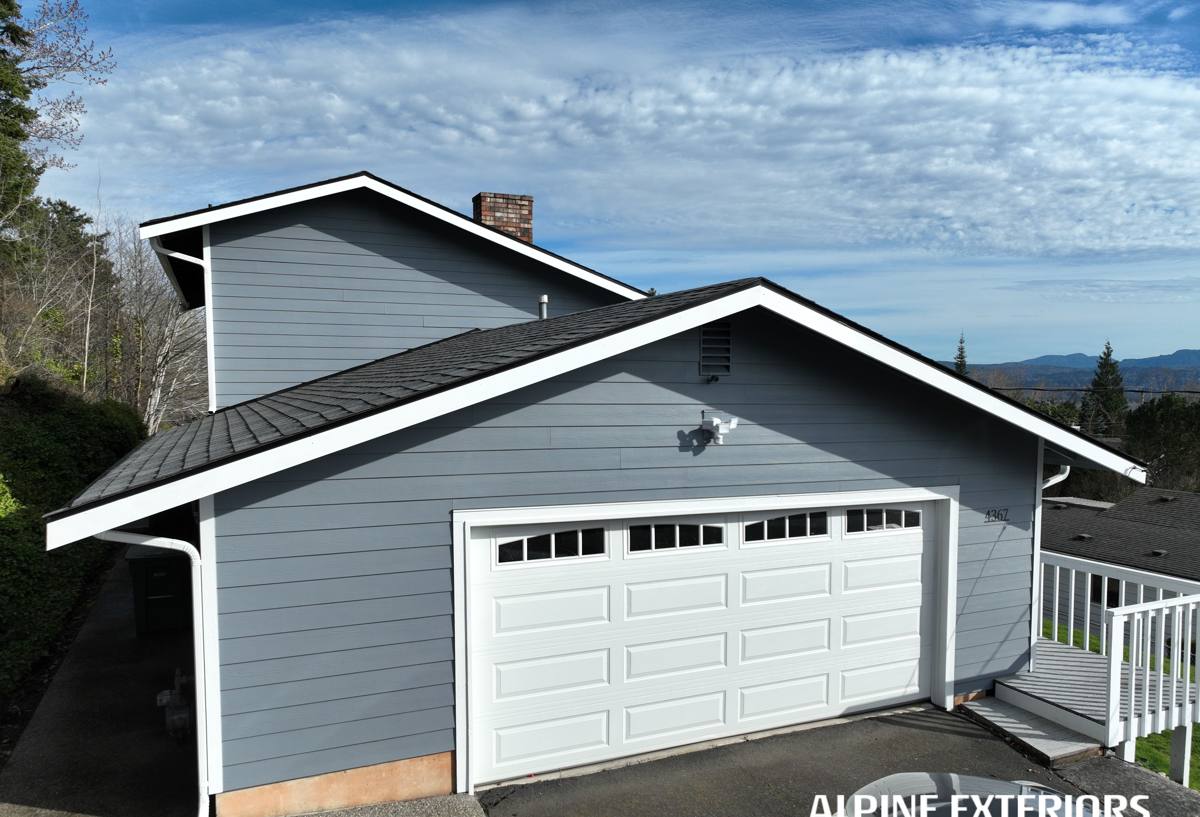
Signs Your Fidalgo Island Home Needs a New Roof
Because moisture damage on the island tends to be gradual, many homeowners don't realize how far along their roof's wear actually is until they get a close inspection. Some signs are visible from the ground; others only show up in the attic or at the roof edges.
- Granule loss showing up in gutters or at downspout outlets, especially after heavy rain
- Moss or algae streaking that keeps returning within a season or two of cleaning
- Curling, cupping, or cracked shingles, particularly on slopes that get the most wind exposure
- Soft spots in the roof deck when walked on, or sagging along a ridge or valley
- Daylight visible through the roof boards from inside the attic
- Water stains on ceilings or in the attic near chimneys, skylights, or vents
- Flashing that's visibly rusted, lifted, or separated from the roof plane
- A roof that's already 20-plus years old, which is near or past the practical service life for many materials in this climate
Any one of these on its own might just call for a repair. Several at once, especially on a roof approaching or past its expected lifespan, usually means full replacement is the more cost-effective path.
What a Correct New Roof Installation Involves
A new roof is only as good as what's underneath the visible surface. On Fidalgo Island, where wind-driven rain and prolonged dampness are the norm, the details below the shingles or panels matter as much as the material choice itself.
Tear-Off and Deck Inspection
We remove the old roofing down to the deck rather than layering over it. This lets us actually see the sheathing and catch soft, rotted, or delaminated plywood before it's covered up again. Any damaged decking gets replaced before anything new goes down — installing a new roof over a compromised deck just guarantees problems down the road.
Underlayment and Water Protection
A synthetic underlayment goes down across the full roof, with self-adhered ice-and-water membrane at the eaves, valleys, and around any roof penetration — chimneys, skylights, pipe boots, and vent stacks. These are the areas most likely to take on wind-driven rain, and they're where most Fidalgo Island roof leaks actually originate.
Ventilation
Balanced intake and exhaust ventilation keeps moist air from condensing inside the attic space. In a climate this humid, poor ventilation shortens the life of the roof deck itself and can lead to mold and mildew issues that have nothing to do with the shingles above.
Flashing Details
Step flashing at walls, counter-flashing at chimneys, and properly lapped valley flashing are non-negotiable. This is the part of a roof installation most likely to get rushed on a lower-quality job, and it's almost always where a "new" roof starts leaking within a few years.
Choosing a Roofing Material for Salt Air and Moss Season
There's no single "best" roofing material for every home — the right choice depends on your home's exposure, roof pitch, budget, and how much long-term maintenance you're willing to take on. Here's how the common options generally compare for a home on Fidalgo Island.
| Material | Typical Lifespan Here | Moss/Algae Resistance | Maintenance Needs | Relative Cost |
|---|---|---|---|---|
| Architectural asphalt shingle | 20-30 years | Moderate (algae-resistant granules help) | Periodic moss removal recommended | Lower to mid |
| Standing seam metal | 40-50+ years | High — sheds moisture quickly | Low; occasional inspection of fasteners/sealant | Mid to higher |
| Cedar shake | 20-25 years with upkeep | Lower — needs regular treatment | Higher; regular cleaning and treatment expected | Higher |
| Synthetic/composite shingle | 30-50 years (varies by product) | Moderate to high, product-dependent | Low to moderate | Mid to higher |
We install a range of these depending on the home, but we're upfront about trade-offs. Cedar shake, for example, has real aesthetic appeal but needs consistent maintenance to hold up against the moisture this area sees year-round — we'll walk you through what that upkeep actually looks like rather than just selling the look. Metal roofing sheds moss and standing water well, which matters on shaded, tree-covered lots common around the island, but it's a different installation skill set and cost bracket than asphalt.
A Note on Warranties
Manufacturer warranties on shingles and other roofing materials typically require the roof to be installed to that manufacturer's specifications, including proper ventilation and underlayment. An installation that skips these steps can void that warranty even if the shingles themselves are fine — another reason the installation details matter as much as the product label.
Our Installation Process, Start to Finish
- On-site inspection and estimate — we look at your current roof, attic ventilation, and any problem areas, and give you a written scope and price.
- Material selection — we go over the realistic options for your roof's pitch, exposure, and budget, including honest maintenance expectations for each.
- Scheduling around weather — on Fidalgo Island, timing a tear-off around a stretch of manageable weather is part of the job; we plan for it rather than leaving a roof exposed.
- Tear-off and deck inspection — old roofing removed, deck checked and repaired as needed.
- Underlayment, flashing, and ventilation installed — the parts of the job that determine whether the roof actually performs in this climate.
- Final roofing material installed to manufacturer spec, preserving warranty coverage.
- Cleanup and walkthrough — magnetic sweep for nails, debris hauled off, and a final look-over with you before we consider the job done.
Moss, Algae, and Long-Term Roof Care
Even a well-installed roof on Fidalgo Island will deal with moss and algae over time, especially on shaded, north-facing slopes or under overhanging trees. This isn't a sign of a failed installation — it's a normal part of owning a roof in this climate. What matters is staying ahead of it: soft washing or gentle cleaning rather than pressure washing (which can strip granules and shorten shingle life), keeping gutters and valleys clear so water isn't sitting against the roofline, and trimming back overhanging branches where practical. Zinc or copper strips near the ridge can help slow moss regrowth on some roofs, though they're not a substitute for periodic cleaning.
Permits and What's Included
Roof replacement in Skagit County typically requires a building permit, and we handle that process as part of the job rather than leaving it to the homeowner. A legitimate roofing contract should spell out the materials, underlayment system, flashing scope, disposal of old roofing, and workmanship warranty in writing before work starts — if a bid doesn't include those details, it's worth asking why.
Why Local Experience on Fidalgo Island Matters
A crew that works this island regularly knows which slopes take the worst of the wind off the water, which neighborhoods deal with heavier moss cover from tree canopy, and how long a given material actually lasts here versus its national average rating. That local pattern recognition shows up in small decisions — where to add extra ice-and-water membrane, how to detail a valley on a low-slope section, which vents hold up against wind-driven rain — that a crew unfamiliar with this specific climate might not think to make. It's the difference between a roof that's technically installed correctly and one that's actually built for Fidalgo Island.
If your roof is showing wear, or you just want an honest read on how much life it has left, we're happy to take a look. Use the form below to request a free, no-pressure estimate for your Fidalgo Island home.