 Anacortes Window
 Siding Built for Skagit Valley Weather
Mount Vernon sits inland along the Skagit River, which gives it a slightly different weather pattern than the immediate Anacortes waterfront — less direct salt spray, but no shortage of driving rain, valley humidity, and the long gray stretches that let moss and algae get a foothold on north-facing walls and anything shaded by trees or eaves. Add in the temperature swings between summer heat radiating off the valley floor and damp winter cold, and siding here works harder than most homeowners realize. It's not battling salt air the way a home two blocks from Fidalgo Bay is, but it's dealing with sustained moisture exposure for a large share of the year, and that's exactly the condition that separates siding that lasts decades from siding that starts failing at year twelve.
This page is about one job in one area: siding installation for houses in and around Mount Vernon, done by a crew based in Anacortes that already works this part of Skagit County regularly. We're not going to give you a generic national rundown of siding options — we're going to talk about what actually holds up on a Skagit Valley home, what a correct installation looks like, and why the product we chose to standardize on is the one we recommend here.
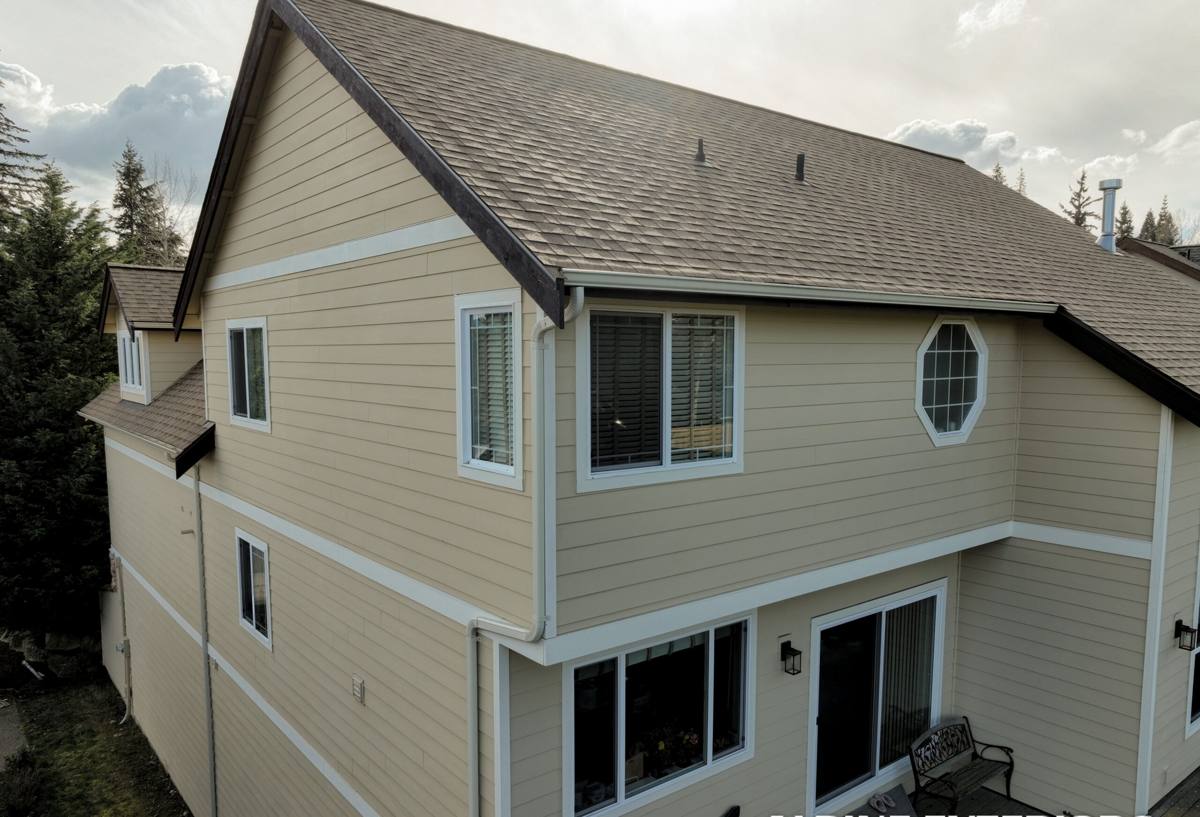
What Mount Vernon Homes Need From Their Siding
Whether a home sits closer to the river bottom or up on higher ground toward the edges of town, a few things stay consistent across Skagit County:
- Sustained moisture resistance. Long rainy stretches mean siding needs to shed water reliably, not just resist a single storm.
- Moss and algae tolerance. Shaded walls, tree-lined lots, and persistent damp conditions favor organic growth on porous or poorly-finished siding.
- Dimensional stability through temperature and humidity swings. Materials that expand, contract, or absorb moisture unevenly are the ones that crack, cup, or pop fasteners over time.
- A finish that doesn't rely on the homeowner repainting every few years. Valley humidity is hard on field-applied paint, especially on south and west exposures that get more direct sun-to-rain cycling.
None of this is unique to any one street or subdivision — it's the baseline reality of building in a river valley in the Pacific Northwest, and it's why we treat siding material selection as a climate decision, not just a style decision.
What a Correct Siding Installation Actually Involves
Siding failures in this region are rarely about the siding material itself failing outright — they're almost always about installation details that were skipped or rushed. A correct install includes:
Weather-Resistive Barrier and Flashing
A properly lapped weather-resistive barrier behind the siding, with correctly integrated flashing at windows, doors, and any wall penetrations, is what actually keeps bulk water out of the wall assembly. Siding is the first line of defense, not the only one — if the barrier and flashing behind it are wrong, even the best siding material will eventually let moisture in.
Proper Clearances
Siding needs consistent clearance from grade, roof lines, decks, and other horizontal surfaces where water and debris can collect. Skipping these clearances is one of the most common shortcuts that leads to rot and moisture damage years down the line, especially in a climate that doesn't give walls much time to dry out between rain events.
Fastening to Manufacturer Spec
Fiber cement siding has specific fastener type, spacing, and penetration requirements. Incorrect fastening shows up later as popped nails, wavy panels, or cracking at stress points — and it can also void the manufacturer's warranty, which matters a lot more than it sounds like when you're twelve years into a twenty-year product.
Caulking and Joint Treatment
Butt joints, trim intersections, and penetrations need to be sealed correctly with the right materials — not just caulked over as an afterthought. This is one of the fastest places for a rushed crew to cut corners, and one of the first places moisture problems show up when they do.
Why We Install Only James Hardie Fiber Cement
We don't install LP SmartSide, vinyl, Cemplank, Allura, or unprimed cedar or spruce siding. That's a deliberate standard, not a lack of options. Each of those products has legitimate strengths, but each also comes with a trade-off that we've decided isn't worth carrying for a Skagit County homeowner:
- Vinyl is inexpensive and low-maintenance, but it can warp in heat, crack in cold, and it's a poor match for homes where a more substantial, paintable, non-combustible material is the goal.
- Wood products (cedar, primed spruce) look great and perform well when maintained aggressively, but in a climate with this much sustained moisture, that maintenance burden is real and ongoing — repainting, sealing, and watching for rot are permanent line items, not one-time tasks.
- Engineered wood siding (LP SmartSide) has improved a lot over the years, but it's still a wood-strand product with edge-swell and moisture-sensitivity considerations that fiber cement doesn't have.
- Other fiber cement brands (Cemplank, Allura) are legitimate competitors to Hardie, but we've chosen to build our installation expertise, warranty relationships, and supply chain around one product line rather than spread thin across several.
James Hardie fiber cement is non-combustible, holds a factory-applied ColorPlus finish that resists fading far better than field-applied paint, and is engineered in specific product lines (the HZ5 line, for our climate zone) to handle exactly the kind of sustained damp, moderate-freeze conditions Skagit County sees. It also carries a strong, transferable warranty — but only when installed to Hardie's specification, which is the whole reason installation quality matters as much as material choice.
Our Process
| Step | What Happens |
|---|---|
| On-site assessment | We walk the home, check existing siding condition, look at moisture-prone areas (shaded walls, low clearances, valley exposure), and take measurements. |
| Scope and estimate | You get a clear, itemized estimate — no pressure, no inflated urgency tactics. |
| Tear-off and inspection | Old siding comes off and we inspect the sheathing underneath for hidden rot or moisture damage before anything new goes up. |
| Weather barrier and flashing | Barrier and flashing are installed or corrected to current best practice, regardless of what was there before. |
| Hardie installation | Panels, lap siding, or trim installed to manufacturer fastening and clearance spec. |
| Final walkthrough | We review the finished work with you before calling the job done. |
Cost Factors to Understand Before You Get Quotes
Siding pricing varies by home size, existing condition, and product line, so we won't quote a number here — but these are the factors that actually move the price:
| Factor | Why It Matters |
|---|---|
| Existing sheathing condition | Hidden rot found during tear-off adds repair scope before new siding can go on. |
| Home complexity | More corners, dormers, and trim detail means more labor and material waste. |
| Siding profile chosen | Lap siding, panel siding, and shingle-style Hardie products differ in material and labor cost. |
| Accessibility | Multi-story sections, tight setbacks, or landscaping obstacles affect scaffolding and staging time. |
| Trim and detail work | Window and door trim, corner boards, and fascia detail add labor beyond the flat wall area. |
Signs a Mount Vernon Home May Need New Siding
- Visible cracking, warping, or cupping on wall panels or lap boards
- Persistent moss, algae, or dark streaking that keeps returning after cleaning
- Soft or spongy spots when pressed, especially near the bottom of walls or below windows
- Peeling or chalking paint that no longer holds a fresh coat
- Visible gaps at trim, corners, or butt joints
- Rising energy bills that suggest a compromised wall assembly
Why It Matters That We Already Work Mount Vernon
A crew that already works Skagit County isn't guessing about how the valley's damp season behaves against a wall assembly — we've seen how moss establishes on shaded elevations, how driving rain finds gaps in flashing that look fine from the ground, and how homes here differ from a straight coastal or a drier east-side Washington install. That local pattern recognition shows up in the details: where we pay extra attention to clearances, how we sequence a tear-off around a wet forecast, and which trim details actually hold up through a full Skagit Valley winter. Hiring a crew based nearby in Anacortes also means faster response for follow-up questions, warranty support, and any punch-list items after the job — not a call center for a company that installed your siding once and moved on to the next region.
Get a Free, No-Pressure Estimate
If your Mount Vernon home's siding is showing wear, or you're planning ahead for a replacement, we're happy to walk the property, give you an honest read on condition, and put together a clear estimate for James Hardie siding installation done right. No pressure, no inflated urgency — just a straight assessment from a crew that already works this area. Use the form below to get started.