 Anacortes Window
 Windows That Can Actually Handle March Point's Exposure
March Point sits out on the water side of Fidalgo Bay and Padilla Bay, which means homes here take a different beating than houses tucked further inland in Anacortes. You get salt-laden air rolling off the water, wind that doesn't have much to slow it down before it hits a wall of glass, and long stretches of driving rain that push moisture sideways into places it was never meant to go. On top of that, Skagit County's damp, low-light winters keep everything green longer than most homeowners expect — moss and algae get a foothold on window sills, trim, and cladding faster here than in drier parts of the state.
None of that is a reason to avoid big windows or a bright, open feel in a March Point home. It's a reason to make sure the installation itself — not just the window unit — is done correctly. Most window failures we see out here aren't the glass or the frame failing on its own. They're water finding a gap in the flashing, a bead of caulk that was never structural sealant, or a nailing fin that was tucked in but never properly integrated with the house wrap. Get that part right and a good window will outlast the paint job around it.
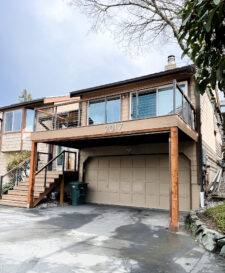
Signs a March Point Home Needs New Windows
Salt air and wind-driven rain don't usually destroy a window overnight — they wear it down over years, and the warning signs are easy to write off as "just an old house" until they add up to a real problem.
- Fogging or a permanent haze between panes — the seal on the insulated glass unit has failed
- Soft or discolored wood at the sill or lower corners of the frame, especially on walls that face the water or prevailing wind
- Drafts you can feel with a hand near the frame on a windy day, even with the window latched
- Paint that keeps blistering or peeling around the same window no matter how often it's touched up
- Windows that are hard to open, close, or lock — frames can swell, warp, or rack out of square from years of moisture cycling
- Visible moss or dark streaking building up on the sill or the siding just below the window
- Noticeably higher heating bills in winter with no other explanation
Any one of these can be minor. Two or three together, especially on the same window or same side of the house, usually means it's time to replace rather than keep patching.
What a Correct Installation Actually Involves
The window itself is maybe half the job. The other half is everything around it that keeps water from getting behind the frame in the first place — and that's the part that separates a job that lasts twenty-plus years from one that starts leaking in three.
Removal and inspection
We pull the old window carefully and check the rough opening before anything new goes in. In a lot of older March Point homes, this is where we find out what's really been happening — soft framing, missing or degraded building paper, or flashing that was never installed correctly the first time. Better to find it now than after a new window is sitting on top of it.
Sill pan and flashing
A sloped sill pan gives any water that does get past the window a way out instead of a place to pool. Flashing tape at the sides and head has to be layered correctly — over the sill pan, under the house wrap at the top — so water sheds down and out, following gravity, not up and behind the sheathing.
Sealing and insulation
The gap between the window frame and the rough opening gets sealed and insulated, not just stuffed with fiberglass. Low-expansion foam or backer rod and sealant, depending on the gap size, keeps air and moisture out without bowing the frame.
Exterior finish
Trim, caulking, and paint or stain go back on with attention to the same joints that fail first — the bottom corners of the trim, where two materials meet, and anywhere water naturally collects. This is also where we build in a little extra protection against the moss and algae growth this region is known for, by making sure sills and trim can actually dry out between rain events instead of staying damp.
Choosing the Right Frame Material for This Climate
There's no single "best" window material for every home — it depends on your budget, your home's style, and how much exposure that particular wall gets. Here's how the common options hold up under Anacortes and Skagit County conditions.
| Frame Material | How It Handles Salt Air & Moisture | Maintenance | Typical Fit |
|---|---|---|---|
| Vinyl | Won't rot or corrode; handles coastal moisture well | Low — occasional cleaning | Most budgets, wide style range |
| Fiberglass | Very stable in temperature and moisture swings; strong against wind loads | Low | Higher-exposure walls, larger openings |
| Wood | Needs consistent upkeep to resist moisture and rot in this climate | High — regular painting/sealing | Historic or traditional homes where the look matters most |
| Wood-clad (wood interior, metal or vinyl exterior) | Exterior shell protects the wood from weather; still needs an intact seal | Moderate | Homeowners who want a wood interior look with less exterior maintenance |
| Aluminum | Strong but conducts cold and can corrode near salt air without a good finish | Moderate | Less common for full replacements here |
For most March Point homes we recommend vinyl or fiberglass on the walls that take the brunt of the weather off the water, simply because there's less ongoing maintenance riding on keeping a painted surface intact. Wood and wood-clad still have a place, especially on homes where matching an existing look matters — we'll just be upfront that they come with a higher maintenance commitment in this environment.
Our Installation Process, Start to Finish
- On-site assessment — we look at each window individually, not just the house as a whole. Exposure varies wall to wall, and so does what each opening needs.
- Measuring and ordering — exact rough opening measurements, confirmed twice before anything is ordered.
- Prep and protection — interior and exterior work areas are protected before removal starts.
- Removal and opening inspection — old window out, framing checked and repaired if needed before the new unit goes in.
- Flashing, sill pan, and sealing — the weatherproofing steps that actually determine whether the window performs.
- Window installation and leveling — set plumb, level, and square, and checked for smooth operation before final fastening.
- Insulation and interior/exterior finish — gaps filled, trim reinstalled or replaced, caulking and paint or stain completed.
- Final walkthrough — every window operated and checked with you before we call it done.
Window Styles That Make Sense Out on the Point
Style choice matters more here than in a sheltered neighborhood a few miles inland, because wind exposure affects how a window performs over time, not just how it looks.
Casement windows
Crank-out casements seal tighter against wind-driven rain than sliding styles because the sash presses into the frame rather than sliding past a track. On walls that catch the brunt of the weather, that tighter seal matters.
Double-hung windows
A classic choice that works well on most elevations, with the advantage of tilting in for easy cleaning — useful when salt film builds up on the glass.
Sliders
Fine for more sheltered walls or larger openings where a wide, unobstructed view matters, but worth pairing with a quality weatherstrip and lock system given the wind exposure common to this area.
What Drives the Cost
Every home and every window is different, so exact numbers depend on your specific project, but these are the main factors that move the price up or down.
| Factor | Why It Matters |
|---|---|
| Frame material | Vinyl is generally the most budget-friendly; fiberglass and wood-clad cost more upfront |
| Window size and count | Larger openings and whole-house replacements have different economies of scale than a single window |
| Condition of the rough opening | Rot repair or reframing adds labor beyond a straightforward swap |
| Glass package | Upgraded low-E coatings or gas fills add cost but improve comfort and efficiency |
| Exterior finish work | New trim, siding repair, or repainting around the opening adds to the scope |
| Access and height | Second-story or hard-to-reach windows take more time and equipment |
We'll walk your home with you and give you a real, itemized number rather than a vague ballpark — and we'll tell you honestly if a window doesn't need full replacement yet.
Why Hire a Crew That Already Works This Area
Anacortes and the surrounding Skagit County shoreline have their own weather logic — wind direction, salt exposure, and rain patterns that don't match a generic install checklist written for a drier or more sheltered part of the state. A crew that regularly works March Point and the surrounding waterfront neighborhoods knows which walls take the worst of it, what kind of flashing detail actually holds up here, and where moss and algae tend to creep in fastest so it can be designed around rather than fought every year.
That local familiarity also shows up in smaller ways — knowing what permitting looks like locally, understanding how older Skagit County homes were typically framed and flashed originally, and being straightforward about what your specific home needs versus what would just pad the invoice.
Keeping Your New Windows Performing Long-Term
A correct installation does most of the work, but a little upkeep goes a long way in this climate.
- Rinse salt film off exterior glass and frames periodically, especially on water-facing walls
- Check and clean weep holes on vinyl and fiberglass frames so they can drain properly
- Keep an eye on caulking at the trim joints and touch it up before gaps open
- Wash sills in fall and spring to keep moss and algae from getting established
- Operate every window at least a few times a year, even ones you rarely open, to keep hardware working freely
If you're weighing new windows for a March Point home, we're happy to take a look and give you a straight, no-pressure assessment of what your home actually needs. Use the form below to request a free estimate.