 Anacortes Window
 Why March Point's Waterfront Setting Is Tough on Siding
March Point sits close to the water on a low, exposed piece of land near Anacortes, and that position matters more than most homeowners realize when it comes to siding. Salt-laden air moves inland off the surrounding water, and over years that airborne salt works into seams, fastener heads, and any place paint or caulk has started to fail. Add in wind-driven rain that hits siding at an angle instead of falling straight down, and water gets pushed into laps and joints that a calmer climate would never test.
Skagit County's moss season is also longer here than in drier parts of Washington. Shade, humidity, and mild temperatures give moss, algae, and mildew a long window to take hold on north-facing walls and anywhere siding stays damp between rains. On the wrong material, that combination shows up as swelling, streaking, soft spots, or paint that won't hold — sometimes years before the siding would fail anywhere else in the state.
Signs Your March Point Home Needs Siding Replacement, Not Just Repair
Not every siding problem calls for a full replacement. But there's a point where patching individual boards or panels stops making sense — either because the damage is spread across the whole house, or because what's underneath the siding has been compromised. Here's what tends to signal that a repair budget is better spent on replacement:
- Soft, spongy, or crumbling siding when you press on it, especially near the bottom of walls or under windows
- Paint that keeps failing within a year or two of repainting, no matter how well it was prepped
- Visible warping, buckling, or panels that have pulled away from the wall
- Persistent moss or dark streaking that comes back within months of cleaning
- Rising energy bills alongside drafts you can feel near exterior walls
- Interior signs of moisture — peeling paint, musty smell, or staining on walls that back up to the exterior
- Siding that's original to a home more than 25-30 years old, particularly wood, hardboard, or early-generation composite products
If you're seeing two or more of these at once, that's usually a sign the problem is systemic rather than isolated to one bad board.
What a Correct Siding Replacement Job Actually Involves
Tear-Off and What's Underneath
A proper siding replacement starts with full removal, not siding-over-siding. Once the old material is off, the sheathing and framing underneath get inspected for rot, soft spots, or prior water damage. This is the one point in the project where hidden problems are actually visible and fixable — skipping this step just seals existing damage behind a new wall.
Water Management Behind the Siding
In a climate that gets driving rain off the water, what's behind the siding matters as much as the siding itself. A correct install includes a weather-resistant barrier and, ideally, a rainscreen gap that lets any moisture that does get past the cladding drain and dry out instead of sitting against the sheathing. This detail is often invisible once the job is done, which is exactly why it's worth asking a contractor about directly before work starts.
Fastening and Flashing
Every window, door, and penetration in the wall needs flashing that directs water outward and down, never inward. Fasteners need to be the right type and length for the substrate, driven to the manufacturer's spacing and depth — over-driven or under-driven nails are one of the most common causes of premature siding failure, and it's a mistake that doesn't show up until years later.
The Finish Coat
Whatever the finish — factory-applied or field-painted — it needs to be rated for marine exposure and applied correctly at the edges and cuts, which are the first places coatings fail. This is where the choice of material starts to matter as much as the installation itself.
Why We Install Only James Hardie Fiber Cement
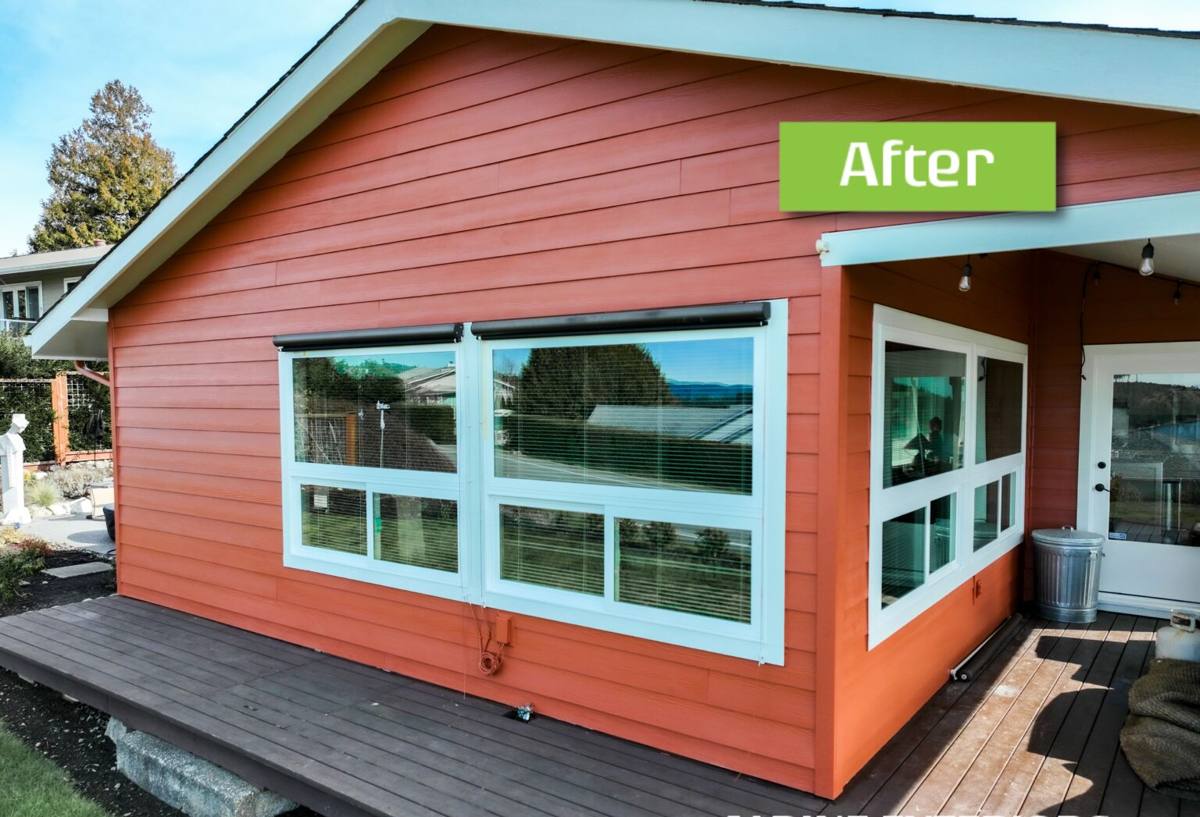
We made a decision a while back to install one siding system and install it well, rather than offer several products and hope each one holds up. That system is James Hardie fiber cement. It's non-combustible, which matters on a property that's going to sit through decades of weather and wear. It's engineered specifically for wet, marine-influenced climates through Hardie's HZ5 product line, which is built to resist moisture-related damage in regions like ours far better than wood, hardboard, or standard vinyl.
Hardie's ColorPlus factory finish is baked on under controlled conditions rather than brushed or sprayed on-site, which gives it more consistent coverage and better resistance to fading and peeling than field-applied paint. It also carries a strong, transferable manufacturer warranty — useful if you sell the home before the siding's functional life is over. None of this means Hardie is maintenance-free or bulletproof; it means that when it's installed to spec, it holds up to exactly the conditions March Point deals with better than the alternatives we used to install.
How Siding Materials Compare in a Marine Climate
| Material | Moisture Behavior | Salt Air / Corrosion | Typical Maintenance | Finish Longevity |
|---|---|---|---|---|
| James Hardie fiber cement | Engineered for wet climates (HZ5); doesn't rot or swell | Resistant; cement composition doesn't corrode | Occasional washing; no repainting for many years | Factory ColorPlus finish, long warranty |
| Vinyl siding | Can warp with heat/cold cycling; water can get behind panels | Doesn't corrode, but can become brittle and fade | Low, but panels can crack and are hard to color-match later | Color molded in, fades over time, can't be repainted easily |
| Wood or cedar | Absorbs moisture; prone to rot without diligent upkeep | No metal corrosion risk, but salt accelerates weathering | High — regular painting/staining and inspection | Depends entirely on maintenance schedule |
| Primed spruce / engineered wood | Vulnerable at cut edges and seams if not fully sealed | Moderate risk if coating is compromised | Moderate to high; edges need monitoring | Field-applied finish, variable durability |
Our Siding Replacement Process for March Point Homeowners
- On-site assessment. We walk the exterior, check for moisture and framing issues, and talk through what we're seeing and why it matters for your specific home.
- Written proposal. A clear scope of work and price, including what's included in tear-off, sheathing repair (if needed), and the Hardie product line and color.
- Prep and protection. Landscaping, walkways, and windows get protected before removal starts.
- Removal and inspection. Old siding comes off, sheathing is checked, and any rot or damage gets addressed before anything new goes up.
- Weather barrier and installation. Water-resistive barrier, flashing, and Hardie siding installed to manufacturer fastening specs.
- Final walkthrough. We go over the finished work with you before calling the job complete.
What Affects the Cost of a Siding Replacement
| Factor | Why It Matters |
|---|---|
| Home size and wall complexity | More square footage and more corners, gables, and trim details mean more labor and material |
| Condition underneath the old siding | Rot or damaged sheathing found during tear-off adds repair scope that can't be quoted sight-unseen |
| Number of existing layers | Homes re-sided in the past sometimes have siding installed over siding, which adds removal time |
| Trim and detail work | Window and door trim, corner boards, and fascia add labor beyond flat wall area |
| Access and site conditions | Multi-story walls, tight side yards, or landscaping close to the house affect setup and staging |
| Siding profile and color | Lap width, shingle-style panels, and custom ColorPlus colors vary in material cost |
Because so much of the real cost depends on what's found once the old siding comes off, we don't quote a full siding replacement without seeing the house in person.
Why Hire a Crew That Already Works This Neighborhood
Siding installation isn't one-size-fits-all, and a crew that mostly works drier, inland areas doesn't always account for the details that matter on a waterfront-adjacent property. Working regularly around Anacortes and Skagit County means knowing which walls take the worst of the wind-driven rain, where moss builds up fastest, and how much of a rainscreen gap and drainage detail actually earns its keep here versus somewhere less exposed. It also means we're not guessing at how James Hardie's HZ5 products perform in this specific setting — we've installed them here before and stand behind that work with a local presence, not a one-time job and a phone number that changes.
If your March Point home is showing signs of siding wear, or you just want an honest read on whether repair or full replacement makes more sense, we're happy to take a look. Fill out the form below for a free, no-pressure estimate — we'll walk the exterior with you and tell you straight what we find.