 Anacortes Window
 Siding Repair Built for March Point's Marine Climate
Homes around March Point sit close to the water, and that location shapes everything about how siding ages here. Salt-laden air moves through year-round, driving rain comes in sideways off the water during winter storms, and the mild, damp Skagit County climate keeps moss and algae growing on north- and west-facing walls for most of the year. Siding that would hold up fine forty miles inland can show real wear here in half the time. Repair work in this neighborhood has to account for all three of those stresses at once, not just patch the visible damage and move on.
That combination is also why generic repair advice falls short for this area. A crack or soft spot on a March Point home is rarely an isolated problem — it's usually a sign that moisture has been working behind the siding for a while, helped along by salt air breaking down caulk and fasteners faster than it would elsewhere. A repair that only addresses the surface tends to fail again within a season or two.
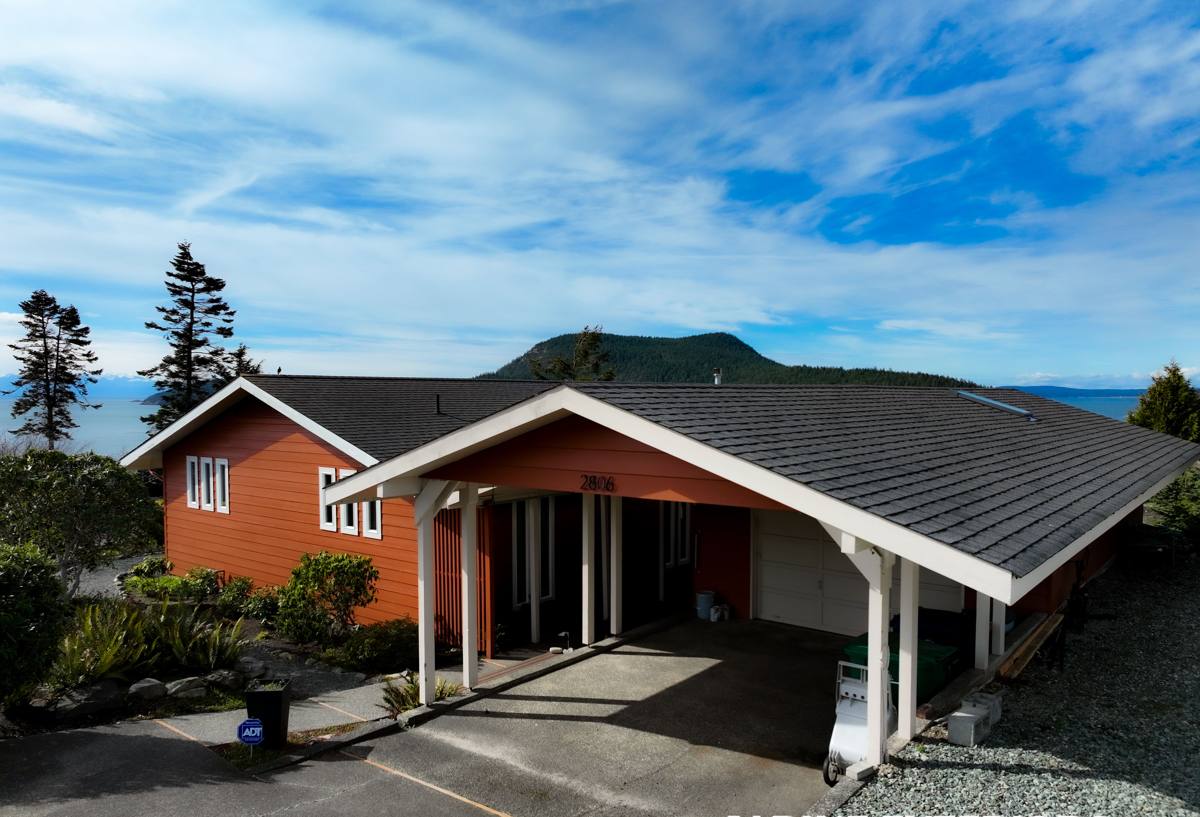
Signs Your March Point Home Needs Siding Repair
Most siding problems in this area show up gradually, and homeowners often notice the cosmetic symptoms before they recognize the underlying cause. Knowing what to look for — and what it usually means — helps you catch damage before it spreads.
What We're Usually Called Out For
- Soft or spongy spots when you press on the siding, usually a sign of trapped moisture behind the panel
- Bubbling, peeling, or flaking paint, especially on walls that face prevailing wind and rain
- Persistent moss, algae, or dark streaking that keeps returning even after cleaning
- Warped, cupped, or separating boards, common with wood and engineered wood products in wet climates
- Cracks or gaps opening up at seams, corners, and trim where caulking has failed
- Visible fastener corrosion or rust streaks bleeding down from nail heads
- Soft trim boards or window casings near siding damage, since water rarely stays in one spot
Why These Show Up Faster Here
Salt air accelerates the breakdown of caulk, sealants, and metal fasteners. Combined with regular wind-driven rain, that means water finds its way into small gaps faster than it would in a drier, calmer inland location. Add a long moss season — moss holds moisture against the siding surface for weeks at a time — and you get a climate that punishes any weak point in the siding system, whether that's a poorly sealed seam, a missing piece of flashing, or a material that wasn't built to handle sustained dampness.
What a Correct Siding Repair Actually Involves
A proper repair is more than swapping a damaged board for a new one. Done right, it starts with figuring out why that section failed in the first place, because replacing siding without fixing the underlying cause just buys a few more years before the same spot fails again.
Diagnosing the Real Problem
We check moisture levels behind the siding, not just at the surface, and look at the flashing, house wrap, and trim details around the damaged area. In a lot of cases, the siding itself is only a symptom — the real issue is a gap in flashing above a window, a gutter that's been overflowing onto a wall, or caulking that failed years ago and let water track behind the panel unnoticed.
Matching Material and Finish
For homes already sided in James Hardie fiber cement, matching is straightforward — the plank profile, reveal, and ColorPlus factory finish can be matched closely so the repair blends in rather than standing out as an obvious patch. For homes with other siding materials, we're upfront about what a repair can and can't achieve; some products are harder to match years after original installation, and we'll tell you honestly when a full section replacement will look and perform better than a small patch.
Repair vs. Replacement: What Actually Determines the Right Call
| Factor | Leans Toward Repair | Leans Toward Replacement |
|---|---|---|
| Extent of damage | Isolated to one or two sections | Spread across multiple walls or elevations |
| Moisture behind panels | Localized, source identified and fixable | Widespread, signs of long-term water intrusion |
| Age of existing siding | Well within expected service life | Near or past the end of its useful life |
| Prior repair history | First repair in that area | Same section has been patched before |
| Material match availability | Existing product can be closely matched | Discontinued color, profile, or product line |
Our Process for March Point Siding Repair Calls
We keep the process straightforward because homeowners deserve to know exactly what's happening to their house and why. Every repair visit follows the same core steps, adjusted for the specific damage in front of us.
What a Proper Repair Visit Includes
- Full inspection of the damaged area and the surrounding siding, trim, and flashing
- Moisture readings taken behind the siding where damage is suspected, not just visual assessment
- A clear explanation of what caused the damage before any repair work begins
- Removal of compromised material and inspection of house wrap and sheathing underneath
- Correction of the underlying issue — flashing, sealant, drainage — not just the visible board
- Matched replacement material, installed with proper fastener spacing and clearance
- Caulking and touch-up finish work matched as closely as possible to existing siding
- A straightforward explanation of what to watch for going forward
We don't upsell a full re-side when a targeted repair will genuinely hold up, and we don't recommend a patch when the underlying damage is too far along for that to make sense. The goal on every call is the option that actually solves the problem, not the option that's easiest to sell.
Why We Only Work With James Hardie Fiber Cement
For new siding sections and full replacements, we install James Hardie fiber cement exclusively. We don't install vinyl, LP SmartSide, primed wood, or cedar, and in a climate like this one, that decision comes down to how each material actually performs over years of salt air, driving rain, and moss exposure — not just how it looks on installation day.
Fiber cement is non-combustible and dimensionally stable, meaning it doesn't swell, cup, or rot the way wood-based products can when they stay damp for extended periods. James Hardie's ColorPlus finish is baked on at the factory under controlled conditions, which holds up better against coastal UV and moisture exposure than field-applied paint, and it comes with a longer color-specific warranty as a result. Hardie's HZ5 product line is engineered specifically for climates like ours, with freeze-thaw cycling and sustained moisture built into the design criteria. That's a meaningful difference from products designed around more moderate, drier conditions.
None of this means other materials are worthless — vinyl and engineered wood siding both have legitimate uses and reasonable price points. But we've seen how each performs in this specific climate over time, and fiber cement is what we're willing to put our name behind and back with our own installation standards.
Why a Crew That Already Works March Point Matters
Siding repair isn't just a generic skill — the right approach changes based on what a specific area's weather actually does to a house over time. A crew that regularly works in and around Anacortes and Skagit County already knows which elevations take the worst of the wind-driven rain, how fast moss regrows on shaded north walls in this climate, and which failure patterns show up again and again on homes exposed to salt air. That local pattern recognition speeds up diagnosis and helps us catch problems, like early flashing failure or fastener corrosion, before they turn into bigger repairs.
There's also a practical side to hiring local: shorter response times for estimates and follow-up work, familiarity with the permitting and inspection process in the county, and accountability that comes from being a crew your neighbors can actually check up on. When a company is easy to find a year or five years after the job, that says something about how they expect their work to hold up.
Maintenance That Keeps a March Point Repair Lasting
A well-executed repair still needs basic upkeep to get its full lifespan in this climate. A few habits make a real difference given how much moss and moisture this area sees.
Simple Habits That Protect the Repair
- Keep gutters clear so overflow isn't running down siding walls during heavy rain
- Trim back vegetation and tree cover that keeps walls shaded and slow to dry
- Rinse moss and algae buildup off siding gently at least once a year, before it takes hold
- Walk the exterior after major storms and check caulking at seams, trim, and penetrations
- Address small caulking gaps or paint failures early, before water gets behind the panel
None of this requires special tools or expertise, but it does require actually doing it on a schedule. Homes that get this basic attention consistently need far less emergency repair work down the line.
Get a Straight Answer on Your Siding
If you're seeing soft spots, moss buildup, or paint failure on a March Point home, it's worth getting an honest read on what's actually happening before it spreads further. We'll walk the exterior, check for moisture behind the siding where it matters, and give you a clear picture of whether a targeted repair or a fuller replacement makes sense — no pressure, no inflated scope. Reach out for a free estimate and we'll give you a straight answer based on what we actually find on your walls.