 Anacortes Window
 Board & Batten Siding Built for March Point's Exposure
March Point sits out on its own peninsula between Fidalgo Bay and the refinery flats, which means homes here catch weather that inland Anacortes neighborhoods don't see as often. Wind comes off the water with little to break it up, salt air settles on every exterior surface, and the long gray stretch from November through April keeps siding damp for days at a time. Board and batten siding — with its vertical lines and crisp shadow reveals — is one of the most popular looks for this area, but it's also one of the least forgiving styles if the material or the installation isn't right for the exposure.
We install board and batten using James Hardie fiber cement exclusively. This page walks through what that choice means specifically for a March Point home, what correct installation looks like, and how we run the job from estimate to cleanup.
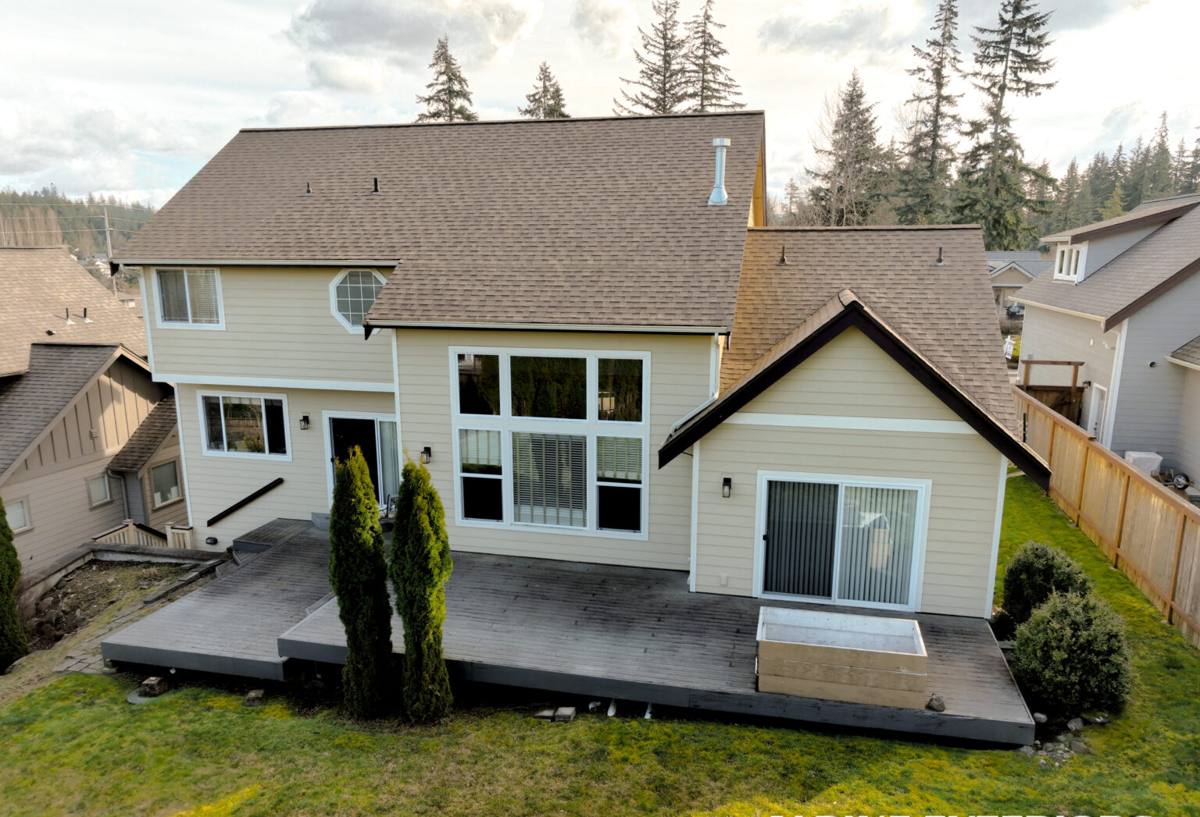
Why March Point's Climate Is Hard on Vertical Siding
Board and batten relies on vertical seams — the gaps between boards and the battens that cover them — and every one of those seams is a potential entry point for moisture if it's not detailed correctly. A few things about this location make that detail work more important than it would be somewhere more sheltered:
- Salt-laden wind: Airborne salt from the bay accelerates corrosion on fasteners and metal trim, and it can degrade certain paint films and caulks faster than inland exposure would.
- Driving rain: Open exposure means rain often hits siding at an angle instead of falling straight down, pushing water sideways into laps, seams, and butt joints that a calmer site wouldn't stress as hard.
- Extended moss season: Skagit County's damp fall-through-spring stretch gives moss and algae months to establish themselves on any surface that stays shaded and wet, particularly on north-facing walls and under overhangs.
None of this means board and batten is a bad choice for March Point — it means the material and the installation both have to be chosen with that exposure in mind, not just for the look.
What Happens When the Wrong Material Goes Up
Wood board and batten (cedar or primed spruce) needs a paint film to survive this exposure, and that film is the first thing salt air and driving rain go to work on. Once it starts to fail at a seam or a fastener head, the wood underneath is exposed to moisture it can't shed on its own, and swelling, cupping, or rot follows. Vinyl board and batten profiles handle moisture better in that narrow sense, but they can't hold the crisp, deep reveal that makes the style attractive in the first place, and they're prone to visible warping in direct afternoon sun on south and west walls. We don't install either product — not because they can't be installed, but because we don't think either one holds up to this specific exposure the way a homeowner expects a "one-time" siding job to.
Why We Use James Hardie for Board & Batten
James Hardie's fiber cement board and batten systems — whether that's HardiePanel vertical siding with Hardie battens, or the Artisan vertical profile for a more refined reveal — are engineered around the fact that fiber cement doesn't absorb and release moisture the way wood does, and it doesn't expand and contract with temperature the way vinyl does. That stability matters most at the seams, which is exactly where this climate applies the most stress.
| Concern | Wood Board & Batten | Vinyl Board & Batten | James Hardie Fiber Cement |
|---|---|---|---|
| Moisture absorption at seams | High — swells, can rot | Low, but seams can gap with thermal movement | Very low, engineered lap/seam detailing |
| Salt air / coastal exposure | Paint film degrades faster | Generally stable, but hardware corrodes | ColorPlus finish formulated for harsh exposure |
| Moss and algae resistance | Moss holds moisture against wood | Moss sits on surface, doesn't damage panel | Non-organic material, no food source for rot |
| Fire resistance | Combustible | Melts, contributes fuel in nearby fires | Non-combustible core |
| Reveal/shadow line crispness | Sharp when new, degrades as wood moves | Softer, less defined profile | Sharp and stable long-term |
The other piece that matters here is warranty structure. Hardie's ColorPlus factory finish carries a substantial transferable warranty against peeling, cracking, and fading — which is worth more on a house that sits in direct salt air than it would be on a home a few miles inland, simply because the finish is being tested harder every year it's up.
What a Correct Board & Batten Installation Involves
Board and batten is more installation-sensitive than lap siding because every vertical seam is a decision point. On a March Point job, we pay particular attention to:
Water Management Behind the Siding
A drainable house wrap or rainscreen gap behind the boards gives any moisture that does get past the surface a way to drain and dry instead of sitting against the sheathing. On a site with this much wind-driven rain, we don't treat this as optional.
Fastener Placement and Spacing
Hardie specifies fastener type, spacing, and edge distance for a reason — get it wrong and you create stress points where panels can crack or where water can track in around a fastener head. We follow manufacturer fastening schedules to the letter, not "close enough."
Batten and Seam Detailing
Battens need consistent spacing and proper fastening into framing, not just into the panel, and butt joints need to be flashed or backed so they don't become a wicking point. This is the part of the job that separates a board and batten installation that looks right for five years from one that looks right for thirty.
Caulk and Sealant Selection
Not every sealant holds up to UV, salt air, and constant wet-dry cycling. We use sealants rated for the exposure at hand, applied at the joints Hardie specifies — not applied everywhere as a substitute for correct flashing.
Our Process for a March Point Board & Batten Project
- On-site assessment: We walk the exterior, check the existing wall assembly, note which elevations take the most wind-driven rain and which stay shaded long enough to grow moss, and identify any moisture damage already present behind the current siding.
- Written estimate and product selection: We spec the Hardie board and batten profile, reveal width, and ColorPlus color that fits the home, with a clear written scope — no verbal-only agreements.
- Prep and moisture check: Old siding comes off, sheathing gets inspected and repaired where needed, and we address any rot or water intrusion before anything new goes up. Covering up a problem is not an option we consider.
- Weather barrier and drainage plane: House wrap and, where called for, a rainscreen gap go in before a single board is hung.
- Installation to manufacturer spec: Boards, battens, fasteners, and flashing details all follow Hardie's published installation requirements for this climate zone.
- Final walkthrough: We go over the finished job with the homeowner, point out anything they should know for maintenance, and close out the paperwork needed for the warranty to be valid.
Maintenance: What Board & Batten Actually Needs Here
One reason homeowners choose Hardie board and batten in this area is how little upkeep it needs compared to wood — but "low maintenance" isn't "no maintenance." A simple seasonal routine keeps it looking right and keeps the warranty intact:
- Rinse the exterior once or twice a year, focusing on north-facing and shaded walls where moss and algae are most likely to establish
- Walk the exterior after major windstorms and check for any dislodged battens or trim, particularly on the walls facing open water
- Keep gutters clear so overflow doesn't run down the wall face and stay wet against the siding longer than necessary
- Trim back vegetation that shades a wall section for most of the day, since shade plus moisture is what drives moss growth
- Have caulked joints and trim checked every few years, since sealant is the one component that ages faster than the siding itself
Why Hire a Crew That Already Works This Area
Board and batten installation isn't uniform across a region — a crew that mainly works drier, more sheltered inland sites can get away with shortcuts on drainage and sealant that simply don't hold up on a peninsula catching wind straight off the water. Working regularly in and around Anacortes and Skagit County means we already know which elevations on a March Point-style site take the worst of the weather, and we detail those walls accordingly instead of treating every side of the house the same. That's less about local reputation and more about not learning an expensive lesson on your house.
Get a Straightforward Estimate
If you're weighing board and batten siding for a March Point home, we're happy to walk the exterior with you, point out anything specific to your site's exposure, and put together a clear, honest estimate — no pressure, no inflated claims. Use the form below to request a free estimate.