 Anacortes Window
 Decking That Has to Hold Up to La Conner's Climate
La Conner sits right on the Swinomish Channel, which means homes here deal with a steady dose of salt-laden air, wind-driven rain, and a damp season that stretches from fall through spring. Add in the moss and algae growth that thrives in Skagit County's mild, wet winters, and a deck here works harder than a deck built inland. Composite decking has become the practical answer for a lot of homeowners in this area because it doesn't absorb moisture the way wood does, it won't rot, and it doesn't need to be sanded, stained, or sealed every year or two just to keep it from falling apart.
That said, "composite" isn't a single product, and not every composite board handles this specific environment equally well. The right choice for a deck two blocks from the channel is not automatically the right choice for a deck set back in the trees. Part of doing this job correctly in La Conner is knowing which boards, fasteners, and framing details actually matter here versus what's just marketing.
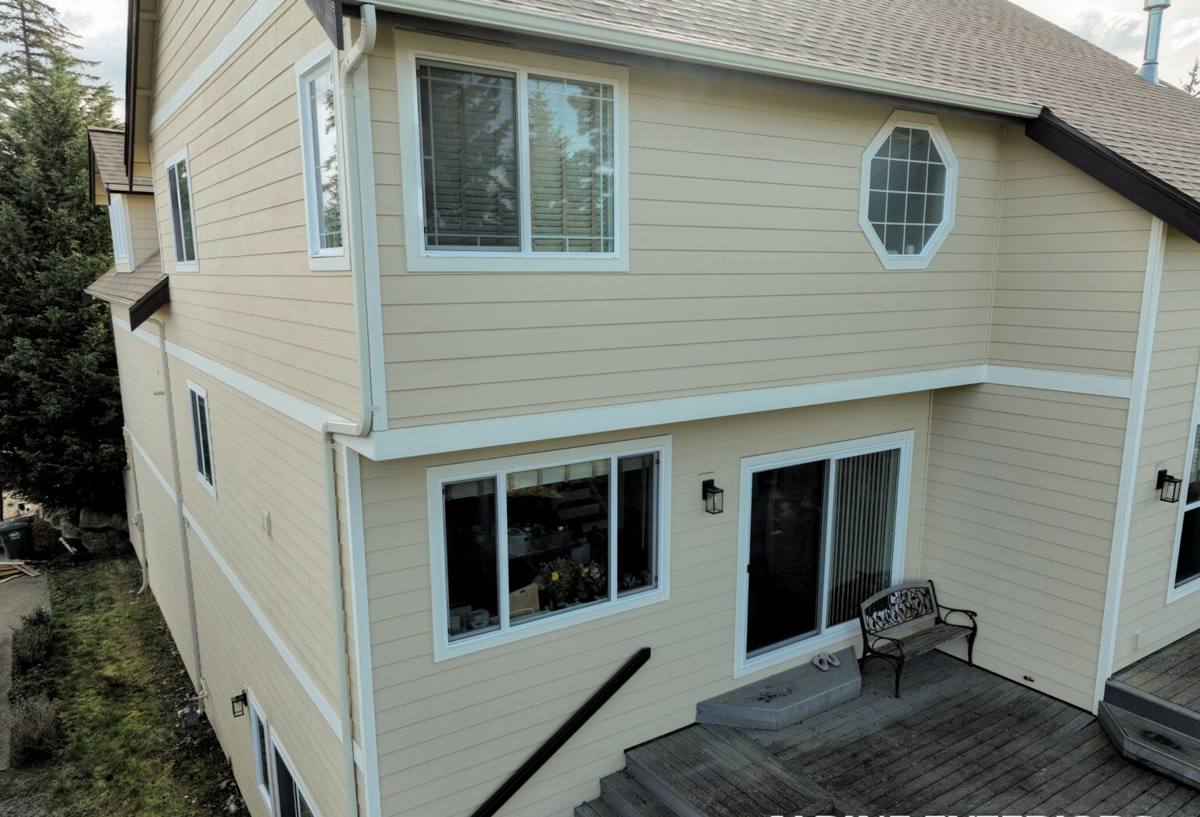
What Salt Air and Moisture Actually Do to a Deck
It helps to understand the specific failure points before talking about solutions.
- Salt air corrodes hardware. Standard coated screws and brackets can start rusting and staining boards within a few seasons this close to the water. Fastener choice matters more here than in drier parts of the county.
- Standing moisture feeds moss and algae. Any spot on a deck that stays damp longer than the rest — under debris, in shaded corners, where drainage is poor — becomes a moss magnet. On wood, that moisture cycle also accelerates rot underneath the surface.
- Wind-driven rain gets under things. Rain in this area doesn't just fall straight down; it blows sideways off the channel. That pushes water into board gaps, ledger connections, and stair stringers that a drier climate wouldn't stress the same way.
- UV and temperature swings cause expansion and contraction. Even with our relatively mild summers, decking materials move seasonally. Gaps and fastening patterns have to account for that movement or boards buckle, cup, or pull loose over time.
None of this means composite decking is maintenance-free — no exterior material truly is in a marine climate — but it does mean composite handles these specific stresses better than wood if it's specified and installed correctly.
Why Composite Makes Sense for La Conner Specifically
Moisture Resistance Without the Yearly Upkeep
Wood decking needs to be cleaned, brightened, and resealed on a regular schedule to keep moisture out — skip a year in this climate and you'll see it. Composite boards are engineered to resist moisture absorption, so they don't swell, cup, or splinter the way wood does when they sit wet for days at a time, which happens often here between October and April.
Better Resistance to Moss and Mildew Staining
Composite boards, especially capped versions, don't have the open wood grain that moss and algae spores latch onto as easily. That doesn't mean a composite deck never grows moss — anything horizontal and shaded in Skagit County can — but it's far easier to clean off a capped composite surface than to scrub and re-treat bare or stained wood.
No Structural Rot Risk
The real danger with wood decking near the water isn't the surface look, it's what happens underneath — joists, ledger boards, and fasteners that quietly rot or corrode while the top surface still looks fine. Composite decking removes that specific risk from the wearing surface, though the substructure underneath still needs the right materials and detailing regardless of what decking sits on top.
What a Correct Composite Deck Build Involves Here
A composite deck is only as good as what's underneath it and how it's fastened. In a climate like La Conner's, a few details matter more than they would elsewhere:
- Corrosion-resistant fasteners and hardware. Stainless steel or coated hardware rated for coastal/marine exposure, not standard interior-grade fasteners.
- Proper joist spacing for the specific composite board. Composite boards vary in their span ratings — some require tighter joist spacing than standard wood decking, especially on angled or picture-frame layouts.
- Ventilation and drainage under the deck. Airflow beneath the decking surface helps the substructure dry out between rain events instead of staying damp for days.
- Correct expansion gaps. Composite boards need consistent, manufacturer-specified gapping to handle seasonal movement without buckling or leaving fastener heads exposed.
- Flashing at the ledger board. Where the deck attaches to the house, proper flashing keeps wind-driven rain from working its way behind the board and into the wall assembly — one of the most common failure points on decks near the water.
- Hidden fastening systems where board profile allows. Reduces surface penetrations that can become weak points for water intrusion over time.
Skipping any of these to save time on installation is how a composite deck that should last decades starts showing problems in five or six years instead.
Comparing Decking Options for a Home Like Yours
| Factor | Composite (Capped) | Pressure-Treated Wood | Cedar |
|---|---|---|---|
| Moisture resistance | High | Moderate (needs sealing) | Moderate to good, needs upkeep |
| Maintenance routine | Occasional wash | Annual sealing/staining | Regular sealing/staining |
| Resistance to moss/algae staining | Good, easier to clean | Prone to staining if untreated | Prone to staining if untreated |
| Upfront cost | Higher | Lowest | Mid to high |
| Long-term cost (labor + materials over 20 yrs) | Lower | Higher | Higher |
| Structural rot risk over time | None on wearing surface | Present if maintenance lapses | Present if maintenance lapses |
Pressure-treated wood and cedar are both reasonable materials, and we install them when that's the right fit for a homeowner's budget or the look they want. The trade-off is honest: they cost less upfront and more over time, in both money and effort, especially in a climate this wet.
Boards and Fasteners We Consider for This Environment
We don't push one brand of composite decking as the only answer — what matters is matching board type to the specific site: sun exposure, proximity to the water, drainage, and how the homeowner plans to use the space. Generally, we favor capped composite boards over uncapped for this area, because the cap layer resists moisture absorption and staining at the surface better than uncapped composite, which can still take on water at cut ends and wear faster in a marine climate. We're glad to walk through the specific product lines and warranty terms available when we look at your project — that's a conversation worth having in person rather than a generic pitch here.
Our Process for a La Conner Deck Project
- On-site assessment. We look at sun exposure, drainage, proximity to the water, existing substructure condition (if this is a replacement), and how you actually use the space.
- Material and layout recommendation. We walk you through board options, framing requirements, and realistic cost ranges based on your specific site conditions — not a one-size-fits-all quote.
- Permitting. Deck work often requires a permit through the applicable jurisdiction; we handle that process so it doesn't fall on you.
- Substructure work. Framing, joists, ledger flashing, and drainage details get built or corrected to hold up under this climate's demands, whether or not they're visible in the finished product.
- Decking installation. Boards are installed with correct spacing, fastening, and expansion gaps for the specific product chosen.
- Final walkthrough. We go over basic care — what cleaning is needed, what to watch for, and how the warranty on your specific product works.
Basic Care for a Composite Deck in This Climate
- Sweep off leaves, needles, and debris regularly — anything that traps moisture against the board speeds up moss growth.
- Rinse the deck a few times a year with plain water; use a soft-bristle brush and a composite-safe cleaner for moss or algae spots rather than a pressure washer on high setting, which can damage the cap layer.
- Check that gaps between boards stay clear so water can drain through rather than pooling.
- Inspect visible fasteners and railing hardware once a year for early signs of rust or loosening.
- Trim back overhanging vegetation where possible to cut down on shade and debris buildup, both of which extend how long the deck stays damp after rain.
Why Hire a Crew That Already Works in This Area
A composite deck installed to spec in a drier, inland climate can still fail early in La Conner if the crew doesn't account for salt exposure, wind-driven rain, and the local moss season. We work throughout Anacortes and Skagit County, so we're not guessing at how this environment treats a deck over time — we've seen what fastener corrosion looks like at year three near the water, what happens when a ledger board isn't flashed correctly, and where moss tends to establish itself on a poorly drained deck. That local pattern recognition is part of what you're paying for when you hire a crew based here instead of one traveling in from outside the area.
If you're planning a new deck or replacing an aging one in La Conner, we're happy to take a look at your site and talk through honest options for your budget and the way you use the space. Fill out the form below for a free, no-pressure estimate.