 Anacortes Window
 Bow sits in that stretch of Skagit County where saltwater air off the Sound mixes with the wet, gray stretch of Pacific Northwest winters that can run six months or longer. Homes here take on a steady combination of salt-laden moisture, driving rain that comes in sideways off the water, and long stretches of shade and dampness that let moss and algae get a foothold on anything that stays wet. That combination is hard on siding in a way that drier inland climates never have to deal with.
Salt air accelerates corrosion on fasteners and trim metal. Driving rain finds every gap in a wall assembly that wasn't flashed correctly the first time. And moss doesn't just look bad — it holds moisture against a wall surface for weeks at a time, which is exactly the condition that rots wood trim, breaks down poor-quality composite siding, and feeds paint failure. A siding product and installation method that works fine in a drier part of the state can fail here in a fraction of the time.
Why We Install Only James Hardie in Bow
We install James Hardie fiber cement siding exclusively — not vinyl, not LP SmartSide, not Cemplank, not Allura, not primed spruce or cedar. That's not a marketing position, it's a decision made after weighing how each of those products actually performs in a climate like this one over twenty to thirty years, not just the first five.
A non-combustible, cement-based core
Hardie's siding is roughly ninety percent Portland cement, sand, and cellulose fiber. It doesn't support combustion the way wood-based sidings and some engineered wood products do, and it doesn't have the heat-sensitivity or impact vulnerability of vinyl. That fire resistance matters less for this particular location than it would on the dry side of the state, but the same cement composition is what gives the product its rot resistance and dimensional stability in wet weather — the fire performance and the moisture performance come from the same material choice.
A factory-applied finish, not a field-applied one
Field-applied paint is the weak point of almost every siding failure we get called out to inspect, regardless of brand. Hardie's ColorPlus finish is baked on at the factory in multiple coats before the boards ever reach a jobsite, which gives it far more consistent adhesion and UV resistance than paint applied on site in variable weather — something that matters in a place where dry, low-humidity painting windows don't come around as often as homeowners would like.
HZ5 engineering for this region
James Hardie makes climate-zone-specific product lines, and the HZ5 formulation is engineered for the wet, moderate-temperature conditions found throughout Western Washington. It resists moisture absorption and freeze-thaw cycling better than a one-size-fits-all product, and it's the version we install on every job in this area, Bow included.
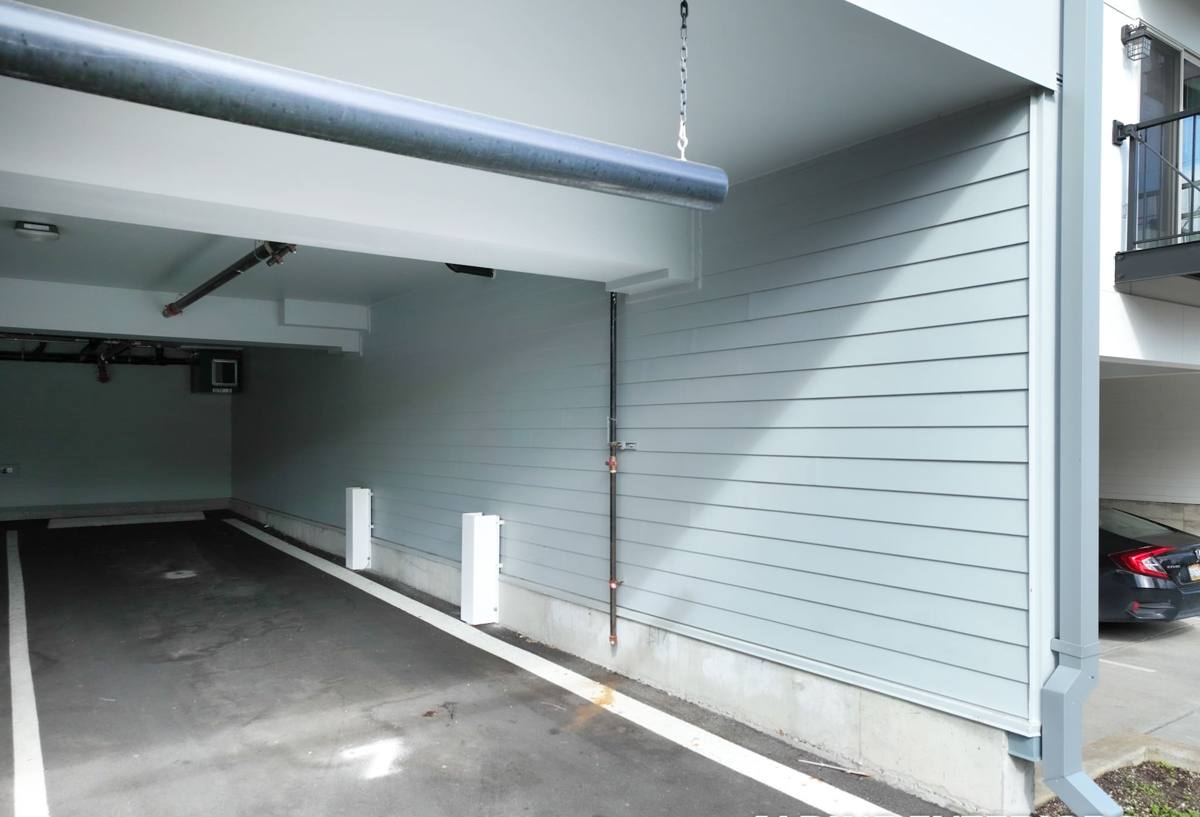
What a Correct Installation Requires in This Climate
The product only performs the way it's rated to perform if the installation follows manufacturer spec — and in a high-moisture area like this, the margin for error is smaller than it looks. A few details we treat as non-negotiable:
Clearance and drainage
Hardie's own installation instructions call for a minimum clearance between the bottom edge of the siding and the ground, roof lines, decks, and paved surfaces. Where moss and standing moisture are a year-round concern, we don't treat that clearance as a suggestion — it's the difference between siding that sheds water and siding that wicks it up from below for months at a time.
Flashing and the weather-resistive barrier
Every window, door, and penetration gets flashed and integrated with the weather-resistive barrier before a single piece of siding goes up. Driving rain off the water doesn't just hit a wall head-on — it gets pushed sideways and upward under trim and around openings, so the drainage plane behind the siding has to be continuous, not just the visible surface.
Fastening and joints
We follow Hardie's specified nailing pattern and fastener type rather than whatever happens to be fastest, and we treat butt joints and panel seams as a moisture risk, not a cosmetic detail. Joints that aren't backed and sealed correctly are one of the most common points where wind-driven rain gets behind the cladding.
Caulk and touch-up done in the right conditions
Trim caulking and any factory-finish touch-up at cut edges has to be done with the right products in weather that lets them cure properly, which in this area sometimes means scheduling around a dry stretch rather than rushing to finish on a fixed date.
How James Hardie Compares to the Alternatives
Homeowners in Bow often ask us to compare Hardie against other products they've seen quoted elsewhere. Here's the honest, practical comparison for this specific climate:
| Siding Material | Performance in Salt Air & Driving Rain | Factory Finish | Long-Term Maintenance |
|---|---|---|---|
| James Hardie fiber cement | Cement core resists moisture absorption and doesn't rot; holds up to repeated wetting | ColorPlus baked-on finish, warranted separately | Occasional cleaning; no recurring refinishing cycle if the finish is maintained |
| Vinyl siding | Won't rot, but can warp, crack, or turn brittle with age and doesn't manage trapped moisture behind it | Color runs through the panel but fades and chalks over time | Low upkeep, but faded panels are hard to color-match and impact damage is common |
| LP SmartSide (engineered wood) | Treated wood-strand core, but still moisture-sensitive at cut edges and joints if sealing isn't perfect | Primer requiring a topcoat, sensitive to installation quality | Edge sealing and caulk maintenance is ongoing and climate-critical |
| Cedar or primed wood siding | Natural material that absorbs moisture, especially in shaded, damp spots where moss forms | Field-applied paint or stain | Repainting or restaining on a shorter cycle, plus moss and mildew treatment |
Our Process for a Bow Siding Project
- On-site inspection of the existing siding, wall assembly, and any moisture damage already present
- Written scope covering tear-off, weather barrier repair or replacement, flashing details, and the specific Hardie profile and color
- Removal of old siding and inspection of sheathing for hidden rot before anything new goes up
- Weather-resistive barrier and flashing installed or repaired to current standards
- Hardie panels, planks, or shingle siding installed to manufacturer clearance and fastening specifications
- Trim, caulking, and touch-up finished, followed by a final walkthrough
What Affects the Cost of a Bow Siding Job
| Cost Factor | Why It Matters Here |
|---|---|
| Condition of existing sheathing | Homes with long-term moisture exposure sometimes need sheathing repair once old siding comes off, which isn't visible until tear-off |
| Siding profile (lap, panel, shingle) | Different Hardie profiles carry different material and labor costs, and some suit certain home styles better than others |
| Trim and detail work | Homes with more windows, dormers, or architectural detail require more flashing and cutting labor |
| Access and site conditions | Sloped lots, tree cover, and limited access can add setup time and equipment needs |
| Color and finish selection | Factory ColorPlus finishes carry a different cost than field painting after installation |
Living With Hardie Siding in a Moss-Prone Climate
Even the right siding needs a small amount of homeowner attention in a climate like this. None of it is difficult, but skipping it is how moss and grime get a head start.
- Rinse siding down at least once a year, more often on shaded or north-facing walls where moss tends to establish first
- Keep gutters clear so overflow doesn't run down the wall face and stay wet longer than the rest of the house
- Trim back shrubs and trees that keep siding shaded and damp, since airflow is what lets a wall dry out between rain events
- Check caulking at trim and joints every year or two and have any cracked or missing sections redone before water gets behind it
- Have a professional look at any soft spots, staining, or discoloration early rather than waiting for it to spread
Why a Crew That Already Works in Bow Matters
Siding installation isn't just about the product — it's about knowing how a specific area's weather actually behaves against a wall. A crew that regularly works Bow and the surrounding Anacortes and Skagit County area already knows which walls take the worst of the driving rain, where moss shows up first, and how much clearance actually holds up here versus what looks fine on paper. That local pattern recognition is what keeps a flashing detail or a clearance measurement from becoming a callback three years down the road, rather than a job that only looks right on the day it's finished.
If you're considering new siding for a home in Bow, we're happy to come take a look, walk the exterior with you, and put together a straightforward, no-pressure estimate — no obligation, just an honest read on what your home needs.