 Anacortes Window
 Guemes Island Roofs Face a Different Storm Than the Mainland
Guemes Island sits out in the current, separated from Anacortes by a short ferry ride, and that separation matters more than most homeowners realize until a storm rolls through. Island roofs take wind off open water with almost nothing to slow it down first — no ridgelines, no dense tree cover on the windward side of many properties, no neighboring buildings to break a gust before it hits your shingles or metal panels. Add in the salt air that comes with living this close to Skagit County's saltwater shoreline, near-constant driving rain through the fall and winter, and a moss season that runs longer here than it does twenty miles inland, and you've got a roof that ages differently than one in a sheltered subdivision.
None of that means Guemes Island roofs are doomed to fail early. It means storm damage repair here has to account for conditions a general contractor who mostly works in-town may not think about: corrosion-resistant fasteners, wind-driven rain intrusion at edges and penetrations, and a repair schedule that respects the ferry instead of fighting it.
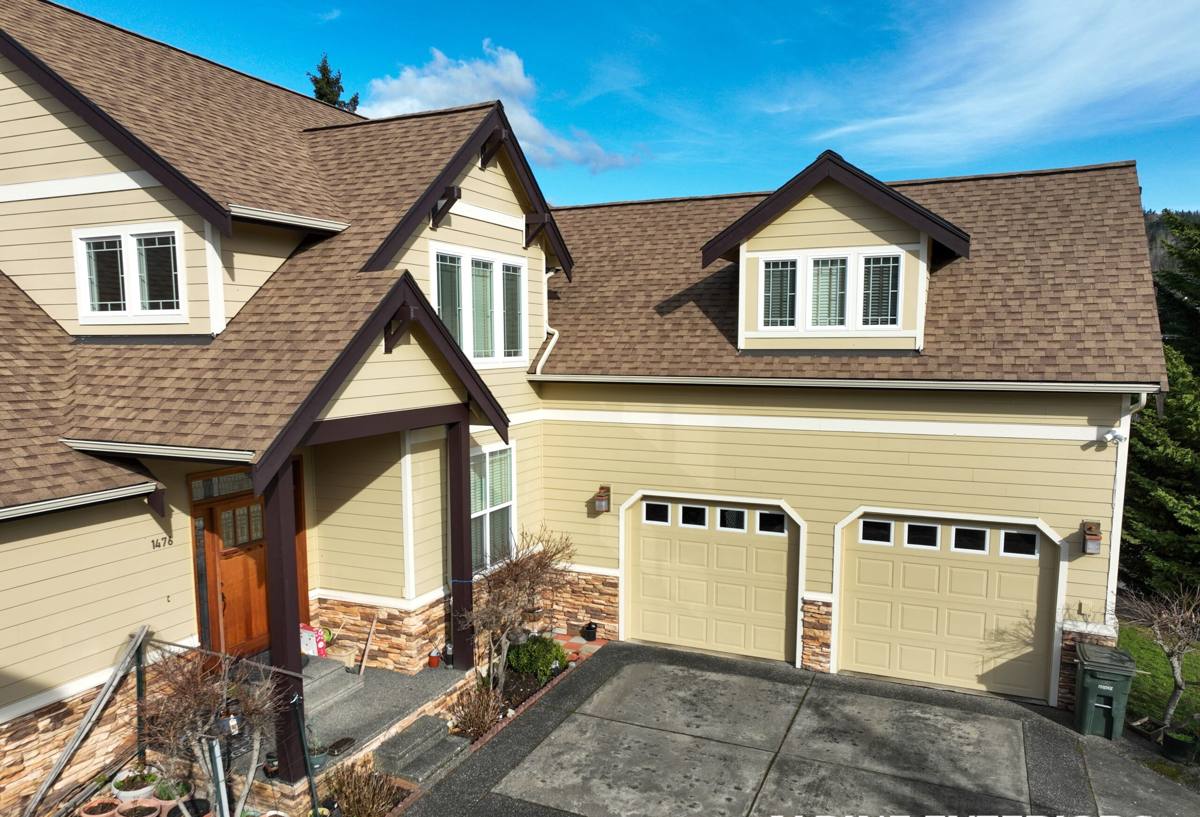
What Storm Damage Actually Looks Like on an Island Roof
Storm damage rarely announces itself with a hole in the ceiling. Most of what we find during a post-storm inspection on Guemes Island falls into a handful of categories, and catching them early is the difference between a patch and a full re-roof.
Wind Damage
Lifted or missing shingles along ridges, hips, and roof edges — the areas that take the brunt of uplift in a gust. On older three-tab shingle roofs we also see sealant strips that have simply fatigued from years of wind flex, which lets the next storm finish the job a prior one started.
Wind-Driven Rain Intrusion
This is the one that catches homeowners off guard. Rain doesn't need a missing shingle to get in — on an exposed island lot, sideways rain can work its way under flashing, around chimney and vent penetrations, or through nail holes that have backed out slightly. You often see the evidence indoors before you see it on the roof: a stain on a ceiling, a musty smell in an attic, or trim starting to swell near an exterior wall.
Debris Impact
Fir and cedar limbs come down in windstorms across the whole county, but on tree-lined island lots a falling branch can crack shingles, dent metal roofing, or puncture underlayment without leaving an obvious hole from the ground.
Flashing and Fastener Failure
Salt-laden air accelerates corrosion on any metal component that isn't rated for it — flashing, valley metal, exposed fasteners, and vent boots with metal collars. A storm often just finishes off a flashing seam that had already been quietly failing from salt exposure for a couple of seasons.
Getting a Crew to the Island: How Ferry Logistics Shape the Repair Process
Any honest roofer who works Guemes Island regularly will tell you the biggest practical difference isn't the roof itself — it's getting people, tools, and materials onto the island and off again on a fixed ferry schedule. A crew that doesn't plan around ferry timing ends up either wasting billable hours waiting for a sailing or, worse, cutting a repair short to make the last boat.
We plan Guemes Island jobs around the ferry from the start: materials staged and loaded in advance, crew and equipment scheduled for a single round trip whenever possible, and enough buffer built in that an unexpected complication — a rotted section of decking found under a shingle repair, for instance — doesn't turn into a half-finished roof sitting open overnight. For emergency tarp-and-dry-in work after a storm, that planning matters even more, since a temporary repair has to actually hold until the follow-up trip, not just look finished when the crew leaves.
What a Correct Storm Repair Actually Involves
A storm repair that's done right isn't just "replace what's obviously broken." It's an inspection process followed by a repair scoped to what the roof actually needs — no more, no less.
- Exterior inspection. A full walk of the roof surface, checking every ridge, hip, valley, and penetration, not just the area directly below the reported leak.
- Interior and attic check. Water travels sideways along rafters and sheathing before it shows up as a ceiling stain, so tracing intrusion back to its actual entry point matters more than treating the visible symptom.
- Underlayment and decking assessment. Once shingles or panels are pulled back at the damaged area, we check the condition of the underlayment and the roof deck underneath — soft or delaminated decking has to be replaced, not covered over.
- Matching materials. Repairs use materials that match the existing roof's type, profile, and where possible, color and age, so a patch doesn't stand out or create a mismatched wear pattern down the road.
- Flashing and fastener upgrade where it makes sense. If the damage was caused or worsened by corroded flashing or fasteners, we address that component directly rather than just re-covering it.
- Sealing and weatherproofing. All penetrations, edges, and seams touched during the repair get properly sealed and re-checked before the crew leaves.
- Final walkthrough and documentation. Photos and notes on what was found and what was repaired, useful both for your records and for any insurance claim.
Repair or Replace? What Actually Decides It
Not every storm-damaged roof needs to come off. But on a roof that's already near the end of its service life, storm damage is often the event that tips the decision. Here's how we weigh it.
| Factor | Leans Toward Repair | Leans Toward Replacement |
|---|---|---|
| Age of roof | Under 10-12 years | Nearing or past manufacturer's expected lifespan |
| Extent of damage | Isolated to one section or slope | Spread across multiple slopes or the whole roof |
| Decking condition | Solid, dry sheathing under the damaged area | Soft, delaminated, or repeatedly wet decking |
| Prior repair history | First or second repair on this roof | Multiple past repairs in different spots |
| Material availability | Existing shingle or panel style still matches available product | Discontinued product with no reasonable match |
| Salt/wind exposure pattern | Damage from a single storm event | Cumulative corrosion and wear across many seasons |
We'll always give you the honest read on which side of that table your roof falls, including when a repair is genuinely the right call and a full replacement would be overkill.
Salt Air, Moss, and the Long Game
Storm repair and long-term roof health aren't separate conversations on Guemes Island — they're the same conversation. Salt air accelerates corrosion on unprotected metal, which is why fastener and flashing choice matters more here than on a roof further inland. Moss, meanwhile, isn't just cosmetic. In this part of Skagit County, moss season runs long thanks to shade, moisture, and mild temperatures, and moss that's allowed to establish itself lifts shingle edges, holds moisture against the roof surface, and creates the exact conditions that let wind-driven rain get underneath a shingle it otherwise wouldn't have touched. A roof that's kept clear of moss buildup handles the next windstorm noticeably better than one that hasn't been maintained.
Because of that, part of an honest storm repair visit includes flagging moss growth, debris buildup in valleys, and clogged gutters even when they aren't the direct cause of the current damage — they're very likely to cause the next round.
What to Do Right After a Storm
What you do in the first day or two after a storm affects both how much damage spreads and how smoothly an insurance claim goes, if one is needed.
- Do a ground-level visual check for missing shingles, dented metal, or debris on the roof — don't climb up yourself, especially on a wet or windy day.
- Check the attic and ceilings for staining, dampness, or a musty smell, even if nothing looks wrong from outside.
- Photograph any visible damage and any debris (fallen limbs, displaced shingles found in the yard) before cleanup.
- Cover any active leak from the inside with a container or tarp to limit interior damage while you wait for inspection.
- Avoid DIY roof patches with tape or sealant products not rated for roofing — they rarely hold and can complicate a later professional repair.
- Call for an inspection promptly; a small intrusion point left open through another storm cycle gets expensive fast.
Documentation and Insurance
Most storm damage claims move faster when the damage is well documented before repairs begin. Our inspection includes dated photos of the affected areas, a written description of what we found, and our assessment of likely cause — wind, impact, or age-related failure exposed by the storm. We're happy to work directly with your insurance adjuster's timeline and provide documentation they request, though the claims decision itself is always between you and your carrier.
Why Hiring a Crew That Already Works Guemes Island Matters
A contractor who's never worked the island learns all of this on your job — the ferry schedule, the wind exposure on a waterfront lot, which fastener and flashing choices actually hold up to salt air, how long moss really takes to become a problem here. That learning curve costs you time, and on a storm repair, time is exactly what you don't have while a roof is compromised.
We schedule Guemes Island storm repairs around the ferry as a matter of routine, not as a special accommodation. We know what a correctly executed temporary repair looks like when a crew has to leave the island before a permanent fix is possible, and we know which materials are worth the extra cost here because they'll actually outlast the ones that aren't rated for salt exposure. That familiarity translates into fewer surprises, fewer return trips, and a roof repair that's built for the conditions it actually has to survive.
Get a Free, No-Pressure Estimate
If your Guemes Island roof took a hit in a recent storm — or you're not sure whether what you're seeing is storm damage or just wear that's finally catching up with the roof — we're glad to take a look. Fill out the form below for a free estimate with no pressure to move forward until you're ready.