 Anacortes Window
 Why Guemes Island Roofs Wear Differently
A roof on Guemes Island doesn't age the same way one does twenty miles inland. The island sits fully exposed to Rosario Strait and Bellingham Channel, which means salt-laden air moves across every roof plane pretty much constantly. Add the driving rain that comes sideways off the water during winter storms, near-constant shade on north-facing slopes from mature fir and cedar cover, and a moss season that can run eight or nine months out of the year, and you've got a roof environment that punishes shortcuts. We've replaced roofs on the island that looked fine from the ground but had soft decking, corroded fasteners, and moss root systems working into the shingle mat underneath. None of that shows up until you're standing on it.
A correct new roof installation out here isn't just "put shingles on a house." It's choosing materials and details that specifically account for salt exposure, wind-driven moisture, and shade-driven moss growth — and installing them in a way that holds up to all three at once.
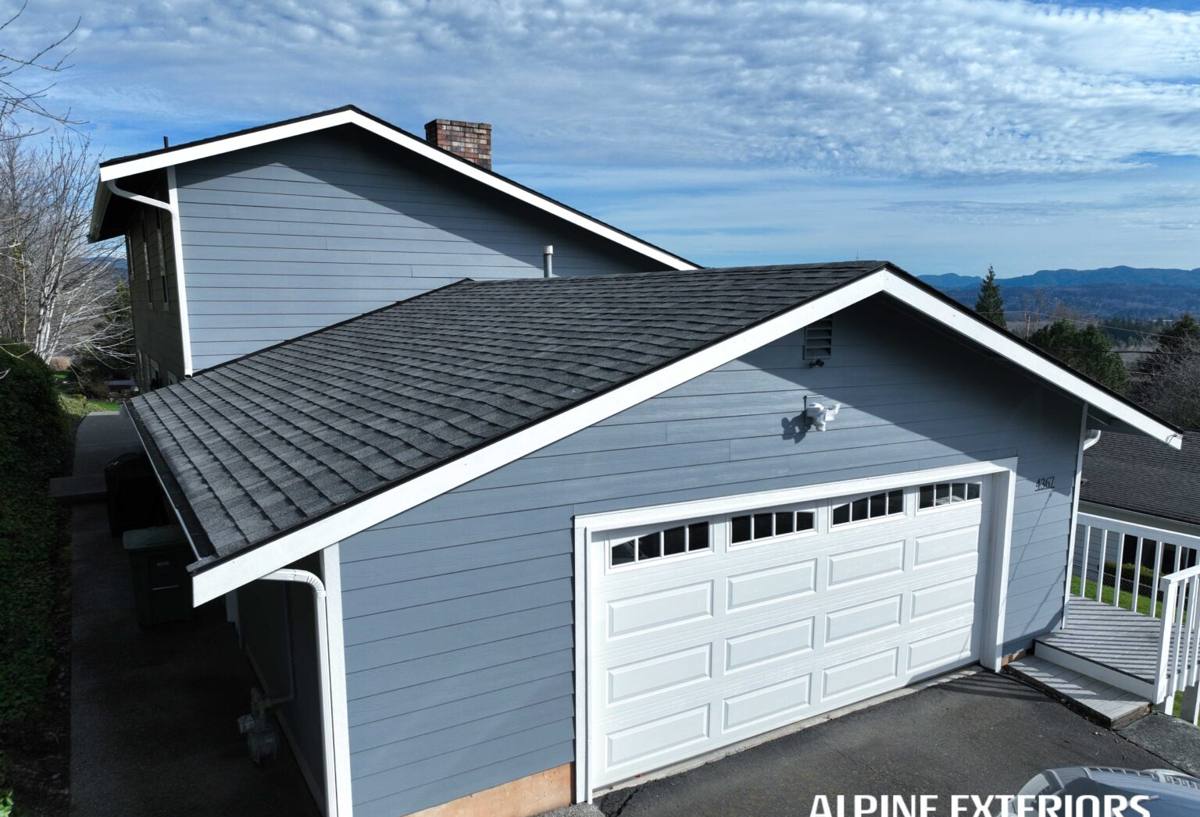
What Salt Air, Rain, and Moss Actually Do to a Roof
Salt Air
Airborne salt accelerates corrosion on any exposed metal — nail heads, flashing, drip edge, and vent housings. Cheaper galvanized fasteners can start showing rust streaks in a few years on the island; that streaking is often the first visible sign that fastener corrosion is underway underneath the shingles too.
Driving Rain
Wind-driven rain doesn't just fall straight down — it gets pushed sideways and even upward under shingle edges, around chimneys, and at wall-to-roof transitions. A roof that would be watertight in a calmer inland location can leak on Guemes Island if flashing details and underlayment laps aren't built for wind-driven water.
Moss
Moss needs shade and moisture to establish, and a lot of Guemes Island lots have both in abundance. Moss holds water against the roof surface long after rain stops, and its root structure works into shingle granules and seams over time. Left unchecked for years, it shortens the service life of even a good roof.
Getting a Crew and Materials to the Island
Guemes Island is only accessible by the Skagit County ferry, and that changes how a roofing job needs to be planned — not just how it's built. Material deliveries, dumpster drop-off and pickup, and crew scheduling all have to work around ferry sailing times, seasonal ferry schedule changes, and weather days that can back up the whole timeline. A crew that already works the island builds ferry logistics into the estimate from the start: staging materials in the right order, minimizing the number of round trips, and communicating realistic timelines instead of promising a mainland-style schedule that ferry access won't actually allow.
This matters more than it sounds like. Crews unfamiliar with island logistics tend to underbid the time and trip cost, then either eat the loss (and cut corners to make it back) or hit the homeowner with change orders mid-project. Neither outcome serves you.
What a Correct New Roof Installation Involves
A full roof replacement is a sequence of steps, and skipping or rushing any one of them is where problems start — especially in a climate like this one.
- Tear-off: complete removal of old roofing material down to the deck, never installed over existing layers.
- Deck inspection: checking every sheet of sheathing for soft spots, delamination, or rot, particularly around valleys, chimneys, and eaves where water tends to sit longest.
- Deck repair: replacing any compromised sheathing before anything new goes down — this is non-negotiable on a coastal, high-moisture site.
- Ice and water shield: self-adhering waterproof membrane at eaves, valleys, and roof penetrations, sized generously given how far wind-driven rain can push water uphill.
- Synthetic underlayment: a full water-resistive layer across the remaining field, properly lapped for the prevailing wind and rain direction.
- Flashing: new metal flashing at every wall, chimney, skylight, and roof-to-roof transition — old flashing rarely gets reused correctly, and corrosion from salt air is exactly why.
- Field material installation: shingles, metal panels, or another chosen material, installed to manufacturer spec and nailing pattern.
- Ventilation: intake at the eaves and exhaust at the ridge, balanced correctly for the attic volume.
- Final detailing: ridge caps, pipe boots, and a full site cleanup including magnetic nail sweep.
Choosing a Roofing Material for This Environment
There's no single "best" roofing material for every Guemes Island home — it depends on roof pitch, budget, tree cover, and how the home is oriented to the water. What matters is understanding the honest trade-offs for each option in a salt-air, high-moss environment.
| Material | Salt Air Behavior | Moss Resistance | Maintenance Burden |
|---|---|---|---|
| Architectural asphalt shingle | Good with quality fasteners and flashing; standard choice | Moderate — benefits from algae-resistant granules | Periodic moss/debris removal recommended |
| Standing seam metal | Very good with coated fasteners and proper coastal-rated finish | High — sheds moisture fast, little for moss to grip | Low; occasional gutter and fastener check |
| Cedar shake | Moderate; needs consistent maintenance near salt air | Low without regular treatment | High — regular cleaning and treatment needed |
| Composite/synthetic shake | Good; engineered for moisture resistance | Moderate to high depending on product | Low to moderate |
We'll walk through which option fits your specific roof during the estimate — pitch, shade coverage, and how long you plan to stay in the home all factor into the honest recommendation.
Ventilation: The Part Homeowners Don't See but Always Feel
A new roof is only as good as the ventilation underneath it. In a marine climate like Skagit County, an under-ventilated attic traps moisture, which condenses on the underside of the decking and can rot it from the inside — the opposite direction most people worry about. Balanced ventilation, meaning enough intake at the soffits to match the exhaust at the ridge, keeps that moisture moving out instead of settling. We size and correct ventilation on every install rather than assuming the existing setup was adequate, because on older island homes it frequently wasn't.
Our Process, Start to Finish
- On-site evaluation of the current roof, decking, and ventilation, including photos of anything hidden from ground level
- A written estimate that accounts for ferry logistics, material lead time, and a realistic weather-dependent schedule
- Permitting handled through Skagit County before work begins
- Material delivery staged and timed to ferry sailings to avoid mid-project delays
- Full tear-off and deck inspection with photos of any repairs needed, reviewed with you before proceeding
- Installation following manufacturer specification for wind and moisture exposure, not just minimum code
- Final walkthrough covering ventilation, flashing details, and warranty paperwork
What Drives the Cost of a Guemes Island Roof
| Factor | Why It Matters Here |
|---|---|
| Roof size and pitch | Steeper pitches take longer and require more fall protection setup |
| Number of existing layers | Extra tear-off time and disposal weight |
| Deck condition | Rot from long-term moisture or moss adds repair cost that can't be known until tear-off |
| Material choice | Metal and composite options generally cost more upfront, less in long-term maintenance |
| Ferry and logistics | Trip scheduling and material staging add time not present on mainland jobs |
| Access and tree cover | Limbing back branches or complex staging near dense tree cover adds labor |
Rather than quoting a number before seeing the roof, we give a realistic range at estimate and firm it up once tear-off exposes the actual deck condition — that's the only honest way to price a roof in this environment.
Keeping a New Roof Performing Once It's In
- Clear debris from valleys and gutters at least twice a year — fall and late winter, given the tree cover common on the island
- Have moss growth treated before it establishes a root structure, not after it's visibly thick
- Check flashing and pipe boots annually for early signs of salt-related corrosion
- Keep overhanging branches trimmed back to reduce shade and debris buildup
- Schedule a professional inspection every few years, especially after major windstorms
None of this is difficult, but it does need to actually happen. A new roof installed correctly for this climate will still age faster than it should if basic upkeep gets skipped for years at a time.
Why a Crew That Already Works Guemes Island Matters
Roofing companies that treat the island as a rare, one-off job tend to underestimate what it takes to get there, stage materials properly, and detail a roof for salt air and driving rain. We've built our scheduling, our material handling, and our installation details around what actually holds up out here — not around a generic mainland job. That experience shows up in fewer callbacks, more accurate estimates, and a roof that's actually built for the conditions it has to survive.
If you're weighing a new roof for your Guemes Island home, we're happy to come out, take a real look at the roof and attic, and give you a straightforward assessment — no pressure, no inflated urgency. Use the form below to request a free estimate.