 Anacortes Window
 Window Replacement Built for Flounder Bay's Marine Climate
Flounder Bay sits close enough to the water that its homes take a different kind of weather beating than houses further inland in Skagit County. Salt-laden air, wind-driven rain off Rosario Strait, and a wet season that stretches long enough to grow moss on nearly anything that holds moisture — these aren't abstract concerns for the windows on a Flounder Bay home. They're the reason a window that performs fine in a drier climate can fail early here, and the reason window replacement in this neighborhood needs to be approached differently than a generic swap-and-go job.
We work Anacortes regularly, and Flounder Bay specifically has its own personality: a mix of older homes with original single-pane or early dual-pane units, newer construction with vinyl windows nearing the end of their seal life, and everything in between. What ties them together is exposure. Whether a home sits with a water view or just a few blocks back, it's still inside the same salt-air envelope that accelerates corrosion on hardware, degrades weak seals, and gives mold and mildew a head start on any wood that isn't properly protected.
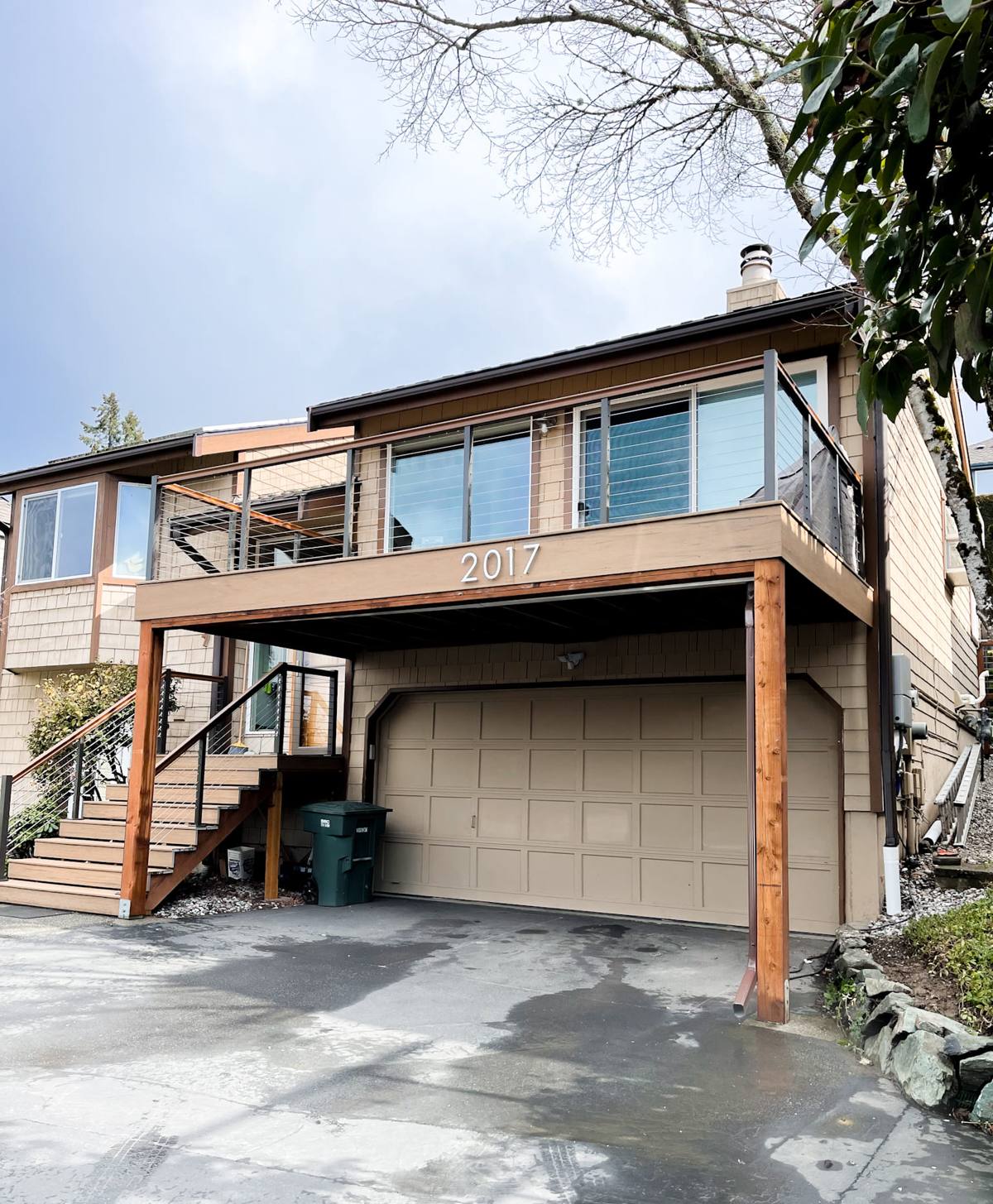
What Salt Air and Driving Rain Actually Do to Windows
It helps to understand the specific damage mechanisms at play, because they shape what "correct installation" means out here.
Salt Air and Metal Components
Aluminum and steel hardware — hinges, latches, balance systems, screws — corrode faster near salt water. Once corrosion starts on a window's moving parts, operation gets stiff, locks stop seating properly, and that's often the first visible sign that a window's hardware life is winding down, well before the glass or frame shows any problem.
Wind-Driven Rain and Water Intrusion
Rain that comes in sideways off the water tests flashing, sill pans, and sealant joints in ways that straight-down rain doesn't. A window that's watertight in calm conditions can still leak under sustained wind pressure if the flashing details weren't done right at installation. This is one of the most common sources of hidden water damage we find when we open up an old window opening.
Moss, Mildew, and Prolonged Dampness
Anacortes' long wet season means anything that stays damp — wood sills, cladding around a window opening, gasket material — has extended time to grow moss, algae, or mildew. On windows themselves this shows up as black staining in corners, soft or discolored wood trim, and gaskets that degrade and lose their seal faster than the manufacturer's rated lifespan would suggest.
Signs a Flounder Bay Home Needs Window Replacement
- Visible fogging or moisture between panes — the seal has failed and the insulating gas is gone
- Windows that are hard to open, close, or lock, especially after damp weather
- Cold drafts near the frame even when the window is fully closed
- Soft, discolored, or spongy wood at the sill or jamb
- Visible corrosion or pitting on hinges, latches, or balance hardware
- Black staining or persistent mildew smell in the window corners
- Noticeable rise in heating costs without another clear cause
- Condensation forming on the interior glass regularly in cooler months
Any one of these on its own might not mean immediate replacement, but two or three together — especially hardware corrosion paired with a failed seal — usually means the window has moved from "monitor it" to "replace it" territory.
What a Correct Replacement Job Involves Here
Window replacement isn't just popping in a new unit where the old one sat. In a marine-exposure area like Flounder Bay, several steps matter more than they would in a drier, more sheltered location.
Inspecting the Rough Opening
Before anything new goes in, we check the opening itself — sill, jambs, header — for hidden water damage. Salt air and driving rain often cause damage that isn't visible from the interior trim. If the sheathing or framing underneath has been compromised, that gets addressed before a new window ever goes in, not covered over.
Flashing and Water Management
Proper flashing integration — sill pan, side flashing, head flashing that sheds water outward and down — is what actually keeps wind-driven rain out over the long term. This is the step that's easiest to shortcut and the most consequential to get right in a location that catches weather off the water.
Material Selection for Salt Exposure
Hardware and frame materials matter more here than in a sheltered inland lot. We steer homeowners toward corrosion-resistant hardware and frame systems that hold up under salt exposure, and we're candid about the maintenance trade-offs of different materials rather than overselling any one product.
Sealing and Insulation
Proper air sealing around the new frame — using the right sealant and insulation for the gap, not just spray foam everywhere — keeps drafts out and prevents the kind of moisture-trapping installation mistakes that lead to problems a few years down the road.
Choosing Windows That Hold Up in a Marine Climate
Not every window product marketed as "energy efficient" is built with salt air and coastal moisture in mind. Here's how the common options generally compare for a property in Flounder Bay's exposure conditions.
| Frame Material | Salt Air Performance | Maintenance | Typical Trade-Off |
|---|---|---|---|
| Vinyl | Good — doesn't corrode or rot | Low | Limited color/finish options; can expand/contract with temperature swings |
| Fiberglass | Very good — dimensionally stable, corrosion-resistant | Low | Higher upfront cost than vinyl |
| Aluminum-clad wood | Fair to good if properly sealed and maintained | Moderate to high | Wood core still vulnerable if cladding or seals are breached |
| Bare wood | Poor without diligent upkeep | High | Attractive appearance but highest moisture risk in this climate |
| Standard aluminum (uncoated) | Poor — prone to corrosion and condensation | Moderate | Thermal performance also lags other options |
We don't push one material on every job. The right call depends on the home's style, budget, and how exposed the specific elevation is to weather off the water. What we won't do is install a product we know is a poor match for this climate just because it's cheaper up front — that's a decision we'll walk through honestly with you, including the maintenance commitment each option carries.
Our Process for a Flounder Bay Window Replacement
- On-site assessment — we look at each window's exposure, current condition, and the framing underneath, not just the visible glass and frame
- Honest scope and options — we explain what's actually needed versus what's optional, with real cost factors, not a one-size-quote
- Material and product selection — matched to the home's exposure level, style, and your budget
- Careful removal — old units come out without unnecessary damage to surrounding siding or trim
- Opening repair if needed — any hidden rot or water damage gets fixed before the new window goes in
- Installation with proper flashing and sealing — the water-management details that matter most in this climate
- Final check — operation, seal, and finish work verified before we call the job done
Cost Factors for Window Replacement in This Area
Every home is different, so we won't quote a number without seeing the job, but a few factors consistently drive cost up or down for Flounder Bay projects specifically:
| Factor | Why It Affects Cost |
|---|---|
| Number and size of windows | More units and larger openings mean more material and labor |
| Hidden water or rot damage | Discovered damage at the opening requires repair before installation |
| Frame material chosen | Fiberglass and specialty corrosion-resistant hardware cost more than standard vinyl |
| Exposure level of the elevation | Water-facing walls often warrant more robust flashing and materials |
| Trim and siding condition | Deteriorated exterior trim around the opening adds repair scope |
| Access and site conditions | Upper-story or hard-to-access windows take more time and equipment |
Why a Local Crew Matters for This Neighborhood
A crew that works Anacortes regularly, and Flounder Bay in particular, has already seen how homes in this exposure zone age. That means knowing which signs of hardware wear are early warnings versus normal use, understanding how the local wet season affects timing and sequencing of exterior work, and being straightforward about what's really going on with your windows instead of guessing based on a generic climate assumption. It also means we're a known, reachable presence in Skagit County if a question comes up after the job is done — not a crew that drove in from out of the area and won't be back.
Maintaining New Windows in a Salt Air, High-Moisture Climate
Even a well-installed window benefits from some basic upkeep in this environment. A short annual routine goes a long way:
- Rinse frames and hardware periodically to reduce salt buildup, especially on water-facing elevations
- Check and lubricate moving hardware — locks, hinges, balance systems — to keep salt-related stiffness from setting in
- Inspect exterior caulking and sealant lines each year and touch up before gaps develop
- Keep gutters and drainage clear near window openings so water isn't pooling against the frame
- Watch for early moss or mildew on sills and trim and clean it before it spreads
None of this is heavy maintenance, but skipping it is exactly how a good window's lifespan gets cut short in a climate like this one.
Get a Straightforward Estimate
If you're noticing drafts, stiff hardware, fogged glass, or just have an aging set of windows on a Flounder Bay home, it's worth having someone look at them who understands what this specific climate does to a window over time. We offer free, no-pressure estimates — use the form below to get one scheduled.