 Anacortes Window
 Windows Built for Flounder Bay's Marine Exposure
Flounder Bay sits close enough to the water that homes here take a different kind of weathering than houses a few miles inland. Salt-laden air off the marina and the strait works its way into every gap, seam, and fastener on a house. Add Skagit County's long wet season and the shade-and-moisture combination that grows moss on anything that stays damp too long, and you've got a climate that is genuinely tougher on windows than most manufacturers design for. Window installation in this pocket of Anacortes isn't just about picking a style and cutting a hole in the wall — it's about understanding how salt, rain, and moss behave against a specific product over ten or twenty years, not just on install day.
We work on homes throughout Anacortes and Skagit County, and Flounder Bay is one of the areas where we see the clearest difference between a window installed correctly for coastal exposure and one that was installed the same way you'd do it in a dry inland subdivision. The gap shows up in year three or four, usually as soft trim, a fogged pane, or a sash that won't seal anymore.
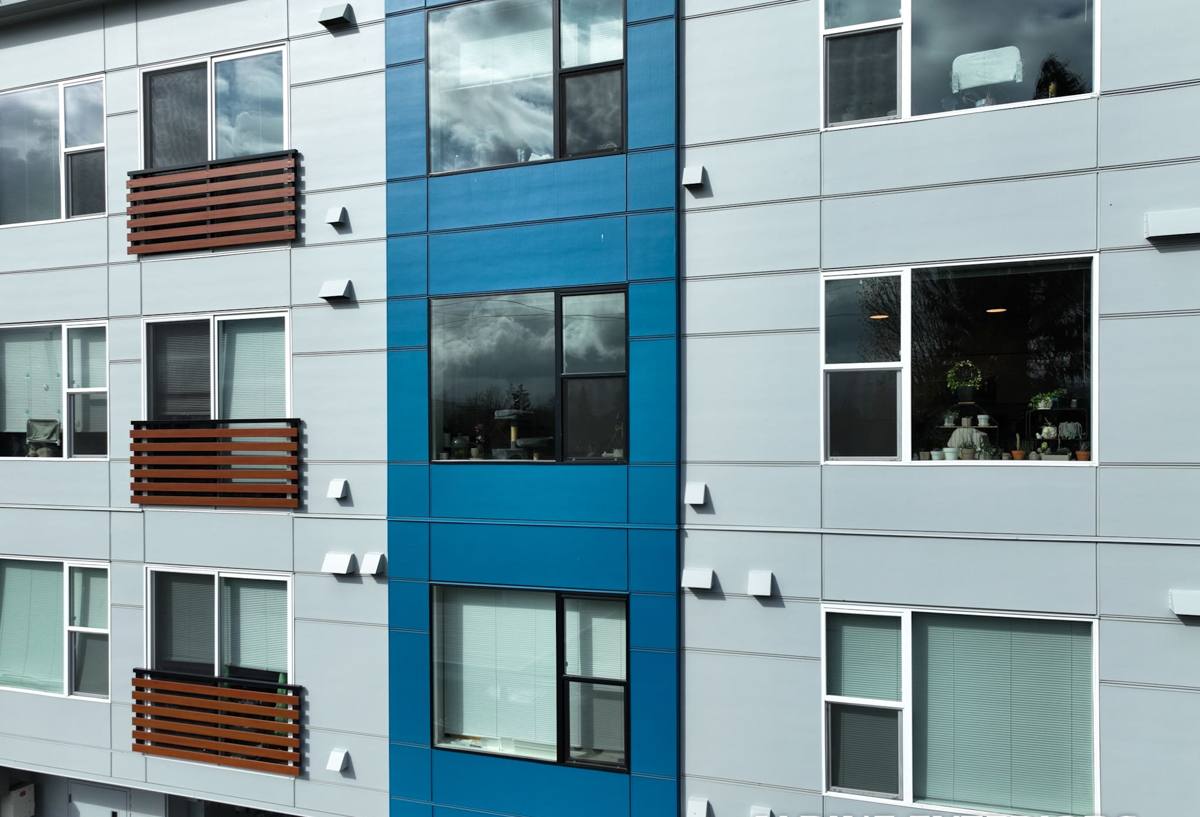
What Salt Air, Driving Rain, and Moss Actually Do to a Window
Salt Air
Airborne salt is corrosive to unprotected metal hardware — hinges, locks, balance systems, and screws. On homes close to the water, we see corrosion on cheaper hardware sets years before it would show up inland. It's not dramatic; it's a slow stiffening of the lock, a squeak in the hinge, a crank handle that starts to bind. By the time it's obvious, the hardware usually needs replacing.
Driving Rain
Wind off the water doesn't just fall as rain, it drives sideways into window assemblies, testing flashing and sealant details that a calm-weather install might get away with skipping. A flashing detail that's "good enough" in a sheltered inland lot can fail on a wall that regularly takes wind-driven rain straight on. Water intrusion around windows is one of the most common sources of hidden rot we find in older coastal-exposed homes.
Moss and Sustained Moisture
Long wet seasons and shaded exterior walls keep wood trim and sills damp for extended stretches. That's exactly the condition moss and mildew need to take hold. Once moss establishes on sills or trim, it holds moisture against the wood continuously, which accelerates rot even where the window itself is sound.
Signs Your Current Windows Are Losing the Battle
- Sash that's hard to open, close, or lock — often the first sign of hardware corrosion or frame swelling
- Fogging or moisture between panes on double- or triple-glazed units (a failed seal)
- Soft, discolored, or spongy wood at the sill or bottom corners of the frame
- Visible moss, algae, or dark streaking on the sill or exterior trim
- Drafts or a cold spot near the window even when it's fully closed
- Paint or finish that's peeling or bubbling specifically around the window opening
- Noticeably higher heating bills in a room with older single-pane or early dual-pane windows
Any one of these on its own might just mean a repair. Several together, especially on a wall that faces the water or prevailing wind, usually means it's time to talk about replacement before the surrounding wall framing gets involved.
What a Correct Installation Involves in This Climate
The window unit itself is only part of the job. The install detailing around it is what determines whether a home stays dry for the next twenty years or starts showing rot in five. For Flounder Bay and similar exposed Anacortes locations, a correct installation includes:
- Removing and inspecting the old window opening — checking the sill, header, and jack studs for hidden water damage before anything new goes in
- Proper flashing sequence — sill pan flashing, side flashing, and head flashing installed in the right shingle-lap order so water sheds outward, not into the wall cavity
- Quality sealant at the right joints only — sealing the outside perimeter while leaving a drainage path at the sill so any water that does get behind the siding can escape instead of pooling
- Correct shimming and squaring — a window that's out of square stresses the sash and hardware from day one, which shows up as premature wear
- Insulating the gap around the frame — without overpacking, which can bow the frame and cause operational problems
- Interior and exterior trim work — sealed and finished so moisture can't wick into the trim from either side
Skip any one of these steps and the window can still look fine on install day. The problems that show up from a rushed or generic install usually take a full wet season or two to surface — which is exactly why the installation crew's experience with this specific climate matters more here than in a dry inland market.
Choosing Frame Materials for a Coastal Skagit County Home
Frame material matters more here than in most parts of the county. Here's how the common options hold up against salt air, sustained moisture, and moss exposure:
| Frame Material | Coastal/Salt Air Performance | Maintenance Needs | Notes |
|---|---|---|---|
| Vinyl | Good — won't corrode or rot | Low; occasional cleaning | Most common choice for Flounder Bay replacements; good value |
| Fiberglass | Very good — dimensionally stable, resists warping | Low | Higher upfront cost, holds up well to temperature and moisture swings |
| Aluminum | Fair — needs a marine-grade finish to resist corrosion | Moderate | Conducts cold; less common for residential in this climate |
| Wood | Poor without diligent upkeep — prone to rot in sustained damp | High; regular painting/sealing | Classic look, but the maintenance burden is real this close to the water |
| Wood-clad (wood interior, vinyl/aluminum exterior) | Good on the exposed side | Low-moderate | Interior wood look with exterior protection; a common compromise |
We don't push one brand or material on every job. The right call depends on your home's exposure, your budget, and how much upkeep you actually want to do. A wall that takes direct wind-driven rain off the water is a different conversation than a sheltered wall on the same house.
Hardware and Glass Considerations
For homes in this area, we favor hardware with corrosion-resistant coatings over standard finishes — it costs a little more up front and pays for itself in years of smooth operation. On glass, a quality dual-pane unit with a warm-edge spacer performs well here; the spacer material affects how well the seal holds up to temperature swings and humidity over time, which is directly relevant given how much moisture this area sees.
Our Installation Process
- On-site assessment — we look at the existing windows, the wall assembly where visible, and the specific exposure of each elevation (which walls take the worst of the wind and rain)
- Honest recommendation — replacement windows sized and specified for what that wall actually faces, not a one-size answer for the whole house
- Written estimate — clear pricing with no vague allowances
- Careful removal — protecting interior finishes and inspecting the opening as we go
- Correct flashing and sealing — done to the sequence described above, every time, not just on the walls that show
- Final check — operation, seal, and cleanup before we call it done
What Affects the Cost of a Window Installation Here
| Factor | Why It Matters in Flounder Bay |
|---|---|
| Frame material | Fiberglass and quality vinyl cost more than basic vinyl but need less upkeep against salt exposure |
| Number of windows facing prevailing wind/rain | Exposed elevations may warrant a higher-spec window than sheltered ones |
| Condition of the existing opening | Hidden rot found during removal adds repair work before the new window goes in |
| Window size and configuration | Larger units, custom shapes, or multi-panel assemblies cost more than standard single units |
| Trim and siding tie-in | Matching existing trim profiles or siding cuts adds labor |
| Access and site conditions | Upper-story or hard-to-access windows take more time and equipment |
We give real numbers during the in-person estimate, not a phone quote — every home and every wall's exposure is a little different, and we'd rather look before we price.
Why Local Experience in This Specific Area Matters
A crew that mostly works dry, sheltered, inland jobs can install a window that looks perfect and still fails early on a wall that faces open water. Knowing how hard the wind drives rain on a given elevation, which flashing details actually hold up through an Anacortes winter, and where moss tends to take hold on local homes isn't something you learn from a manual — it's something you learn by working this specific stretch of Skagit County, season after season. That local knowledge is the difference between a window that looks good on install day and one that's still performing well a decade later.
If your windows in Flounder Bay are showing any of the wear signs above, or you're planning ahead before the next wet season, we're happy to come take a look. Reach out for a free, no-pressure estimate — we'll walk the exterior with you, tell you honestly what we see, and give you real numbers before you decide anything.