 Anacortes Window
 Why Flounder Bay Homes Wear Out Siding Faster
Flounder Bay sits right up against the water on Fidalgo Island, and that proximity is exactly what makes siding replacement here different from a job inland in Mount Vernon or Burlington. Homes in this part of Anacortes take on salt-laden air coming off the bay, near-constant moisture from marine fog and driving rain, and long stretches of shade and dampness that keep moss and algae established on north- and west-facing walls for much of the year. None of that is unique to any one house — it's the baseline condition for anyone living this close to the water in Skagit County.
Salt air is corrosive to fasteners and trim metal, and it accelerates the breakdown of coatings that aren't built for it. Combined with wind-driven rain that gets pushed sideways into wall assemblies during winter storms, siding here has to do more than look good — it has to manage water at every seam, corner, and penetration, year after year, without babysitting.
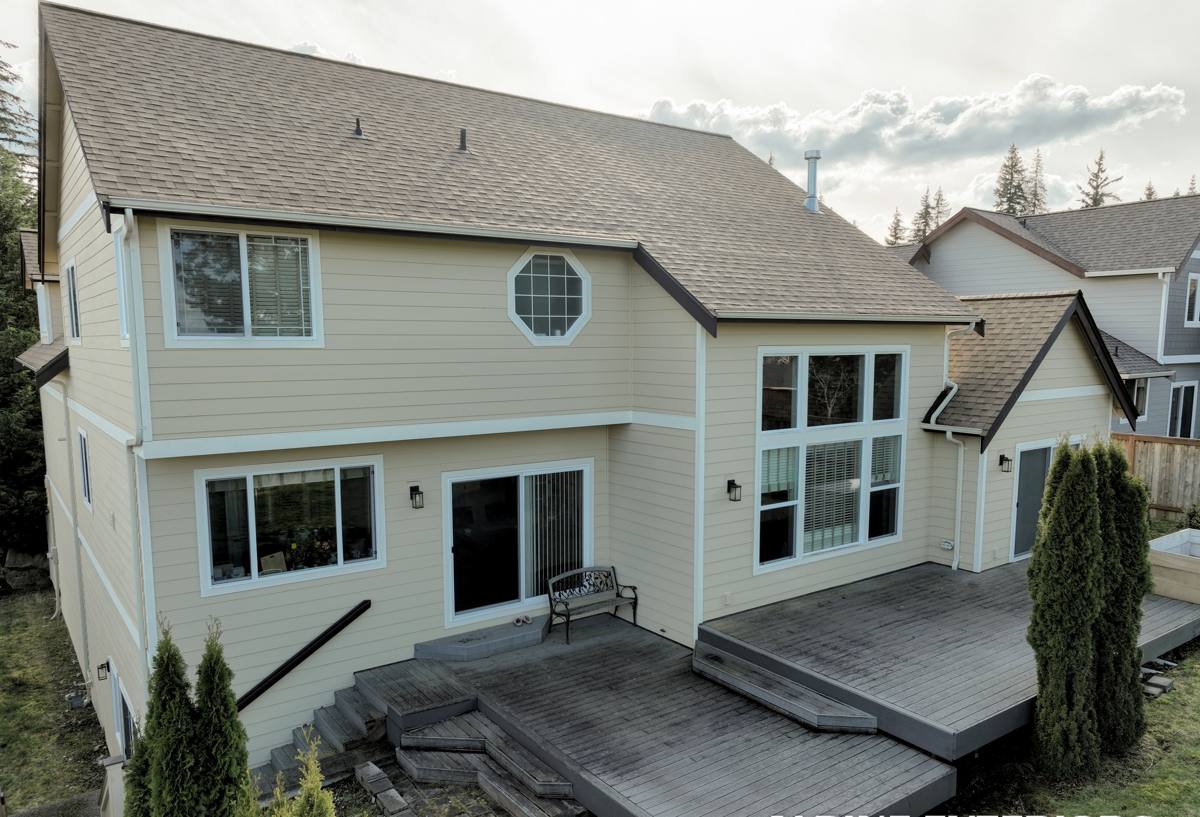
How the Climate Actually Damages Siding
It helps to understand the specific failure patterns we see on Flounder Bay homes, because they explain why some siding materials hold up here and others don't.
Moisture Intrusion Behind the Cladding
Wind-driven rain doesn't just hit the face of a wall — it gets forced into laps, seams, and fastener penetrations under pressure. If the water-resistive barrier, flashing, and siding material behind it aren't working together correctly, moisture tracks inward and sits against the sheathing. On a waterfront lot with near-constant humidity, that trapped moisture rarely gets a chance to fully dry out between storms.
Moss, Algae, and Constant Surface Dampness
Shaded walls and roof overhangs near the water stay damp longer than they would a few miles inland. That extended dampness is what feeds moss and algae growth on siding surfaces, and it's also what breaks down paint films and lesser coatings faster than the manufacturer's warranty timeline assumes.
Salt Air and Fastener Corrosion
Airborne salt accelerates corrosion on exposed metal — nail heads, trim flashing, and hardware. When fasteners rust and lose their grip, or when trim corrodes at the edges, the whole siding system starts failing from the details outward, even if the field panels themselves still look intact.
Signs a Flounder Bay Home Needs Siding Replacement, Not Just Repair
Not every siding problem calls for a full tear-off. But there's a point where patching becomes false economy. Here's what tells us a home is past the repair stage:
- Soft or spongy spots when you press on the siding, especially near the bottom courses or below windows
- Paint that's bubbling, peeling, or won't hold a fresh coat no matter how it's prepped
- Visible warping, buckling, or delamination across multiple sections of wall
- Persistent moss or algae staining that comes back within a season of cleaning
- Rust streaking from fasteners or corroded trim at corners and window heads
- Interior signs — musty smells, discoloration, or soft drywall — near exterior walls
- Siding that's simply reached the end of its practical service life, regardless of brand
If you're only seeing one or two of these on an isolated section, targeted repair may still make sense. Once damage is showing up in multiple places, or the underlying sheathing is compromised, replacement is almost always the more honest recommendation — repeated patch jobs on failing material just delay a bigger bill.
What a Correct Siding Replacement Actually Involves
Swapping old siding for new panels is the visible part of the job, but it's not the part that determines whether the new siding lasts. On a waterfront property like Flounder Bay, the water management details matter more than they would on a sheltered inland lot.
Tear-Off and Sheathing Inspection
Once the old siding comes off, we can actually see the sheathing and framing underneath — this is the point where hidden rot, soft spots, or prior water damage from wind-driven rain show up. Any compromised sheathing gets addressed before anything new goes on; covering damaged material with new siding just hides the problem.
Water-Resistive Barrier and Flashing
A correctly installed weather-resistive barrier, properly lapped and taped, along with flashing at every window, door, and horizontal trim transition, is what actually keeps wind-driven rain out of the wall assembly. This layer does more long-term work than the siding material itself.
Correct Fastening and Clearances
Fastener type, spacing, and penetration depth all affect how siding performs over time — especially in a salt-air environment where the wrong fastener corrodes early. Proper clearance from grade, decks, and roof lines also keeps siding out of standing water and prolonged dampness.
Finish and Caulking Details
Trim, caulking, and touch-up at cut edges are where a lot of jobs get rushed. Factory-finished material with correctly sealed cut ends resists moisture intrusion far better than field-painted trim that gets caulked once and forgotten.
Why We Install Only James Hardie Fiber Cement
We don't install vinyl, LP SmartSide, primed spruce, cedar, or other fiber cement brands like Cemplank or Allura. That's a deliberate standard, not a sales pitch, and on a property like Flounder Bay the reasoning is straightforward.
Fiber cement as a category resists moisture differently than wood-based or engineered-wood products — it doesn't swell, delaminate, or feed fungal growth the way OSB-based siding can when it stays damp. James Hardie's HZ5 product line is specifically engineered for climates like ours, with freeze-thaw and moisture-cycling performance built into the formulation rather than added on. The ColorPlus factory finish is baked on under controlled conditions, which holds up to UV and moisture exposure noticeably better than field-applied paint — a real advantage on a wall that stays damp and shaded for long stretches near the water. Hardie siding is also non-combustible, which matters given how many Fidalgo Island properties border wooded lots.
We're not going to tell you competing products are junk — plenty of homes around Anacortes have vinyl or engineered wood siding that's holding up fine. But we've made a professional call that for the moisture load, salt exposure, and moss pressure this area sees, Hardie fiber cement is the material we're willing to warranty our workmanship on. That's why it's the only thing we install.
How the Common Siding Options Compare in This Climate
| Material | Moisture Resistance | Salt Air Behavior | Finish Durability | Fire Resistance |
|---|---|---|---|---|
| James Hardie Fiber Cement | Very strong — won't swell or rot | Holds up well; engineered HZ lines | Factory ColorPlus finish, long-lasting | Non-combustible |
| Vinyl Siding | Doesn't absorb water, but can warp/crack in temperature swings | Can fade and become brittle over time | Color molded in, but fades and chalks | Combustible, can melt/deform near heat |
| LP SmartSide (Engineered Wood) | Vulnerable if seams/cuts aren't sealed correctly | Moisture plus salt increases swelling risk | Factory finish available, but wood-based core is the weak point | Combustible |
| Cedar / Primed Spruce | Absorbs moisture; needs consistent maintenance | High upkeep near salt air and dampness | Requires repainting/restaining on a cycle | Combustible |
Our Process, Start to Finish
We've worked properties around Anacortes and Fidalgo Island long enough to know what waterfront exposure does to a wall assembly, and our process is built around catching problems before they're covered up rather than after.
- On-site assessment — we walk the exterior, check for soft spots, moss patterns, drainage issues, and existing damage before quoting anything.
- Detailed estimate — a clear scope covering tear-off, any sheathing repair contingencies, water-resistive barrier, flashing, and the specific Hardie product and color selected.
- Tear-off and inspection — old material removed, sheathing checked and repaired as needed before anything new is installed.
- Weather barrier and flashing install — the layer that actually stops wind-driven rain, done to manufacturer spec at every penetration.
- Hardie siding installation — correct fastening, clearances, and joint treatment for our climate.
- Final walkthrough — trim, caulking, and touch-up details reviewed with you before we call the job done.
Why Local Experience in Flounder Bay Matters
A crew that's only worked drier, inland jobs can miss things that are second nature to someone who's replaced siding on waterfront Skagit County homes. Knowing how far wind-driven rain gets pushed under normal siding laps here, which wall orientations hold moss the longest, and how salt air behaves on exposed fasteners isn't guesswork — it's pattern recognition built from doing this work in this specific environment. That experience shows up in the small decisions: where extra flashing attention goes, which clearances get extra scrutiny, and which details can't be treated as optional just to save an hour on the schedule.
It also matters when something needs to be revisited years down the road. A contractor who's still working this area, and who installed to spec the first time, is a very different position to be in than chasing down a company that did a one-off job and moved on.
What Affects Cost and Timeline
Every home is different, but a few factors consistently drive the scope and price of a siding replacement project in this area:
| Factor | Why It Matters |
|---|---|
| Sheathing condition | Hidden rot or water damage found during tear-off adds repair work before new siding goes on |
| Home size and complexity | More corners, dormers, and trim transitions mean more labor and detail work |
| Siding profile and color | Lap width, texture, and ColorPlus color selection affect material cost |
| Access and site conditions | Waterfront lots with tight access or slopes can affect staging and labor time |
| Trim and accessory scope | Full trim replacement versus reusing sound existing trim changes the total |
We'll walk through all of this during the on-site estimate so you know exactly what's driving the number before you commit to anything.
Ready to Talk About Your Home?
If your Flounder Bay home is showing signs of siding wear — moss that won't stay away, paint that won't hold, or soft spots you've noticed near the bottom courses — it's worth having a straightforward look before winter storms make the problem worse. We offer free, no-pressure estimates, and we'll tell you honestly whether you're looking at repair or full replacement. Fill out the form below to get started.