 Anacortes Window
 Siding Built for Flounder Bay's Exposure, Not Just Any Anacortes Address
Flounder Bay sits close enough to the water that its homes take a different kind of beating than houses a mile inland. Wind comes off the water carrying salt, moisture gets driven sideways into wall assemblies during winter storms, and the shaded, damp stretches of the neighborhood stay wet long after the rain stops. Siding installed here has to handle all three at once, year after year, without babysitting from the homeowner.
We install siding in Flounder Bay regularly, which means we already know which walls take the worst of the weather, where moss builds up fastest, and which details actually matter when the wind is blowing rain sideways off the bay. That local familiarity changes how a job gets planned before the first board ever goes up.
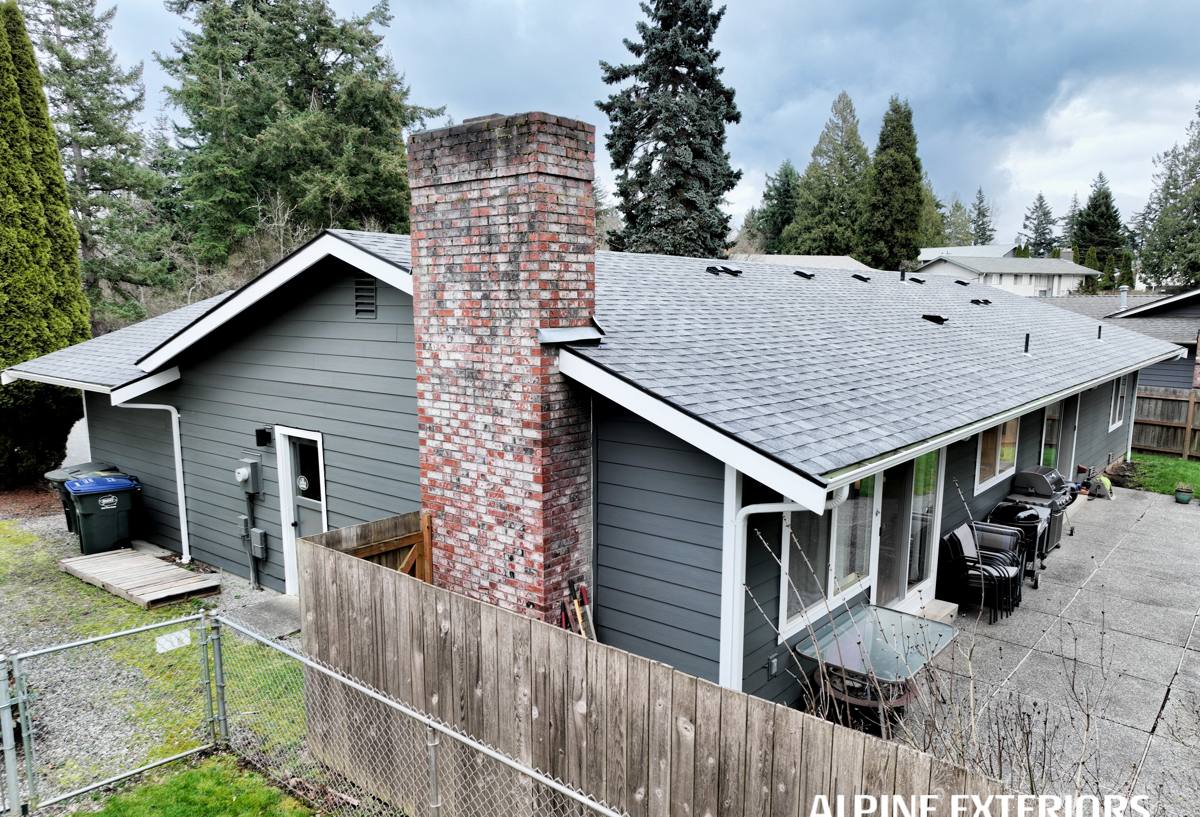
What Flounder Bay's Climate Actually Does to Siding
Salt Air
Proximity to saltwater accelerates corrosion on anything metal — fasteners, flashing, trim connectors — and it degrades some paint and coating systems faster than the same product would wear a few miles inland. Siding materials and finishes that aren't engineered with coastal exposure in mind tend to chalk, fade, or corrode at their hardware points sooner here than the manufacturer's general climate rating would suggest.
Driving Rain
Anacortes gets wind-driven rain off the water, and Flounder Bay's waterfront and near-waterfront lots take it directly. Rain that's being pushed horizontally finds every gap in flashing, every under-caulked seam, and every place where siding wasn't held to its minimum clearance. A siding job that would hold up fine on a sheltered inland lot can fail years early here if the water-management details were skipped.
Moss and Sustained Dampness
Skagit County's long wet season means siding surfaces — especially north-facing walls and anything shaded by trees or neighboring structures — stay damp for extended stretches. That's exactly the environment moss, algae, and mildew need to take hold. Materials that absorb moisture or hold it against the substrate accelerate the problem; materials that shed water and resist moisture intrusion slow it down considerably.
Why We Only Install James Hardie Siding
We standardized on James Hardie fiber cement for every siding job we take on, including Flounder Bay, and we don't install vinyl, LP SmartSide, Cemplank, Allura, primed spruce, or cedar. That's not a marketing position — it's a decision based on what holds up correctly in this specific climate when installed to spec.
- Non-combustible material — fiber cement doesn't feed a fire the way wood-based products can, which matters for insurance and long-term risk regardless of coastal exposure.
- Engineered for Pacific Northwest conditions — Hardie's HZ10 product line is formulated specifically for climates like ours, with moisture and freeze-thaw performance built into the product rather than added on.
- Factory-applied ColorPlus finish — baked-on color resists the fading and chalking that job-site paint struggles with under sustained UV and salt exposure, and it holds a consistent finish across the whole house.
- Dimensionally stable — fiber cement doesn't swell, warp, or split the way some wood-based and engineered wood products can when they take on repeated moisture cycling.
- A strong, transferable warranty — backed by a manufacturer with decades of fiber cement manufacturing behind it, which matters when a product has to perform for 30-plus years on a waterfront lot.
We're not going to tell you every other siding product is worthless — vinyl, LP SmartSide, and cedar all have legitimate uses and satisfied customers elsewhere. But for the specific combination of salt air, driving rain, and moss exposure that Flounder Bay homes deal with, we've made the call that Hardie is the only product we're willing to put our installation crew's name behind.
How Different Siding Materials Hold Up in This Environment
| Material | Salt Air Resistance | Moisture Behavior | Long-Term Maintenance |
|---|---|---|---|
| James Hardie fiber cement | Strong — non-metallic substrate, factory finish resists chalking | Doesn't swell or rot; engineered for wet climates | Occasional wash; repaint interval is long due to ColorPlus finish |
| Vinyl siding | Can become brittle and fade faster under sun and salt over time | Sheds water but seams and panels can allow moisture behind them | Low, but cracked or warped panels are hard to color-match when replaced |
| LP SmartSide / engineered wood | Coatings can wear at fastener points faster near salt air | Vulnerable to swelling and edge failure if moisture reaches the wood substrate | Requires diligent caulk and paint upkeep to keep water out |
| Cedar / primed spruce | Natural material, needs active protection against salt-accelerated weathering | Absorbs moisture; prone to rot, cupping, and moss growth without upkeep | Highest — regular refinishing and moisture monitoring required |
What Correct Installation Involves
Siding failures in coastal-adjacent neighborhoods almost never come down to the material alone — they come down to installation details that were rushed or skipped. On a Flounder Bay job, the parts that matter most are the parts you can't see once the siding is up.
Water-Resistive Barrier and Flashing
A continuous, properly lapped water-resistive barrier behind the siding is the actual first line of defense against wind-driven rain — the siding itself is the second. Flashing at every window, door, and horizontal trim transition has to be installed so water is directed out and down, never trapped behind the cladding.
Fastening and Clearances
James Hardie specifies exact fastener types, spacing, and penetration depth, along with minimum clearances from grade, roof lines, and decks. Skipping these — using the wrong fastener or nailing too close to a panel edge — is one of the most common causes of early siding problems, and it's invisible from the street once the job is finished.
Ventilation Behind the Cladding
A rainscreen gap or proper ventilation behind the siding lets any moisture that does get past the surface dry out instead of sitting against the wall assembly, which matters more in a damp, shaded neighborhood like Flounder Bay than it does on a dry inland lot.
Signs Your Current Siding Is Due for Replacement
- Visible moss or algae growth that returns within weeks of cleaning
- Soft spots, bubbling, or a spongy feel when you press on the siding
- Paint that's peeling or chalking heavily, especially on water-facing walls
- Cupping, warping, or gaps opening up between boards or panels
- Rust streaks running down from fasteners or metal trim
- Rising energy bills that suggest the wall assembly is no longer sealing properly
- Visible rot at butt joints, corners, or anywhere siding meets trim
Our Process for a Flounder Bay Installation
Every job starts with a walk-around assessment of the specific exposures your lot faces — which walls take direct wind off the water, where moss has already established itself, and whether the existing sheathing and barrier need repair before new siding goes on. We don't cover up rot or damaged sheathing with new siding; if we find a problem underneath, we address it before moving forward.
From there, installation follows James Hardie's published specifications for fastening, clearances, and flashing, with attention to the coastal-adjacent details that matter most here: sealed penetrations, correctly lapped barrier paper, and fastener patterns that will hold up under sustained wind-driven rain. We finish with a walk-through so you understand what was done and why.
What This Runs, Roughly
| Cost Factor | Why It Moves the Price |
|---|---|
| Home size and wall complexity | More corners, gables, and trim transitions mean more flashing and cut work |
| Condition of existing sheathing | Rot or moisture damage found during tear-off adds repair scope |
| Siding profile and Hardie product line | Lap siding, shingle-style panels, and board-and-batten each price differently |
| Access and site conditions | Waterfront lots with limited access or steep grades affect labor time |
| Trim and detail work | Window and door trim, corner boards, and fascia detailing add scope |
We'll walk your specific home and give you a real number based on what your walls actually need — not a generic square-footage estimate.
Why a Local Crew Matters for Flounder Bay
A crew that already works this neighborhood knows which walls in Flounder Bay take the worst weather, understands the access challenges on waterfront and near-waterfront lots, and has seen firsthand how moisture and salt exposure play out on homes here over years, not just on installation day. That experience shows up in the small decisions — where to add extra flashing attention, which details can't be shortcut — that a crew unfamiliar with this specific stretch of Anacortes might not think to prioritize.
We're a Skagit County company, and Flounder Bay is part of our regular service area, not a special trip. That means straightforward scheduling, a crew that shows up knowing the neighborhood, and a warranty backed by a company that isn't going anywhere.
If your Flounder Bay home's siding is showing its age or you're planning ahead for a replacement, we're happy to walk the property and give you an honest, no-pressure assessment. Fill out the form below to schedule a free estimate.