 Anacortes Window
 Fidalgo Island Roofs Take a Different Kind of Beating
A roof on Fidalgo Island doesn't fail the same way a roof does forty miles inland. Between the marine air coming off Rosario Strait and Guemes Channel, the wind that funnels across open water before it hits a rooftop, and a wet season that can stretch on for months, the damage patterns we see here are specific to this stretch of Skagit County. Storm damage repair that doesn't account for salt exposure, wind direction, and moss pressure is a short-term patch, not a real fix.
This page is about one job done right: repairing storm-damaged roofs on Fidalgo Island homes, in a way that holds up to the next storm and the one after that, not just the inspection after this one.
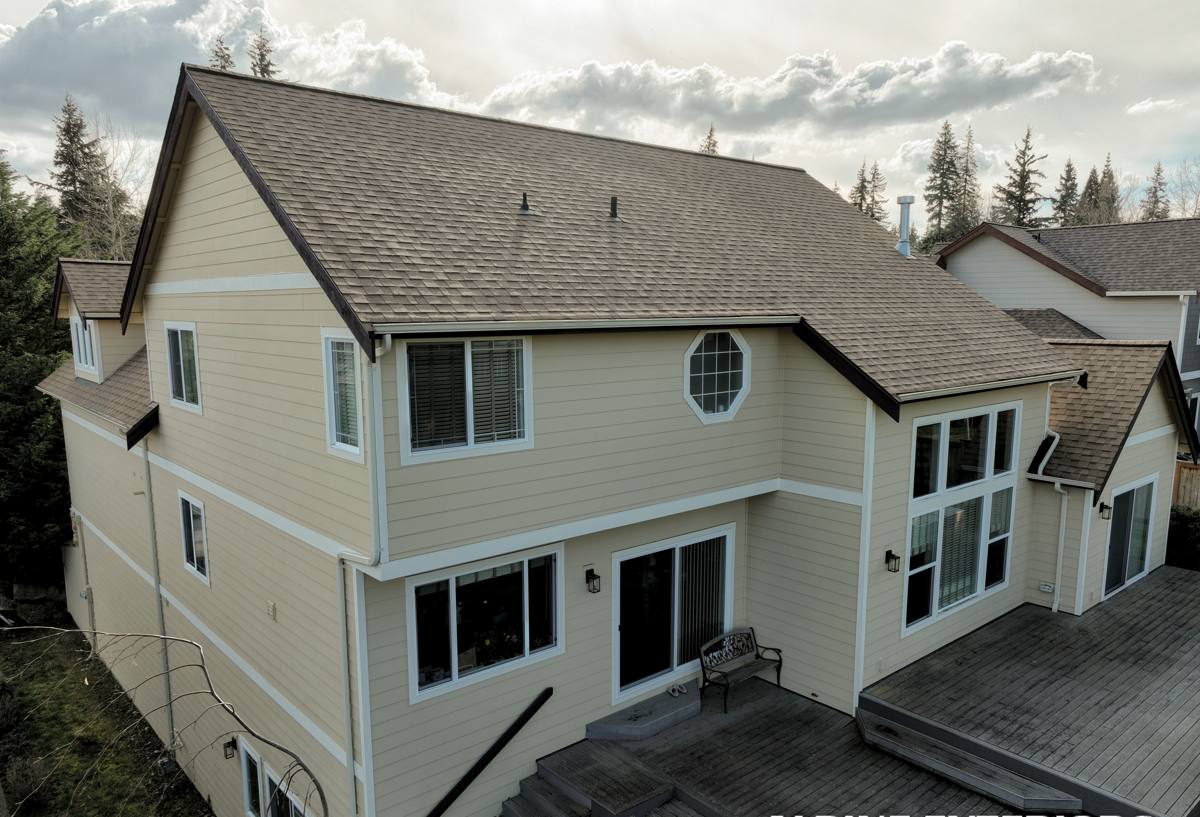
What Storm Damage Actually Looks Like Here
Storm damage on this part of the island rarely shows up as one dramatic hole. More often it's a combination of smaller failures that add up to a leak weeks or months later.
Wind-driven damage
Fidalgo Island's exposure to open water means gusts often hit roofs at an angle rather than straight-on. That angled load is what lifts shingle tabs, cracks sealant strips, and works fasteners loose at ridges, hips, and rake edges — the areas most homeowners never think to check after a storm.
Driving rain intrusion
Heavy rain pushed sideways by wind doesn't behave like rain falling straight down. It finds its way under lifted shingles, around flashing that's slightly short, and into vents and pipe boots that were never sealed for horizontal water. A roof can look intact from the ground and still be taking on water at every one of those points.
Salt air corrosion
Metal flashing, fasteners, and vent components corrode faster this close to saltwater. Corroded fasteners back out or shear off under wind load, and corroded flashing develops pinholes that let water through long before it looks obviously rusted from a distance.
Impact and debris damage
Tree limbs, branches, and wind-blown debris are a bigger factor on a wooded island than in a stripped-down suburban lot. Impact damage can bruise or fracture shingles without punching a visible hole, which is exactly the kind of damage that gets missed on a quick visual check.
The Damage That Gets Missed
Most storm damage claims and quick repairs focus on what's visible from the ground or a ladder at the eave line. The damage that causes real problems later is usually somewhere else.
- Fastener backout at ridge caps and hip lines, invisible unless you're walking the roof
- Flashing pulled a fraction of an inch away from a chimney, wall, or skylight curb
- Granule loss on the wind-exposed slope, which thins the shingle's UV and weather protection without creating a visible leak yet
- Soft or discolored decking under a section that looks fine from above
- Compressed or torn moss and lichen mats hiding cracked or lifted shingles underneath
- Gutter and downspout damage that redirects water back under the roof edge instead of away from the house
A proper storm inspection means getting on the roof, not just looking at it — checking every plane, every penetration, and every edge, and documenting what's found with photos before any repair starts.
How Our Storm Damage Repair Process Works
The process is the same whether the damage is from last week's storm or something a homeowner is just now noticing:
- Full roof walk and inspection. Every slope, valley, penetration, and edge — not just the section that's obviously damaged.
- Documentation. Photos and notes on every point of damage, which matters for insurance and for making sure nothing gets missed once the repair is underway.
- Honest scope review with the homeowner. We explain what's damaged, what's at risk if it's left alone, and what the repair actually involves — no upselling a full tear-off when a targeted repair will hold.
- Repair or replacement of the affected materials. Matching shingle type and, where possible, color; replacing flashing and fasteners with corrosion-resistant materials suited to this environment, not whatever was used originally if it wasn't right for a marine climate.
- Underlayment and decking check. Any decking that's gone soft or shows water staining gets replaced, not covered over.
- Final water test and walkthrough. We check the repair holds under simulated wind-driven water before calling the job done.
Materials That Actually Hold Up on the Island
Not every roofing product or fastener performs the same way this close to saltwater. Part of doing this job right is choosing materials for the environment they'll actually sit in, not just the cheapest match.
| Component | Standard-grade option | Marine-environment option | Why it matters here |
|---|---|---|---|
| Fasteners | Electro-galvanized nails | Stainless or hot-dip galvanized | Salt air accelerates corrosion on standard coatings, leading to backout and leaks years earlier |
| Flashing | Painted steel | Aluminum or heavier-gauge coated steel | Resists pinhole corrosion longer under salt exposure and driving rain |
| Sealants | General-purpose roofing caulk | High-flex, UV- and salt-stable sealant | Standard sealants crack and lose adhesion faster in marine, high-UV coastal conditions |
| Vent boots | Standard rubber | Reinforced or metal-collar boots | Rubber degrades faster with prolonged damp exposure and moss contact |
None of these upgrades are dramatic in cost individually, but they're the difference between a repair that lasts one storm season and one that lasts many.
Moss, Algae, and the Long Wet Season
Anacortes doesn't get a short, sharp rainy season and then dry out — the damp period stretches long enough that moss and algae growth becomes its own source of storm vulnerability. Moss holds moisture against the shingle surface, works its way under tabs as it grows, and adds weight that makes shingles more prone to lifting in wind. It also hides cracked, curled, or already-damaged shingles from a casual look.
Any storm repair on Fidalgo Island should include moss and debris removal from the repaired area and, where it makes sense, zinc or copper strip installation to slow regrowth. Skipping this step means the same section of roof is set up to fail again next wet season, storm or no storm.
Repair or Replace: How We Make That Call
Storm damage doesn't always mean a full roof replacement, and it doesn't always mean a quick patch either. The right call depends on a few honest factors.
| Factor | Favors targeted repair | Favors full replacement |
|---|---|---|
| Roof age | Under roughly 10-12 years | Near or past expected shingle lifespan |
| Damage spread | Isolated to one slope or section | Scattered across multiple slopes |
| Decking condition | Dry, solid decking under damaged area | Soft, stained, or rotted decking found |
| Shingle match availability | Matching shingles still available | Discontinued product, visible mismatch likely |
| Prior repair history | First significant repair | Multiple past patches already on the roof |
We'll walk through where your roof lands on these factors before recommending anything, and we'll say so plainly if a repair is the right call even when a full replacement would be the bigger job.
Working With Insurance on a Storm Claim
Most storm damage repairs on the island involve an insurance claim, and the documentation from the initial inspection matters here. Detailed photos, a clear description of the wind or storm event, and an itemized scope of damage make the adjuster's job easier and reduce back-and-forth. We provide that documentation directly to the homeowner to use with their carrier, and we're available to walk an adjuster through what was found on the roof if that's useful to the claim.
We won't inflate a scope to chase a bigger payout, and we won't downplay damage to make a smaller, faster job — the goal is an accurate scope that matches what the roof actually needs.
Why Local Storm Experience on Fidalgo Island Matters
A crew that already works roofs across Anacortes and the rest of Fidalgo Island knows which slopes take the worst of the wind off the water, which neighborhoods hold moss longer into the season, and which fastener and flashing choices have actually held up here versus which ones haven't. That's not something you get from a general storm-repair checklist — it comes from working this specific stretch of Skagit County, storm after storm, season after season.
It also means faster response after a storm event, since we're not routing a crew in from somewhere across the county or further. When wind-driven rain is actively finding its way into a home, that local proximity is part of what limits how much interior damage happens before the leak gets stopped.
A Quick Checklist After a Storm
- Check ceilings and upper-floor walls for new staining, even faint discoloration
- Look for granules collecting in gutters or at downspout outlets
- Note any shingles visible on the ground or lawn after high wind
- Check attic spaces (if accessible) for daylight, dampness, or musty odor
- Photograph any visible roof damage from the ground before it's cleaned up
- Avoid getting on the roof yourself after a storm — wet, wind-loosened shingles are unstable footing
If any of these show up after a storm, it's worth getting a professional inspection before the next round of weather moves through, not after.
If a recent storm has left your Fidalgo Island roof with missing shingles, a slow leak, or damage you're not sure about, we're happy to take a look and give you a straight answer — no pressure, no inflated scope. Use the form below to request a free estimate.