 Anacortes Window
 Fiber Cement Siding for Guemes Island Homes
Guemes Island sits just across the water from Anacortes, reachable only by a short ferry crossing, and that separation shapes almost everything about how a home's exterior should be built out here. Island properties catch weather from every direction instead of just one exposed side, and a lot of homes on Guemes see more sustained wind, salt, and rain than a comparable house a few miles inland in Anacortes proper. We work on Guemes Island regularly, and the siding we recommend and install is chosen specifically because of what this environment does to a wall assembly over time.
We install James Hardie fiber cement siding exclusively — not vinyl, not engineered wood, not cedar. For an island property dealing with salt air, driving rain, and a moss season that runs long here, that's not a marketing preference. It's the material that holds up to the specific combination of conditions Guemes Island homes actually face.
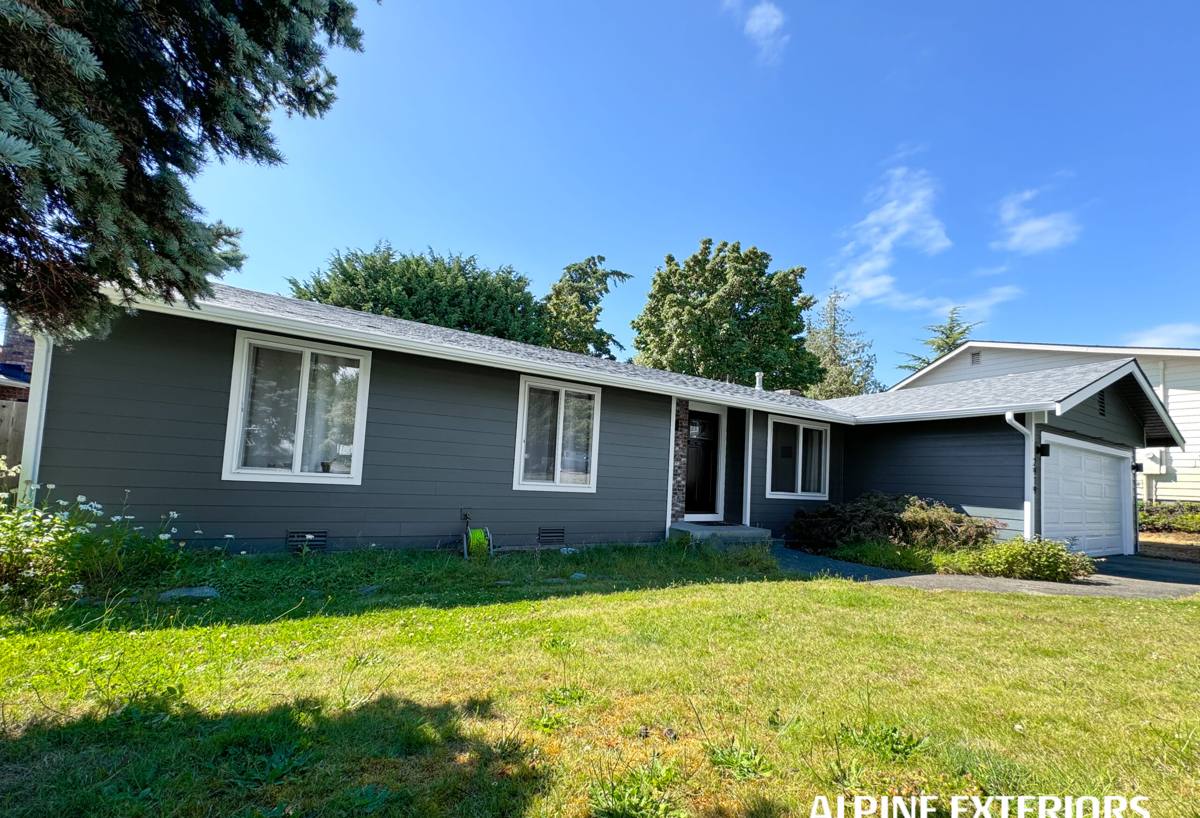
What Guemes Island's Exposure Does to a Home's Exterior
Salt Air and Corrosion
Being surrounded by the Salish Sea means salt-laden air reaches every side of a Guemes Island home, not just the water-facing wall. Salt accelerates corrosion on fasteners, flashing, and hardware, and it degrades finishes that aren't built to resist it. Over years, that shows up as rust streaking below nail heads, pitted metal trim, and paint that chalks and fails faster than the same product would inland.
Driving Rain With Nowhere to Hide
Because the island doesn't offer the same terrain and building shelter that a denser in-town lot might, wind-driven rain hits Guemes homes more directly and more often. Rain that comes in sideways doesn't behave like rain falling straight down — it gets pushed into seams, laps, and trim joints that were only ever detailed to shed water moving downward. Siding and flashing that aren't built and installed for wind-driven exposure tend to fail first at those same joints and penetrations.
A Long Moss and Mildew Season
Mild temperatures, persistent regional dampness, and the tree cover on many wooded Guemes lots add up to a moss and mildew season that stretches across much of the year. It shows first on shaded and north-facing walls and rooflines, and it's not just cosmetic — sustained moss growth holds moisture directly against a wall, which is exactly the condition that leads to rot in materials that aren't dimensionally stable.
Wind Load on an Open Island Lot
Many Guemes properties sit on open, unsheltered lots with clear exposure across the water, and that means real wind load on siding and trim during storm events. Materials and fastening patterns that hold up fine on a sheltered in-town lot get tested harder on an island property with nothing between the wall and open water.
Why We Install Only James Hardie Fiber Cement Here
We narrowed our siding work to one system after years of watching which products actually held up under this kind of sustained marine exposure and which ones quietly turned into maintenance problems for homeowners a few years down the road. For a Guemes Island property specifically, the case for fiber cement is straightforward:
- Non-combustible core: Fiber cement doesn't feed a fire the way wood-based products can, which matters for both household safety and insurance underwriting on a property that may not have quick fire department access.
- Factory-applied ColorPlus finish: The color is baked on under controlled conditions rather than brushed on in the field, so it resists the fading and chalking that salt air and UV exposure accelerate.
- Climate-engineered HZ product lines: Hardie builds different formulations for different climate zones, including versions engineered for sustained moisture exposure — a real match for an island property surrounded by water on every side.
- Dimensional stability: Fiber cement doesn't swell, cup, or warp the way engineered wood can after repeated wet-season moisture cycles, which matters more here given how long that wet season runs.
- Strong transferable warranty: Provided the installation follows spec, Hardie's warranty gives an island homeowner real protection rather than a marketing claim.
We don't install LP SmartSide, vinyl siding, Cemplank, Allura, primed spruce, or cedar. Each has a place in the broader market, and plenty of homeowners are satisfied with them elsewhere. But we made a professional decision that one system we trust completely, installed correctly, is worth more to a Guemes Island homeowner than a cheaper option that shifts maintenance risk back onto them — especially on a property where a maintenance problem can go unnoticed longer between visits.
What a Correct Fiber Cement Installation Involves
Fiber cement is only as good as the installation behind it. It's a material that's sensitive to the details — get flashing, fastening, or joint treatment wrong, and the panels themselves can still fail early even though the product is rated for exactly this kind of exposure. On a coastal or island job, we pay particular attention to a handful of details that matter more here than they would on a sheltered inland lot.
| Detail | Done to Spec | Common Shortcut |
|---|---|---|
| Fasteners | Corrosion-resistant, manufacturer-approved fasteners set to the correct depth | Standard fasteners that corrode and streak under salt air within a few years |
| Panel gap / rainscreen | Proper drainage gap behind siding so incidental moisture can escape | Panels installed tight to the sheathing with no way for trapped moisture to dry |
| Joint treatment | Manufacturer-specified caulking or flashed joints at every butt seam | Uncaulked or poorly sealed joints that let wind-driven rain behind the wall |
| Ground clearance | Siding held above grade, decks, and roof lines per Hardie's minimum clearances | Siding installed too close to grade or a roof surface, wicking moisture up |
| Flashing at penetrations | Step and kick-out flashing integrated with the water-resistive barrier | Trim and penetrations caulked over rather than properly flashed |
None of these details are unique to Hardie siding, but they matter more on a property where wind-driven rain and salt air are a given rather than an occasional event. We install to Hardie's published specifications on every job, on Guemes Island or anywhere else.
How We Handle a Guemes Island Project
Assessment and Estimate
We start with a walk-through of the home to look at existing siding, trim, and any signs of moisture damage, and we talk through what a repair, partial replacement, or full re-side would actually involve. You get a written estimate with no pressure to sign that day.
Material Staging and Ferry Logistics
Working on an island means planning around the ferry rather than just showing up with a truck. We stage materials in Anacortes and coordinate deliveries and crew crossings so the job runs efficiently once we're on-island, rather than making repeat trips back and forth for things that should have been loaded the first time.
Crew Scheduling
Because crew time on the island is worth planning around, we batch our work — tear-off, installation, and trim — into efficient blocks rather than spreading a job out over scattered half-days. That keeps your home from sitting exposed with siding partly removed any longer than necessary.
Final Walkthrough and Cleanup
We walk the finished job with you before we leave the island, and all debris and packaging leaves with us — nothing gets left behind to deal with later.
Why Hiring a Crew That Already Works Guemes Island Matters
A contractor who doesn't regularly work on Guemes can underestimate what island logistics actually require — ferry capacity for vehicles and trailers, tighter timelines for material deliveries, and the reality that a forgotten tool or part means a delay measured in ferry schedules, not minutes. We already build our scheduling and staging around those realities, which keeps your project moving instead of stalling on logistics that a mainland-only crew hasn't had to think through before. It also means we're familiar with the kind of exposure island homes see, well and septic considerations on some properties, and the wooded, shaded lots common here — all of which affect how we approach flashing, drainage, and moss-prone areas on your specific home.
Cost Factors for a Guemes Island Fiber Cement Project
| Factor | Why It Matters Here |
|---|---|
| Home size and wall area | More square footage means more material and labor, the same as anywhere |
| Tear-off and disposal of old siding | Debris has to be hauled off-island by ferry, which factors into disposal logistics |
| Trim and architectural complexity | Homes with more corners, dormers, or custom trim take longer to flash and finish correctly |
| Moisture or rot repair underneath | Coastal exposure means we sometimes find hidden sheathing damage once old siding comes off |
| Standard vs. HZ5 panel selection | Sustained marine exposure often calls for Hardie's more climate-resistant formulation |
| Logistics and ferry transport | Material staging and crew crossings are planned into the schedule rather than priced as a surprise |
We walk through these factors during the estimate so there are no surprises once work is underway — an island job has real logistical differences from an in-town one, but it shouldn't be a mystery how those differences affect your price.
Caring for Fiber Cement Siding on an Island Property
Correctly installed Hardie siding is low-maintenance, but "low-maintenance" isn't "no-maintenance," especially in a salt-air, high-moss environment. A little regular attention keeps it looking and performing the way it's supposed to for decades.
- Rinse salt film off exterior walls periodically, especially on water-facing sides, using a garden hose rather than a pressure washer aimed directly at joints
- Inspect caulking at trim, window, and door joints once a year and have any cracked or missing caulk redone before wet season
- Keep vegetation trimmed back from shaded and north-facing walls to improve airflow and slow moss growth
- Clean gutters and downspouts so overflow isn't running down the face of the siding
- Have any impact damage or cracked panels repaired promptly — because scheduling a repair crew takes a bit more lead time on an island, it's worth addressing small damage before it becomes a bigger moisture problem
Signs a Guemes Island Home May Need New Siding
Because island homes are sometimes occupied seasonally or visited less often than a full-time residence, exterior problems can go unnoticed longer here than they would in town. A few things worth checking for on a walk around the property:
- Soft or spongy siding when pressed, especially near the bottom of walls or below windows
- Paint or finish that's peeling, bubbling, or chalking heavily rather than just fading
- Visible cracking at panel corners, joints, or fastener locations
- Moss or algae staining that returns quickly after cleaning
- Drafts, rising energy bills, or musty smells near exterior walls that suggest the weather barrier has failed behind the siding
Any one of these on its own might be minor. Several together, or any sign of soft sheathing, usually means it's time for a closer look before the underlying structure is affected.
If you own a home on Guemes Island and want an honest look at your siding, or you're planning a full re-side and want it done with a crew that already knows how to work efficiently out here, we're glad to take a look. Reach out using the form below to schedule a free, no-pressure estimate.