 Anacortes Window
 Why La Conner's Waterfront Location Changes the Window Equation
La Conner sits right on the Swinomish Channel, which means homes here deal with a different set of conditions than houses a few miles inland in Skagit County. Salt-laden air off the water accelerates corrosion on hardware and fasteners, wind-driven rain finds its way into gaps that would stay dry in a more sheltered location, and the long, damp shoulder seasons keep humidity levels high against exterior walls for months at a time. On top of that, moss and algae growth is a near-constant fact of life anywhere shaded or north-facing, and that green film holds moisture against trim, sills, and glazing longer than most homeowners realize.
None of that makes windows in La Conner fundamentally different products than what you'd install anywhere else in Western Washington. But it does change what "energy-efficient" needs to mean in practice. A window that tests well in a lab but isn't installed and sealed for this specific climate will still leak air, fog between panes, or let moisture into the wall cavity within a few years — regardless of its energy rating.
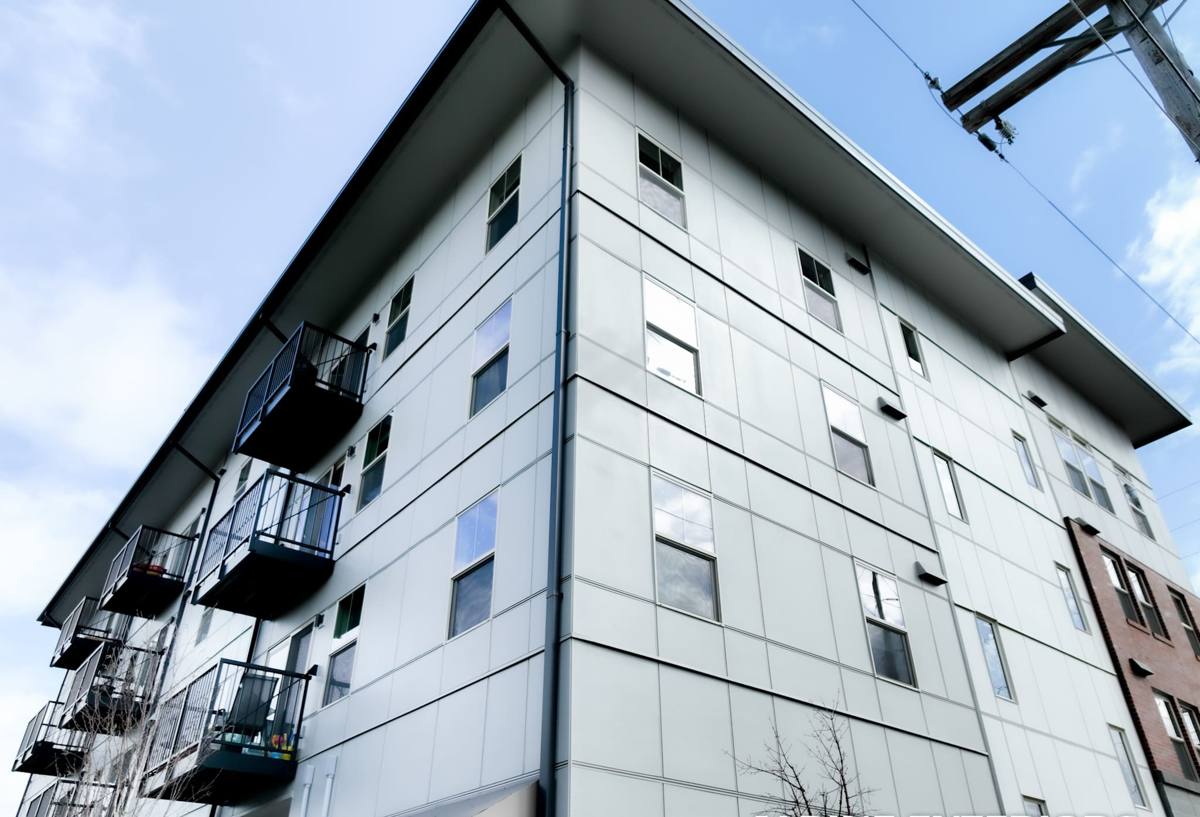
What Energy-Efficient Really Means for a La Conner Home
Energy efficiency in a window comes down to three things working together: the glass package, the frame material, and the installation. Homeowners often focus only on the first one.
Glass Package
Most efficient replacement windows in this area use double-pane glass with a low-E coating and an inert gas fill (typically argon) between the panes. Low-E coatings reflect radiant heat while still letting visible light through, which matters in a region where we rely on natural light through a lot of gray-sky months. Triple-pane glass is available and offers a modest additional efficiency gain, but the tradeoff is added weight and cost — for most single-family homes in La Conner, a good double-pane low-E unit is the more practical choice unless the home has an unusual noise or exposure issue.
Frame Material
Frame material affects both thermal performance and how the window holds up to salt air and constant moisture. We'll cover the tradeoffs in detail below, but the short version is that not every frame material sold as "energy-efficient" performs the same way once it's been through a few wet Skagit County winters near the water.
Installation and Sealing
This is the piece that gets overlooked most often. A window's efficiency rating assumes it's installed with correct flashing, a continuous air seal, and proper drainage so any water that does get behind the exterior cladding has somewhere to go. In a driving-rain environment like La Conner, a sloppy install is often worse than an older, less efficient window that was at least sealed correctly — because water intrusion behind the wall causes rot and mold long before it shows up as a drafty room.
Signs Your Current Windows Are Costing You Money
Homeowners usually notice comfort problems before they notice the energy bill. In La Conner specifically, watch for:
- Condensation or fogging between the panes — a sign the seal has failed and the gas fill has escaped
- Soft or discolored wood at the sill or bottom corners, often from years of moss and standing moisture
- A noticeable draft near the frame during winter storms off the water
- Hardware (locks, hinges, cranks) that's corroded, stiff, or pitted from salt exposure
- Visible daylight or a whistling sound around the frame in wind
- Paint or finish that's failing faster on window trim than on the rest of the siding
Any one of these can mean the window is still "working" in the sense that it opens and closes, but it's no longer doing its job of keeping conditioned air in and weather out.
What a Correct Installation Involves Here
Replacing a window is straightforward in concept — remove the old unit, set the new one, seal it up. Doing it correctly in a coastal Skagit County setting means paying attention to a few steps that matter more here than they would inland:
Flashing and Drainage
Every opening gets flashed so that any water working its way past the exterior cladding drains back out rather than pooling at the sill. This is standard practice everywhere, but it's non-negotiable in a location that sees sustained wind-driven rain off open water.
Sealant Selection
Not all sealants hold up the same way to salt air and constant damp-dry cycling. We use products rated for exterior, high-moisture exposure rather than a generic caulk, and we pay attention to full, continuous beads rather than spot-sealing.
Hardware and Fasteners
Corrosion-resistant fasteners and hardware matter more here than in a drier, inland part of the county. Standard hardware can start showing pitting and stiffness within a few years this close to salt water.
Fitting to the Existing Opening
Many La Conner homes are older and were framed before modern window sizing standards. A correct install accounts for out-of-square openings and existing settling rather than forcing a standard-size unit into a space it doesn't quite fit.
Comparing Frame Materials for a Salt-Air, High-Moisture Climate
There's no single "best" frame material for every home — it depends on your budget, your home's style, and how much maintenance you want to take on. Here's how the common options actually perform in this specific environment:
| Frame Material | How It Handles Salt Air & Moisture | Maintenance | Best Fit |
|---|---|---|---|
| Vinyl | Doesn't corrode; handles moisture well when properly welded and sealed | Low — occasional cleaning | Most homes prioritizing value and low upkeep |
| Fiberglass | Very stable in moisture and temperature swings; resists warping | Low to moderate | Homes wanting a higher-end feel and long-term dimensional stability |
| Wood or wood-clad | Attractive but requires diligent sealing and upkeep to resist rot near salt air | High — regular inspection and refinishing | Historic or period-style homes where appearance is a priority |
| Aluminum | Prone to corrosion pitting near salt water unless specifically coated | Moderate | Limited use; usually not our first recommendation this close to the water |
We'll walk through these options honestly, including the maintenance commitment each one carries, rather than pushing whatever happens to be easiest to sell. A wood-clad window can be the right call for a historic La Conner home, as long as the homeowner understands what it takes to keep it sealed against this climate.
Our Process for a La Conner Window Project
The process is the same whether you're replacing one window or the whole house:
- On-site assessment — we look at existing window condition, framing, and any moisture or rot issues before recommending anything
- Honest options — we walk through glass packages and frame materials that fit your home and budget, with real tradeoffs explained
- Accurate measurement — especially important on older homes where openings may be slightly out of square
- Careful removal — checking sheathing and framing for hidden water damage once the old window is out
- Correct installation — flashing, sealing, and fastening to hold up against wind-driven rain and salt exposure
- Cleanup and walkthrough — confirming operation and answering questions before we consider the job done
If we find rot or moisture damage behind an old window during removal, we'll show you what we're seeing and talk through the repair before moving forward — that's not an upsell, it's a problem that needs to be addressed before a new window can seal correctly.
Living With Windows in a Salt-Air, Moss-Season Climate
Even a well-installed, efficient window benefits from a little seasonal attention in this environment. A simple maintenance routine goes a long way toward protecting your investment:
- Rinse salt residue off exterior frames and glass periodically, especially after storms
- Check and clear weep holes so drainage paths don't get blocked by debris or moss
- Inspect exterior caulk lines once a year for cracking or gaps
- Wipe down hardware and lubricate moving parts to slow corrosion
- Keep gutters and nearby vegetation clear so moss and standing water don't collect against trim
- Watch for soft spots at sills, which can signal water getting behind the frame
None of this is complicated, but skipping it is how a good window installation turns into a moisture problem five or ten years down the road.
Why Local Experience in La Conner Matters
Window installation isn't one-size-fits-all, and a crew that mainly works drier, inland areas may not think twice about details that matter a great deal a few hundred feet from open water. Knowing how hard the salt air is on hardware, how much wind-driven rain a given exposure sees, and how older La Conner homes were originally framed all shape decisions on the job — from sealant choice to how tight the flashing detail needs to be. That local pattern recognition is built from working this specific stretch of Skagit County, not from a general window install checklist.
It also means we're not guessing about what fails first in this climate. We've seen which frame materials and installation shortcuts hold up and which ones don't, and we'd rather tell you that upfront than let you find out the hard way.
Get a Straight Answer for Your Home
If you're dealing with drafty, foggy, or corroded windows in La Conner, or you're just planning ahead for a home that's taken a beating from salt air and winter storms, we're happy to take a look and give you an honest read on what your windows need. Use the form below to request a free, no-pressure estimate — we'll assess your home's specific exposure and walk you through real options, not a one-size-fits-all pitch.