 Anacortes Window
 Why Flounder Bay Homes Need a Different Approach to Windows
Flounder Bay sits close enough to the water that its homes deal with a version of Pacific Northwest weather that's a little harsher than what you'll find further inland in Skagit County. Salt-laden air off the water accelerates corrosion on hardware and fasteners. Driving rain, pushed sideways by wind off the Sound, tests every seal and sightline a window has. And the long, damp moss season here means anything that traps moisture against wood or vinyl gets a head start on rot, mildew, and premature failure. Windows that would hold up fine in a drier climate can start showing problems in Flounder Bay years ahead of schedule — fogged glass, soft trim, hardware that won't turn smoothly, drafts that weren't there the first winter.
None of that means your home needs anything exotic. It means the materials, the installation details, and the sealing methods all need to be chosen with this specific exposure in mind, not just picked from a standard catalog page.
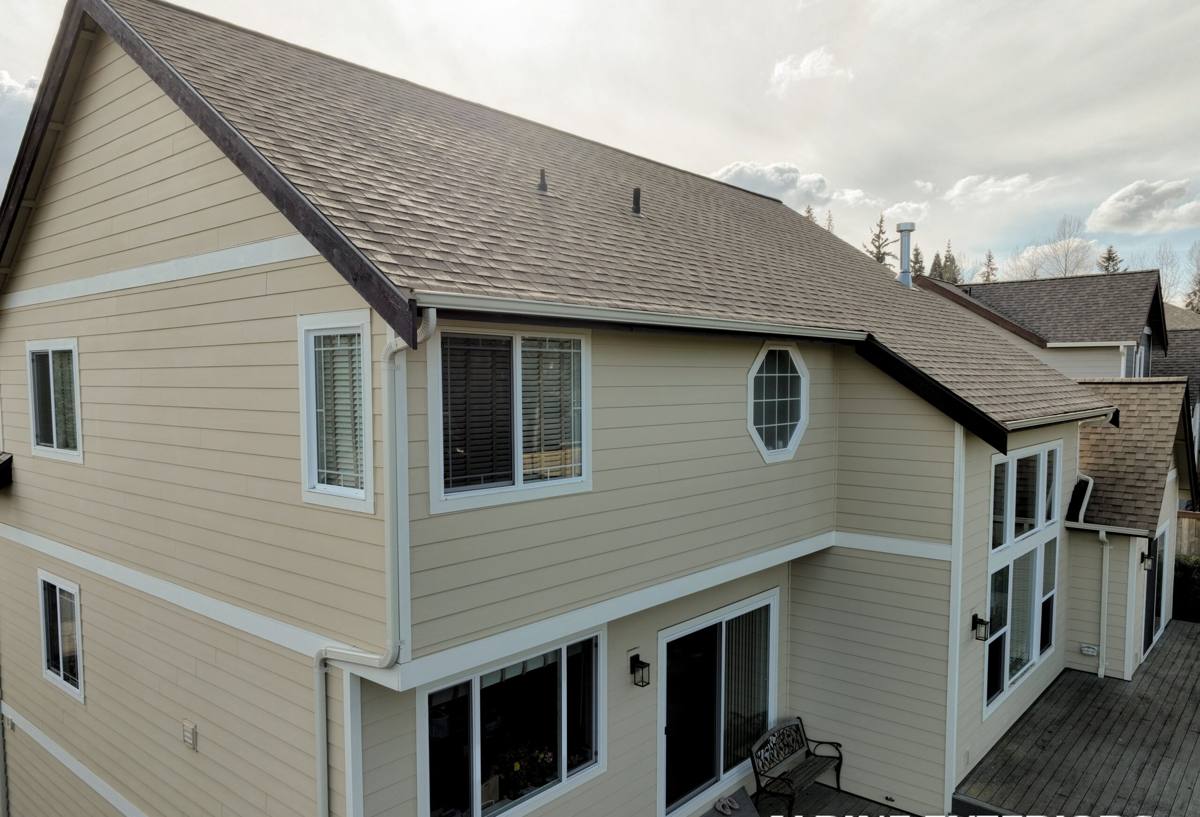
What "Energy-Efficient" Actually Means Here
Energy efficiency isn't one feature — it's several things working together. In a marine climate like Anacortes, the priorities shift slightly compared to a drier region:
Glass and Gas Fill
Dual-pane windows with low-E coatings and an argon gas fill are the baseline for this area. The low-E coating reflects radiant heat back into the room in winter and blocks unwanted solar heat gain in summer, while argon slows down heat transfer between the panes. In a house exposed to constant damp cold and wind, that combination is what actually keeps rooms comfortable near the glass — not just what shows up on a spec sheet.
Frame Material Behavior in Salt Air
Frame material matters more here than in a typical inland install. Salt air is corrosive to certain hardware and can be hard on some finishes over time, so we pay close attention to what's actually facing the weather side of a Flounder Bay home versus what's more sheltered.
Spacer Systems
The spacer that separates the two panes of glass affects both energy performance and long-term seal life. Warm-edge spacer technology reduces condensation risk at the edge of the glass, which matters in a climate where indoor humidity plus cold glass is a near-constant condition for several months of the year.
Air Sealing at Installation
You can buy the best-rated window on the market and still get poor performance if it's installed with gaps in the sealing. In driving rain conditions, installation quality is often the difference between a window that performs for decades and one that leaks within a few winters.
Signs Your Windows Are Underperforming
Homeowners in Flounder Bay often notice these issues years before they get around to calling anyone:
- Visible fog or moisture trapped between the panes of glass (a failed seal)
- Cold drafts near the window frame even when it's fully latched
- Hardware — locks, cranks, hinges — that's stiff, corroded, or won't fully engage
- Soft or discolored trim and sills, especially on the side of the house facing prevailing wind and rain
- Noticeably higher heating bills compared to homes of similar size nearby
- Condensation forming on the inside of the glass regularly through fall and winter
- Visible moss or algae growth building up in window tracks or on exterior trim
Any one of these on its own might not mean much. Several together, especially on windows more than 15-20 years old, usually mean the window is past the point where caulking or minor repair will fix it.
Comparing Frame Materials for This Climate
| Frame Material | How It Handles Salt Air & Moisture | Maintenance | Typical Fit for Flounder Bay |
|---|---|---|---|
| Vinyl | Doesn't rust or corrode; performs consistently in salt-air exposure | Low — occasional cleaning | Strong all-around choice for most homes here |
| Fiberglass | Very stable in temperature swings and moisture; resists warping | Low | Good option where a stiffer, more dimensionally stable frame is wanted |
| Aluminum | Can be prone to corrosion issues near salt air unless properly finished and detailed | Moderate — needs attention to finish condition over time | We evaluate case by case; not our default recommendation on exposed elevations here |
| Wood (clad or unclad) | Handsome, but bare wood is vulnerable to the area's long moss season and driving rain without diligent upkeep | High — regular painting, sealing, and inspection | Best reserved for homes committed to ongoing maintenance, or with clad exteriors |
We're not telling homeowners any one material is bad — every one of these has legitimate uses. Our job is to be honest about which ones hold up with the least fuss in a marine, wet, moss-prone environment, and which ones ask more of you in upkeep over the years.
What a Correct Installation Actually Involves
Flashing and Water Management
The window unit itself is only part of the job. Proper flashing integration with the house wrap or building paper is what actually keeps wind-driven rain from working its way behind the trim over time. This step gets rushed on lower-quality installs, and it's usually invisible until years later when rot shows up inside a wall cavity.
Sealing Details
We seal at the right layers — not just a bead of caulk on the outside trim, but proper backer rod and sealant at the rough opening, correct shimming so the window sits square and doesn't rack, and insulation in the gap between the frame and the framing lumber so you're not just trading an air leak for a thermal gap.
Hardware Selection
For homes closer to open water, we pay attention to hardware and fastener specification so that what's exposed to the elements is suited to that exposure, rather than defaulting to whatever is standard for an inland install.
Interior and Exterior Finish Work
A clean tie-in with existing trim, siding, and interior casing is part of the job, not an afterthought. Sloppy trim work is often where moisture problems start.
Our Process
- Free on-site assessment — we look at your current windows, note which elevations take the worst of the weather, and check for any existing moisture or rot issues before quoting anything.
- Honest recommendation — we talk through frame material, glass package, and any structural or trim concerns specific to your home, with straightforward reasoning, not a sales script.
- Detailed written estimate — scope, materials, and timeline in writing before any work begins.
- Careful removal — old windows come out with attention to protecting existing siding, trim, and interior finishes.
- Proper installation — flashing, sealing, insulation, and hardware done to the standard this climate actually requires.
- Final walkthrough — we check operation, sealing, and finish work with you before calling the job done.
Cost Factors to Understand
| Factor | Why It Affects Price |
|---|---|
| Frame material | Vinyl, fiberglass, and clad-wood options carry different material costs and labor requirements |
| Number of openings | Whole-house replacements typically bring a better per-window rate than one-off replacements |
| Condition of existing framing | Rot or water damage found during removal adds repair work before a new window can go in correctly |
| Access and elevation | Second-story or hard-to-reach openings, common on some Flounder Bay lots, take more time and equipment |
| Glass package | Upgraded low-E coatings, gas fills, or sound-dampening glass add cost but also long-term performance |
We give a broad range during the initial conversation and a firm number after the on-site assessment — no surprise add-ons once work has started.
Maintaining Your Windows in This Climate
Even the right windows, properly installed, benefit from a bit of seasonal attention in a place like this:
- Rinse salt residue off exterior frames and glass periodically, especially after storms
- Clear moss and debris from window tracks and weep holes so water can drain as designed
- Check exterior caulking annually for cracking or gaps, particularly on wind-exposed walls
- Lubricate hardware on operable windows once or twice a year to prevent stiffness from salt exposure
- Watch for soft spots in exterior trim during your regular home inspection routine
Why Local Experience in Flounder Bay Matters
A crew that's worked windows throughout Anacortes and the surrounding Skagit County waterfront knows which elevations on a given street typically take the worst weather, how the moss season behaves on shaded north-facing walls, and which installation details actually matter here versus what's just generic best practice from a manual written for a different climate. That's not something you get from a national chain running crews through on a rotating schedule. It shows up in the small decisions — flashing details, hardware choices, where extra sealant attention goes — that determine whether a window install is still performing well in fifteen years or causing problems in five.
If your Flounder Bay home has drafty, foggy, or aging windows, we're happy to take a look and give you an honest read on what's going on — no pressure, no obligation. Reach out using the form below for a free estimate.