 Anacortes Window
 Windows Built for Where Edison Sits
Edison sits close enough to Samish Bay and the Skagit Valley farmland that weather off the water reaches every house in town, and it's not far from the same coastal exposure that shapes homes throughout the Anacortes area. That mix — salt-laden air, wind-driven rain coming straight off the bay, and heavy shade from surrounding trees — is harder on windows than most manufacturers account for in their standard warranty language. A window that performs fine in a dry inland climate can fail early here: seals give out ahead of schedule, hardware corrodes, and moss finds a foothold in every horizontal ledge and corner. Upgrading windows in Edison isn't only about lowering energy bills, though that's part of it. It's about choosing products and installation details that hold up to this specific stretch of Skagit County coastline, year after year, without constant repair.
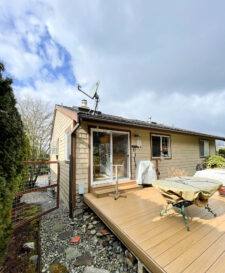
What This Climate Actually Does to Windows
Salt Air and Corrosion
Proximity to Samish Bay means airborne salt settles on exterior surfaces even on days you can't smell the water. Over years, that salt attacks unprotected metal hardware, aluminum components, and lower-grade fasteners. Locks stiffen, cranks corrode, and finishes chalk out faster than they would twenty miles inland. Coastal-rated hardware and finishes cost a bit more up front, but they're the difference between a window that still operates smoothly in year ten and one that needs its hardware replaced by year five.
Wind-Driven Rain
Storms moving through the valley don't just drop rain straight down — they push it sideways into every seam, sill, and joint. Installation practices that hold up fine in calmer climates can leave gaps that let wind-driven rain track behind the trim and into the wall cavity before anyone notices. Around Edison, flashing details and sill pan work often matter more to long-term performance than the window unit itself.
Moss and a Long Wet Season
Tree cover and the valley's mild, damp winters give moss and algae a long growing season. On windows, that shows up as green film on sills and exterior trim, plus clogged weep holes that stop draining water back outside the way they're designed to. A window with weak drainage detailing in a shaded, moss-prone spot will hold moisture against the frame for months at a stretch, which is exactly the condition that rots wood and swells vinyl.
What "Energy-Efficient" Should Mean Here
Efficiency for an Edison home isn't just about chasing the highest sticker rating — it needs to account for the marine layer, the swing between warm summer afternoons and cool damp nights, and near-constant humidity. Two numbers matter most when comparing options:
- U-factor — how well the window resists heat transfer; lower numbers mean less heat loss through our cool, wet winters
- Solar Heat Gain Coefficient (SHGC) — how much solar heat passes through the glass; a moderate SHGC balances welcome winter warmth against overheating on south- and west-facing rooms in summer
Glass packages suited to this area typically pair a low-E coating with argon or krypton gas fill and a warm-edge spacer that resists condensation — a real concern in a valley with this much humidity and this many temperature swings between day and night.
Glass Package Comparison
| Glass Package | Best For | Trade-Off |
|---|---|---|
| Standard dual-pane, single low-E | Budget-conscious replacements, secondary or low-exposure rooms | Less condensation resistance during high-humidity months |
| Dual-pane, low-E, argon-filled | Most Edison homes — solid all-around performance for the price | Modest cost increase over standard dual-pane |
| Triple-pane, low-E, argon or krypton | North-facing walls and homes with direct bay exposure | Added weight and cost; worth it where wind and cold exposure run highest |
Signs Your Windows Are Already Falling Behind
Because this climate accelerates wear, we see the same warning signs repeatedly on homes throughout the Edison and Samish Bay area:
- Fogging or a hazy film between the glass panes — the seal has failed and the gas fill has escaped
- Sills that stay damp or show green film for days after a storm passes
- Hardware that's stiff, corroded, or won't latch tightly anymore
- A noticeable draft near the frame on windy days
- Wood trim or sills that feel soft, spongy, or show dark staining
- Condensation forming on the inside of the glass through fall and winter
Any single item on that list isn't necessarily an emergency, but two or more together usually mean the window's ability to keep out weather — not just cold — has already been compromised.
How Our Process Works
Every home in Edison is a little different — some are newer builds, others are older farmhouses that have been added onto over the decades — so we start with an honest look at what's actually there before recommending anything.
- On-site assessment and measurement. We check existing frame condition, sill pitch, and signs of past water intrusion before quoting anything, since those details change what the job actually requires.
- Careful removal. Old units come out without unnecessary damage to surrounding siding or trim, and we inspect the sheathing and framing underneath while it's exposed.
- Sill pan and flashing correction. This is where most long-term failures start, so we build or correct drainage paths so wind-driven rain has somewhere to go besides your wall cavity.
- Installation and sealing. Units go in level, plumb, and square, with sealants and tapes chosen for a marine climate rather than generic all-purpose products.
- Final operation and weather check. Every window gets tested for smooth operation, tight latching, and a proper seal before we consider the job done.
Frame Materials Worth Considering
Frame choice affects how well a window shrugs off salt air, moisture, and the freeze-thaw swings that show up on cold, clear nights in the valley.
| Frame Material | Strengths in This Climate | What to Watch |
|---|---|---|
| Vinyl | Won't rot or corrode; low maintenance; good value | Quality varies widely between manufacturers — thin vinyl can warp under sustained sun and temperature swings |
| Fiberglass | Very stable through temperature changes; resists moisture and doesn't corrode | Higher upfront cost than vinyl |
| Wood-clad | Classic look that suits older Edison homes; solid insulating performance | Cladding and seams need attention — any breach lets moisture reach the wood core over time |
We don't push one material on every home. The right call depends on the home's exposure, its existing trim and siding, and how much upkeep the owner actually wants to do. What we do avoid is recommending anything with a maintenance burden that doesn't match how exposed a given wall is to salt air and driving rain — that's a setup for problems a few years down the road, regardless of the brand name on the sticker.
Older Homes and Permitting
Edison and the surrounding Skagit County countryside have their share of older farmhouses and homes that have been modified over the years. Replacement windows on these often need to account for irregular rough openings, older trim profiles, and sometimes settling in the framing itself — none of which shows up until the old unit is out. We handle the local permitting process for window replacement as part of the job, and we flag anything unusual we find in the opening before proceeding rather than forcing a standard-size unit into a non-standard space.
Why Hire a Crew That Already Works This Area
A contractor who regularly works in Edison and around Samish Bay already knows what wind-driven rain does to a poorly flashed sill, has a feel for how much shade and moss pressure a given lot gets, and isn't guessing at what "coastal-rated" hardware actually needs to hold up here. That local pattern recognition shows up in small decisions — how a sill pan is built, which sealants get used, where extra flashing goes — that don't show up on a quote but matter enormously five and ten years later. It also means someone who can be back out to your property quickly if a question comes up after the install, rather than a crew based hours away with no ongoing presence in Skagit County.
Protecting the Investment After Installation
New windows aren't maintenance-free, especially in this climate. A short seasonal routine keeps them performing the way they're supposed to:
- Rinse sills and tracks periodically to clear salt residue and prevent moss from establishing
- Clear weep holes of debris so water can drain instead of pooling against the frame
- Check exterior caulking and sealant lines once a year for cracking or separation
- Operate hardware through its full range a few times a year to keep moving parts from seizing
- Trim back vegetation that keeps a window in constant shade and moisture
None of this takes much time, but skipping it is how a well-installed window still ends up with early problems in a climate this demanding.
If your Edison home has windows showing any of the signs above, or you're planning ahead for an upgrade, we're glad to take a look and give you a straightforward, no-pressure estimate. Use the form below to get started.