 Anacortes Window
 Composite Decking Built for Edison's Marine Climate
Edison sits low and close to the water, tucked against the Samish Flats with Samish Bay just to the west and the Skagit Valley's farmland wrapping the rest. That location is part of what makes the area beautiful, and it's also exactly why decks here take more punishment than decks a few miles inland. Salt-laced air off the bay, long stretches of driving rain, and a moss season that can run from October through April all work on a deck at the same time, year after year. A composite deck built for this spot needs to be planned differently than one going in in a drier, more sheltered yard.
We install composite decking throughout the Anacortes and Skagit County area, and Edison jobs get treated as their own category — not a smaller version of a Fidalgo Island job or an inland Mount Vernon job. The framing, fasteners, board selection, and drainage details all get chosen with this specific mix of salt air and standing moisture in mind.
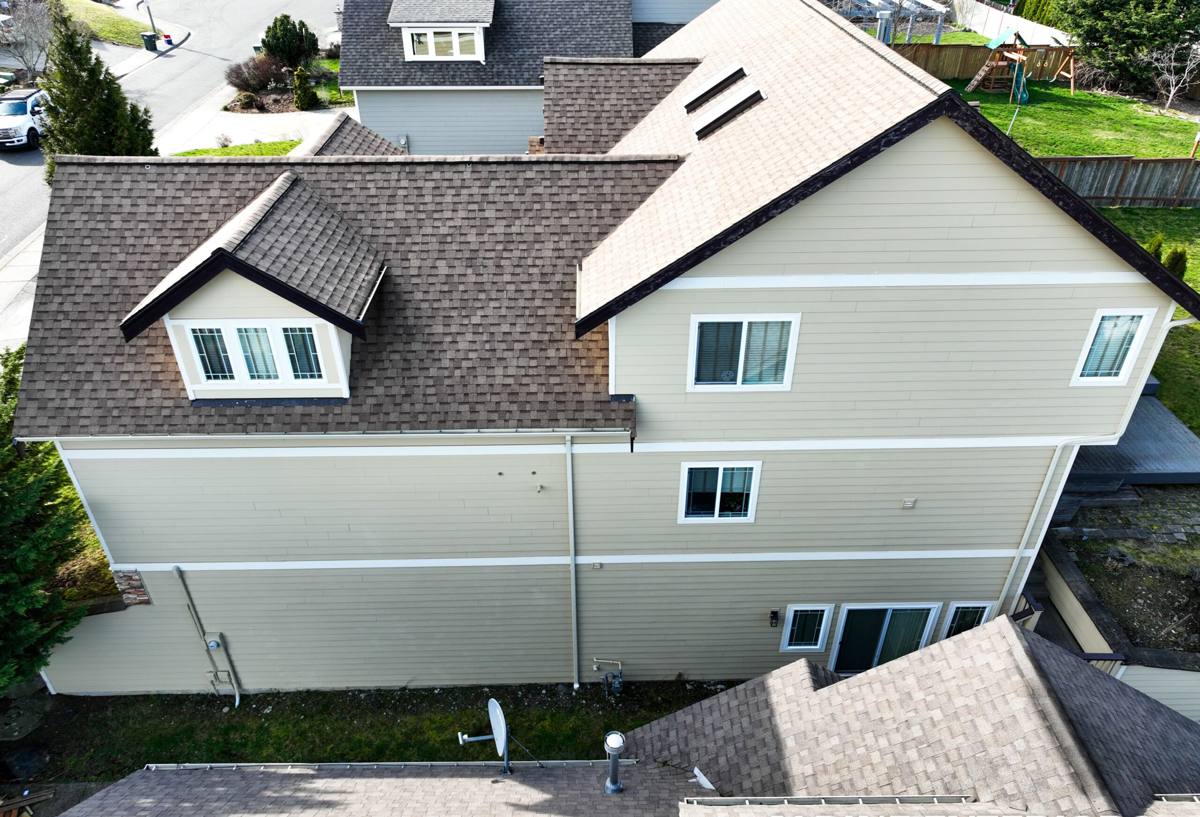
What Edison's Climate Actually Does to a Deck
Salt Air and Metal Fasteners
Airborne salt from Samish Bay travels further inland than most homeowners expect, especially on windy days. It settles on every exposed surface, including the screws, brackets, and joist hangers holding a deck together. Standard zinc-coated hardware can start showing corrosion within a few seasons in a spot like this. Once fasteners start to weaken, the deck's structure is compromised even if the surface boards still look fine — which is exactly why hardware choice matters as much as board choice.
Driving Rain and Substructure Rot
Rain in this part of Skagit County rarely falls straight down. Wind off the flats pushes it sideways, driving water up under ledger boards, into end grain, and behind rim joists that aren't properly flashed. Composite boards themselves don't rot, but the wood framing underneath almost always does — and that framing is what actually holds the deck up. A deck can look brand new on top while the joists underneath are failing.
Moss Season and Surface Traction
Between the shade from surrounding trees, the marine humidity, and the sheer number of wet days, moss and algae get a long runway in Edison — often six months or more. On a smooth-surfaced or poorly-drained deck, that turns into a slick, slippery surface right through the wettest and darkest part of the year, which is also when people are least likely to notice it building up.
What a Correct Composite Deck Installation Involves Here
Framing and Drainage First
The composite boards are the part everyone sees, but the framing underneath decides whether the deck lasts fifteen years or thirty. For an Edison install, that means treated or coated framing lumber, joist tape over every joist to keep water out of the wood, and a ledger connection that's properly flashed against the house — not just bolted and caulked. Deck footings also need to account for the soft, often waterlogged soil common in low-lying parts of the Samish Flats, which is a different footing conversation than we'd have on higher, better-drained ground closer to Anacortes proper.
Board Selection for This Environment
Not every composite product handles salt air and constant moisture the same way. We favor capped composite boards — meaning the wood-plastic core is fully wrapped in a protective polymer shell — over older uncapped composites, which absorb moisture at the edges and can swell or fade faster in a wet, salty climate. Grooved-edge boards with a hidden fastener system also shed water better than boards face-screwed straight through the top, since there are fewer open penetration points for moisture and salt to work into.
Fastening and Ventilation
Given the corrosion risk from salt air, we use stainless steel or coated fasteners rated for coastal exposure rather than standard hardware. We also make a point of keeping enough airflow under the deck — proper joist spacing, gaps at the perimeter, and clearance off the ground — so the substructure can actually dry out between rain events instead of staying damp for weeks at a stretch through the winter.
Composite vs. Other Decking Materials in Edison Conditions
Every material has a place, but here's how the common options actually perform once salt air, driving rain, and long moss seasons are part of the equation:
| Material | How It Handles This Climate | Maintenance Burden |
|---|---|---|
| Pressure-treated wood | Absorbs moisture readily; prone to cupping, splintering, and rot at fastener points in wet, salty air | Annual cleaning, sealing, and re-staining; boards eventually need replacing |
| Uncapped composite | Better than wood but can swell at cut edges and fade faster under salt exposure and constant damp | Periodic cleaning; watch cut edges and fastener points |
| Capped composite | Fully sealed core resists moisture absorption and salt-driven fading; performs well long-term in this environment | Regular rinsing and occasional deck cleaner, especially through moss season |
| PVC/cellular decking | Excellent moisture resistance but can feel less substantial underfoot and shows scratches more readily | Low; similar cleaning routine to capped composite |
For most Edison homeowners, capped composite hits the right balance — it holds up to the salt and rain without the higher price ceiling or different feel of full PVC decking, and without the ongoing sealing and staining that wood demands.
Our Process for Edison Deck Projects
The steps are the same on every job because skipping one is usually where problems start:
- Site walk and assessment — we look at drainage, sun/shade exposure, existing framing condition if it's a replacement, and how exposed the site is to wind and salt air off the bay.
- Design and material selection — board color, fastening system, and railing choice, matched to the home and to how much direct weather exposure the deck will see.
- Framing and flashing — treated framing, joist tape, and proper ledger flashing before a single composite board goes down.
- Installation — hidden fasteners where the product allows, coastal-rated hardware throughout, and attention to expansion gaps so the deck performs correctly through temperature and moisture swings.
- Final walkthrough — we go over basic care with the homeowner, including what moss season will mean for that specific deck's layout and sun exposure.
Keeping a Composite Deck Clean Through Moss Season
Composite decking is genuinely low-maintenance compared to wood, but "low-maintenance" isn't "no-maintenance" in a climate like this one. A little seasonal attention prevents the buildup that leads to slick surfaces and staining:
- Sweep leaves and debris off the deck regularly in fall, before they trap moisture against the boards
- Rinse with a garden hose every few weeks through the wet months to keep salt residue and organic buildup from settling in
- Use a soft-bristle brush and a composite-safe deck cleaner on any green or black patches as soon as they appear, rather than waiting until spring
- Keep gutters and downspouts near the deck clear so runoff isn't dumping extra water directly onto the surface
- Trim back overhanging branches where possible to cut down on shade and leaf litter, both of which extend moss season
- Check railing posts and stair connections once a year for any looseness, which can be an early sign of fastener corrosion
What Affects the Cost of a Composite Deck in Edison
Composite decking costs more up front than pressure-treated wood, but the total cost picture depends on more than just square footage:
| Cost Factor | Why It Matters Here |
|---|---|
| Framing condition | Replacing rotted joists or a poorly flashed ledger adds cost but is not optional if the substructure has already taken on water damage |
| Board and fastener grade | Capped composite and coastal-rated stainless hardware cost more than base-grade materials but hold up far better against salt air |
| Site access and soil conditions | Soft or low-lying ground near the flats can require additional footing work compared to a well-drained, higher site |
| Deck size and layout | Multi-level decks, built-in stairs, and custom railing add labor beyond a simple rectangular footprint |
| Railing and finish choices | Composite, aluminum, or cable railing all price differently and hold up differently to salt exposure over time |
We give a written estimate that breaks these out so homeowners can see exactly what they're paying for — and where there's room to adjust scope if budget is a factor.
Permits and Code Considerations in Skagit County
Most new decks and full deck replacements in unincorporated Skagit County, which includes Edison, require a building permit, particularly once the deck is attached to the house or built above a certain height off grade. Requirements can also touch on guardrail height, stair geometry, and setback from property lines. We handle the permit process as part of the job rather than leaving it to the homeowner to sort out, and we build to current code rather than just matching whatever was there before — especially important on replacement projects where the old deck may predate current guardrail and footing requirements.
Why Hire a Crew That Already Works in Edison
A lot of deck problems we get called out to fix didn't start as bad workmanship — they started as a good, standard installation that wasn't built for this specific climate. Standard fastener specs, standard framing details, and standard board choices are written for average conditions, and Edison's mix of salt air, driving rain, and long moss season isn't average. A crew that regularly works this area already knows to spec coastal-rated hardware, already accounts for the local soil and drainage patterns, and already understands how much shade and moisture a given lot is going to see through the winter. That local knowledge shows up years later as a deck that's still solid, rather than one that needs framing repairs at year eight.
If you're planning a new composite deck or replacing one that's showing its age, we're happy to take a look and talk through what makes sense for your specific property. Reach out for a free, no-pressure estimate using the form below.