 Anacortes Window
 Why Conway Homes Put Different Demands on Windows
Conway sits in the lower Skagit River delta, a flat, open stretch of Skagit County where farmland meets tidal water and weather has nowhere to break before it reaches a house. Homes out here take a different kind of beating than a place tucked into town. Wind carries moisture off the water and across open fields with little to slow it down, rain comes in sideways more often than straight down, and a fine film of salt-laced air settles on everything, including window frames, hardware, and glazing. Add in Western Washington's long, damp winters and you get a near-constant window for moss, mildew, and slow-motion wood rot to take hold anywhere water can sit.
None of that is unique to Conway in isolation, but the combination is more concentrated here than in more sheltered parts of Anacortes and Skagit County. A window that's fine on a protected wall in town can fail years earlier on an exposed Conway elevation facing the prevailing weather. That's the starting point for every recommendation on this page: we're not selling windows, we're solving for what this specific stretch of the county does to a house over time.
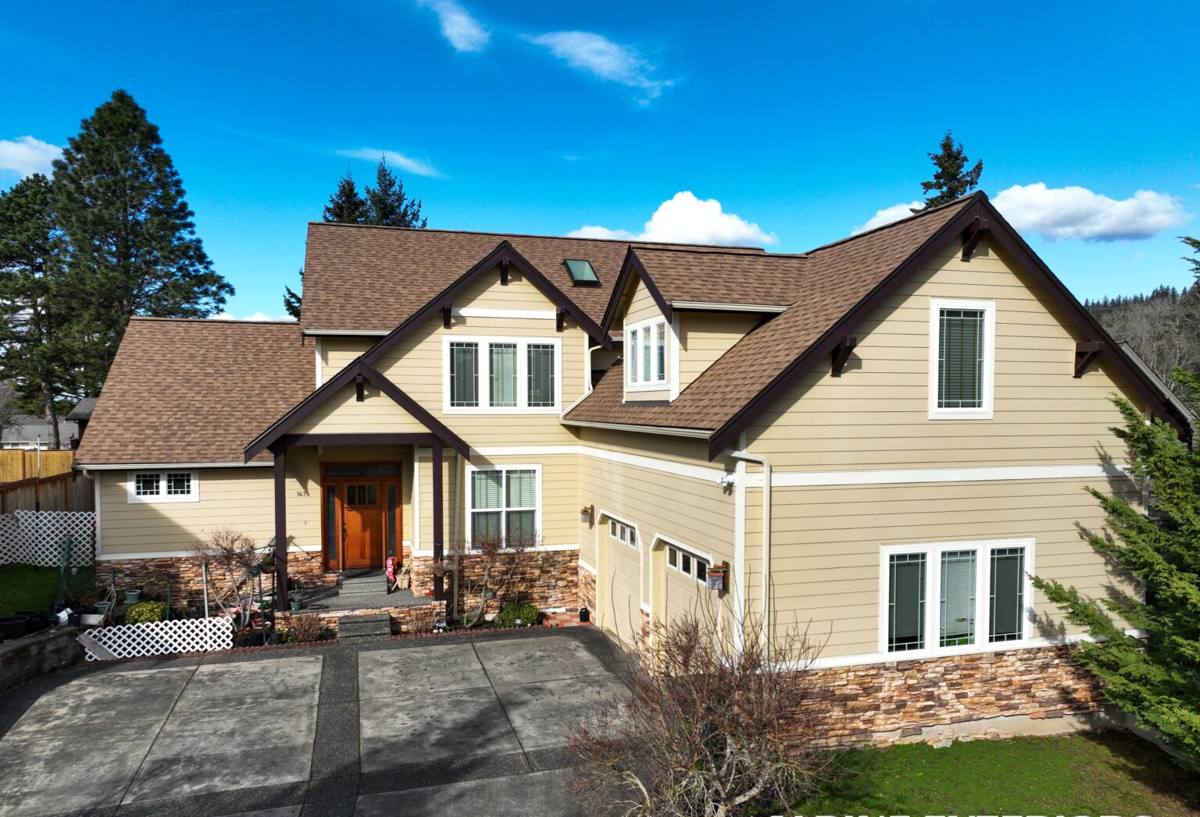
What a Correct Window Job Looks Like Out Here
It Starts With the Opening, Not the Window
Most window failures we get called out to investigate aren't really window failures — they're flashing, sealant, or sill failures that let water behind a perfectly good window. On a property exposed to driving rain and salt air, the rough opening has to be treated as carefully as the unit itself: proper flashing tape integrated with the weather-resistive barrier, a sloped sill pan so any water that does get in drains back out instead of pooling, and sealant joints sized and placed so they can actually move with the building without splitting.
The Window Itself Has to Match the Exposure
Beyond the opening, the unit needs glazing, frame material, and hardware rated for sustained moisture and airborne salt, not just a manufacturer's baseline spec sheet. We size that up per elevation — a window facing the prevailing wind and open water view gets treated differently than one tucked under an eave on the leeward side of the same house.
Signs a Conway Home's Windows Are Already Losing the Battle
- Black or green streaking on the sill or lower sash that comes back within weeks of cleaning
- Soft, spongy wood at the bottom corners of the frame or the sill
- Fogging or a permanent haze between panes of double-glazed units — a sign the seal has failed
- Visible daylight or a draft at the frame edge when the window is latched shut
- Paint that blisters or peels specifically around the window, not the surrounding wall
- Hardware (locks, cranks, hinges) that's pitted, stiff, or coated in white corrosion residue
- Difficulty latching or opening a window that used to operate smoothly
Window Styles That Hold Up in This Exposure
Style choice matters as much as material out here, because some designs simply shed water and resist wind-driven rain better than others.
| Style | How It Performs in Conway's Exposure | Best Use |
|---|---|---|
| Casement | Cranks shut against a compression seal, so wind actually presses it tighter — strong performer against driving rain | Walls facing open wind and water |
| Awning | Hinged at the top so it sheds rain even cracked open — good for ventilation during wet stretches | Above sinks, in bathrooms, sheltered walls |
| Single/Double-Hung | Relies on a sliding sash meeting a track seal — more joints for wind-driven rain to find, needs good weatherstripping | Traditional look on more sheltered elevations |
| Sliding | Similar exposure concerns to hung windows; performs fine when track drainage and seals are properly maintained | Wide openings, patio-adjacent rooms |
We're not against hung or sliding windows in Conway — plenty of homes here have them and do fine — but we do push clients toward casement or awning styles on the most exposed walls, because the physics of a compression seal simply beats a sliding seal when wind is shoving rain sideways at the house.
Frame Material: What We Recommend and Why
| Material | Trade-offs in This Climate |
|---|---|
| Vinyl | Won't rot or corrode from salt air, low maintenance, good value; quality varies a lot between manufacturers so we're selective about which lines we install |
| Fiberglass | Excellent dimensional stability and moisture resistance, handles temperature swings without warping; higher upfront cost than vinyl |
| Aluminum-clad wood | Attractive interior wood look with a weather-facing shell; the shell has to be fully sealed at every joint or moisture gets trapped against the wood core, which is the main failure mode we watch for |
| Solid wood | Best look for period-correct homes, but bare wood exposed to salt air and constant damp needs a maintenance schedule most homeowners underestimate — we're honest about that commitment before recommending it |
We don't steer people away from wood or clad-wood windows out of dislike for the product — for the right home and the right owner, they're a great choice. We steer people toward vinyl or fiberglass on the most exposed elevations because it's an honest trade-off: less charm, dramatically less upkeep, and one less thing to worry about when the next atmospheric river rolls through.
Our Installation Process for Conway Properties
- On-site assessment — we walk the exterior, check each elevation's exposure, and look at current window condition, existing flashing, and any signs of water intrusion already underway.
- Measure and specify — exact openings are measured, and we match style, material, and glazing to each wall's actual exposure rather than a one-size spec for the whole house.
- Remove and inspect the opening — once old windows come out, we check the rough opening, sheathing, and sill for hidden rot or moisture damage before anything new goes in. This is often where we find the real story behind a failing window.
- Flash and pan the sill — a sloped sill pan and properly lapped flashing tape go in before the new unit, so any water that reaches the opening has somewhere to go besides your wall cavity.
- Set, shim, and seal the window — the unit is leveled, shimmed to spec (not squeezed to force a fit, which stresses the frame), fastened, and sealed with movement-rated sealant at the right joints.
- Interior and exterior finish — trim, casing, and exterior weatherproofing are completed to match the home.
- Walkthrough — every window is opened, closed, and locked in front of the homeowner before we consider the job done.
Living With Moss Season and Salt Air After Install
Even the right window and a correct install still benefit from a bit of homeowner upkeep in this climate. A short seasonal routine keeps things performing for the long haul:
- Rinse frames and sills a couple times a year to clear salt residue and organic buildup before it stains or corrodes hardware
- Clear debris and moss from adjacent gutters and sills — trapped organic matter holds moisture against the frame
- Check exterior sealant joints annually, especially after a hard winter, and have any cracked or separated caulk redone before it becomes a leak path
- Lubricate hinges, cranks, and locks on casement and awning windows once a year to keep corrosion from seizing them up
- Watch for condensation between panes — it means a seal has failed and the insulating gas is gone, not something that fixes itself
Cost Factors Worth Understanding Before You Get a Quote
| Factor | Why It Moves the Price |
|---|---|
| Frame material | Vinyl is the most budget-friendly; fiberglass and wood/clad-wood cost more upfront but shift the maintenance and lifespan equation |
| Number and size of openings | Straightforward, but larger custom shapes or oversized units cost more to manufacture and install |
| Condition of existing openings | Hidden rot or damaged sheathing found during removal adds repair work that a simple retrofit install wouldn't need |
| Style | Casement and awning hardware mechanisms generally cost more than a comparable hung or sliding unit |
| Full-frame vs. insert replacement | Insert (replacing just the sash/frame within the existing opening) is usually less expensive than full-frame replacement, but full-frame is often the better call when the opening itself needs attention |
We give straight, itemized numbers during the estimate rather than a vague ballpark — every Conway property is a little different depending on exposure and existing condition, and that's exactly what the on-site visit is for.
Why It Matters That We Already Work Conway
Conway isn't a large market on its own, and plenty of window companies treat it as an afterthought stop between bigger jobs elsewhere in Skagit County. We work it regularly enough to know how this specific stretch of the delta behaves — which elevations take the worst of the wind, how fast moss builds up on north-facing sills here compared to more sheltered spots, and what kind of flashing detail actually holds up against sideways rain year after year. That's the kind of judgment that only comes from repeat, hands-on experience with a specific area's weather, not from a general sales brochure.
It also means we're not guessing at logistics — we know the drive, we know the area, and a Conway job gets the same attention to scheduling and follow-up as anything closer to our home base in Anacortes.
Ready to Talk About Your Windows?
If your Conway home has windows showing any of the wear signs above, or you're just tired of fighting moss and drafts every winter, we're happy to come take a look. The estimate is free, there's no pressure to sign anything on the spot, and you'll get a straight answer about what your home actually needs — use the form below to get started.