 Anacortes Window
 Why Cap Sante Homes Need to Think Differently About Siding
Cap Sante sits close enough to the water that homes here take a different kind of weathering than houses even a few miles inland. Salt-laden air moves through the neighborhood daily, driving rain comes in sideways off Rosario Strait during winter storms, and the damp, shaded stretches of the year give moss and algae months to get established on anything that holds moisture. Any siding material installed here is going to be tested by all three of those conditions at once, year after year.
This isn't a theoretical concern. It's the reason we've standardized on James Hardie fiber cement siding for every home we side, rather than offering a menu of vinyl, LP SmartSide, or cedar options. Cap Sante's climate is unforgiving of shortcuts, and the material choice matters as much as the installation.
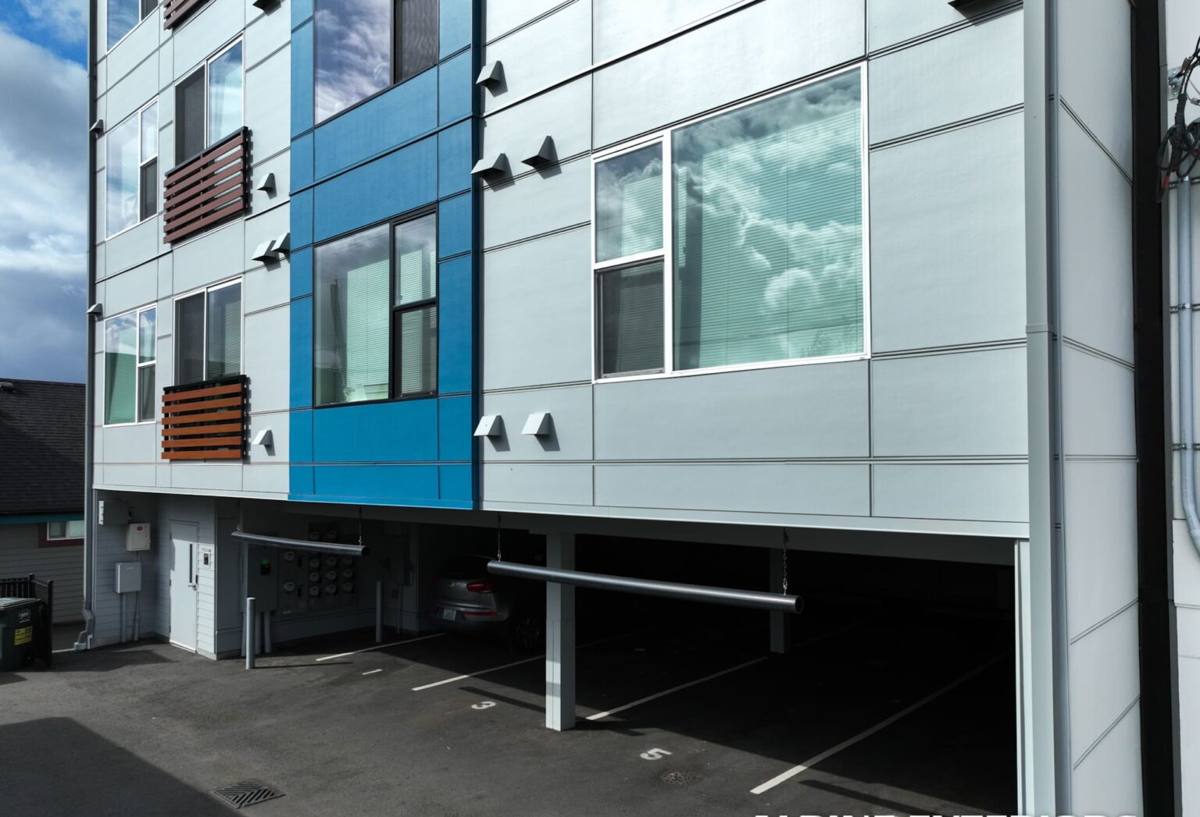
What Salt Air, Rain, and Moss Actually Do to Siding
Salt Air
Airborne salt is corrosive to metal fasteners and trim, and it accelerates the breakdown of lower-grade paint finishes. Siding that isn't engineered with a factory-cured finish tends to chalk, fade, or lose adhesion faster near the water than it would ten or twenty miles inland.
Driving Rain
Wind-driven rain doesn't just run down a wall — it gets pushed sideways into laps, joints, and butt seams. Any siding system with weak moisture resistance at the seams, or a water-resistant barrier installed incorrectly behind it, will eventually let water track behind the cladding. Once that happens, the sheathing and framing pay the price, not the siding itself.
Moss Season
Anacortes gets a long stretch of overcast, wet, low-sun months where moss and algae thrive on north- and west-facing walls, especially anywhere shaded by trees or a neighboring structure. Materials that absorb even small amounts of moisture give moss something to root into over time. Materials that stay dense and don't wick water resist it far better.
Why We Install James Hardie and Nothing Else
We don't offer vinyl, LP SmartSide, Cemplank, Allura, primed spruce, or cedar. That's a deliberate standard, not a lack of options. Each of those products has legitimate uses somewhere, but none of them holds up to Cap Sante's specific combination of salt exposure, wind-driven rain, and moss pressure as consistently as James Hardie fiber cement.
- Non-combustible core: Hardie's fiber cement won't ignite, warp, or melt — a real consideration given wildfire smoke seasons and the general push toward fire-resistant exterior materials in the Northwest.
- Dense, moisture-resistant composition: Fiber cement doesn't absorb and release moisture the way wood-based products can, which matters directly for moss and rot resistance in a marine climate.
- Factory-applied ColorPlus finish: The finish is baked on under controlled conditions, not applied on-site, which gives it far better long-term color retention against salt air and UV than field-applied paint.
- Climate-engineered HZ product lines: Hardie makes region-specific formulations (HZ5 for our zone) designed around freeze-thaw cycles and moisture exposure rather than a one-size-fits-all product.
- Transferable warranty: A meaningful warranty that survives a home sale is worth something to a buyer down the line — a detail that matters in a neighborhood where waterfront and near-waterfront property turns over.
What a Correct Install Involves Here
James Hardie siding performs the way it's rated to only when it's installed to spec — and in a high-moisture, salt-air location like Cap Sante, the installation details matter more than in a drier inland town.
Water-Resistive Barrier and Flashing
Before a single piece of siding goes up, the wall needs a correctly lapped water-resistive barrier and properly integrated flashing at every window, door, and penetration. This is the layer that actually keeps wind-driven rain out of the wall assembly — the siding is the second line of defense, not the first.
Rainscreen or Proper Drainage Gap
Given how much rain this area sees, a drainage gap behind the siding lets any incidental moisture that gets past the cladding drain and dry out instead of sitting against the sheathing. This is one of the details that separates a durable install from one that looks fine for a few years and then causes problems.
Fastener Selection and Placement
Corrosion-resistant fasteners, placed and spaced according to Hardie's specifications, are non-negotiable this close to salt air. Under-driven or over-driven nails, or the wrong fastener type, are a common source of premature siding failure regardless of how good the material is.
Caulking and Joint Treatment
Butt joints, trim transitions, and penetrations need to be sealed with the right products, in the right sequence, so that water is shed rather than trapped. Done wrong, these are exactly the spots where moss gets a foothold and moisture works its way behind the panel.
Ventilation and Clearance
Proper clearance from grade, decks, and roof lines keeps splash-back and standing moisture away from the bottom courses of siding — a detail that's easy to shortcut and expensive to fix later.
Comparing Common Siding Choices for a Cap Sante Home
| Material | Salt Air Performance | Moisture/Moss Resistance | Finish Longevity |
|---|---|---|---|
| James Hardie Fiber Cement | Strong — dense composition resists corrosion-driven wear | Strong — low moisture absorption | Long — factory-cured ColorPlus finish |
| Vinyl | Moderate — can become brittle and fade with UV/salt exposure over time | Moderate — doesn't rot, but can trap moisture behind panels if installed loosely | Moderate — color is molded-in but not repaintable easily |
| Wood/Cedar (including primed spruce) | Weak to moderate — needs consistent maintenance near salt air | Weak — absorbs moisture, prone to moss and rot without upkeep | Short — repainting/staining on a recurring cycle |
| LP SmartSide / Engineered Wood | Moderate — performs well when sealed edges stay intact | Moderate — edge sealing and caulking maintenance is critical | Moderate — field-applied finishes wear faster than factory-cured |
This isn't a claim that other materials are unusable — plenty of homes around the country are sided in each of them successfully. It's a statement about what we've found holds up best, with the least maintenance burden, specifically in a marine, high-rain, moss-prone environment like this one.
What This Means for Maintenance Over Time
Homeowners in Cap Sante often ask what upkeep looks like after a Hardie install. The honest answer: it's low, but not zero. A periodic rinse to knock off salt residue and any moss spores before they establish, an eye kept on caulking at joints and trim over the years, and prompt attention if a gutter or downspout starts overflowing onto a wall section. None of that compares to the sanding, painting, and edge-sealing cycles that wood-based or field-finished products typically need in this climate.
Our Process for a Cap Sante Siding Job
- On-site assessment: We look at wall orientation (which sides get the most driving rain and shade), existing moisture damage, and the condition of the current water-resistive barrier and trim.
- Product and color selection: We walk through Hardie's HZ5 lines, panel/lap profiles, and ColorPlus options suited to the home and to how the neighborhood's homes typically read.
- Tear-off and inspection: Removing the existing siding lets us actually see the sheathing underneath — this is where hidden moisture damage from a prior installation often shows up.
- Barrier, flashing, and drainage gap installation: This is the step that determines how the wall performs for the next several decades, done before any visible siding goes up.
- Hardie installation to manufacturer spec: Correct fasteners, spacing, joint treatment, and clearances, following Hardie's published installation requirements for our climate zone.
- Final detailing: Trim, caulking, and touch-up work, followed by a walkthrough so the homeowner understands what maintenance (if any) to expect going forward.
A Quick Checklist Before You Hire Anyone for Siding in Cap Sante
- Ask whether they install a drainage gap or rainscreen behind the siding, not just a barrier.
- Ask what fastener type they use and whether it's rated for coastal/marine exposure.
- Ask to see how they handle flashing at windows and doors — this is where most failures start.
- Ask whether they follow the manufacturer's climate-specific installation manual, not just "how we always do it."
- Ask what the warranty actually covers, and whether it's transferable if you sell the home.
Why Local Experience in Cap Sante Specifically Matters
A crew that has worked other neighborhoods around Anacortes and Skagit County, but not the specific conditions near the water at Cap Sante, can still make good general decisions — but the margin for error is smaller here. Knowing which wall orientations take the worst of the wind-driven rain, how much moss pressure to expect on shaded elevations, and how salt air behaves against trim and fasteners over a few winters isn't something you get from a manual. It comes from having done the work in this specific area and having seen how the details hold up years later.
If you're considering a siding replacement or a new install in Cap Sante, we're happy to take a look at your home, talk through what we're seeing, and put together a straightforward, no-pressure estimate — no obligation, just a clear picture of what your home needs. The form below gets you started.