 Anacortes Window
 Roof Repair in Burlington: What Local Homes Are Up Against
Burlington sits in the Skagit Valley, close enough to the water that salt air reaches shingles and flashing long before most homeowners notice any damage. Add in the region's driving rain, which tends to come in sideways during winter storms, and a moss season that can run eight months or longer, and you have a climate that is genuinely hard on roofs. None of this means a Burlington roof is doomed to constant problems. It means the maintenance and repair work has to match the conditions, not a generic checklist written for a drier part of the country.
Most roof problems we see in this area do not start as leaks. They start as small, easy-to-miss issues: a lifted shingle tab, a hairline crack in old flashing cement, a gutter that backs up during a heavy rain event and pushes water under the roof edge. By the time a homeowner sees a stain on the ceiling, the underlying damage has usually been building for a while. Repair work done early, before water finds its way into the sheathing or attic insulation, is almost always cheaper and less disruptive than repair work done after a leak shows up indoors.
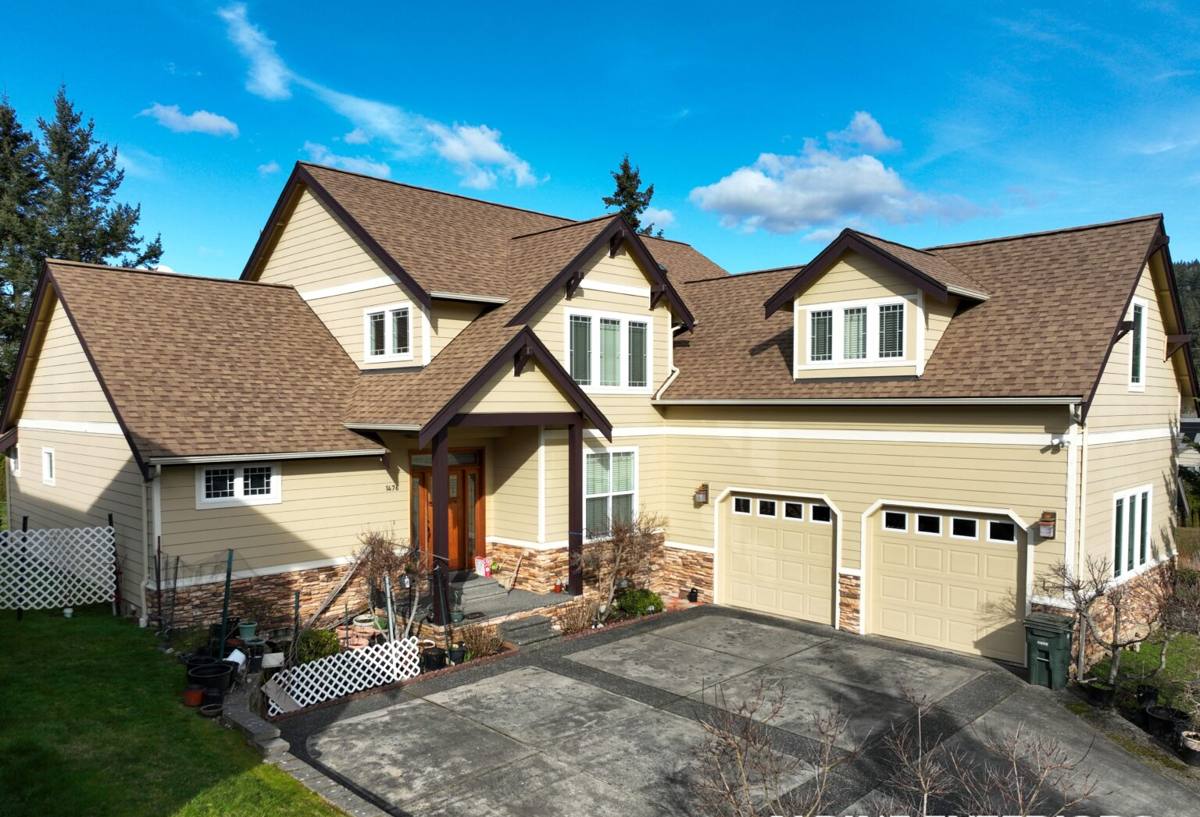
Signs Your Burlington Roof Needs Repair, Not Replacement
A lot of roofs get replaced years before they need to be, simply because nobody looked closely enough to see that the problem was fixable. On the other side, some roofs get patched over and over when the smarter move would have been a straightforward section replacement. The honest answer usually falls somewhere in between, and it depends on the roof's age, the extent of the damage, and how the roof has been maintained.
- Missing, cracked, or curling shingles limited to one slope or section rather than spread across the whole roof
- Flashing that has pulled away from a chimney, skylight, or sidewall, especially where two roof planes meet
- Granules collecting in gutters or at downspout outlets, which signals shingle wear but not necessarily failure
- Visible daylight through the roof deck when viewed from the attic, or damp insulation near a specific spot
- Moss buildup thick enough to hold moisture against the shingle surface, especially on north-facing slopes
- Soft or spongy spots underfoot near valleys, penetrations, or the roof edge, which usually means deck damage
If the damage is contained and the rest of the roofing material is still doing its job, a targeted repair is the right call. If the roof is older, has multiple failing areas, or the deck itself has been compromised over a wide area, we will tell you that plainly rather than patching something that needs more than a patch.
Common Roof Repair Issues We See in Burlington and Skagit County
Moss and Organic Growth
Moss is more than a cosmetic issue here. It holds moisture directly against the shingle surface for months at a time, which accelerates granule loss and can work its way under shingle edges as it spreads. On shaded, north-facing roof planes, which are common on homes tucked among trees around Burlington, moss growth can outpace what a homeowner can manage with periodic cleaning alone.
Flashing Failure
Flashing around chimneys, skylights, dormers, and roof-to-wall intersections is often the first thing to fail on an otherwise sound roof. Sealants degrade with UV exposure and temperature swings, and once a bead of caulk cracks, wind-driven rain finds the gap. Flashing repair is precise work; it is also some of the most cost-effective repair work available because it addresses the failure point directly instead of replacing material that is still performing fine.
Valley and Ice Dam Damage
Roof valleys carry a disproportionate amount of water off the roof, and in a climate with sustained heavy rain, they take more wear than open field areas. Compounding that, occasional cold snaps can produce ice dams at eaves, which back water up under shingles that were never designed to hold standing water. Valley metal and eave protection are common repair points on older Burlington roofs.
Wind and Storm Damage
Winter storms moving through the valley can lift shingle tabs, crack ridge caps, or tear loose a section of roofing that was already weakened. Storm damage repair is usually urgent, since an open section of roof deck can let in a significant amount of water in a single event.
What a Correct Roof Repair Actually Involves
A roof repair done right is not just swapping out a few shingles and calling it finished. It starts with figuring out why the damage happened in the first place, because replacing material without addressing the cause just means the same repair again in a year or two.
- Identify the actual point of water entry, which is often several feet from where the interior stain or damage shows up
- Inspect the roof deck underneath the damaged area for rot, soft spots, or delamination before installing new material
- Replace or repair the underlayment in the affected section, not just the visible shingles
- Rebuild flashing details correctly, with proper overlap and fastening rather than relying on sealant alone
- Match new shingles to the surrounding roof as closely as possible in profile and color
- Check adjacent areas, gutters, and downspouts to confirm water will shed properly once the repair is complete
Skipping the deck inspection is the most common shortcut in roof repair work, and it is the one that causes repeat problems. A shingle laid over a soft or damaged deck will not hold fasteners properly and will fail again, often faster than the first time.
Repair vs. Replacement: How We Help You Decide
Homeowners are often unsure whether a given problem calls for a repair or signals that the whole roof is nearing the end of its service life. There is no single rule that applies to every roof, but a few factors consistently point one direction or the other.
| Factor | Points Toward Repair | Points Toward Replacement |
|---|---|---|
| Roof age | Under roughly two-thirds of expected material lifespan | At or beyond expected lifespan for the material |
| Extent of damage | Isolated to one section, penetration, or slope | Spread across multiple slopes or the whole roof |
| Deck condition | Solid, dry sheathing beneath the damaged area | Widespread rot, soft spots, or repeated deck repairs |
| Shingle condition elsewhere | Remaining shingles still flexible, granules intact | Granule loss, curling, or brittleness across the roof |
| Repair history | First or second repair in this area | Same spot repaired multiple times already |
We will always walk you through where your roof lands on these points before recommending a direction, and we will show you what we found rather than just telling you what to do.
Our Roof Repair Process in Burlington
Inspection and Honest Assessment
We start on the roof, not just from the ground, and we go into the attic when we can to check for moisture, staining, or daylight that points to the real source of a leak. We photograph what we find so you can see it, not just take our word for it.
Clear Written Estimate
You get a written scope of work and a price before anything happens, including what material we plan to use and what areas of the roof will be touched. If we find something during the inspection that changes the scope, we discuss it with you before proceeding rather than adding surprise charges afterward.
The Repair Itself
We protect the surrounding landscaping and property, remove and dispose of damaged material properly, and rebuild the affected section to match the surrounding roof as closely as possible. Flashing and underlayment get the same attention as visible shingles, since that is where most repairs actually succeed or fail.
Cleanup and Final Check
We run a magnetic sweep for stray nails around the work area, clear debris, and do a final walk-through so you know exactly what was done and why. If we noticed anything else on your roof worth keeping an eye on, even if it did not need attention this visit, we will tell you.
Materials and Methods We Use
For repair work, matching the existing roof matters as much as the quality of the new material. A mismatched patch stands out, and more importantly, mismatched materials can behave differently under the same weather conditions, creating new stress points. We work with standard asphalt composition shingles in the profiles common to this region, along with metal flashing in aluminum or galvanized steel depending on what the existing roof uses and what the application calls for.
Sealants and cements have a limited service life even when applied correctly, which is why we favor mechanical flashing details, proper overlap, and correct fastening over relying on caulk to do the structural work. Caulk has its place as a finishing step, not as the primary defense against water intrusion. This is a professional standard we hold to on every repair, not a judgment about any particular product brand.
Why Hiring a Crew That Already Works Burlington Matters
Roofing conditions are not identical across Washington, or even across Skagit County. A crew that mostly works drier, inland climates may not think twice about a repair method that performs fine there but struggles under the sustained rain and salt-tinged air common closer to the water near Anacortes and Burlington. Knowing which flashing details hold up, which shingle types handle moss exposure better, and where valleys and eaves typically fail on homes in this area comes from doing the work here repeatedly, not from a general roofing background alone.
Local experience also means a faster, more accurate diagnosis. We have seen the common failure points on the housing stock in this area enough times to know where to look first, which shortens the inspection and gets you a straight answer sooner.
Maintaining Your Roof Between Repairs
A repair holds up longer when the roof around it is reasonably well maintained. A few habits make a real difference in a climate like this one.
- Clear gutters and downspouts before the fall rains arrive, and check them again mid-winter
- Trim back tree limbs that shade roof sections and contribute to persistent moss growth
- Have moss treated or removed before it thickens rather than after it has taken hold
- Walk the attic occasionally for signs of moisture, especially after a heavy storm
- Address small flashing or shingle issues promptly instead of waiting for a leak to appear indoors
None of this replaces a periodic professional look, but it reduces how often you need one, and it helps any repair we do last as long as it should.
If you have noticed a stain on a ceiling, missing shingles after a windstorm, or moss creeping across your roofline, we are happy to take a look and give you a straight, no-pressure assessment. Reach out for a free estimate using the form below.