 Anacortes Window
 Burlington Decks Take a Different Kind of Beating
Burlington sits far enough inland from Anacortes to escape the worst of the direct salt spray, but it still sits inside the same weather system: wet Pacific air moving in off Puget Sound and Skagit Bay, months of low-angle winter sun that never quite dries anything out, and a moss and algae season that can run from October clear through April in a shaded backyard. A deck out here isn't just fighting rain. It's fighting standing moisture that never fully evaporates between storms, freeze-thaw cycles that are mild but frequent, and organic growth that gets into every joint, screw hole, and board gap it can find.
That combination is hard on decks in a specific way. It's rarely one dramatic failure. It's slow: a ledger board that stays damp against the house siding, joists that never see direct sun, fasteners that were fine for the first five years and then start bleeding rust into the wood around them. By the time a deck looks bad on top, the structure underneath has usually been losing strength for a while. That's the gap a straight replacement job is meant to close — not just new boards, but a structure built to actually shed water and dry out between the wet stretches that define a Skagit County winter.
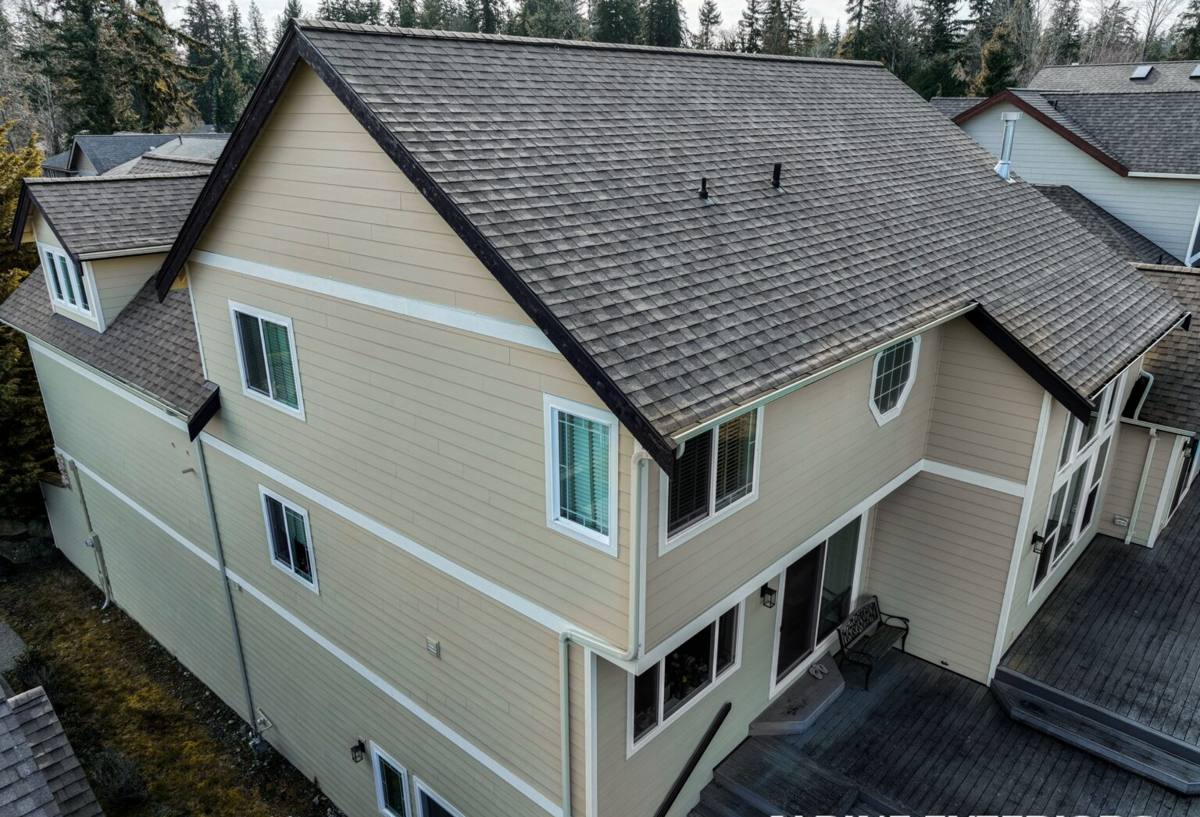
Repair, Resurface, or Full Replacement — Knowing Which One You Need
Not every tired-looking deck needs to come out entirely. But in this climate, cosmetic problems on top are often a signal of something more serious underneath, and it's worth knowing the difference before you spend money on the wrong fix.
- Surface graying, mild cupping, or peeling stain — usually a refinishing or board-swap job, not a full replacement.
- Soft or spongy spots when you walk on it — a sign of rot in the decking or the framing below; often means partial or full structural replacement.
- Rust streaks running down from fasteners — the fastener is failing and taking the wood fiber around it with it; localized but tells you the whole fastening system may be near end of life.
- Deck feels bouncy or the railing has play in it — a structural issue, not cosmetic, and shouldn't wait.
- Ledger board area (where the deck meets the house) is dark, swollen, or soft — this is the single most common serious failure point on decks in wet climates and needs to be inspected properly, not patched over.
- Deck is 20+ years old and was built before current ledger flashing and joist protection practices — even if it looks okay, the framing underneath may not meet what's considered safe or code-correct today.
We walk every deck before quoting anything, checking framing moisture, fastener condition, and the ledger connection specifically, because that's where Burlington's damp shoulder seasons do the most damage out of sight.
What a Correct Deck Replacement Actually Involves
A deck replacement that's built for this area isn't just pulling old boards and screwing down new ones. The framing and water management underneath the decking are what determine whether the new deck lasts 10 years or 30.
The Ledger Connection
This is where the deck attaches to the house, and it's the single spot most responsible for premature deck failure in wet regions. It needs proper flashing that directs water away from the house sheathing, not just caulk and a hope. We treat this connection as the most important structural detail on the whole project.
Joists and Framing
Pressure-treated framing lumber is standard, but the fasteners and hardware connecting it need to be rated for contact with treated lumber's chemical makeup — mismatched metal corrodes fast in a damp climate like ours. Joist tape or a similar protective barrier on top of each joist keeps water from pooling directly against the wood under the decking boards, which is one of the cheapest, most effective upgrades for longevity in a place that stays wet as long as Skagit County does.
Footings and Posts
Old decks in this area were sometimes built on footings that don't meet current frost depth or bearing requirements, or on posts set directly in soil with no separation from ground moisture. Replacement is the right time to correct that, since it's not something you can fix later without pulling the deck apart again.
Drainage and Airflow Underneath
A deck that sits low to the ground with poor airflow underneath stays damp far longer after a rain than one with proper clearance. Grading, gaps, and ventilation underneath the structure all factor into how fast it dries out between storms — which, in this region, matters more than almost anything else.
Decking Material Choices for a Wet, Mossy Climate
There's no single "best" decking material — there's a best fit for how you'll use the deck, your maintenance appetite, and your budget. Here's how the common options actually perform in Burlington's climate specifically.
| Material | Moisture & Moss Behavior | Maintenance | Typical Lifespan Here |
|---|---|---|---|
| Pressure-treated wood | Absorbs and releases moisture readily; needs to dry fully between wet spells or it stays vulnerable to rot and moss growth in shaded areas | Annual cleaning, periodic staining/sealing | 15–20 years with upkeep |
| Cedar | Naturally moisture- and insect-resistant, but still an organic surface that moss and algae will colonize in shade without cleaning | Regular cleaning and refinishing to hold color and resistance | 15–20 years with upkeep |
| Composite decking | Doesn't rot or absorb water like wood, but surface texture can still hold moisture film where moss spores land — capped composites resist this better than uncapped | Periodic washing; no staining or sealing required | 25–30+ years |
| PVC / cellular decking | Fully synthetic, doesn't absorb moisture at all; best resistance to moss and algae staining of the common options | Occasional washing | Comparable to or longer than composite |
We install all of these. Where we're careful is with lower-grade composite products that trap moisture at the board grooves or fastener points — not because the composite category is bad, but because installation detail (proper spacing, correct fastening, hidden clip systems that don't puncture the cap layer) matters as much as the material choice itself in a climate this wet. We'll walk you through the real trade-offs for your specific deck rather than pushing one product line.
Permits and Local Code in Skagit County
Deck replacement projects above a certain height or size typically require a building permit through the local jurisdiction, and structural elements — footings, ledger attachment, railing height and spacing — get inspected against current code, not the code that was in place when the original deck went up years ago. This catches some homeowners off guard: a like-for-like replacement can still trigger requirements the original deck never had to meet, especially around railing baluster spacing and guard height. We handle the permit process as part of the job so you're not the one tracking down inspections.
How Our Deck Replacement Process Works
- On-site evaluation. We inspect the existing deck, check the ledger connection and framing for moisture damage, and talk through how you actually use the space.
- Scope and material discussion. We lay out what genuinely needs to be replaced versus what can be reused, and walk through decking material options with honest trade-offs for your budget and site conditions.
- Permit handling. We pull the required permits and coordinate inspections so the structure is signed off correctly.
- Demolition and disposal. Old decking, framing, and any compromised posts or footings come out, with the site cleared and hauled off.
- Structural rebuild. New footings, framing, ledger flashing, and joist protection go in first — the part that doesn't show but matters most.
- Decking and railing installation. Your chosen material goes down with attention to fastening method, spacing for drainage, and railing code compliance.
- Final walkthrough. We go over the finished deck with you, including what maintenance (if any) the material needs going forward.
Keeping a New Deck Ahead of Moss Season
Even a well-built deck needs a little seasonal attention in this climate. What that attention looks like depends heavily on the material you chose.
- Sweep debris (leaves, needles, seed pods) off the deck regularly in fall — trapped organic matter is what moss and algae feed on first.
- Rinse or wash the surface at least once before winter and once in spring, especially in shaded or low-airflow areas.
- Check that gaps between boards stay clear so water can drain through rather than pool on the surface.
- For wood decks, plan on resealing or restaining on the schedule the product calls for — skipping a cycle in this climate compounds fast.
- Keep gutters and downspouts near the deck clear so roof runoff isn't dumping extra water onto or under the structure.
- Trim back overhanging vegetation where possible to cut down on shade and moisture retention on the deck surface.
What Affects the Cost of a Deck Replacement
Every deck is different, so we won't quote a number without seeing the site, but these are the factors that move the price most:
| Factor | Why It Matters |
|---|---|
| Deck size and shape | Square footage and complexity (multiple levels, angles, curves) directly affect material and labor time |
| Decking material chosen | Pressure-treated wood, cedar, composite, and PVC span a wide cost range and different maintenance costs over time |
| Framing and footing condition | How much of the substructure needs replacement versus reuse changes the scope significantly |
| Height off the ground | Taller decks require more substantial railing, stair, and structural work, plus different permit requirements |
| Access to the site | Tight side yards or difficult equipment access can add labor time for demolition and material staging |
| Railing and stair details | Custom railing styles, glass panels, or multiple stair runs add cost beyond the deck surface itself |
Why It Matters That We Already Work in Burlington
A deck built to a generic national spec doesn't account for the specific rhythm of weather in Skagit County — how long things stay damp here, how aggressively moss establishes itself in shaded yards, or which local conditions tend to compromise ledger connections and footings first. Working in and around Burlington and the greater Anacortes area regularly means we're not guessing at how a given material or detail performs here — we're seeing the results on decks we've built and inspected in this exact climate, year after year. That local pattern recognition is what separates a deck that looks good on installation day from one that still performs well a decade into Burlington's wet seasons.
If you're weighing repair versus replacement, or just want an honest read on where your current deck stands, we're happy to take a look. Use the form below to request a free, no-pressure estimate and we'll walk the site with you.