 Anacortes Window
 Decks in Bow Face a Different Kind of Wear
Bow is a small, mostly rural community tucked into Skagit County between Anacortes and Burlington, close enough to tidal water that salt-laden air is part of daily life for a lot of properties out here. Combine that with the long wet season, heavy tree cover on many lots, and the shoulder months when everything stays damp for weeks at a time, and you get a climate that is genuinely hard on exterior wood and fasteners. A deck built to a generic national spec, or one that was fine in a drier inland climate, often does not hold up the same way here.
What we see most often on older Bow decks is not one dramatic failure but a slow accumulation of small ones: fasteners that have started to bleed rust into the boards, ledger connections that have taken on moisture behind the siding, footings that were never quite deep or wide enough, and a green-black film of moss and algae that keeps the wood surface wet far longer than it should be. None of that shows up overnight. It shows up after five, ten, fifteen winters of driving rain and short gray days that never quite let the structure dry out.
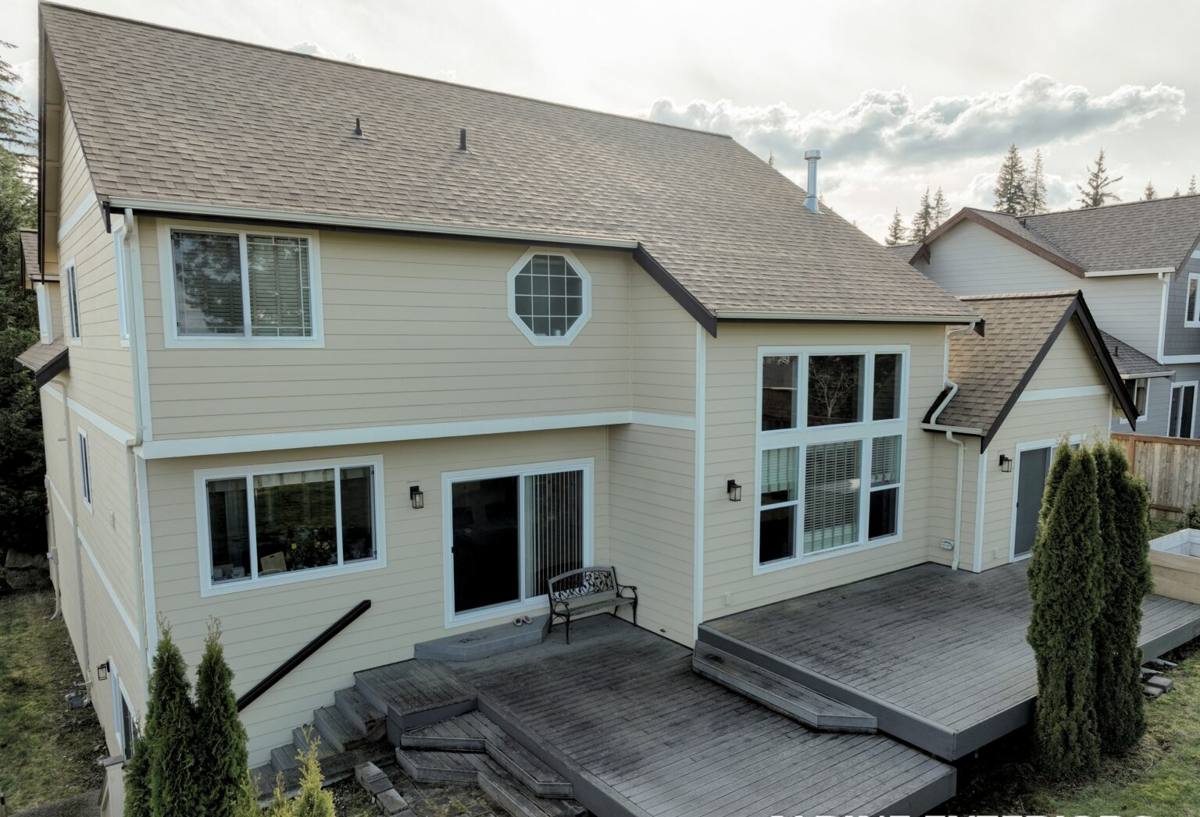
Repair, Resurface, or Replace — Knowing Which One You Actually Need
Repair
Repair makes sense when the problem is isolated — a few boards, a loose rail, a stair stringer that has started to split. If the framing underneath is sound and dry, targeted repair is the honest, cost-effective answer, and we will tell you that plainly if that is what your deck needs.
Resurfacing
Resurfacing means keeping the existing frame and swapping the walking surface and rails for new material. This only works if the substructure — joists, beams, posts, footings — is still structurally sound. On a lot of older Skagit County decks, especially ones built directly on grade or with undersized footings, the frame is the part that has actually failed, which makes resurfacing a short-term fix at best.
Full Replacement
Replacement means removing the deck down to (and often including) the ledger and footings, and rebuilding the whole structure to current code. We recommend this when the frame shows rot, when footings are inadequate for the deck's size and load, or when the deck is old enough that patching it would just mean repeating the same repair every few years. A straightforward way to think about it: if you are already paying to open up the frame to find the problem, you are usually better off rebuilding it right the first time.
What a Correct Deck Replacement Actually Involves
A deck replacement done right is mostly invisible once it is finished — the parts that matter most are the parts you will never see again. That is exactly why so many older decks fail from the inside out: the visible boards looked fine for years while the connections underneath were quietly failing.
- Removal of the old deck down to framing, with an honest assessment of what can and cannot be reused
- New or reinforced footings sized for the actual deck load and Skagit County frost depth requirements, not just what was there before
- Proper ledger attachment to the house, including flashing that sheds water away from the wall assembly instead of trapping it — this single detail is behind more deck and siding rot calls than almost anything else
- Corrosion-resistant fasteners and structural hardware rated for the coastal, high-moisture environment
- Joist and beam spacing and sizing that meets current code span tables for your decking material and load
- Proper drainage and airflow underneath the deck so the frame can actually dry between rain events
- Rail and stair construction that meets current guardrail and stair code, which has tightened over the years even if your old deck was built to an older standard
Any one of these done poorly can undercut the whole project, even if the decking boards on top look great on installation day.
Choosing Decking Material for This Climate
There is no single "best" decking material — there is a best material for your budget, your maintenance appetite, and how much sun or shade your particular lot gets. Bow properties range from open, sunnier parcels to heavily treed lots where moss and moisture linger longer, and that difference matters when picking material.
| Material | Upfront Cost | Maintenance | How It Handles This Climate |
|---|---|---|---|
| Pressure-treated fir/hem-fir | Lowest | Regular cleaning and re-sealing needed | Prone to moss growth in shaded, damp spots without upkeep; needs a real sealing schedule |
| Cedar | Mid-range | Periodic oiling or staining to hold color and resist checking | Naturally more rot-resistant than fir, but still needs maintenance to look and perform its best in wet conditions |
| Composite / capped composite | Higher upfront | Occasional washing, no sealing or staining | Handles constant moisture and moss exposure with the least ongoing effort; some lower-grade composites can still trap surface moisture, so board quality matters |
We are honest about trade-offs rather than pushing one product line. Wood costs less to install but asks more of you every year. Composite costs more up front and asks less of you afterward. Given how much rain and moss pressure this area sees, we walk homeowners through both and let the maintenance conversation, not a sales pitch, drive the decision.
Our Process for a Bow Deck Replacement
1. On-Site Assessment
We look at the existing deck from the ground up — framing condition, footing depth and spacing, ledger attachment, and any moisture damage to the house wall behind it. This tells us whether you are looking at a repair, a resurface, or a full rebuild before we ever talk numbers.
2. Straightforward Estimate
You get a clear scope and price range based on size, material choice, and what the structure actually needs — not a placeholder number that changes once demolition starts.
3. Permitting
Most deck replacements in Skagit County require a building permit, particularly when footings, ledger attachment, or guardrails are involved. We handle that process so the finished deck is inspected and code-compliant, not something that becomes a problem when you go to sell the house.
4. Demolition and Rebuild
Old decking, framing, and any compromised footings come out. We rebuild from the ground up with materials and hardware suited to a coastal, high-rainfall climate, and we do not cover up ledger or framing work before it has been inspected.
5. Final Walkthrough
We walk the finished deck with you, cover basic care for whatever material you chose, and make sure rails, stairs, and fasteners all check out before we call it done.
Signs Your Deck Has Crossed From "Needs Repair" to "Needs Replacing"
- Boards that feel soft, spongy, or flex noticeably underfoot
- Rust-colored streaking around fasteners or hardware, which usually means the metal is failing, not just staining the wood
- Any gap or movement where the deck meets the house — a sign the ledger connection may have failed
- Rail posts that wobble or flex when pushed, which is a safety issue, not a cosmetic one
- Visible rot or soft wood at the base of support posts
- Moss or algae buildup that comes right back within weeks of cleaning, suggesting the wood underneath is staying wet
- A deck older than 15-20 years that has never had the substructure inspected
If you are seeing more than one of these, it is worth having the frame looked at before another wet season goes by.
Permits and Code in Skagit County
Deck work in unincorporated Skagit County, which includes Bow, generally falls under county building permit requirements once you get past very small, low, freestanding structures. Guardrail height, stair rise and run, footing depth, and ledger attachment methods are all things an inspector will check. Skipping permits on a deck rebuild is a common shortcut that causes real problems later — at resale, with insurance, or simply with safety, since those code requirements exist because older deck failures caused real injuries. We pull the proper permits and build to the current code, not to what was allowed when the old deck went in decades ago.
Why a Crew That Already Works Bow Matters
A deck replacement is a structural project as much as a cosmetic one, and the details that matter most — footing depth, ledger flashing, fastener choice — are exactly the details that get shortchanged by crews unfamiliar with how hard this specific climate is on exterior structures. A crew that regularly works Bow and the surrounding Anacortes area already knows what driving rain off the water and a long moss season do to a deck over time, and builds accordingly from day one instead of learning it the hard way on your project. That local familiarity also means fewer surprises with the county permitting process and a realistic sense of how weather windows affect scheduling out here.
Caring for Your New Deck
Whatever material you choose, a few habits go a long way in this climate: keep leaves and debris from collecting between boards where they trap moisture, rinse off moss and algae before it gets established rather than after, and check fastener heads and rail connections once a year. Wood decking needs a real re-sealing schedule to keep performing; composite decking mostly needs to be kept clean. Either way, a deck built correctly from the ground up will ask a lot less of you over the years than one that was patched together.
If your deck in Bow is showing its age, or you just want an honest read on whether it needs repair or a full rebuild, we are happy to take a look. Reach out for a free, no-pressure estimate using the form below.