 Anacortes Window
 What Bow's Climate Does to a Deck Over Time
Bow sits in the part of Skagit County where saltwater is never more than a few minutes away, and that proximity shapes everything about how an outdoor structure ages. Salt-laden air corrodes exposed metal fasteners, wind-driven rain off the water finds its way into seams and end cuts, and the long stretch of gray, wet months from fall through spring keeps every horizontal surface damp far longer than homeowners further inland ever deal with. A deck here doesn't fail because of one bad storm. It fails gradually, from moisture that never fully dries out between rain events and from fasteners and hardware that corrode faster than they would twenty miles inland.
Moss is the other piece of it. Given shade, moisture, and organic debris, moss and algae will colonize almost any decking surface in this part of Washington, and once established it holds water against the boards and turns the surface slick and slippery underfoot. None of this means a deck can't last — it means the material, the fasteners, and the way the whole assembly is built either work with these conditions or fight a losing battle against them for the next fifteen years.
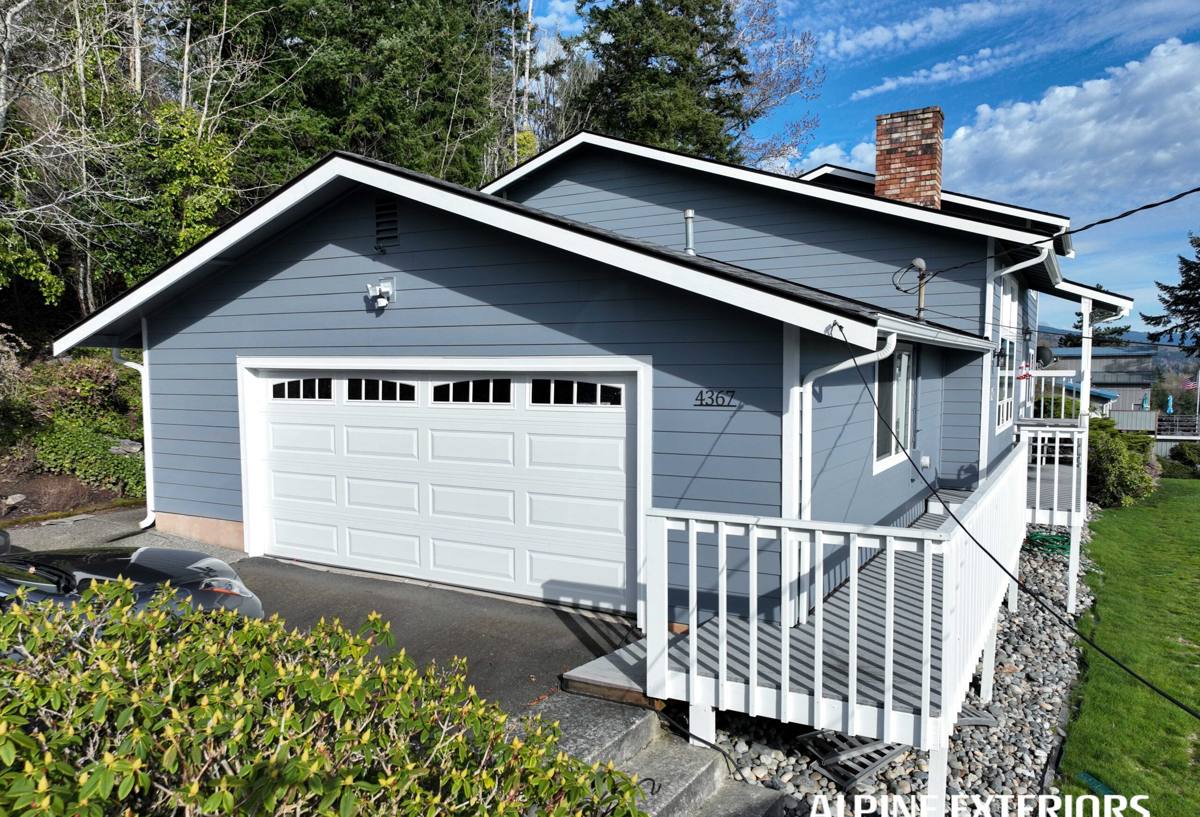
Why Composite Decking Fits This Environment
Moisture Behavior
Solid wood decking absorbs and releases moisture constantly, which is what drives the cupping, splitting, and checking that shows up on older decks throughout Skagit County. Composite boards are made from a blend of wood fiber and plastic, and capped composite products add a polymer shell around that core. The result is a board that doesn't swell, split, or absorb water the way solid wood does, which matters directly in a climate where boards rarely get a long dry stretch to recover in.
No Annual Refinishing Cycle
A wood deck in this area realistically needs to be cleaned, brightened, and resealed on a yearly or every-other-year basis to hold up against the rain and UV exposure — skip that maintenance and the wood starts graying, splintering, and absorbing water within a couple of seasons. Composite decking doesn't need staining or sealing at all. That's less about convenience and more about what happens when maintenance gets deferred, which is common with second homes, rental properties, and busy households — a wood deck punishes neglect, a composite deck tolerates it.
Consistent Footing
Composite boards are manufactured with grain patterns and surface texture built in, rather than relying on natural wood grain that wears smooth over time. That texture holds up better underfoot when the surface is damp, which is a real consideration through the wetter months when a deck may not fully dry for days at a stretch.
What a Correct Composite Deck Installation Actually Involves
Composite decking is often marketed as low-maintenance, and it is — but that reputation only holds up if the structure underneath and the installation details are done correctly. A composite board laid over a poorly built or poorly ventilated substructure will still trap moisture, and the manufacturer's warranty won't cover problems caused by installation shortcuts.
Substructure and Joist Spacing
Composite boards flex differently than solid wood and most manufacturers specify tighter joist spacing than a wood deck would need, particularly for boards run at an angle or in areas that will see furniture or hot tub loads. Building to the composite manufacturer's actual span tables — not just standard wood-deck framing assumptions — is what keeps boards from developing a bounce or a sag over time.
Fasteners and Hidden Clips
Most composite systems use hidden fastener clips rather than face-screwed boards, which gives a cleaner look and eliminates the exposed screw heads that are usually the first thing to corrode and streak in salt air. The clips and screws themselves need to be stainless or coated hardware rated for coastal exposure — standard galvanized fasteners will rust and stain the decking well before the boards themselves show any wear.
Ledger Board Flashing and Water Management
Where the deck attaches to the house, proper flashing keeps wind-driven rain from working its way behind the ledger board and into the rim joist or wall framing. This is one of the most common failure points on decks in wet coastal climates, and it's invisible once the deck is finished — which is exactly why it has to be done right the first time rather than patched later.
Airflow Underneath
Composite decking still needs airflow beneath the boards to keep the substructure and the underside of the decking from staying damp. Skirting, planting beds, or low clearance can trap moist air under a deck and create the exact conditions moss and mildew need to take hold, even on a composite surface that doesn't itself absorb water.
Composite, Wood, and PVC: How They Compare in Bow
| Factor | Composite | Pressure-Treated Wood | PVC / Capped Polymer |
|---|---|---|---|
| Moisture resistance | Strong — resists swelling and rot | Weak without regular sealing | Strong — fully synthetic core |
| Annual maintenance | Occasional washing | Cleaning and resealing yearly or biennially | Occasional washing |
| Upfront cost | Mid to upper range | Lowest | Highest |
| Typical lifespan | 25–30+ years | 10–15 years with upkeep | 25–30+ years |
| Feel underfoot | Warms less in sun, consistent texture | Natural feel, can splinter with age | Can run hotter in direct sun |
| Moss/algae resistance | Good, especially capped boards | Poor — porous surface holds moss | Good |
Wood remains the lower up-front option and some homeowners prefer its look and the ability to refinish it in a different color down the road. But in a climate that stays wet for months at a time, wood is the option that demands the most ongoing attention to avoid the rot and splintering that salt air and moss accelerate. PVC performs similarly to composite in moisture resistance but typically costs more and can feel harder underfoot in direct sun. For most Bow homeowners weighing cost against long-term upkeep, composite lands in the middle: a real upfront investment that pays back in decades without a refinishing cycle.
What Drives the Cost of a Composite Deck Project
| Cost Factor | Why It Matters |
|---|---|
| Deck size and shape | Square footage and the number of angles, cutouts, or curves affect both material waste and labor time |
| Substructure condition | Reusing sound existing framing costs less than rebuilding a deteriorated substructure from scratch |
| Height and access | Elevated decks need additional framing, stairs, and code-compliant railings |
| Board grade and brand | Capped composite boards and premium color lines cost more than base-tier composite |
| Railing style | Composite or metal railing systems add cost over basic code-minimum railing |
| Site access | Tight lots or limited equipment access can add labor time for material staging and old deck removal |
Our Process, Start to Finish
On-Site Assessment
We start by looking at the existing deck or the site where a new one is going in — checking the ledger connection, the condition of any existing framing, drainage around the footings, and how much sun and shade the area gets through the year. In Bow specifically, we're also looking at how exposed the deck will be to prevailing wind and rain direction, since that affects flashing details and board orientation.
Framing and Structural Work
Any rot, undersized joists, or inadequate footings get addressed before a single composite board goes down. This is the step that gets skipped by crews trying to move fast, and it's the one that determines whether the deck is solid in five years or starting to feel spongy.
Decking, Fascia, and Trim
Boards go down with the manufacturer-specified clips and fastener spacing, with attention to consistent gapping for drainage and expansion. Fascia boards and trim get finished in matching composite material so cut edges of the substructure aren't left exposed to the weather.
Railings and Stairs
Railings are built to current code height and baluster spacing requirements, using either composite railing systems or a metal-and-composite combination depending on the look the homeowner wants. Stairs get the same attention to flashing and fastener quality as the deck surface itself, since stair stringers exposed to the weather are often where problems show up first.
Moss, Mildew, and Keeping a Composite Deck Looking Right
Composite decking doesn't rot, but it isn't maintenance-free in an absolute sense — it's maintenance-light. A little seasonal attention keeps it looking the way it did the day it was installed, especially given how much moss pressure this area sees over the wet months.
- Sweep debris off the deck regularly rather than letting leaves and needles sit and hold moisture in one spot
- Wash the surface once or twice a year with a soft-bristle brush and mild soap and water — avoid pressure washers on close settings, which can damage the board surface
- Keep gutters and downspouts near the deck clear so water isn't dumping directly onto the decking or framing below
- Trim back overhanging vegetation to cut down on shade and organic debris that feed moss growth
- Check railing connections and stair fasteners once a year for corrosion or looseness, especially on hardware near the water side of the house
- Confirm skirting or under-deck areas still have airflow and haven't been blocked by stored items or new landscaping
Permits, Setbacks, and Other Practical Considerations
Most deck construction and replacement projects in unincorporated Skagit County — which covers Bow — require a building permit, particularly for decks attached to the house, elevated decks, or any structure involving new footings or structural framing. Requirements can also touch on property line setbacks, railing height, and guard spacing on elevated decks. We handle the permitting process as part of the project so homeowners aren't left tracking down requirements on their own, and so the finished deck is something that will pass inspection without rework.
Why It Matters to Hire a Crew That Already Works in Bow
A lot of what makes a deck last in this climate isn't visible once the project is finished — it's in the flashing details, the fastener choice, and the framing decisions made before the first composite board goes down. A crew that works Bow and the surrounding Anacortes area regularly has already seen how decks in this specific environment age, which fastener grades actually hold up against the salt air, and which orientation and drainage details matter most given the wind and rain patterns coming off the water. That's different from general decking experience picked up somewhere drier inland. It also means scheduling around this area's wet season is second nature rather than guesswork, so the framing and structural work happen during weather windows that let materials cure and set up properly.
If you're weighing whether composite decking makes sense for a deck project in Bow, we're glad to take a look and talk through what your specific site and budget call for. Reach out for a free, no-pressure estimate using the form below.