 Anacortes Window
 Asphalt Shingle Roofing Built for Bow's Weather
Bow sits in a tricky spot for a roof. You're close enough to Samish Bay and the greater Salish Sea shoreline to get salt-laden air working on your fasteners and flashing, but you're also tucked among enough tree cover and farmland moisture that moss and algae have every reason to move in and stay. Add Skagit County's long wet season, where roofs can go weeks without a real drying window, and you've got a combination that wears out a poorly installed shingle roof years before its time. Asphalt shingles remain one of the most practical, cost-effective roofing choices for this area when they're specified and installed correctly for these exact conditions — the key phrase being "for these exact conditions," not just installed to a generic manufacturer minimum.
This page covers what an asphalt shingle roof needs to hold up in Bow specifically: the materials, the details underneath the shingles that most homeowners never see, and the maintenance rhythm that keeps a good roof good.
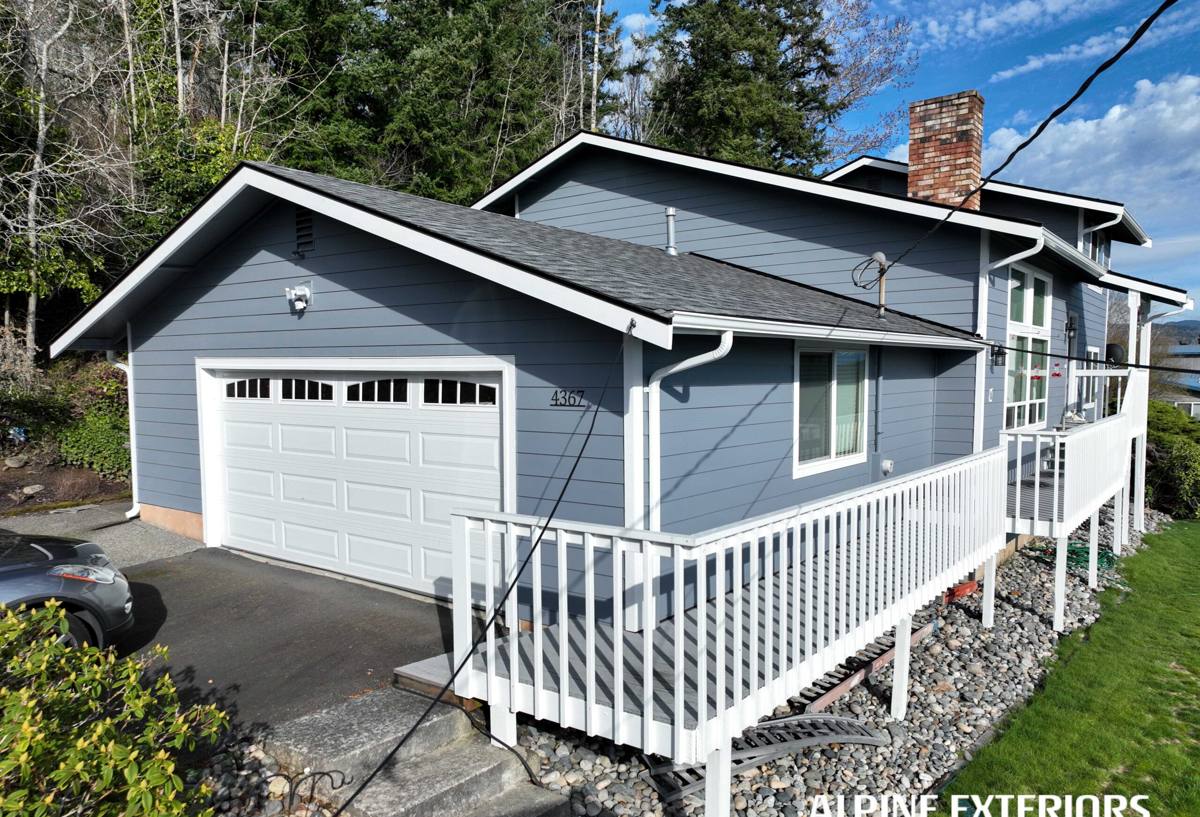
What Bow's Climate Actually Does to a Roof
It helps to understand the specific mechanisms at work, because they point directly to what a correct installation has to account for.
Salt Air and Corrosion
Proximity to Samish Bay and the surrounding saltwater means airborne salt settles on every exterior surface, roofs included. Over time it accelerates corrosion on exposed metal — nail heads, flashing seams, gutter hangers, vent stacks. A roof detailed with standard-grade fasteners and thin flashing will show rust streaks and metal fatigue well before an otherwise identical roof built further inland.
Driving Rain
Skagit County storms don't always come straight down. Wind-driven rain pushes water sideways and upward under shingle edges, around chimneys, and into any valley or penetration that wasn't sealed with wind-driven conditions in mind. A roof that only handles vertical rainfall well can still leak in a Bow storm.
Moss and Organic Growth
Shade from surrounding trees, consistent moisture, and mild temperatures make Bow close to ideal moss habitat. Moss doesn't just look bad — it holds water against the shingle surface, works its way under shingle tabs and into fastener lines, and gradually lifts shingles off the roof deck. Left unmanaged for a few seasons, moss growth can shorten the usable life of an asphalt roof significantly.
What a Correct Asphalt Shingle Roof for Bow Involves
A roof that's going to hold up here isn't just "shingles nailed to plywood." It's a layered system, and every layer matters.
The Underlayment
Synthetic underlayment, properly lapped and fastened, is the backup waterproofing layer beneath the shingles. In a driving-rain climate, we don't treat this as an afterthought — it's sized and installed to handle water that gets past the shingle surface during a real storm, not just incidental moisture.
Ice and Water Shield at Vulnerable Points
Even though Bow doesn't see the ice-dam problems of colder climates, self-adhering waterproof membrane still earns its place at eaves, valleys, and around penetrations, where wind-driven rain is most likely to find a way in.
Flashing That's Built for Salt Exposure
Around chimneys, skylights, sidewalls, and roof-to-wall transitions, we use flashing and fasteners suited to a corrosive coastal-influenced environment rather than the cheapest option that meets code minimums. This is one of the areas where cutting corners shows up fastest — often within a few years — as rust stains, loosened seams, and eventual leaks.
Ventilation
Balanced intake and exhaust ventilation keeps the underside of the roof deck dry and temperature-stable. Poor ventilation traps moisture in the attic, which shortens shingle life from underneath and can contribute to the exact kind of rot and mold growth that our damp climate already makes more likely.
Shingle Selection
We favor architectural (laminate) shingles over basic three-tab in most Bow installations. They're heavier, have a stronger wind rating, and their layered profile sheds water more effectively than a flat three-tab design — a real advantage when rain is coming in sideways.
Our Installation Process
We follow the same disciplined sequence on every roof, because skipping steps is exactly how a roof ends up failing early in this climate.
- Inspection and tear-off. We remove the old roofing down to the deck and inspect the sheathing for soft spots, rot, or delamination — common in older Skagit County homes that have carried moss and moisture for years.
- Deck repair. Any compromised sheathing gets replaced before anything new goes down. Installing new shingles over a weak deck just hides a problem that will resurface.
- Underlayment and ice/water shield. Installed per manufacturer spec, with extra attention at eaves, valleys, and penetrations.
- Flashing. New flashing at all transitions, chimneys, and sidewalls — not reused old flashing, which is a common shortcut that causes early leaks.
- Shingle installation. Nailed to manufacturer specification for wind resistance, with attention to proper exposure and alignment.
- Ventilation check. We confirm intake and exhaust venting is balanced for the home's attic volume.
- Final walkthrough. We inspect the finished roof, clean up the site, and go over care and maintenance with the homeowner.
Comparing Shingle Options for a Bow Home
| Factor | 3-Tab Asphalt | Architectural Asphalt |
|---|---|---|
| Wind resistance | Lower rating, more vulnerable to lifting in driving storms | Higher rating, better suited to wind-driven rain events |
| Moss resistance options | Available but thinner profile holds less algaecide granule | Widely available with algae-resistant granules built in |
| Expected lifespan in this climate | Shorter, especially with moss exposure | Longer, due to thicker construction and better water-shedding profile |
| Upfront cost | Lower | Moderate premium over 3-tab |
| Appearance | Flat, uniform look | Dimensional, shadow-line look |
For most Bow homes, the modest upfront premium for architectural shingles pays for itself in reduced maintenance and a longer service life, given how hard moss and driving rain work on a roof here.
Repair vs. Replacement
Not every roof problem means a full replacement, and we won't sell one when it isn't needed. Localized damage — a section of lifted shingles after a windstorm, a leak around a single flashing point, isolated moss damage — is often repairable if the rest of the roof and deck are sound. We look at the roof's overall age, the condition of the decking, how widespread the wear is, and how many repairs the roof has already had before recommending replacement over repair. A roof nearing the end of its expected life with multiple problem areas is usually better replaced than patched repeatedly, since repeated repairs on an aging roof rarely add up to good value.
Maintenance That Actually Extends Roof Life in Bow
Given the moss and moisture pressure in this area, a shingle roof here needs more attention than the same roof would in a drier climate. A simple, consistent maintenance rhythm makes a real difference:
- Keep gutters clear of debris so water isn't backing up under the eave line
- Trim back overhanging branches to reduce shade and debris buildup on the roof surface
- Address moss growth early, before it works under shingle tabs
- Have flashing and seals around chimneys, vents, and skylights checked periodically, since these are the first places salt-air corrosion shows up
- Schedule a roof inspection after any major windstorm
- Watch for granule buildup in gutters, which signals accelerating shingle wear
None of these tasks require a major investment, but skipping them for a few years in a row is how a 25-30 year shingle roof turns into a 15-year roof.
Why Local Experience with Bow Roofs Matters
A roofing crew that works Bow and the surrounding Skagit County area regularly already knows which details matter here — how much moss pressure to expect on a shaded lot near the water versus an open field, which flashing details hold up against salt air over time, and how local wind patterns tend to hit a roof during a storm. That's different knowledge than a crew that mostly works drier, inland climates and treats every job the same way. It shows up in the small decisions: fastener choice, flashing material, how aggressively we recommend algae-resistant shingles, and how we sequence a tear-off around Pacific Northwest weather windows so your home isn't exposed to open sky longer than necessary.
We also know this area well enough to give straight answers about what your specific roof needs, rather than a one-size-fits-all recommendation. A roof on an open, wind-exposed lot near the water has different priorities than one tucked under a tree canopy a mile inland, even though both are technically in Bow.
Signs Your Bow Home May Need Roofing Attention
A few warning signs are worth acting on before they turn into a bigger repair:
- Visible moss or dark streaking across shingle surfaces
- Shingles that look cupped, curled, or are missing granules
- Daylight visible through the attic roof deck
- Water stains on interior ceilings, especially after a windy storm
- Granules collecting in gutters and downspouts
- Soft spots when walking the roof, indicating deck damage underneath
Catching these early usually means a smaller repair bill and a lot less risk to the rest of your home.
Get a Straightforward Estimate
If your Bow home's roof is showing signs of wear, or you're planning ahead for a replacement, we're glad to take a look and give you an honest read on repair versus replacement, along with a clear estimate. There's no pressure and no obligation — just a straight assessment from a crew that knows what this climate does to a roof. Use the form below to request your free estimate.