 Anacortes Window
 Board & Batten Siding for Flounder Bay Homes
Flounder Bay sits close enough to the water that its homes take a different kind of weather beating than houses a few miles inland in Anacortes. Salt-laden air moves through the neighborhood most days of the year, wind-driven rain hits exposed walls at an angle rather than falling straight down, and the shaded, damp stretches of the year give moss and algae plenty of time to take hold on anything that stays wet. Board and batten siding, with its bold vertical lines and strong shadow reveal, is a popular look for waterfront and near-water properties in this part of Skagit County — but the same exposure that makes it attractive also makes it unforgiving of a poor installation.
This page covers what board and batten siding actually needs to hold up in Flounder Bay's climate, what a correctly built system looks like layer by layer, and why we build every one of ours out of James Hardie fiber cement rather than the wood-based or vinyl alternatives some contractors still offer.
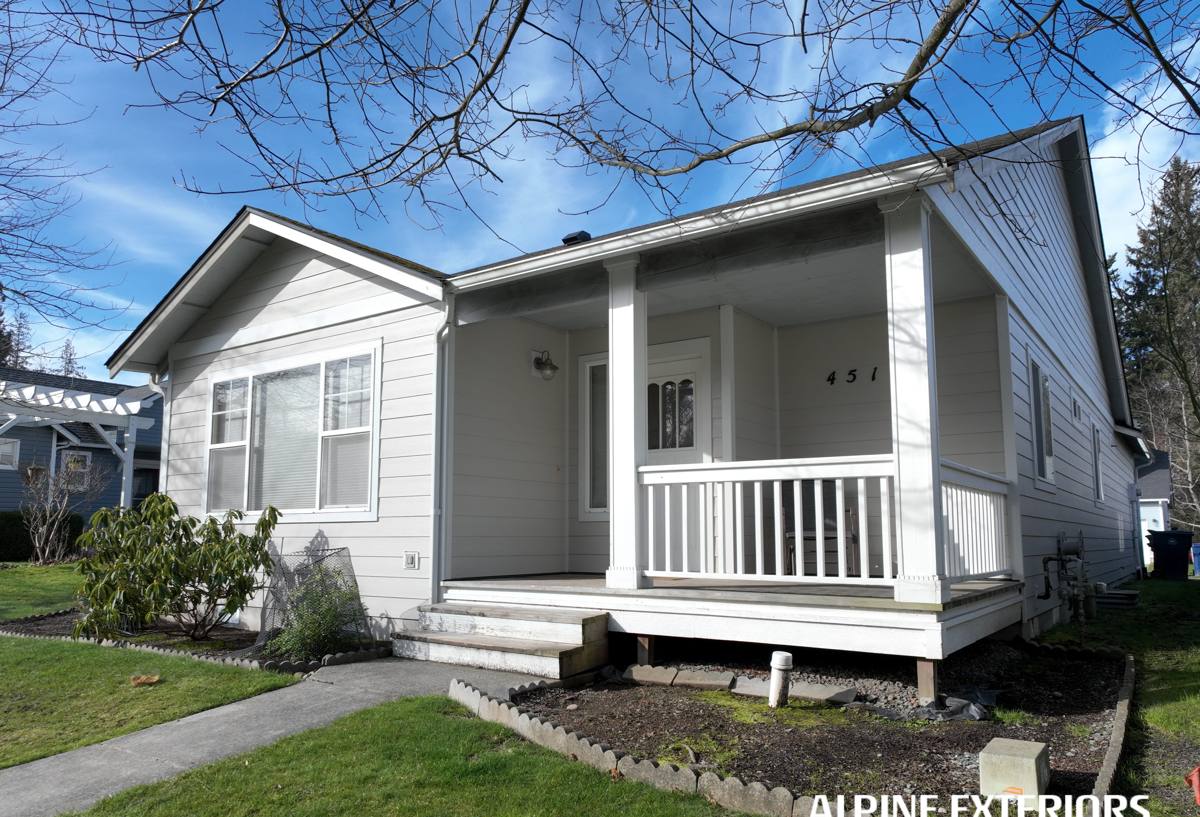
What Flounder Bay's Climate Does to Vertical Siding Over Time
Salt Air and Coastal Exposure
Homes near the bay sit inside a corrosive, moisture-heavy air mass for most of the year. Salt air accelerates the breakdown of caulking, speeds up corrosion on exposed fasteners, and works into any seam or gap in a siding system faster than it would a few miles inland. Materials that rely on paint film or sealant integrity to stay weather-tight lose that protection sooner near the water than the same product would on a drier, more sheltered lot.
Driving Rain and Wind-Driven Moisture
Board and batten's vertical seams run with gravity, which helps water shed — but only if the seams and battens are built correctly. Flounder Bay's exposure to wind off the water means rain frequently arrives sideways rather than straight down, pushing moisture up under battens and into fastener lines that would stay dry on a calmer site. A system that isn't detailed for wind-driven rain will eventually let water behind the cladding, even if it looks fine from the street.
Moss, Shade, and the Long Wet Season
Skagit County's wet season runs long, and shaded, north-facing, or tree-sheltered walls near the water stay damp for extended stretches. Moss and algae take hold anywhere moisture sits on a surface without drying out, and vertical battens create ledges and shadow lines where organic growth can establish if the siding's surface and finish aren't built to resist it.
What a Correctly Built Board & Batten System Requires
The Panel and Batten Layers
True board and batten siding is a two-layer system: a flat vertical panel underneath, with narrower battens fastened over the seams to create the signature shadow line. Both layers, and the fasteners holding them, have to be rated for long-term exterior and coastal exposure — not just look right on installation day.
Water Management Behind the Battens
The most important part of a board and batten system is invisible once the job is done: a correctly lapped weather-resistive barrier, properly flashed penetrations, and enough of a gap behind the battens for incidental moisture to drain and the wall to dry. Skipping this step is the single most common reason board and batten systems fail early in wet coastal climates.
Fastening and Flashing Details
Every seam, corner, window, and door opening needs its own flashing detail, and fasteners have to land in solid framing at the manufacturer's specified pattern and spacing. In a driving-rain environment like Flounder Bay, shortcuts here show up as staining, soft spots, or trim rot within a few winters, not decades.
Installation Checklist We Hold Ourselves To
- Weather-resistive barrier lapped correctly, shingle-fashion, with all seams sealed
- Flashing installed at every window, door, and roof-to-wall intersection before siding goes on
- Rainscreen gap maintained behind battens for drainage and drying
- Fasteners matched to the manufacturer's spec for coastal exposure, driven to the correct depth
- Panel and batten joints staggered and sealed per manufacturer instructions, not field-guessed
- Factory-finished edges and cut ends sealed to keep raw material from wicking moisture
Why We Install James Hardie for This Application
Board and batten can be built from several materials, and it's worth being direct about why we've standardized on one. We install James Hardie fiber cement exclusively — we do not install LP SmartSide, vinyl, Cemplank, Allura, primed spruce, or cedar board and batten. Each of those has real strengths, but each also carries a trade-off that we've decided isn't worth putting on a home in this climate.
Wood-based engineered panels perform well when kept perfectly sealed, but any breach in that factory coating exposes wood fiber that can swell or deteriorate once moisture gets behind it — a real risk given how much wind-driven rain this area sees. Vinyl board and batten is low-maintenance and inexpensive, but it's a thinner, more flexible material that can warp in temperature swings and shows its seams and fastener lines more visibly over time, especially in a style meant to read as bold, clean vertical lines. Cedar and primed spruce are traditional and attractive, but they need ongoing refinishing, are vulnerable to moisture and insect damage, and demand a maintenance schedule most homeowners don't want to keep up with near the water.
Fiber cement doesn't have those failure points. It's non-combustible, dimensionally stable across wet and dry cycles, and holds its factory-applied finish far longer than field-painted wood. That combination matters more in Flounder Bay than almost anywhere else in Skagit County.
| Factor | James Hardie Fiber Cement | Wood-Based Panel (LP-Style) | Vinyl | Cedar / Primed Spruce |
|---|---|---|---|---|
| Moisture behavior | Dimensionally stable, engineered for wet climates | Vulnerable once coating is breached | Doesn't rot, but can trap moisture behind it | Absorbs moisture; prone to swelling and decay |
| Salt air / coastal durability | Strong, factory ColorPlus finish resists fading and wear | Coating wears faster in corrosive air | Can become brittle over time | Finish breaks down quickly near salt air |
| Maintenance | Occasional wash; no refinishing needed for years | Regular inspection and touch-up recommended | Low, but limited repair options if damaged | Regular refinishing/repainting required |
| Fire resistance | Non-combustible | Combustible (wood-based) | Combustible, can melt/deform | Combustible |
| Warranty | Strong, transferable manufacturer warranty | Varies by manufacturer | Varies, often prorated | Typically none from a manufacturer |
Our Board & Batten Installation Process
Assessment and Design
We start by walking the property and looking specifically at exposure — which walls take the most direct wind and rain off the water, where shade and moisture linger longest, and where the existing siding or sheathing shows signs of past water intrusion. That assessment shapes decisions on batten spacing, trim details, and where extra flashing attention is needed.
Tear-Off and Substrate Check
Once old siding comes off, we inspect the sheathing underneath for rot, soft spots, or prior water damage before anything new goes on. Building over a compromised substrate is one of the most common causes of early siding failure, and it's not something we skip to save time.
Weather Barrier and Flashing
A new weather-resistive barrier goes on correctly lapped, and every window, door, and roof intersection gets flashed before the first panel is hung. This is the layer that actually keeps Flounder Bay's driving rain out of the wall assembly, and it's the layer that's invisible — and impossible to fix cheaply — once the siding is up.
Panel, Batten, and Finish Installation
Panels and battens go up to James Hardie's fastening and spacing specifications, with joints staggered and sealed, and a rainscreen gap maintained for drainage. We finish with a final walk-through so the homeowner can see the completed work and ask questions before we consider the job done.
Maintenance to Expect on a Flounder Bay Home
A correctly installed James Hardie board and batten system asks very little of a homeowner, but a near-water property still benefits from a short seasonal routine:
- Rinse salt spray and grime off the siding a couple of times a year, especially on water-facing walls
- Keep gutters clear so overflow doesn't run down and pool behind battens
- Trim back vegetation that shades siding and keeps it damp longer than it needs to be
- Check caulking at trim and penetrations annually and re-seal if it's cracking or pulling away
- Have any impact damage or chipped finish addressed promptly rather than left to sit through a wet winter
Cost Factors for Board & Batten Siding in This Area
Every home is different, but a few factors consistently move the price on a Flounder Bay board and batten project more than they would elsewhere in the county:
| Factor | Why It Affects Cost Here |
|---|---|
| Wall exposure to wind and water | Water-facing walls often need extra flashing detail and fastening care |
| Substrate condition | Coastal moisture exposure sometimes means sheathing repair is needed before siding goes on |
| Batten spacing and trim complexity | Tighter batten spacing and detailed trim work take more labor per square foot |
| Access and site conditions | Waterfront lots can have tighter staging areas, affecting scaffolding and material handling |
| Color and finish selection | ColorPlus factory finishes vary slightly in cost by line and color |
We provide a firm, itemized quote after seeing the specific home and its exposure — broad estimates without that walkthrough tend to miss the details that actually drive cost on a coastal property.
Why a Crew That Already Works Flounder Bay Matters
Siding crews that mostly work drier, inland sites don't always plan for the details that matter right on the water — the extra flashing attention, the fastening adjustments, the batten spacing choices that account for wind-driven rain rather than just a straight-down shower. A crew that already works in and around Flounder Bay has seen how homes in this specific setting age, what fails first, and what holds up. That local pattern recognition is worth more than a generic install, especially on a siding style where the water management details are hidden behind the finished look.
Get a Free Estimate
If you're considering board and batten siding for a home in Flounder Bay, we're happy to walk the property, look at its specific exposure, and give you a straightforward, no-pressure estimate. There's no obligation — just a clear look at what the job actually involves and what it would cost to do right.