 Anacortes Window
 Sedro-Woolley Roofs Deal With a Different Mix of Weather Than You'd Think
Sedro-Woolley sits far enough inland from the water that people sometimes assume the roof stresses are lighter here than out on the coast. In practice, the opposite is often true. The valley and the surrounding tree cover trap moisture, the Skagit River corridor keeps humidity higher longer into the season, and the same marine air that rolls in off Fidalgo Bay still reaches this far, just mixed with more shade and slower drying times. The result is a roofing environment that combines driving rain, long stretches of damp shade, and a moss season that can run from fall through late spring if a roof isn't built and maintained to resist it.
None of that means asphalt shingle roofing is a bad fit for Sedro-Woolley. It's the most common roofing material in Skagit County for good reason: it's durable, it's repairable, and modern shingle products are built with this exact climate in mind. But it does mean the installation details matter more here than they would in a drier region. A roof that's "close enough" on flashing, underlayment, or ventilation will show it within a few wet seasons.
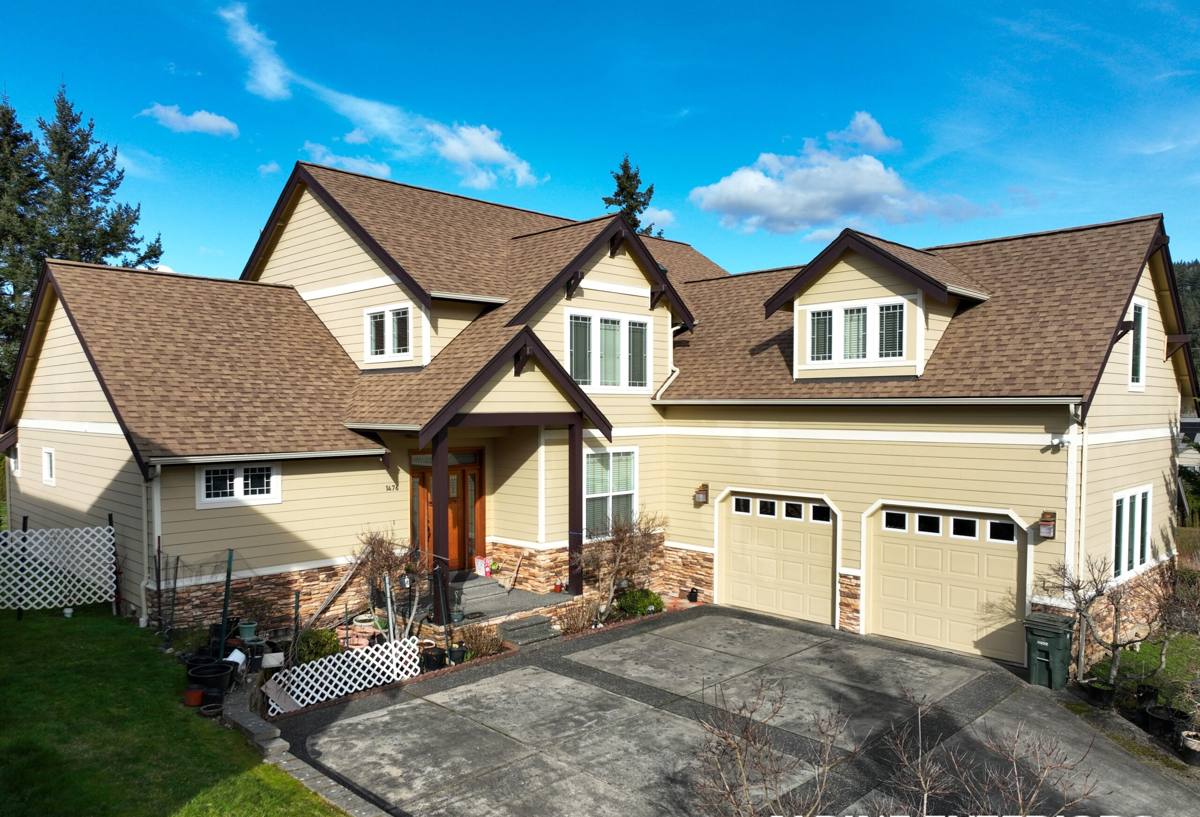
What a Correct Asphalt Shingle Installation Actually Involves
Asphalt shingles look simple from the ground, and the shingle itself is genuinely a straightforward product. What separates a roof that lasts from one that starts leaking early is almost never the shingle brand — it's the layers underneath and the details around every edge, valley, and penetration.
The layers that do the real work
- Deck inspection and repair — any soft, delaminated, or water-stained sheathing gets replaced before anything else goes down. Shingles installed over a compromised deck will fail early no matter how good the shingle is.
- Ice and water shield — a self-adhering membrane at eaves, valleys, and around chimneys and skylights. In a climate with this much sustained rain, this layer is what keeps wind-driven water from working backward under the shingles.
- Synthetic underlayment — a full water-resistant layer across the rest of the deck, giving the roof a second line of defense if any shingle is ever damaged or lifted.
- Metal flashing — at every valley, wall intersection, and roof-to-wall transition. Flashing is where most real leaks originate, far more often than the shingle field itself.
- Correct nailing pattern — the right number of nails, placed in the manufacturer's specified zone, at the specified angle. This is also what keeps a warranty valid; underdriven or overdriven nails are a common cause of both blow-offs and denied warranty claims.
Ventilation is not optional
A shingle roof breathes through a balanced system of intake vents (usually at the soffit) and exhaust vents (usually at or near the ridge). In a damp climate like this one, poor attic ventilation traps moisture underneath the deck, which shortens shingle life from below at the same time moss and algae are working on it from above. If your attic feels noticeably warmer or more humid than it should, or if you've noticed frost or condensation up there in winter, ventilation is worth evaluating alongside any roofing work.
The Moss and Shade Problem Around Sedro-Woolley
Tree cover is part of what makes this area attractive, and it's also the single biggest driver of moss growth on local roofs. North-facing slopes, roofs shaded by mature conifers, and any section of roof that stays damp longer than the rest of the house will grow moss faster than open, sun-exposed areas. Moss isn't just a cosmetic issue — as it grows, it lifts shingle edges, holds moisture against the roofing material, and over time can work its way under the shingle tabs, which is exactly where leaks start.
A few things reduce moss pressure without requiring you to cut down trees you like having:
- Shingles with built-in algae-resistant (AR) granules, which contain copper or other compounds that slow moss and algae growth over the life of the roof
- Zinc or copper strips installed near the ridge, which release trace metal ions with each rain that inhibit moss growth on the slopes below
- Keeping gutters and valleys clear, since trapped debris holds moisture and gives moss a foothold even on shingles rated to resist it
- Periodic gentle cleaning — never pressure washing, which strips protective granules and shortens shingle life
Choosing the Right Shingle for This Climate
Not every shingle product is built the same way, and the differences matter more in a wet, shaded climate than they would somewhere dry. Here's how the common categories compare for a Sedro-Woolley home:
| Shingle Type | Typical Lifespan | Wind Rating | Moss/Algae Resistance | Relative Cost |
|---|---|---|---|---|
| 3-Tab Standard | 15-20 years | Lower (60-70 mph) | Only if AR-treated | Lowest |
| Architectural / Laminate | 25-30 years | Moderate-High (110-130 mph) | Usually AR-treated as standard | Mid-range |
| Impact-Resistant (Class 4) | 30+ years | High | AR-treated, thicker mat resists lifting | Highest |
For most Sedro-Woolley homes, architectural shingles with algae-resistant granules are the practical sweet spot: meaningfully better wind and moisture performance than 3-tab, without the premium cost of impact-rated products, which make the most sense on roofs with heavier exposure or specific insurance incentives. We'll walk through what fits your roof, your budget, and your home's specific shade and slope conditions rather than defaulting to one product for every job.
Signs a Sedro-Woolley Roof Needs Attention
Because moss and moisture work slowly, a lot of roof damage in this area builds up quietly before it shows up as an active leak. Worth checking for, especially before the wet season sets in:
- Moss or dark algae streaking on north-facing or shaded slopes
- Granules collecting in gutters or at the base of downspouts
- Shingle edges that look curled, cupped, or lifted
- Cracked, torn, or missing shingles after a windstorm
- Soft spots underfoot if you're ever up there, or sagging visible from the ground
- Daylight, staining, or a musty smell in the attic
- Flashing around chimneys, skylights, or vent pipes that looks rusted, lifted, or gapped
Any one of these on its own isn't necessarily an emergency, but a roof showing two or three of them at once is usually past the point where a small repair fixes it.
Our Process, Start to Finish
- On-site inspection — we get on or above the roof, not just look at it from the driveway, and check the deck, flashing, ventilation, and shingle condition together, since problems in one usually connect to another.
- Honest scope and estimate — repair versus full replacement, with the reasoning explained, not just a number.
- Material selection — walking through shingle options against your roof's actual shade, slope, and wind exposure.
- Deck prep — replacing any compromised sheathing before new material goes down.
- Underlayment and flashing — ice and water shield at vulnerable points, full underlayment coverage, new flashing where needed rather than reusing old, corroded pieces.
- Shingle installation — correct nailing pattern and exposure per manufacturer specification, which protects both performance and warranty coverage.
- Ventilation check — confirming intake and exhaust venting are balanced for the finished roof.
- Cleanup and walkthrough — magnetic sweep for debris, and a final look at the finished roof together.
Why a Crew That Already Works Sedro-Woolley Matters
Roofing crews that mostly work drier, more open areas sometimes under-spec ventilation or skip AR shingles as an unnecessary upcharge, because in their usual climate it genuinely doesn't matter as much. In Skagit County, it does. A crew that regularly works Sedro-Woolley roofs already knows which slopes in a given neighborhood tend to hold moss, how much intake ventilation a shaded roof actually needs, and which flashing details fail first under this area's rain patterns. That familiarity shows up as fewer callbacks and a roof that's built for the conditions it will actually face, not generic conditions from somewhere else.
Local presence also matters for the boring, practical stuff: knowing the permitting process for Skagit County versus city of Sedro-Woolley jobs, being reachable quickly if a storm causes damage, and standing behind the work because we're not driving in from out of the area for a one-time job.
Maintaining Your Roof After Installation
A correctly installed shingle roof in this climate still benefits from basic upkeep. Keeping gutters and valleys clear of needles and leaves prevents standing moisture. A gentle moss treatment or soft wash once moss appears — rather than waiting until it's thick — keeps it from lifting shingle edges. And a quick visual check after any major windstorm catches lifted or missing shingles before they turn into a deck-level leak. None of this needs to be elaborate, but skipping it entirely is the most common reason a well-installed roof underperforms its expected lifespan in a wet, shaded climate like this one.
If you're dealing with visible moss, an aging roof, or just want an honest read on where your roof stands, we're happy to take a look. Fill out the form below for a free, no-pressure estimate — we'll walk the roof, explain what we see, and give you straight options with no obligation.