 Anacortes Window
 Roofing March Point Homes for the Water, Wind, and Moss They Actually Face
March Point sits out on the water, and that location shapes everything about how a roof ages here. Homes on this peninsula take on salt-laden air off the bay, near-constant exposure to wind-driven rain coming in off the Salish Sea, and a moss season that runs longer than it does even a few miles inland in Skagit County. An asphalt shingle roof that would hold up fine in a drier, more sheltered part of the region can start showing granule loss, moss colonization, and flashing failures years ahead of schedule out here if it wasn't installed with this specific exposure in mind.
This page covers what that means in practice: how we approach asphalt shingle roofing for March Point homes specifically, what a correct installation includes, what tends to go wrong when it isn't done right, and how to think about cost and maintenance over the life of the roof.
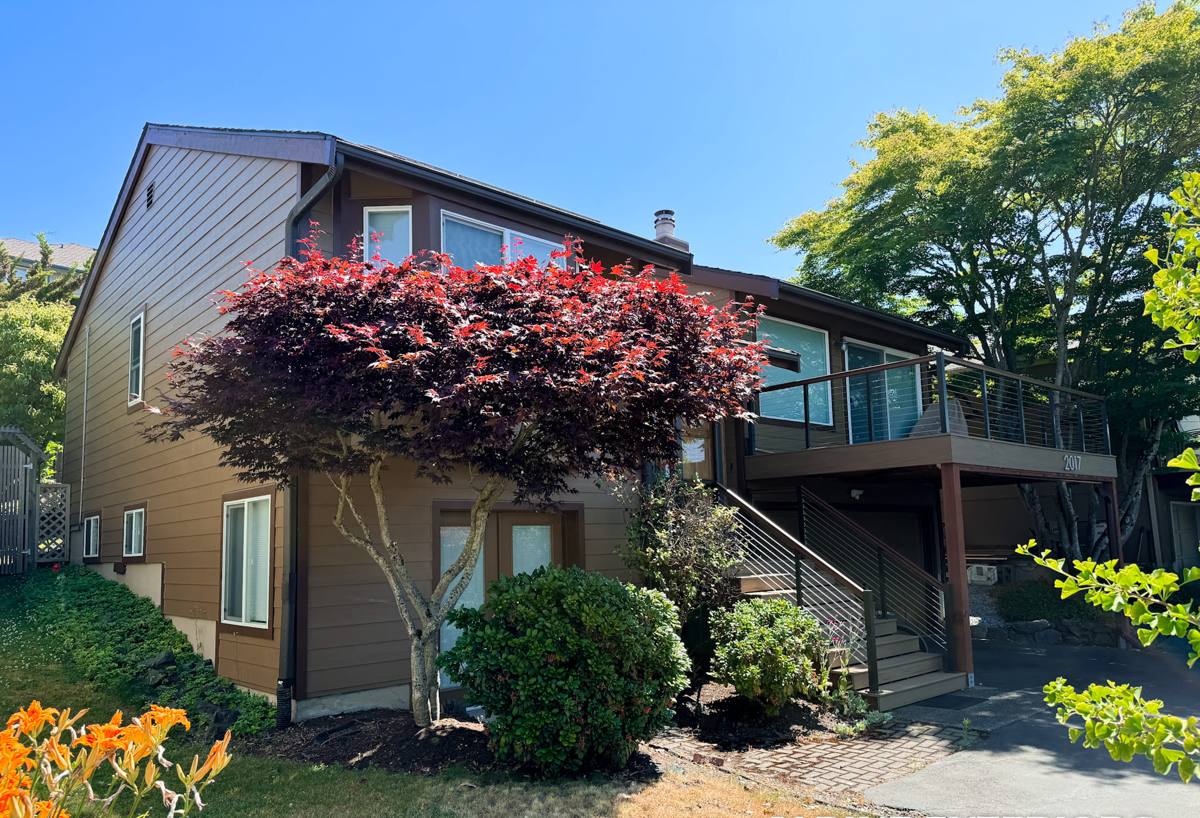
What March Point's Climate Actually Does to a Roof
Salt Air and Corrosion
Metal components on a roof — flashing, drip edge, fasteners, vent caps — are the first things to show wear in a salt-air environment. Standard galvanized fasteners can start rusting years before they would inland, and once a fastener head corrodes, it stops sealing properly. That's a slow leak waiting to happen, usually discovered only when water shows up on a ceiling below.
Driving Rain
Anacortes gets plenty of rain that falls straight down and causes no trouble at all. It's the sideways, wind-driven rain off the water that exposes weak points in a roofing system — nail patterns that are slightly off, underlayment laps that weren't sealed correctly, or flashing at a wall or chimney that relies on caulk instead of proper metalwork. A roof that's watertight in a light rain can still leak in a March Point windstorm if it was installed to a lower standard.
Moss and Organic Growth
Shaded, north-facing, and low-slope sections of roof in this part of Skagit County hold moisture longer, and moss takes hold in that dampness. Left alone, moss doesn't just look bad — it lifts shingle edges, holds water against the roof deck, and accelerates granule loss. On a peninsula like March Point, with humid air moving off the water most of the year, moss season effectively never fully stops the way it might in a drier microclimate.
What a Correct Asphalt Shingle Installation Includes Here
Asphalt shingles are a proven, cost-effective roofing material, but "correct installation" means something a little different for a coastal Skagit County home than it does for a house on the dry side of the state. For March Point work, that includes:
- Ice-and-water shield membrane at eaves, valleys, and around penetrations — not just building code minimums, but coverage sized for how much wind-driven rain this location actually sees
- Synthetic underlayment rated for extended exposure, since coastal humidity means the roof deck stays damp longer between dry stretches
- Corrosion-resistant fasteners and flashing components appropriate for salt-air exposure, not standard galvanized hardware
- Balanced intake and exhaust ventilation, so moisture-laden air moving through the attic doesn't condense against the underside of the deck
- Properly formed step flashing and counterflashing at walls, chimneys, and skylights — not sealant used as a substitute for metal
- Shingle nailing patterns and placement that meet the manufacturer's high-wind installation instructions, since coastal gusts are a real factor here
None of this is exotic. It's the difference between a roof installed to pass inspection and one installed to actually perform in this specific location for its full expected life.
Signs a March Point Roof Needs Attention
Because of the moss and moisture factors described above, roofs in this area tend to show trouble in a few predictable ways:
Moss on the Roof Surface
Green or dark growth along shaded slopes, ridges, or valleys is usually the first visible sign. It's a maintenance issue at first and a roofing issue once it's been established long enough to lift shingle tabs.
Granule Loss
Bare or thinning patches on shingles, or granules collecting in gutters, mean the shingle's protective surface layer is wearing away. This accelerates in areas with more sun-and-moisture cycling, which coastal exposure tends to produce.
Curling or Lifting Shingle Edges
Edges that curl upward or lift are often a sign of moisture trapped underneath — sometimes from moss, sometimes from inadequate ventilation, sometimes both.
Rust Streaking Near Flashing or Fasteners
Rust stains running down from flashing or exposed nail heads point to corrosion, which is worth taking seriously in a salt-air setting since it usually means a fastener or flashing component is failing structurally, not just cosmetically.
Interior Water Stains After Windy, Rainy Weather Specifically
If a stain only appears during storms with strong wind out of a particular direction, that's a strong clue the issue is wind-driven rain finding a weak point in flashing or shingle overlap, rather than a simple worn-out roof.
Choosing Shingles for This Exposure
Not every asphalt shingle product is built the same way, and for a coastal, moss-prone location like March Point, a few product characteristics matter more than they would elsewhere.
| Shingle Characteristic | Why It Matters in March Point |
|---|---|
| Algae-resistant (AR) granules | Reduces the rate at which algae and moss can gain a foothold in a consistently humid, shaded coastal environment |
| High wind rating | Coastal gusts off the water put more lateral stress on shingle tabs than typical inland wind exposure |
| Reinforced nailing zone | Gives fasteners more material to grip, which matters when using corrosion-resistant nails that may have slightly different holding characteristics than standard galvanized |
| Manufacturer warranty terms | Warranties often specify installation requirements — like ventilation and fastening — that must be followed exactly to stay valid, which is part of why installation quality matters as much as product choice |
We don't push a single brand as the only correct answer. Instead, we match the shingle line to the specific slope, exposure, and shading conditions of the home, and we're upfront about trade-offs — some premium lines cost more upfront but reduce moss maintenance over time, while mid-tier lines are a reasonable, honest choice for homes with less direct exposure.
Our Process for March Point Roofing Projects
- Inspection and assessment — We look at the whole system: shingle condition, decking, flashing, ventilation, and any moss or moisture patterns specific to that roof's orientation and shading.
- Honest scope — Some roofs need a full replacement; others need targeted repair, moss treatment, or flashing correction. We tell you which one it actually is.
- Tear-off and deck check — On replacements, we remove old roofing down to the deck and check for soft spots or moisture damage before anything new goes down, since covering a compromised deck just hides the problem.
- Underlayment and flashing first — The waterproofing layer and metal flashing go in correctly before a single shingle is installed, since this layer does most of the actual work of keeping water out.
- Shingle installation to manufacturer spec — Including the nailing pattern and placement required for high-wind performance and warranty coverage.
- Ventilation check — We confirm intake and exhaust airflow is balanced so the new roof isn't fighting trapped moisture from day one.
- Cleanup and walk-through — Site cleaned, debris and old materials hauled off, and a final review with the homeowner.
What Affects the Cost
| Factor | How It Affects Price |
|---|---|
| Roof size and number of slopes | More square footage and more complex rooflines (valleys, dormers, multiple pitches) increase material and labor time |
| Current roof condition | Deck repairs, existing moisture damage, or multiple layers of old roofing to remove add cost beyond a straightforward tear-off |
| Shingle tier chosen | Basic three-tab, standard architectural, and premium algae-resistant/high-wind lines carry different material costs |
| Flashing and ventilation upgrades | Bringing older flashing or inadequate attic ventilation up to a proper standard adds labor but reduces long-term leak and moisture risk |
| Access and site conditions | Steep pitches, limited staging area, or roof height can affect labor and safety equipment needs |
We won't quote a number without seeing the roof — pricing that's given sight-unseen is usually either padded or wrong. What we can say honestly is that skipping proper underlayment, flashing, or ventilation to hit a lower price almost always costs more later in this climate, in the form of moss remediation, leak repair, or a shortened roof life.
Homeowner Maintenance Checklist for a March Point Roof
- Keep gutters and downspouts clear so water isn't backing up against the roof edge, especially after fall storms
- Have moss growth treated before it spreads across a full slope, not after
- Trim back tree branches that keep sections of roof shaded and damp longer than the rest
- Watch for granule buildup in gutters as an early sign of shingle wear
- Have flashing around chimneys, skylights, and vent pipes checked periodically, since these are the most common leak points on an otherwise sound roof
- Schedule a roof inspection after any major windstorm, even if nothing looks obviously wrong from the ground
Why Local Experience on This Peninsula Matters
March Point isn't a large area, but it has its own conditions — exposure angles relative to the water, shading patterns from mature trees, and access considerations that differ from roofing work done a few miles inland in Anacortes proper. A crew that already works this specific stretch of Skagit County has a working sense of which slopes on which orientations tend to hold moss longest, which flashing details tend to fail first in this wind and rain pattern, and what ventilation setups actually keep attics dry here. That's not something you get from a general contractor's spec sheet — it comes from doing the work on this peninsula repeatedly and paying attention to what holds up and what doesn't.
It also matters for logistics: knowing the roads, staging options, and typical weather windows for tear-off work on a peninsula exposed to the water means fewer surprises and a project that moves on schedule instead of getting weathered out repeatedly.
Ready to Talk About Your Roof
If you're dealing with moss, a leak, or just want an honest read on how much life is left in your current roof, we're happy to take a look. Reach out for a free, no-pressure estimate using the form below, and we'll give you a straight assessment of what your March Point home actually needs.