 Anacortes Window
 West Anacortes Siding Takes a Harder Hit Than Most
Homes on the west side of Anacortes deal with a combination of weather stresses that a lot of siding products simply weren't built for. Sitting out on Fidalgo Island, West Anacortes gets more direct exposure to saltwater air, more wind-driven rain off the water, and a longer moss and mildew season than homes further inland in Skagit County. None of that is dramatic on any single day — it's the accumulation, year after year, that separates siding that holds up from siding that quietly fails behind a coat of paint.
If you're looking into siding replacement for a West Anacortes home, the goal isn't just to make it look new again. It's to put a material and installation system on the wall that's actually engineered for this specific climate, installed in a way that keeps water moving out instead of in.
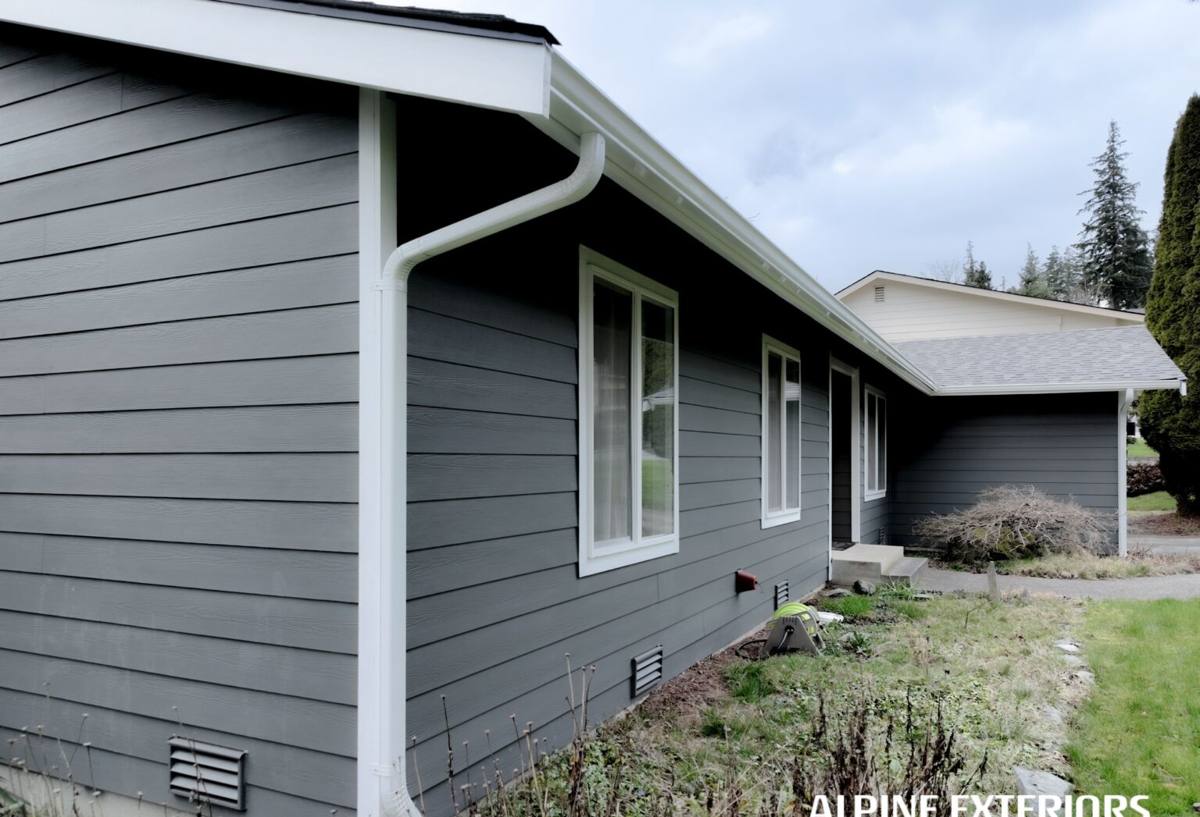
How Salt Air, Rain, and Moss Actually Damage Siding
Salt Air and Finish Breakdown
Airborne salt is corrosive and hygroscopic — it pulls moisture out of the air and holds it against whatever surface it lands on. Over years, that constant low-level moisture exposure breaks down paint films faster than it would inland, fades color, and accelerates corrosion on fasteners, trim, and any exposed metal flashing. Siding with a weak factory finish, or field-applied paint that wasn't built for coastal exposure, tends to chalk, fade, and need repainting on a shorter cycle out here.
Driving Rain and Water Intrusion
West Anacortes doesn't just get rain — it gets wind-driven rain coming off open water, which pushes moisture sideways into laps, seams, and penetrations that would stay dry in a calmer setting. Siding systems depend on lap geometry, caulking, and flashing details to shed that water. When those details are cut short — undersized laps, missing kick-out flashing, caulk used in place of proper flashing — water finds its way behind the siding and into the sheathing, where it does damage you can't see until it's expensive.
Moss, Mildew, and Trapped Moisture
Skagit County's damp, mild winters and shaded lots are ideal moss and mildew conditions. Moss holds moisture directly against a siding surface for months at a time. On materials that swell, delaminate, or lose paint adhesion when saturated, that's a slow-motion failure. On a dense, properly finished fiber cement product, it's mostly a cosmetic issue that a periodic wash keeps in check.
Signs a West Anacortes Home Needs Siding Replacement, Not Just Repair
- Soft, spongy, or crumbling spots when you press on the siding, especially near the bottom courses and around windows
- Paint that keeps failing within a year or two of repainting, even with quality paint
- Visible gaps, warping, or buckling boards, particularly on the west- and southwest-facing walls that take the brunt of the weather
- Persistent moss or algae growth that comes right back after cleaning
- Bubbling, staining, or musty smell on interior walls that back up to exterior siding
- Siding that's original to a home built more than 20-25 years ago, especially wood or older composite products
A few of these on their own might mean a repair. Several together, especially soft sheathing or interior staining, usually mean the water-resistive barrier has failed and a full replacement — not a patch — is the honest answer.
What a Correct Siding Replacement Actually Involves
Full Tear-Off and Sheathing Inspection
Replacement starts with removing the old siding down to the sheathing, not installing over it. That's the only way to actually find and address the damage that's usually the reason for the replacement in the first place — soft OSB or plywood, rot around window and door openings, or old flashing that's failed. Any compromised sheathing gets repaired before anything new goes on the wall.
Weather-Resistive Barrier and Flashing
A new water-resistive barrier goes over the sheathing, and this is where a lot of the real protection against West Anacortes' driving rain gets built in — proper window and door flashing, correctly lapped house wrap, kick-out flashing at roof-to-wall intersections, and careful detailing around penetrations like vents and hose bibs. This layer does more long-term work than the siding itself, and it's the layer that's easiest to shortcut if a crew is moving fast.
Installation to Manufacturer Specification
Fiber cement siding has specific nailing patterns, gap and clearance requirements, and caulking guidelines that exist for a reason — they're what the product warranty is actually based on. Installed off-spec, even the best siding material on the market will underperform. This is also where local experience matters: knowing how to detail a house for wind-driven coastal rain isn't the same as installing siding on a home 30 miles inland.
Why We Install Only James Hardie Fiber Cement
We made a decision as a company to install James Hardie fiber cement siding exclusively — not vinyl, not LP SmartSide, not primed spruce or cedar, not other fiber cement brands. That's not a marketing position, it's a standard we hold ourselves to because of what we've seen hold up in this climate and what hasn't.
Vinyl is affordable and low-maintenance, but it's a thin material that can crack in cold snaps, warp under direct heat reflection, and fade in a way that can't be repainted back to its original color. Wood and primed spruce products can look great, but they demand a maintenance schedule — recaulking, repainting, moisture checks — that a lot of homeowners don't realize they're signing up for until the first signs of rot show up. Engineered wood products carry their own moisture-sensitivity concerns if any part of the installation lets water reach the substrate. James Hardie's fiber cement is cement-based, not wood- or vinyl-based, which changes how it behaves against salt air, rain, and moisture over time.
| Factor | James Hardie Fiber Cement | Vinyl | Wood / Primed Spruce |
|---|---|---|---|
| Moisture behavior | Dense, non-wood composition; resists swelling and rot | Won't rot, but can trap moisture behind panels if installed loose | Absorbs moisture; prone to rot if finish fails |
| Coastal/salt air durability | Factory ColorPlus finish engineered for fade and moisture resistance | Can chalk and fade; brittle in temperature swings | Needs frequent repainting to hold up |
| Fire resistance | Non-combustible material | Combustible | Combustible |
| Typical repaint cycle | Factory finish rated for many years before repainting | Doesn't repaint well if color fades | Every 3-7 years depending on exposure |
| Warranty | Strong transferable manufacturer warranty | Varies by brand; often limited/prorated | Typically no material warranty against rot |
We're not saying every home in every climate needs Hardie. We're saying that for a coastal Skagit County home dealing with salt air, driving rain, and moss, it's the product we're willing to put our name on.
Our Siding Replacement Process for West Anacortes Homes
- On-site assessment. We walk the exterior, check for soft spots, inspect trim and flashing, and talk through what we're seeing before recommending replacement over repair.
- Written estimate and product selection. We go over James Hardie board options — lap siding, panel systems, trim — and colors, with a clear scope of work.
- Tear-off and sheathing repair. Old siding comes off, sheathing gets inspected, and any damaged material is replaced before we move forward.
- Weather barrier and flashing installation. We install the water-resistive barrier and flashing details built for wind-driven rain, not just a standard inland install.
- Hardie installation to spec. Siding goes on following manufacturer nailing, gapping, and caulking requirements to keep the warranty intact.
- Final walkthrough. We review the finished work with you and address anything before calling the job complete.
Choosing a Siding Contractor for a Coastal Climate
Not every contractor who installs siding has real experience with what wind-driven rain and salt air do to a wall system over time. Before hiring anyone for a West Anacortes siding project, it's worth asking a few direct questions.
- Are you licensed and insured to work in Skagit County, and can you provide proof?
- Do you tear off old siding down to the sheathing, or install over existing siding?
- What's your process for flashing windows, doors, and roof-to-wall intersections?
- Are you a certified installer for the siding brand you're proposing, and does that affect the warranty?
- Can you explain, in plain terms, why you recommend the specific product you're proposing for this home?
A contractor who can answer those clearly, without vague reassurances, is one who actually understands the difference between a siding job that looks good at handoff and one that holds up through a decade of Anacortes winters.
Caring for New Siding in a Moss-Prone Climate
Even the right material benefits from basic upkeep in this climate. A soft wash once or twice a year keeps moss and algae from taking hold, especially on shaded north- and west-facing walls. Keep gutters clear so water isn't sheeting down onto siding below, and trim back vegetation that holds moisture against the wall. None of this is heavy maintenance — it's the kind of light seasonal care that keeps a correctly installed Hardie system looking and performing the way it should for the long haul.
If your West Anacortes home is showing signs of siding trouble — or you're just planning ahead for a home that's due — we're happy to take a look and walk you through what we're seeing. Use the form below to request a free, no-pressure estimate.