 Anacortes Window
 West Anacortes Sits Right at the Edge of the Weather
Homes on the west side of Anacortes take on a different exposure than homes tucked into the interior of Fidalgo Island. Being closer to open water means more direct salt-laden air, more wind-driven rain during fall and winter storms, and less shelter from the tree cover that shields some inland Skagit County properties. Siding on these homes works harder than siding just a mile or two away, and it shows up first in the details: fastener corrosion, paint failure at exposed corners, and moss creeping across north- and west-facing walls that never fully dry out between storms.
This page is about one job in one neighborhood: installing James Hardie fiber cement siding correctly on West Anacortes homes. Not a general siding overview, not a sales pitch for a product line — a straight explanation of what this climate demands, what a correct installation actually involves, and why the crew doing the work matters as much as the material itself.
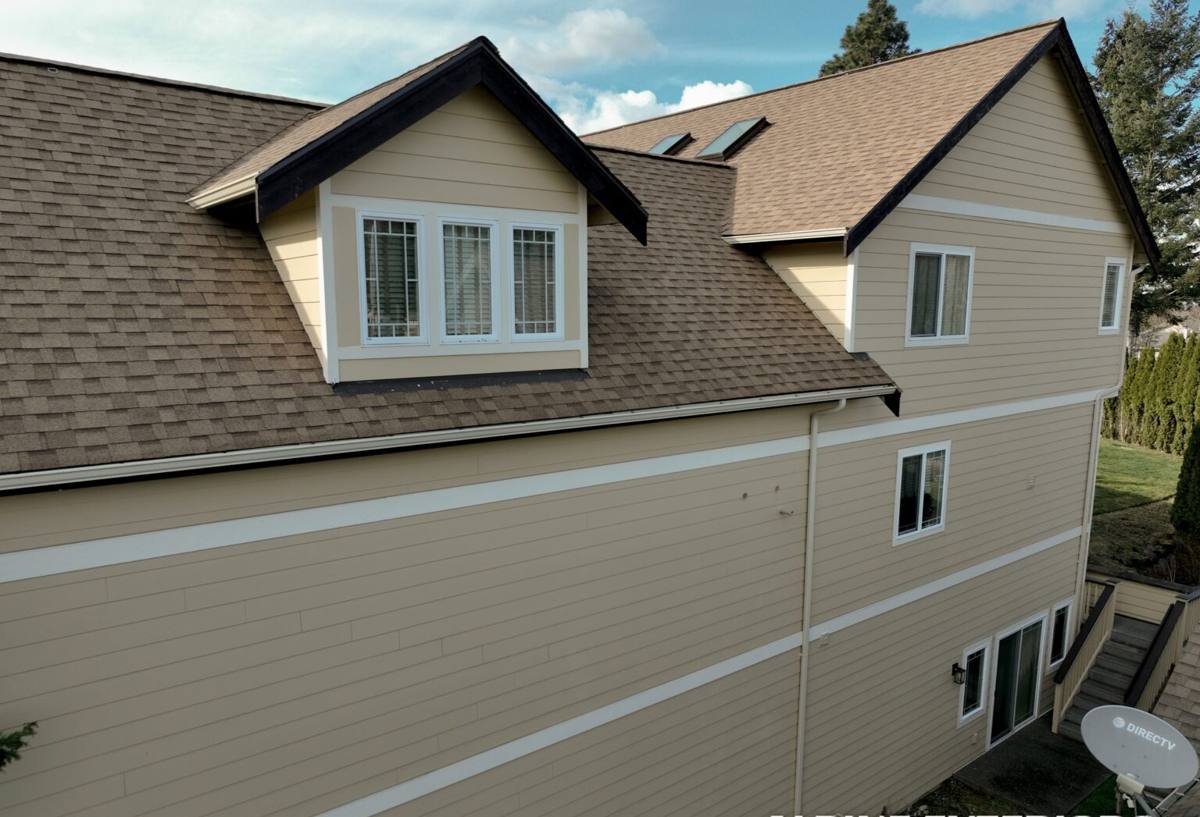
What Salt Air, Driving Rain, and Moss Actually Do to a House
Three things define the West Anacortes exterior environment, and each one attacks siding differently.
Salt Air
Airborne salt is corrosive to metal. Fasteners, flashing, and trim hardware that aren't rated for coastal exposure will corrode faster here than the same materials would a few miles inland. Corroded fasteners eventually loosen or stain the siding face — a slow failure that's easy to miss until it's already visible from the street.
Driving Rain
Wind off the water doesn't just fall rain on a wall — it drives it sideways, forcing water up under laps, into butt joints, and behind trim that isn't flashed correctly. Siding that relies on caulk alone to keep water out, rather than proper flashing and drainage, tends to fail exactly where the wind hits hardest: upper stories and west-facing gable ends.
Moss and Sustained Moisture
Skagit County's long wet season means shaded and north-facing siding can stay damp for extended stretches. Moss and algae take hold wherever moisture lingers, and on materials that absorb water — wood, some fiber cement that isn't factory-sealed on all sides — that sustained dampness leads to swelling, cracking, and paint failure well before the siding is actually worn out.
Why We Only Install James Hardie
We don't install vinyl siding, LP SmartSide, Cemplank, Allura, or primed spruce and cedar. That's a deliberate standard, not an oversight. In a climate like this one, the material matters more than it does in a mild, dry region — vinyl can warp and doesn't hold up well to sustained wind-driven rain at seams, engineered wood products carry more moisture sensitivity than most homeowners realize, and unfinished or site-primed wood siding demands a repainting schedule that gets expensive fast on a house exposed to salt air and constant damp. James Hardie fiber cement is non-combustible, dimensionally stable, and available with a factory-applied ColorPlus finish that's baked on and warrantied — not brushed on in a driveway and left to weather. We standardized on it because it's the product we're comfortable standing behind on homes that take this kind of exposure year after year.
The Hardie Product Lines That Fit This Exposure
James Hardie engineers its siding by climate zone, and the HZ5 line is built for regions with the kind of moisture cycling and temperature swings the Pacific Northwest sees. For a West Anacortes home, that generally means:
- HardiePlank lap siding — the most common choice for this area, available in several exposures and textures, engineered to resist moisture-related swelling and cracking.
- HardiePanel — vertical panel siding, often used for accent walls, gables, or a more modern look, with the same fiber cement durability.
- HardieTrim — matched trim boards that don't share the moisture problems of dimensional lumber trim, which is where a lot of older homes in wet climates show rot first.
- ColorPlus finish — a factory-applied, baked-on finish with its own warranty coverage, which matters on a house that's going to see more UV, salt, and moisture cycling than an inland property.
The right combination depends on the home's exposure, existing trim condition, and the look the owner wants — but the starting point for a West Anacortes project is almost always HZ5-rated product, not a generic mid-climate spec.
What a Correct Installation Actually Involves
Fiber cement siding is only as good as the installation behind it. Most siding failures we get called out to inspect on coastal homes trace back to installation shortcuts, not the material itself.
Moisture Management Comes First
Before a single piece of siding goes up, the wall needs a correctly lapped weather-resistant barrier, properly flashed windows and doors, and kick-out flashing wherever a roofline meets a wall. On a house exposed to driving rain, this layer is what actually keeps water out — the siding itself is the second line of defense, not the first.
Fasteners and Clearances
In a salt-air environment, fastener choice isn't optional — corrosion-resistant fasteners rated for the exposure are used throughout, not just on the visible face. Hardie's clearance specs (ground clearance, roofline clearance, deck and patio clearance) are followed exactly, because those gaps are what let the bottom edge of the siding dry out between storms instead of sitting in standing moisture.
Joints, Gaps, and Caulking
Hardie's installation instructions specify exact gapping at butt joints and around penetrations, and where caulking is and isn't appropriate. Sealing every joint solid, rather than allowing the designed drainage path to work, is one of the most common mistakes we see on homes that weren't originally installed to spec — it traps water instead of shedding it.
Painted Cut Edges
Every field-cut edge of ColorPlus siding needs to be sealed with the matching touch-up product. Skipped edges are where moisture gets into the fiber cement first, and on a house with this much sustained dampness, that's not a detail to skip.
How Siding Materials Compare in This Climate
| Material | Salt Air Resistance | Driving Rain / Moisture Behavior | Maintenance Burden Here |
|---|---|---|---|
| James Hardie fiber cement (HZ5) | Non-combustible, dimensionally stable, factory finish resists fading | Engineered for moisture cycling when flashed and installed to spec | Low — occasional wash, no repainting cycle with ColorPlus |
| Vinyl siding | Can become brittle and discolor faster under UV and salt exposure over time | Prone to water tracking behind panels at seams if not perfectly installed | Low upfront, but limited repair options if panels crack or fade |
| Cedar or primed wood | Absorbs moisture from salt-laden air, accelerating weathering | High moisture absorption; prone to swelling, cupping, and rot at joints | High — regular repainting/sealing, more frequent repairs |
| Engineered wood (e.g., LP SmartSide) | Treated wood strand product; more moisture-sensitive than fiber cement | Requires diligent edge sealing and flashing to avoid swelling at cuts and seams | Moderate — edge sealing and paint maintenance needed over time |
Our Process for a West Anacortes Project
- On-site assessment. We look at the home's specific exposure — which walls face the water and prevailing wind, where moss and staining are already showing, and where the existing trim or sheathing has moisture damage.
- Tear-off and sheathing check. Old siding comes off and the sheathing underneath gets inspected before anything new goes up. Covering damaged sheathing with new siding just hides a problem that gets worse.
- Weather barrier and flashing. A correctly lapped barrier, window and door flashing, and kick-out flashing at rooflines go in before siding installation starts.
- Hardie installation to spec. Fastening, clearances, gapping, and cut-edge sealing follow James Hardie's published installation instructions — not shortcuts, and not generic practices borrowed from a different climate zone.
- Final inspection. We walk the finished job checking clearances, caulking placement, and trim details before calling it done.
A Checklist for Homeowners Comparing Bids
- Does the quote specify HZ5-rated Hardie product, or just "fiber cement siding" generically?
- Is fastener type and rating for salt-air exposure spelled out, or left unstated?
- Does the plan include flashing and weather barrier work, or does it jump straight to siding installation?
- Are ground, roofline, and deck clearances mentioned, or assumed?
- Will cut edges be sealed with Hardie's touch-up product as part of the job?
- Is the crew James Hardie-familiar, with references to installations in this same coastal environment?
Why a Crew That Already Works This Neighborhood Matters
West Anacortes isn't a large area, but its exposure varies block to block depending on how close a home sits to open water and which direction it faces. A crew that's worked this neighborhood before already knows which walls tend to hold moss, which corners take the worst of the wind-driven rain, and which older homes in the area were sided with materials that didn't hold up — because they've seen the failures up close during tear-offs. That local pattern recognition doesn't replace following Hardie's installation spec, but it does mean fewer surprises once the old siding comes off and the wall underneath is exposed.
If you're weighing a siding replacement on a West Anacortes home, we're happy to take a look, talk through what your specific exposure calls for, and give you a straightforward, no-pressure estimate using the form below.