 Anacortes Window
 Storm Damage in Skyline: What Anacortes Weather Really Does to Roofs
Homes in the Skyline area sit close enough to the water that they take weather differently than roofs a few miles inland. Wind off the Salish Sea doesn't just blow rain sideways — it drives salt-laden air onto every roof surface, day after day, whether a storm is happening or not. Add Anacortes' long wet season, and a roof here is doing more work year-round than the same roof would in a drier, more sheltered part of Skagit County.
Storm damage in this kind of environment rarely shows up as one dramatic event. More often it's a fall or winter windstorm that lifts a few shingles or works a flashing seam loose, followed by months of moss growth and steady rain finding that weak spot before anyone notices a leak inside. By the time a homeowner sees a stain on a ceiling, the damage has usually been building for a while.
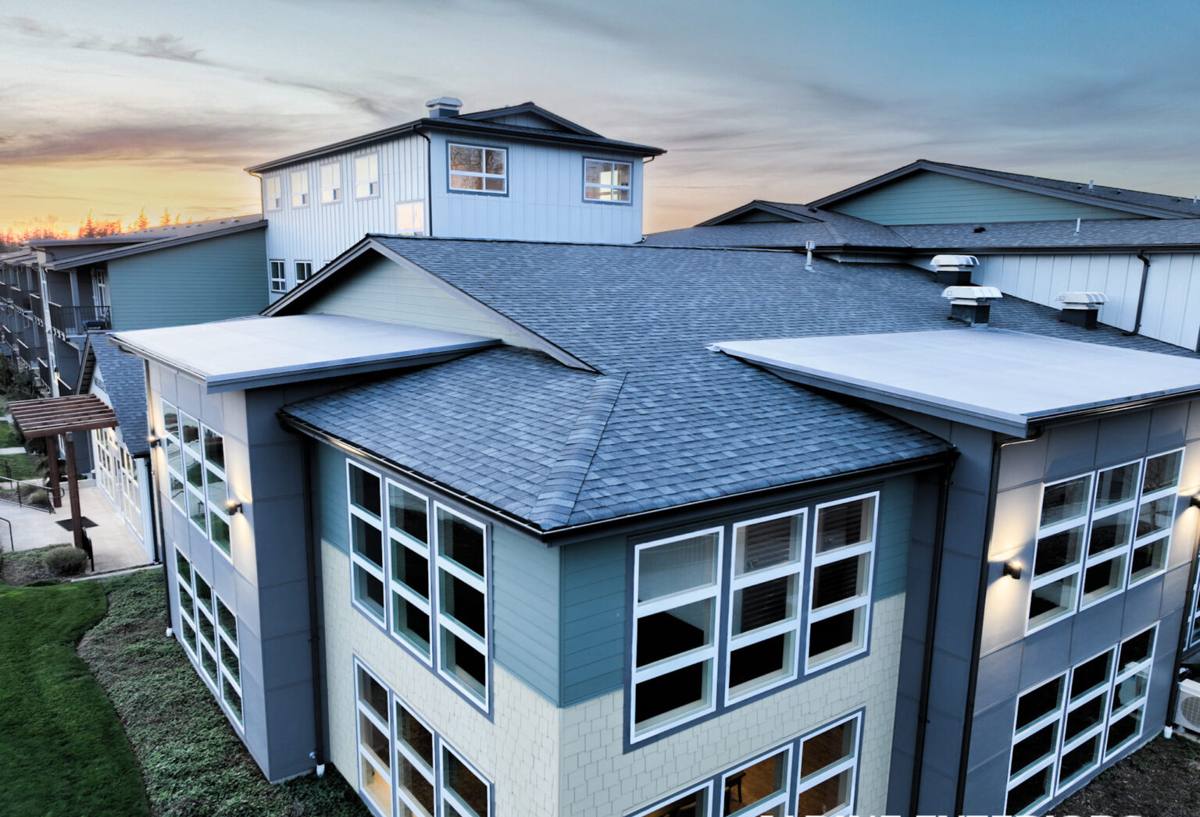
Recognizing Storm Damage on a Skyline Roof
Wind Damage
Sustained wind and gusts off the water can lift shingle tabs, crease them, or tear them loose entirely without leaving anything obviously missing from the ground. Look for shingles that appear slightly raised, curled at the corners, or a different shade than the surrounding roof — that color shift is often the fresh underside of a shingle that's been flipped or torn and is no longer sealed down.
Impact and Debris Damage
Branches and debris are common after wind events, especially on lots with mature trees. Impact damage can bruise or crack shingles without punching a visible hole, which means a roof can look fine from the driveway and still be compromised. Gutters and downspouts knocked loose or dented are also a useful clue that something hit the roofline with real force.
Water Intrusion Signs
Inside the house, watch for ceiling stains, a musty smell in an attic or closet under the roofline, or soft spots in attic decking. Outside, granule buildup in gutters (beyond normal shingle aging), sagging sections of roofline, or daylight visible through soffit and ridge areas all point to storm-related openings that need attention before the next round of rain.
Why Salt Air and Moss Season Complicate Repairs Here
Salt Air and Metal Components
Flashing, fasteners, gutters, and any exposed metal on a roof near the water corrode faster than they would inland. A storm repair that ignores this — using standard fasteners or flashing not suited to a marine-influenced climate — can look fine for a season and then fail early from corrosion, not from another storm. Any proper repair in Skyline should account for the fact that the air itself is part of what's aging the roof.
The Long Moss Season
Anacortes' wet, mild winters and shaded lots give moss a long window to establish itself, and moss does more than look bad. It holds moisture against the shingle surface, works into butt joints and nail lines, and can lift shingle edges over time, which turns a minor storm crease into an active leak path much faster than it would on a dry, sun-exposed roof. Any storm repair that doesn't also address existing moss growth nearby is treating half the problem.
What a Correct Storm Damage Repair Actually Involves
Full Assessment, Not Just Patching
A correct repair starts by identifying every point of damage, not just the one causing the visible leak. Wind and impact damage often cluster — if one section of a roof plane failed, nearby shingles and flashing in the same wind path are worth checking closely, even if they haven't failed yet.
Matching Materials and Aging
Shingles fade and granules wear unevenly over time, so a patch using brand-new material next to a 10-year-old roof will visibly stand out. A good repair either sources a reasonably close match or is honest with the homeowner up front that some color difference is unavoidable — that's a conversation we have before the work starts, not an excuse afterward.
Flashing, Underlayment, and Ventilation
Storm damage often exposes underlayment or decking that wasn't visible before. Replacing shingles without checking the flashing at valleys, chimneys, and penetrations, or the state of the underlayment beneath them, is how a repair ends up needing to be redone within a year or two. Attic ventilation matters too — poor airflow traps moisture that a storm repair alone won't fix.
Our Process for Skyline Homeowners
Inspection and Documentation
We walk the roof (or use a ladder and drone photos where a full walk isn't safe or practical) and document every area of concern with photos, not just a verbal summary. This matters both for our own repair plan and for any insurance claim the homeowner may need to file.
The Repair Decision
We tell homeowners plainly whether their situation is a straightforward repair or something closer to a partial re-roof. If a roof is old enough that patching one storm-damaged section will just shift the next failure to an adjacent, equally worn area, we say so — that's a better outcome for the homeowner than a repair that looks resolved but isn't.
The Work Itself
Repairs are done with attention to the details storms expose: proper flashing integration, correctly lapped underlayment, fasteners suited to a coastal climate, and a finished tie-in that sheds water the way the original roof design intended rather than creating a new seam for water to find.
Repair or Replace? Cost and Decision Factors
Every roof and storm event is different, but these are the factors that generally drive the decision between a targeted repair and a larger replacement:
| Factor | Leans Toward Repair | Leans Toward Replacement |
|---|---|---|
| Roof age | Under 12-15 years | Nearing or past expected lifespan |
| Extent of damage | Isolated to one section or plane | Spread across multiple roof planes |
| Underlying decking | Solid, dry, no rot found | Soft spots or rot found during inspection |
| Moss/algae history | Minor, treatable growth | Long-term moss damage to multiple areas |
| Insurance coverage | Repair-scope claim approved | Adjuster scopes full slope or full roof |
Cost for a straightforward storm repair is generally a small fraction of a full roof replacement, but the honest answer depends entirely on what we find once shingles are pulled back — which is why we walk homeowners through our findings before committing to a scope of work.
Working With Insurance on Storm Claims
Many storm repairs in this area are covered in part by homeowners insurance, particularly after a named wind event. Our documentation is built to be useful for that process — clear photos of the damage, a written description of cause (wind, impact, or water intrusion), and a scope of repair that an adjuster can review. We don't handle the claim itself, but we make sure the homeowner isn't walking into that conversation with just a phone description of "some missing shingles."
One honest note: not all roof wear qualifies as storm damage, and a good contractor should be willing to tell a homeowner when what they're seeing is ordinary aging rather than something an insurance claim will cover. Overstating damage to support a claim isn't something we'll do, and homeowners are usually better served by that honesty in the long run.
What to Do Right After a Storm
- Check for interior signs first — ceiling stains, musty smells, or damp attic insulation — without climbing on the roof yourself
- Photograph any visible exterior damage from the ground: missing shingles, dented gutters, debris on the roof
- Clear immediate safety hazards like downed branches, but leave roof-level debris removal to a professional
- Avoid tarping or DIY patch attempts on a steep or wet roof — this is when most secondary injuries and additional damage happen
- Call for an inspection promptly; small openings get worse with every additional rain event, not better
- Keep any photos or notes about the storm date and conditions — useful if an insurance claim follows
Why a Crew That Already Works Skyline Matters
A crew that regularly works this part of Anacortes already knows which roof styles and ages are common in the area, how the local moss and salt-air pattern tends to show up, and how quickly a small storm opening can turn into a real leak given the winter rain here. That familiarity means less time spent diagnosing the obvious and more time spent on the repair itself. It also means a faster response after a storm — when several homes in the same neighborhood are dealing with the same wind event, being local to the area is the difference between a same-week inspection and a multi-week wait behind crews traveling in from farther away.
If you've noticed storm damage on your roof, or you're just not sure whether what you're seeing needs attention, we're happy to take a look. Reach out for a free, no-pressure estimate using the form below.