 Anacortes Window
 Why Roofs Wear Out Faster Near Similk Beach
Homes along the Similk Beach shoreline sit right where the Salish Sea meets Skagit County weather, and that location is hard on a roof in ways that inland Anacortes homes don't deal with as much. Salt-laden air off Similk Bay accelerates corrosion on nails, flashing, and any exposed metal edge. Driving rain that comes in sideways off the water finds its way under lifted shingles and around poorly sealed penetrations that would stay dry in a calmer setting. And the tree cover common in this part of Skagit County means shaded roof sections stay damp for days after a storm, feeding a moss season that can run from October well into spring.
None of that means a roof here needs to fail early. It means the materials, ventilation, and install details have to be chosen for the actual conditions the roof will face, not for a generic climate. That's the difference between a roof replacement that holds up through a decade of Similk Beach winters and one that needs attention again in five years.
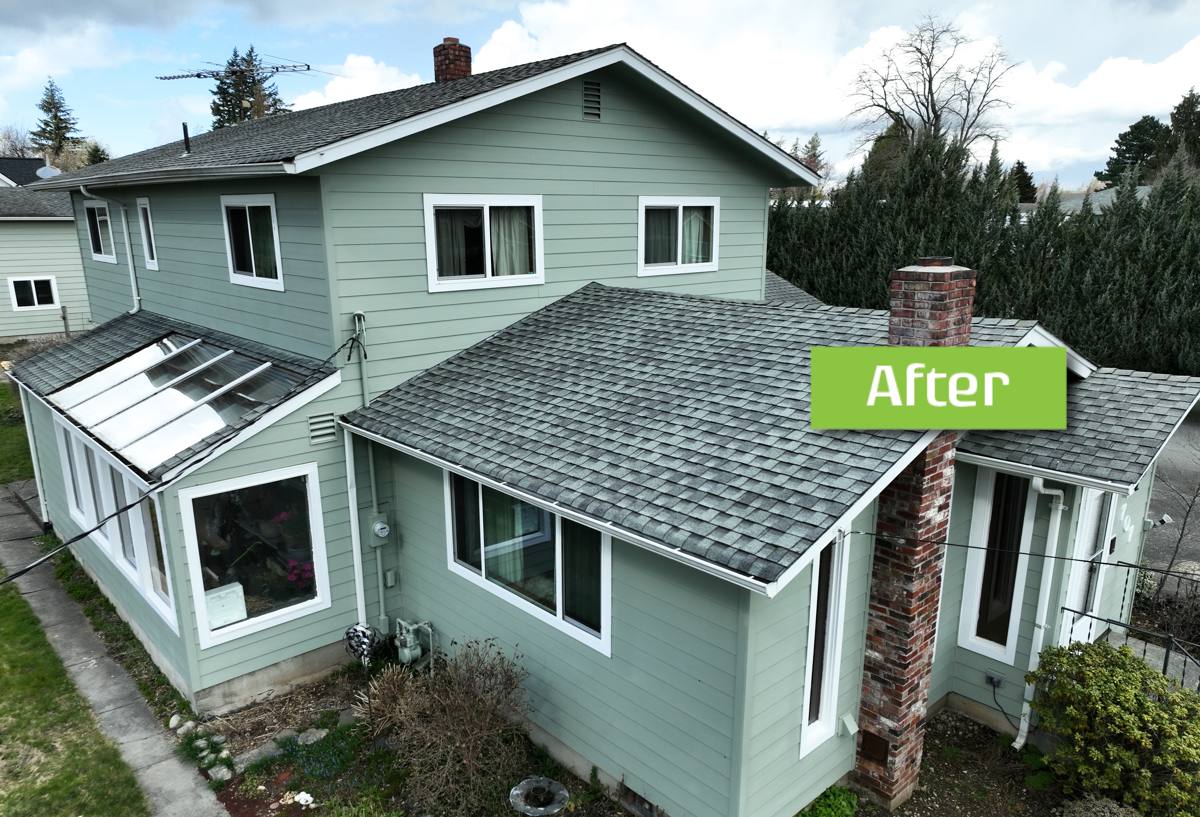
Signs a Roof Needs Replacing, Not Just Patching
A lot of roof problems in this area get treated with a patch when the roof underneath is already past the point where patching makes sense. Before recommending a full replacement, we look for the signs that tell us the roofing system itself — not just a shingle here or there — is failing.
- Granule loss heavy enough that you can see bare, shiny patches on the shingle surface
- Moss established in mats rather than a light surface film, especially on north-facing slopes
- Soft or spongy decking when walked on, usually found near valleys or eaves
- Daylight visible through the roof deck from inside the attic
- Shingles cupping, curling, or cracking across large sections rather than isolated spots
- Rusted or lifting flashing around chimneys, vents, and skylights
- Water stains on interior ceilings that reappear after every heavy rain
- A roof already at or past the manufacturer's expected service life for the material
If you're only seeing one or two of these in a small area, a repair is often the honest answer. When several show up together, or the roof is already fifteen-plus years old, replacement is usually the more cost-effective path — patching an aging roof repeatedly tends to cost more over time than doing the job right once.
What a Correct Roof Replacement Actually Involves
Tear-Off and Deck Inspection
We remove the existing roofing down to the deck rather than layering new shingles over old. That's the only way to actually see the plywood or plank decking underneath, which is where hidden rot from long-term moss and moisture problems tends to hide. Any soft or delaminated decking gets replaced before anything new goes down — skipping this step is the single most common reason a "new" roof fails early.
Underlayment and Moisture Protection
Given the rain volume this area sees, underlayment isn't a place to cut corners. We use synthetic or felt underlayment rated for the exposure, with self-adhered ice-and-water membrane at the eaves, valleys, and any low-slope transitions where wind-driven rain is most likely to get pushed backward under the shingle line.
Ventilation
A roof that can't breathe stays damp longer after every storm, and damp roofs grow moss faster. Balanced intake and exhaust ventilation lets the attic and roof deck dry out between rain events instead of holding moisture against the underside of the sheathing — which matters more here than in drier parts of the state.
Flashing and Transitions
Chimneys, skylights, vent pipes, and roof-to-wall transitions are where the vast majority of leaks start, and they're also the spots salt air corrodes fastest. We use corrosion-resistant flashing metals and detail every transition individually rather than relying on sealant alone to hold a joint together.
Choosing a Roofing Material for This Climate
There's no single "best" roofing material for every home — the right choice depends on the roof's exposure, the home's style, and how much long-term maintenance an owner wants to take on. Here's how the common options actually compare for a salt-air, high-moss environment like Similk Beach.
| Material | Moss & Moisture Resistance | Salt Air Durability | Typical Lifespan | Maintenance Load |
|---|---|---|---|---|
| Architectural asphalt shingle | Good with proper ventilation and periodic cleaning | Good — minimal exposed metal to corrode | 25–30 years | Low to moderate |
| Standing seam metal | Excellent — sheds moisture, nothing for moss to grip | Very good with a marine-grade coating | 40–60 years | Low |
| Cedar shake | Poor without diligent upkeep — moss favors the texture and grain | Moderate — needs regular treatment | 20–30 years with upkeep | High |
| Composition (3-tab) shingle | Fair — thinner profile sheds less debris | Fair — exposed fasteners corrode sooner | 15–20 years | Moderate |
We'll walk through the honest trade-offs for your specific roof before you commit to anything. A steep, well-shaded roof under fir or cedar trees behaves differently than an open, wind-exposed roof closer to the water, even on the same street.
Our Roof Replacement Process, Start to Finish
- On-site assessment. We inspect the existing roof, decking condition, ventilation, and any problem areas specific to your home's exposure, then measure and photograph what we find.
- Written estimate. You get a clear, itemized quote covering materials, labor, disposal, and any decking repair contingencies — no vague allowances.
- Material selection. We go over the options that make sense for your roof's pitch, exposure, and your budget, and answer questions honestly, including where a cheaper option is genuinely fine and where it isn't.
- Scheduling around weather. Roof work depends on dry windows, so we plan around the forecast rather than rushing a tear-off into an incoming system.
- Tear-off and deck repair. Old roofing comes off, the deck gets inspected and repaired as needed, and the site is protected from weather throughout the day's work.
- Underlayment, flashing, and installation. Moisture barriers and flashing go in first, then the roofing material, installed to manufacturer spec so warranties stay valid.
- Cleanup and final walkthrough. We clear debris and nails from the property and walk the finished roof with you before calling the job done.
Timing a Replacement Around This Area's Weather
Skagit County's wettest stretch generally runs from fall through early spring, which makes late spring through summer into early fall the most reliable window for a full tear-off — enough consecutive dry days to get decking exposed, repaired if needed, and covered again before the next system moves in off the water. That said, a roof that's actively leaking or already showing failed decking shouldn't wait for the "ideal" season just to match a calendar preference — ongoing water intrusion causes more damage the longer it sits, and we can plan around shorter dry windows if a roof genuinely can't wait. We track the forecast closely and build buffer days into every schedule so an unexpected rain system doesn't leave a roof partially torn off overnight.
What Affects the Cost of a Roof Replacement
Every roof is different, and we won't quote a number without seeing yours, but these are the factors that most often move the price up or down.
| Cost Factor | Why It Matters |
|---|---|
| Roof size and pitch | Steeper roofs take longer and require more safety setup than a low-slope roof of the same footprint |
| Layers to remove | A roof with one existing layer costs less to tear off than one with two or more layered on top |
| Decking condition | Rot or soft spots found during tear-off require plywood replacement, usually priced as a contingency |
| Material choice | Asphalt shingle, metal, and cedar carry very different material and labor costs per square |
| Ventilation upgrades | Adding proper intake and exhaust venting where none exists adds labor but pays off in roof longevity |
| Access and site conditions | Waterfront lots, steep driveways, or limited staging space can affect equipment and labor time |
Beware of any quote that's dramatically lower than the others without an explanation — it usually means a corner is being cut somewhere, whether that's underlayment quality, disposal fees, or decking repair that gets discovered (and billed) after the job starts.
Keeping a New Roof Moss-Free and Watertight
A correctly installed roof still needs some basic upkeep in an area with this much moisture and moss pressure. A little attention twice a year goes a long way toward getting the full service life out of the investment.
- Have gutters cleared before the fall rains start and again mid-winter if trees are nearby
- Keep overhanging branches trimmed back to reduce shade and debris buildup on the roof
- Have moss growth treated or gently removed before it establishes into thick mats
- Check attic ventilation isn't blocked by insulation or storage
- Have flashing around chimneys and vents inspected every couple of years for lifting or corrosion
- Address any small leak or stain immediately rather than waiting for it to spread
Why Hiring a Crew That Already Works Similk Beach Matters
A roofer who mostly works drier, inland areas will size up ventilation, underlayment, and material choices differently than a crew that replaces roofs along the Similk Bay shoreline regularly. We know which slopes in this area tend to hold moss longest, how wind exposure off the water affects fastening patterns near the eaves, and what Skagit County permitting requires before work starts. That local pattern recognition is the difference between a roof that's technically installed to code and one that's actually built for the conditions it will sit in for the next few decades.
If you're weighing a repair against a full replacement, or just want an honest read on how much life is left in your current roof, we're glad to take a look. Reach out for a free, no-pressure estimate — the form below gets you started.