 Anacortes Window
 Decking Built for Similk Beach's Waterfront Climate
Similk Beach sits close enough to the water that homes here deal with a different set of conditions than decks built further inland in Skagit County. Salt-laden air moves off Similk Bay and the surrounding shoreline, driving rain comes in sideways during fall and winter storms, and the long, damp stretch from October through April keeps every horizontal surface wet far more often than it's dry. That combination is hard on decking materials, hardware, and the framing underneath them, and it's why a deck built the same way you'd build one in a dry inland subdivision often disappoints a Similk Beach homeowner within a few years.
Composite decking has become the practical answer for a lot of homes in this area, but "composite decking" covers a wide range of products and installation approaches, and not all of them hold up the same way against salt air and constant moisture cycling. This page focuses specifically on what a composite deck needs to get right for Similk Beach conditions — not composite decking in general.
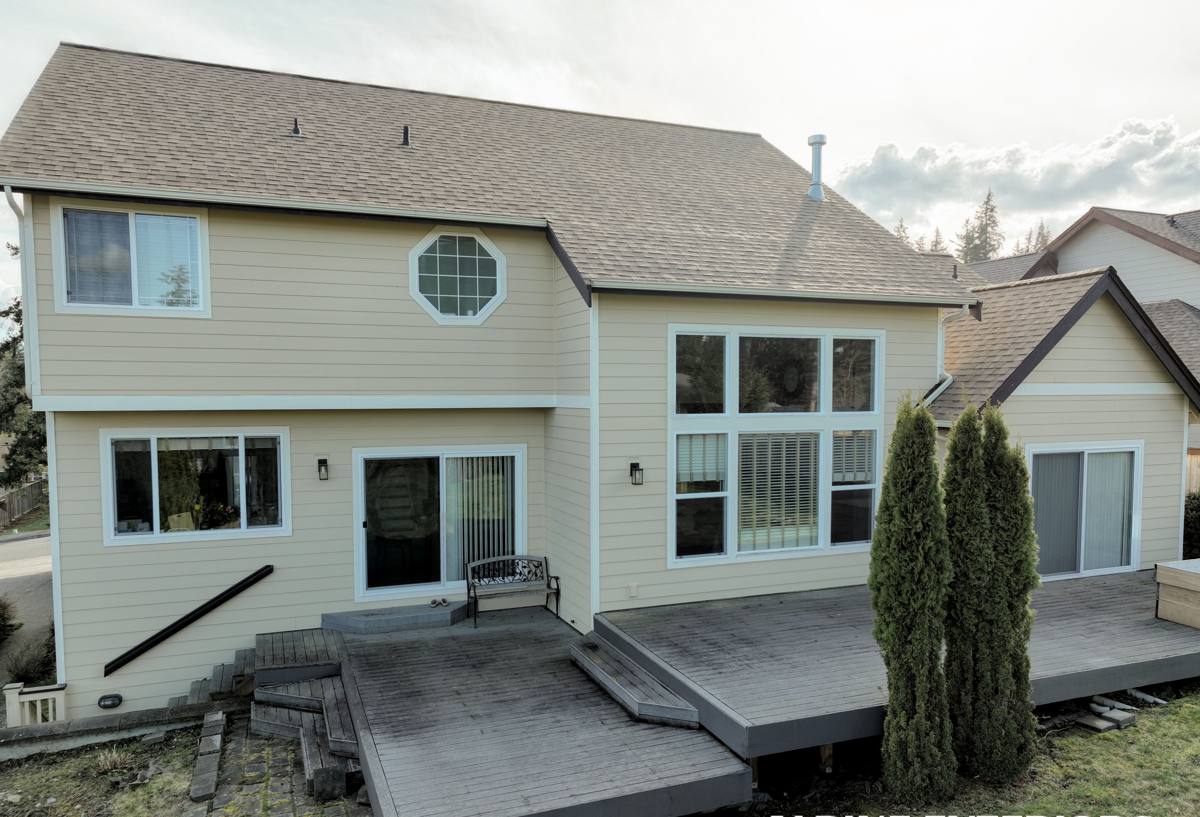
What Salt Air and Driving Rain Actually Do to a Deck
It helps to understand the specific stresses at play, because they shape every decision in the build:
- Salt film buildup settles on board surfaces and hardware, holding moisture against materials longer than plain rainwater would and accelerating corrosion on anything not rated for coastal exposure.
- Driving rain off the water doesn't just fall straight down — it gets pushed under rail caps, into fastener heads, and along board edges, which means water intrusion points matter more here than on a sheltered inland deck.
- Extended damp periods keep the underside of the deck, the joists, and the ledger board wet for days at a time during the wetter months, which is where rot and hidden decay actually start — not on the walking surface.
- Moss and algae growth thrives in the shade and moisture that many Similk Beach lots provide, and it doesn't just look bad — a moss layer holds water against the board surface and creates a slick, sometimes dangerous walking surface.
None of this means a deck can't be built to last here. It means the build has to account for these conditions from the framing up, not just at the surface.
What a Correctly Built Composite Deck Includes
The Structure Underneath
The composite boards are the part everyone sees, but the substructure decides how long the deck actually lasts. For Similk Beach jobs, that means:
- Pressure-treated or naturally rot-resistant framing rated for ground contact where it's called for, not just general exterior use.
- Joist tape or a comparable protective barrier on top of every joist, so fasteners seal into a waterproof layer instead of driving straight into exposed treated lumber.
- Corrosion-resistant fasteners and structural hardware — stainless steel or a coastal-rated coating, not standard galvanized, given the salt exposure this close to the water.
- Proper joist spacing for the specific composite board being used, since composite products often require tighter spacing than traditional wood decking to avoid sagging over time.
Drainage and Airflow
A deck that traps moisture underneath it will develop problems no matter how good the boards on top are. Correct grading away from the house, adequate ventilation under low decks, and a ledger connection that's properly flashed so water can't migrate into the house framing are all non-negotiable in a climate that stays wet as long as this one does.
Board Selection and Layout
Board direction, gapping, and end-cap treatment all affect how well water sheds off the surface. Composite boards expand and contract with temperature and moisture more than some homeowners expect, so gapping has to be set correctly at install — too tight and boards can buckle when they swell; too loose and the deck looks and feels unfinished.
Comparing Composite Decking Options for a Coastal Setting
Not every composite product performs the same way in salt air and constant damp. The table below reflects general trade-offs we walk homeowners through, not brand rankings — the right choice depends on budget, sun exposure, and how much upkeep a homeowner wants to do.
| Board Type | Moisture Behavior | Maintenance Load | Typical Lifespan |
|---|---|---|---|
| Capped composite | Fully sealed shell resists moisture absorption and staining well | Low — occasional washing | Long-term, backed by manufacturer warranty |
| Uncapped composite | More prone to surface moisture absorption and fading over time | Moderate — more frequent cleaning needed | Shorter than capped products in wet climates |
| PVC decking | Doesn't absorb moisture at all; very stable in wet conditions | Low | Long-term, generally higher upfront cost |
| Traditional wood | Absorbs moisture readily; needs sealing to resist rot and salt exposure | High — annual sealing/staining | Depends heavily on maintenance consistency |
For most Similk Beach homes, we recommend a fully capped composite or PVC product specifically because of how much time these boards spend wet during a normal Skagit County winter. An uncapped or budget composite can still work for a lower-traffic deck, but we'll tell you honestly if that trade-off isn't a good fit for a particular site.
Fasteners, Rail Caps, and the Details That Get Skipped
Most composite deck failures we're called out to inspect trace back to a handful of overlooked details rather than the boards themselves:
- Standard fasteners used instead of coastal-rated hardware, leading to rust streaks and weakened connections within a few years.
- Rail post connections that weren't flashed or sealed, letting driving rain track down into the framing.
- Hidden fastener clip systems installed without accounting for board expansion, causing boards to bow or pop loose.
- Stair stringers and ledger boards left without adequate protection, since these areas hold water longest after a storm.
Getting these details right the first time costs little compared to what it costs to fix a deck that's been failing quietly for two or three winters.
Living With a Composite Deck Near Similk Bay
Realistic Maintenance
Composite decking is chosen specifically because it needs far less upkeep than wood, but "low maintenance" is not "no maintenance" — especially this close to the water. A simple seasonal routine keeps a deck performing the way it should:
- Rinse or wash the deck surface a few times a year to clear salt film before it builds up, especially after winter storm cycles.
- Sweep debris out of board gaps regularly so organic material doesn't hold moisture against the boards.
- Treat shaded or north-facing sections for moss and algae before it establishes, since it's far easier to prevent than to remove once it's taken hold.
- Check rail connections and stair hardware annually for early signs of corrosion, particularly on any exposed fasteners.
- Keep gutters and downspouts near the deck clear so runoff isn't dumping extra water onto or under the deck surface.
Moss Season Specifically
Skagit County's long moss season is a real factor in deck longevity, not just a cosmetic nuisance. Moss holds moisture against composite boards and can make a surface slick enough to be a fall hazard on stairs and ramps. Boards installed with proper gapping and drainage shed water faster and give moss less opportunity to take hold in the first place — another reason correct installation matters more here than in drier parts of the state.
Cost Factors for a Similk Beach Composite Deck
Every deck is different, but the same handful of factors drive most of the cost variation we see on jobs in this area:
| Factor | Why It Affects Cost |
|---|---|
| Board tier (capped vs. uncapped vs. PVC) | Material cost varies significantly, and coastal exposure often justifies the higher tier |
| Substructure condition | Existing framing that's rotted or undersized needs rebuilding before new decking goes on |
| Height and access | Elevated decks near sloped or waterfront lots require more substructure and safety work |
| Railing and stair complexity | Custom rail systems and multi-level stairs add labor and hardware cost |
| Site access | Tight or waterfront-adjacent lots can slow material staging and demolition |
We give homeowners a real, itemized estimate before any work starts — no vague ranges that turn into surprises once the old deck comes off.
Our Process for a Similk Beach Deck Project
- On-site assessment. We look at the existing structure (if there is one), drainage patterns, sun and shade exposure, and how close the deck sits to salt water influence.
- Honest product recommendation. We walk through board options based on your budget, how the deck will be used, and how much maintenance you actually want to do — not a one-size-fits-all pitch.
- Written estimate. Clear scope, materials, and pricing before any demolition begins.
- Demolition and structural repair. Any compromised framing gets replaced, not covered over.
- Coastal-appropriate build. Joist protection, corrosion-resistant fasteners, correct gapping, and proper flashing at every ledger and rail connection.
- Final walkthrough. We go over the finished deck and basic maintenance expectations with you directly.
Permits and Local Code Considerations
Deck projects in Skagit County, including work in and around Similk Beach, can be subject to permitting depending on the deck's height, size, and attachment to the home, along with any setback or shoreline-related requirements for waterfront-adjacent properties. We handle the permitting conversation as part of the project rather than leaving it for the homeowner to sort out, and we won't cut corners on inspections to save time.
Why Local Experience on This Stretch of Coastline Matters
A contractor who mostly builds decks inland can still build a technically sound deck, but they may not default to coastal-rated fasteners, joist protection, or the drainage detailing that this environment demands unless they're specifically thinking about it. A crew that already works Similk Beach and the surrounding Anacortes waterfront builds those details in as standard practice, because we've seen what happens to decks that skip them — usually a few years too late to fix cheaply. That local pattern recognition is worth more than it sounds like on paper, and it's the difference between a deck that needs real repair work in five years and one that's still solid in fifteen.
If you're planning a new composite deck or replacing one that hasn't held up to the weather out here, we're happy to take a look and give you a straightforward, no-pressure estimate. Use the form below to get started.