 Anacortes Window
 Roofing Built for Sedro-Woolley's Wet Side of the Mountains
Sedro-Woolley sits inland from the coast, tucked against the foothills where the Skagit River valley starts to climb toward the Cascades. That location changes what a roof has to deal with compared to a house right on the water in Anacortes. You get less direct salt spray here, but you still get plenty of marine-influenced moisture rolling up the valley off Puget Sound, plus heavy tree cover, valley fog, and long stretches of gray, damp weather that keep roofs wet for days at a time. Add in driving rain during fall and winter storms and a moss season that can run from October into May, and you have a climate that is genuinely hard on a roof system, even if it never sees a hurricane or a heavy snow load.
A new roof installation here isn't just about stopping leaks. It's about controlling moisture that sits on the roof deck for weeks at a time, keeping moss from working its way under shingle edges, and making sure the attic underneath can breathe so condensation doesn't rot the deck from the inside. Skagit County homes that get this right last decades longer than roofs installed with a one-size-fits-all approach borrowed from a drier region.
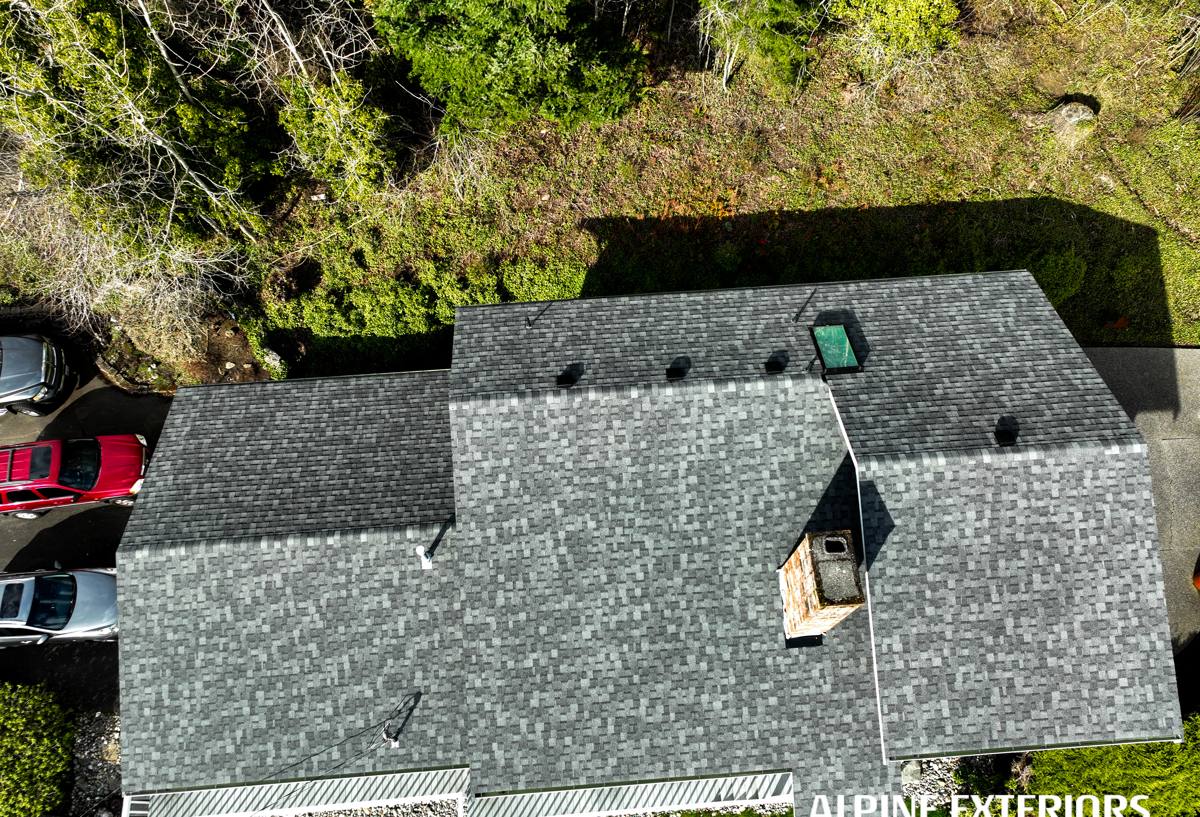
Signs a Roof Needs Replacing, Not Just Patching
Not every roof problem calls for a full tear-off. But in this climate, small problems compound quickly because moisture doesn't dry out between rain events the way it would somewhere sunnier. Here's what usually tips a roof from "repairable" to "replace it":
- Granule loss heavy enough that you can see bare, shiny patches on multiple shingles, not just one or two
- Soft or spongy spots when walked on, which usually means the decking underneath has already taken on water
- Moss or algae that has worked its way under shingle tabs rather than just sitting on the surface
- Daylight visible through the roof deck from inside the attic
- Multiple layers of old roofing already stacked underneath the current one
- Shingles curling, cracking, or lifting at the edges across large sections of the roof
- A roof approaching or past 20-25 years old for asphalt composition shingle in this climate
If a roof only shows one or two of these signs in a localized area, a repair may genuinely be the more honest recommendation. We'll tell you that if it's true — a roof replacement is a significant investment and it should happen because the roof needs it, not because it's convenient for us to sell one.
Choosing the Right Roofing Material for This Climate
What Actually Matters Here
In a climate defined by sustained moisture rather than extreme heat or heavy snow, the properties that matter most are moss resistance, how the material sheds water, and how it holds up to repeated wet-dry cycling over the years. Appearance and budget matter too, but they shouldn't be the only factors.
| Material | Moss/Moisture Behavior | Typical Lifespan Here | Trade-offs |
|---|---|---|---|
| Architectural asphalt shingle | Good with proper algae-resistant granules; needs periodic moss treatment | 20-30 years | Best cost-to-performance balance; widest style/color range |
| Standing seam metal | Sheds water fast, minimal surface for moss to grip | 40-60 years | Higher upfront cost; installation quality matters more than with shingles |
| Synthetic/composite shingle | Resists moisture absorption well, doesn't rot like wood | 30-50 years | Higher material cost than asphalt; fewer local installers experienced with it |
| Cedar shake | Attractive natural look but absorbs moisture and is a prime moss host | varies widely | We're honest with clients that the ongoing maintenance burden in this climate is significant |
We install all of these, but our default recommendation for most Sedro-Woolley homes is a quality architectural asphalt shingle with algae-resistant granules, paired with proper ventilation and moss-prevention detailing. Metal is a strong option for homeowners planning to stay long-term and wanting to minimize future maintenance. We don't push cedar shake as a low-maintenance choice, because in this climate it simply isn't one — that's an honest trade-off, not a knock on the product itself.
Underlayment Matters as Much as the Shingle
What's under the visible roofing is where a lot of long-term performance actually gets decided. Synthetic underlayment resists water absorption and holds up better through a wet installation season than old-style felt, and self-adhered ice-and-water shield belongs at eaves, valleys, and around every penetration where wind-driven rain can push water backward under the shingle line. In a driving-rain climate, skipping or skimping on this layer is one of the most common causes of "mystery" leaks years down the road.
What a Correct New Roof Installation Actually Involves
A roof replacement done right is a sequence, and skipping steps is how homeowners end up with a roof that looks fine for two years and then leaks. Here's what should happen on every full replacement:
- Complete tear-off to bare decking — no roofing over old layers
- Deck inspection and replacement of any rotted, delaminated, or soft plywood/OSB sheathing
- Drip edge installed at eaves and rakes
- Self-adhered ice-and-water shield at eaves, valleys, roof-to-wall transitions, and penetrations
- Synthetic underlayment across the remaining field
- New flashing at chimneys, skylights, and sidewalls — flashing is reused far too often when it should be replaced
- Shingle or panel installation to manufacturer spec, including proper nailing pattern and exposure
- Ridge and soffit ventilation checked and corrected if the existing system doesn't move enough air
- Cleanup and a final walkthrough with the homeowner
Every one of these steps affects how the roof performs in wet, moss-prone conditions specifically — this isn't a generic checklist, it's what actually breaks down first when a roof is installed in a hurry in this part of Skagit County.
Ventilation: The Step That Gets Skipped Most Often
A roof deck that can't breathe traps moisture from inside the house — cooking, showers, laundry — against the underside of the sheathing. Over a few wet Skagit County winters, that trapped moisture leads to rot, mold, and a roof deck that fails from below even though the shingles up top look fine. Balanced intake (soffit vents) and exhaust (ridge vent) is what keeps air moving through the attic and drying that moisture out.
Good ventilation also helps on the outside. Even airflow keeps the roof surface from staying damp longer than it needs to after a rain event, which is one of the practical ways to slow moss regrowth without relying purely on chemical treatments. We check ventilation on every replacement — it's a small line item compared to the shingles themselves, but it has an outsized effect on how long the whole system lasts.
Moss and Debris: Designing the Roof to Fight Back
You can't eliminate moss risk in a climate this wet and shaded, but a correctly installed roof resists it far better than one that isn't. A few details we build in on request or as standard practice:
- Zinc or copper strips near the ridge, which release trace metal ions that inhibit moss growth as rain washes over them
- Proper shingle exposure and nailing so moss and debris can't easily lift tab edges
- Clean valley and flashing design that doesn't create flat spots where needles and debris collect
- Ventilation, as covered above, to keep the deck and surface drying out between storms
None of this makes moss maintenance optional — it still needs periodic attention, especially under overhanging trees — but it changes moss from a structural threat into a cosmetic one you can manage on a normal schedule.
What Drives the Cost of a New Roof
Every roof is priced on its own specifics, and we won't quote a number without seeing the job, but these are the factors that move the price up or down on most Sedro-Woolley homes:
| Factor | Why It Matters |
|---|---|
| Roof size and number of stories | More square footage and steeper access both add labor time |
| Roof pitch and complexity | Steep pitches and multiple valleys/dormers slow installation and increase safety measures |
| Number of existing layers | Tearing off two or three layers of old roofing costs more than tearing off one |
| Decking condition | Rotted sheathing found during tear-off adds material and labor to replace |
| Material choice | Asphalt, metal, and synthetic shingle carry different material costs and install times |
| Ventilation upgrades | Adding ridge vent or additional soffit intake where none existed adds some cost but pays off long-term |
Broadly, homeowners should expect a wide range depending on these factors — from a straightforward asphalt shingle replacement on a simple roof, up to significantly more for large, complex, or metal-roofed projects. We give a firm number after an on-site look, not a phone estimate.
Why It Matters to Hire a Crew That Already Works This Area
Roofing is roofing anywhere, but a crew that regularly works Sedro-Woolley and the surrounding Skagit County towns knows a few things that matter in practice: how to schedule tear-offs around the region's rain patterns so a house isn't sitting open to the weather overnight, which local suppliers stock the underlayment and ventilation components that actually hold up here, and what the county permitting and inspection process looks like for a residential re-roof. That local familiarity shows up as fewer surprises and faster problem-solving, not just faster driving times.
Before hiring any roofing contractor, it's worth confirming a few basics:
- Current Washington state contractor license and liability insurance, verifiable independently
- A written scope of work that specifies tear-off, decking replacement terms, underlayment type, and ventilation plan — not just "new roof"
- Manufacturer certification if you want a material's extended warranty, since many require certified installers
- A clear answer on who pulls the permit and schedules inspections
- Willingness to walk the roof with you before and after the job, and explain what they find
A contractor who hesitates on any of these is worth a second look before you sign anything.
Get a Straight Answer About Your Roof
If your roof is showing its age, or you just want an honest read on how much life it has left, we're happy to come take a look. No pressure, no hard sell — just a clear explanation of what we see and what it would take to fix it right. Use the form below to request a free estimate.