 Anacortes Window
 Why Ship Harbor Roofs Take a Different Kind of Beating
Ship Harbor sits close to the water on the west side of Fidalgo Island, right where the weather rolling off Rosario Strait first meets land. That location is part of what makes the area beautiful, and it's also exactly why roofs here don't age the same way roofs do further inland. Salt-laden air corrodes fasteners, flashing, and metal components faster than it would in a drier, landlocked neighborhood. Wind-driven rain off the water finds every gap in flashing and underlayment instead of just running off the surface. And the shaded, moisture-heavy tree cover common around Anacortes keeps roofs damp for long stretches, which is exactly what moss and algae need to take hold.
None of this means Ship Harbor homes need exotic materials or gimmicks. It means the replacement has to be done correctly, with the right underlayment, the right ventilation, and the right attention to flashing detail — the parts of a roofing job that don't show up in a quick estimate but absolutely show up ten years later.
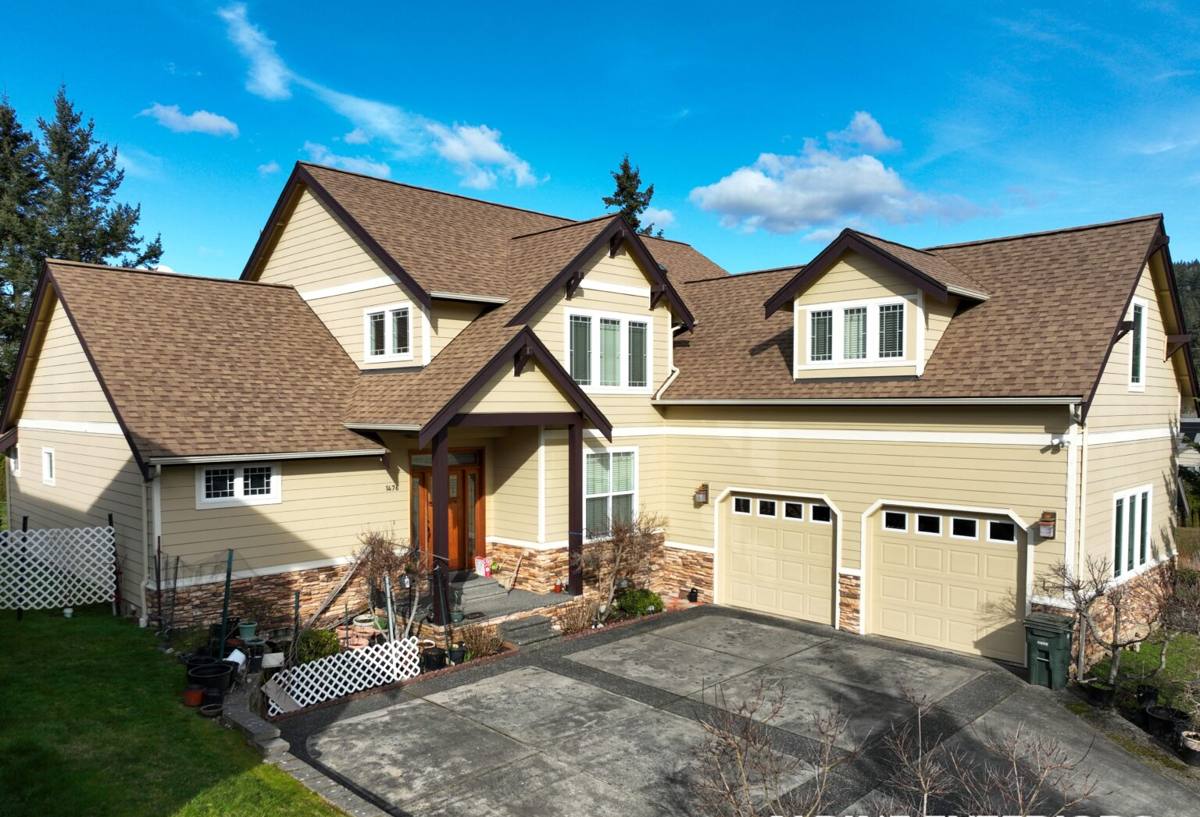
Signs a Ship Harbor Roof Replacement Shouldn't Wait
Roofs near the water rarely fail all at once. They show warning signs first, and catching them early is the difference between a planned replacement and an emergency one during a winter storm.
- Granule loss visible in gutters or downspouts, especially after a windy rain event
- Moss or algae streaking that keeps coming back within a season or two of cleaning
- Curling, cracked, or missing shingles, particularly on the sides of the roof that face prevailing wind and rain
- Soft or spongy spots underfoot when walking the roof, a sign the decking underneath is taking on moisture
- Rust staining or corrosion around flashing, vents, or metal valleys
- Daylight visible through the attic roof boards, or damp insulation after a heavy rain
- A roof that's simply reaching the end of its rated lifespan, even if it looks okay from the ground
If you're seeing two or more of these, it's worth having a straightforward look before it turns into interior damage.
What a Correct Replacement Actually Involves
Full Tear-Off, Not a Layover
In a climate this wet, roofing over old material traps moisture that's already worked its way into the existing layers. A proper replacement strips the roof down to the decking so it can be inspected and, if needed, repaired before anything new goes down.
Decking Inspection and Repair
Once the old roofing is off, the decking gets checked board by board. Any wood that's soft, delaminated, or water-stained gets replaced rather than covered up. Skipping this step is one of the most common ways a roof replacement fails early near the water, because the new roofing is only as good as what it's fastened to.
Underlayment Built for Driving Rain
Standard felt underlayment can work in a mild, dry climate. For a location that takes wind-driven rain directly off the strait, a synthetic underlayment with strong tear resistance, plus ice-and-water shield membrane at eaves, valleys, and around every penetration, gives the roof a real second line of defense if wind ever pushes water up under the shingles.
Flashing Done by Hand, Not by Kit
Prefabricated flashing pieces are fine on a simple roof, but chimneys, skylights, dormers, and roof-to-wall transitions near the water need flashing that's cut and formed to fit tightly, then sealed and lapped correctly with the underlayment. Loose or generic flashing is where the majority of leaks near coastal neighborhoods actually start.
Choosing the Right Roofing Material for a Marine Climate
There's no single "best" roofing material for Ship Harbor — the right choice depends on your budget, your roof's exposure, and how much maintenance you're willing to keep up with. The table below reflects what we tell homeowners honestly, including the trade-offs.
| Material | Moss/Algae Resistance | Salt Air Durability | Typical Lifespan | Maintenance Needs |
|---|---|---|---|---|
| Standard asphalt shingle | Moderate; benefits from algae-resistant granules | Good with quality fasteners and flashing | 20-25 years | Periodic moss removal, gutter checks |
| Architectural/laminate shingle | Better airflow under tabs, sheds moisture faster | Good; heavier profile handles wind-driven rain well | 25-30 years | Low to moderate |
| Metal roofing | Excellent; moss struggles to grip smooth panels | Very good with marine-grade coatings and stainless fasteners | 40-50+ years | Low, but coating quality matters near salt air |
| Synthetic/composite roofing | Good; resistant to moisture absorption | Good | 30-50 years | Low to moderate |
We don't push any one product on every home. A steep, shaded roof tucked under trees behaves differently than an open, wind-exposed roof closer to the water, and the material recommendation should reflect that, not a one-size-fits-all sales pitch.
A Note on Cedar Shake
Cedar shake still shows up on older homes in this area and can look great when it's maintained well. Our professional standard is to be upfront that it demands more regular upkeep in a wet, moss-prone climate than asphalt or metal, and its warranty structure typically leans harder on the homeowner's maintenance schedule. That's not a knock on the material — it's a maintenance-burden conversation worth having honestly before you commit.
Ventilation and Moisture Control Matter as Much as the Shingles
A long moss season means a roof spends a lot of the year damp, and a roof deck that can't breathe traps that moisture underneath the shingles instead of drying out. Balanced intake and exhaust ventilation — soffit vents pulling air in, ridge or roof vents letting it out — keeps the underside of the decking dry and helps prevent the ice-dam and rot issues that show up on poorly vented roofs during a wet Skagit County winter. On a replacement, this is the point where we recheck attic ventilation math rather than just matching what was there before, since a lot of older Anacortes homes were under-vented to begin with.
Our Process, Start to Finish
- Roof and attic assessment — a full look at the current roofing, decking condition from the attic side, ventilation setup, and any problem areas you've already noticed.
- Honest scope and estimate — a written plan covering material options, expected decking repair allowance, and a clear price range before any work starts.
- Tear-off and decking repair — old roofing removed, decking inspected and repaired board by board.
- Underlayment and flashing installation — synthetic underlayment, ice-and-water shield at vulnerable points, and hand-formed flashing at every penetration and transition.
- Roofing material installation — installed to manufacturer specification so warranty coverage stays intact.
- Ventilation check and adjustment — intake and exhaust venting balanced for the roof's actual attic volume.
- Cleanup and magnetic sweep — job site and yard cleared of debris and stray fasteners.
- Final walkthrough — we go over the finished roof with you, point out flashing and ventilation details, and answer questions before calling the job done.
Why a Crew That Already Works Ship Harbor Matters
A roofing crew that only occasionally works this side of Anacortes has to relearn the local conditions every time — how much wind exposure a given lot actually gets, which roof orientations hold moss longest, what ventilation shortfalls show up again and again in homes built in a certain era. A crew that already works Ship Harbor regularly isn't guessing at any of that. We know what driving rain off the strait does to a poorly flashed valley, and we build the job around avoiding it, not fixing it after the first winter storm.
Local familiarity also means fewer surprises on scheduling and permitting. Skagit County and City of Anacortes permitting requirements and inspection timing are things we handle routinely rather than researching from scratch, and we plan around the region's weather windows rather than fighting them.
What Drives the Cost of a Ship Harbor Roof Replacement
Every roof is priced on its own specifics, but the same handful of factors move the number up or down on almost every job we quote in this area.
| Factor | Why It Matters Here |
|---|---|
| Roof pitch and access | Steeper roofs and difficult access near trees or water views take longer and require more safety setup |
| Number of existing layers | Multiple old layers mean more tear-off labor and disposal before decking is even visible |
| Decking condition | Moisture-damaged decking found during tear-off adds material and labor not visible from the ground |
| Material choice | Asphalt, metal, and composite roofing carry different material and labor costs |
| Flashing complexity | Chimneys, skylights, and multiple roof planes each add hand-detailed flashing work |
| Ventilation upgrades | Older homes often need added soffit or ridge venting to meet proper airflow |
We'd rather walk you through these line by line during an estimate than quote a flat number that leaves out what's actually driving the price.
Protecting Your Roof After Replacement
A new roof still needs some seasonal attention in this climate, especially through the wetter months.
- Clear gutters and downspouts before the fall rains start, so water isn't backing up under the roof edge
- Trim back overhanging branches that keep sections of roof shaded and damp longer than the rest
- Have moss growth treated early rather than letting it establish, especially on north-facing slopes
- Schedule a quick visual check after major windstorms to catch lifted shingles or flashing before a leak develops
- Keep an eye on attic ventilation if you add insulation or make other attic changes later
If your roof is showing wear, or you just want a straight answer on whether replacement or repair makes more sense right now, we're happy to take a look. The estimate is free, there's no pressure, and you'll get a clear explanation of what your roof actually needs — just fill out the form below to get started.