 Anacortes Window
 James Hardie Siding, Installed for Sedro-Woolley's Weather
Sedro-Woolley sits where the flat farmland of the Skagit Valley starts climbing into the foothills of the North Cascades, and that position gives the town a weather pattern that's easy to underestimate. It isn't the most exposed part of Skagit County, but it takes a steady, compounding beating: driving rain funneled up the valley from Puget Sound, a moss season that runs most of the year under filtered tree light, and enough salt-tinged air working its way inland to add a slow corrosion load to anything metal on the outside of a house. We install James Hardie fiber cement siding exclusively, and this page is about what that actually means for a Sedro-Woolley home — which Hardie products go where, what correct installation looks like, and how the warranty and finish system hold up against this particular stretch of Washington weather.
This isn't a general "why fiber cement beats vinyl" page. If you already know you want James Hardie siding, or you're trying to understand what you're paying for beyond the brand name, this is the detail level that matters.
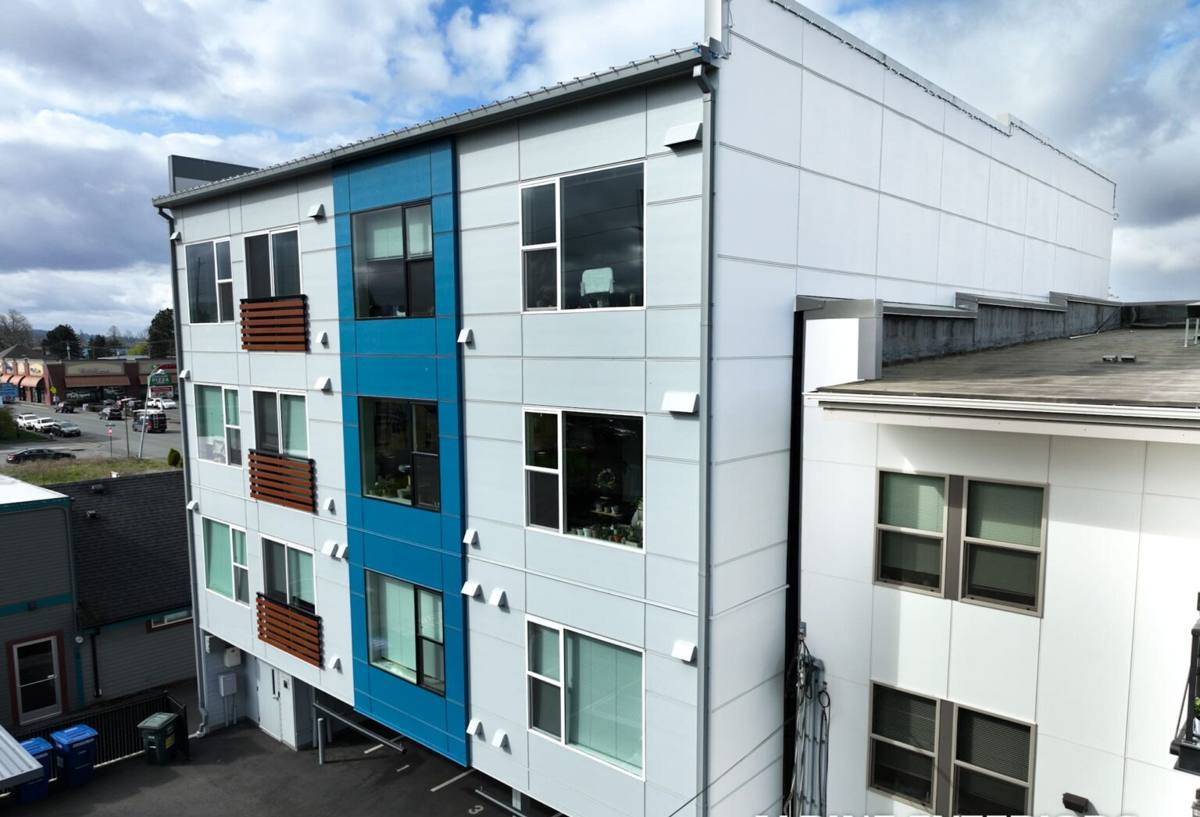
How Sedro-Woolley's Weather Interacts With Each Part of a Hardie System
A Hardie installation isn't one material — it's a system of substrate, fasteners, flashing, joints, and a factory finish, and Sedro-Woolley's climate stresses each part differently.
The Board Itself
Fiber cement is dimensionally stable, meaning it doesn't swell, cup, or warp the way wood-based products do when they absorb moisture. That matters here because the valley rarely gives siding a long, uninterrupted dry stretch — storms roll through, humidity lingers, and a material that expands and contracts with every wet-dry cycle eventually works its joints and fasteners loose. Hardie's board holds its shape through that cycling.
Fasteners and Flashing
Salt-laden air reaching inland from Puget Sound is a smaller factor in Sedro-Woolley than in towns sitting right on the water, but it's not zero, and it adds up over decades on exposed nail heads, flashing, and trim fasteners. We spec corrosion-resistant fasteners and flashing details to Hardie's requirements specifically because this region asks more of that hardware than a drier inland climate would.
Joints and Butt Seams
Every horizontal joint in a lap siding run is a place water can get behind the cladding if it isn't detailed correctly. In a climate where wind-driven rain gets pushed sideways into seams rather than just falling straight down, joint treatment isn't a finishing touch — it's one of the first things that determines whether the wall assembly behind the siding stays dry.
The James Hardie Product Line We Draw From
Hardie makes several distinct product families, and part of getting a Sedro-Woolley project right is matching the right one to the part of the house it's covering, not defaulting to a single product for the whole exterior.
| Product | Typical Use | How It Performs Here |
|---|---|---|
| HardiePlank lap siding | Primary field siding on most homes | Horizontal laps shed driving rain efficiently when installed with correct overlap and clearance |
| HardiePanel vertical siding | Gables, accents, modern-style elevations | Fewer horizontal joints per square foot, which reduces potential water entry points on tall gable faces |
| HardieShingle | Accent bands, dormers, craftsman-style detailing | Shadow-line profile that holds up visually under the region's flat, overcast light |
| HardieTrim | Corner boards, window and door casing, fascia | Non-combustible, dimensionally stable trim that won't rot the way wood trim does at end grain and joints |
On a typical Sedro-Woolley home we'll spec HardiePlank for the main field, HardieTrim throughout for corners and window surrounds, and HardiePanel or HardieShingle only where the architecture calls for an accent — not because more product variety looks impressive, but because each one solves a specific water-management or appearance problem better than forcing one product to do everything.
HZ5: The Climate Zone Formulation Built for This Region
James Hardie engineers its boards differently depending on the climate zone they're sold into, and the formulation sold in warmer, drier regions of the country isn't the one we install here. For the Pacific Northwest, including Skagit County, we install Hardie's HZ5 line — a formulation specifically engineered for regions with sustained moisture exposure and meaningful freeze-thaw cycling. Sedro-Woolley's proximity to the foothills means it sees slightly more freeze-thaw activity in winter than towns closer to the Sound, and HZ5 is built with that swing in mind rather than for a climate that barely sees frost.
This is a detail that's easy for a homeowner to miss when comparing bids, because "James Hardie siding" sounds like a single product regardless of which zone formulation gets installed. It isn't, and installing the wrong zone's product is a quiet way a job can look identical on delivery day and still be mismatched to the climate it's going on.
ColorPlus Finish: Why the Coating Matters as Much as the Board
Most Hardie siding installed today carries a factory-applied ColorPlus finish rather than field-applied paint. The difference is significant in a climate like this one: a factory finish is cured under controlled conditions with multiple coats and no weather interruption, while field-applied paint depends on the weather conditions present on the day it goes on — not ideal in a region where a rain-free, low-humidity painting window can be hard to find for weeks at a stretch. ColorPlus finishes are formulated to resist fading, chipping, and cracking longer than typical field paint, and they carry their own finish warranty separate from the substrate warranty on the board.
Sedro-Woolley's long moss season is also a finish consideration. Lighter colors show algae and moss discoloration on shaded, north-facing walls more visibly than mid-tone grays and browns, which is worth thinking about at the color-selection stage rather than after the first wet winter.
What Correct Installation Actually Involves
James Hardie's product warranty is conditioned on installation to the manufacturer's written specifications — not general good workmanship, but specific measurable requirements. A crew that skips these doesn't just risk a worse-looking wall; they risk a warranty claim getting denied later. On every Sedro-Woolley project we hold to:
- Correct nailing pattern and depth — over-driven or under-driven fasteners are one of the most common causes of premature siding failure
- Proper clearance above grade, roofing, and decks — siding installed too close to these surfaces wicks up moisture it was never designed to handle
- Rain screen or drainage plane behind the siding — a gap that lets incidental moisture drain and the wall assembly dry, rather than trapping water against the sheathing
- Flashing integrated at every window, door, and penetration — the single most common place we find hidden water damage on other companies' work during inspections
- Correct joint and butt seam treatment — sealed and backed per spec, not just butted and caulked over
- Manufacturer-approved fasteners and trim materials — substituting cheaper hardware to save money undercuts the whole system's warranty coverage
None of these are visible in a finished photo. They're the difference between a Hardie installation that performs for thirty-plus years and one that looks the same on day one but starts showing moisture problems in year six or seven.
Our Process for a Sedro-Woolley Hardie Project
Site Walk and Substrate Check
Before we quote anything, we walk the exterior looking at how the current siding, trim, and flashing are actually performing — soft spots, staining patterns, and gaps at penetrations. Once old material comes off, we check the sheathing and framing underneath and repair anything water-damaged before new siding goes up. Covering rotted substrate is the single most common shortcut behind failed "new" siding jobs.
Product Selection
We walk through plank, panel, shingle, and trim options with the homeowner, matching product to each elevation rather than defaulting to one profile for the whole house, and factor in sun exposure, shade, and how each wall's orientation will interact with color and finish over time.
Installation to Spec
Every board goes on to Hardie's written installation requirements — nailing, clearance, drainage plane, and flashing — because that's what keeps the manufacturer's warranty intact and what actually keeps water out of the wall.
Final Walkthrough
We walk the completed job with the homeowner, checking seams, trim lines, and caulking, and cover basic long-term care — mainly what a normal maintenance rinse should look like and what moss regrowth on a Hardie exterior does and doesn't indicate a problem.
The Warranty: What's Actually Covered
James Hardie's product warranty is one of the stronger transferable warranties in the fiber cement industry, but it's worth understanding it's actually two warranties layered together — one on the fiber cement substrate itself, and a separate one on the ColorPlus factory finish if that's what was installed. Both are conditioned on installation to manufacturer specification, which is the reason we won't cut corners on the details in the checklist above even when they add labor time. A warranty that gets denied over an installation shortcut isn't much of a warranty, and it's also transferable to a future owner if the home sells, which is a detail worth knowing if resale is anywhere in your thinking.
Why a Hardie-Only, Local Crew Matters Here
A crew that installs multiple siding brands has to keep multiple sets of specifications, fastener requirements, and warranty conditions straight, and it's easy for details to blur between products. We install James Hardie exclusively, which means our crews aren't relearning a different manufacturer's spec sheet from one job to the next — the nailing pattern, clearance requirements, and flashing details on a Sedro-Woolley job are the same ones we've run hundreds of times across Skagit County.
Local familiarity matters on top of that. A crew that already works this part of the valley knows which walls tend to hold moisture longest, where moss establishes first, and how much freeze-thaw cycling to plan around — not from a manufacturer's regional climate map, but from having pulled failed siding off homes in this exact area and seen where it went wrong.
Cost Factors on a Sedro-Woolley Hardie Project
We don't post fixed prices because every home is different, but the variables that move the number are consistent from house to house.
| Factor | Why It Matters |
|---|---|
| Product mix (plank, panel, shingle, trim) | Accent products and trim detail add material and labor cost beyond plain lap siding |
| Substrate condition | Water-damaged sheathing found under old siding needs repair before new material goes on |
| Finish choice | ColorPlus factory finish vs. field-painted primed board changes both material cost and long-term maintenance |
| Home complexity | Dormers, gables, and multiple stories add cutting, flashing, and labor time |
| Site access | Tree cover, driveway space, and staging room vary widely on the more rural lots common around Sedro-Woolley |
If you're weighing a James Hardie siding project for a Sedro-Woolley home, we're happy to walk the exterior, look at what your current siding and trim are telling us, and put together a free, no-pressure estimate — no obligation, just a clear look at what your home actually needs.