 Anacortes Window
 Deck Repair Built for Skagit County's Wet, Mossy Climate
Sedro-Woolley sits inland along the Skagit River, a little removed from the saltwater that surrounds Anacortes itself, but it shares the same marine-influenced weather pattern that defines this part of Skagit County. Long, wet winters. Low-angle sun that never quite dries a shaded deck between rain events. A moss season that can stretch from early fall through late spring on anything that doesn't get direct light. Decks here don't fail because the material was bad — they fail because water finds a way in and sits there, and nobody caught it early enough.
A deck repair done right in this part of the valley isn't just about swapping a few gray boards. It's about understanding where moisture actually collects on a Skagit County deck — the ledger connection to the house, the fastener heads, the shaded north side where moss takes hold first — and fixing those spots correctly so the repair actually lasts through another wet season instead of needing to be redone in two years.
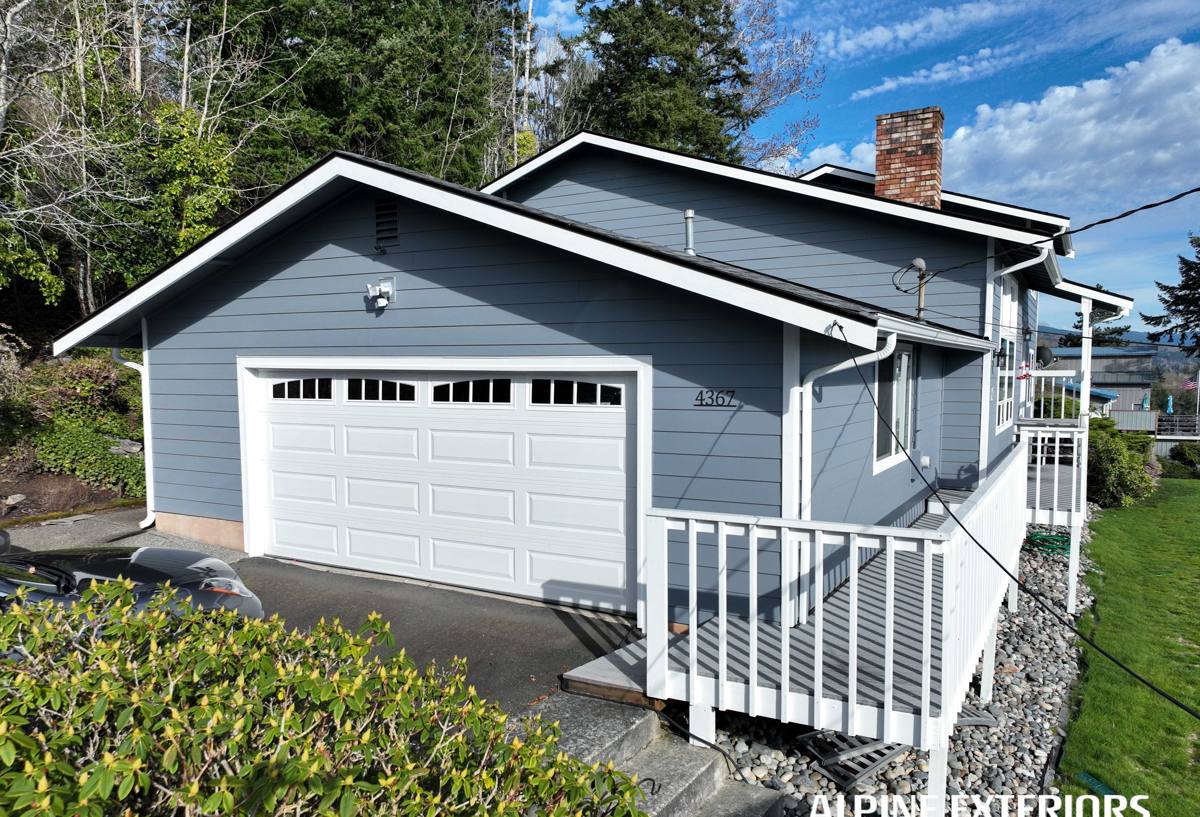
Signs Your Deck Needs Repair, Not Just a Pressure Wash
Homeowners often call us after noticing something cosmetic — dark staining, a slippery green film, boards that look tired. Sometimes that's all it is. But a few warning signs mean there's more going on underneath, and pressure washing it will only mask the problem for a season:
- Boards that feel soft, spongy, or slightly bouncy when you walk across them, especially near the house
- Rust streaks bleeding out from fastener heads or visible corrosion on screws and joist hardware
- A gap, even a small one, where the ledger board meets the house siding or rim joist
- Guardrail posts that wiggle or flex when pushed
- Persistent moss or algae in the same spot every year, even after cleaning — usually a sign that area never fully dries
- Stair stringers that feel bouncy or uneven underfoot
- Visible daylight or gapping between deck boards that has widened noticeably over a year or two
Any one of these on its own might be a minor fix. Several at once usually points to a moisture problem that's been working on the structure for a while.
What a Correct Deck Repair Actually Involves
Structural inspection first, cosmetic work second
Before anything gets replaced, we check the parts of the deck you can't see from standing on top of it: the ledger board attachment, the condition of the joists underneath, the posts and footings, and how the whole structure is fastened together. Replacing decking boards on top of a compromised frame just hides the real problem under new material.
The ledger board and flashing — the most common hidden failure point
The ledger board is where the deck bolts to the house, and it's the single most common source of rot on decks in this climate. If it was never properly flashed when the deck was built, or if the flashing has failed over the years, water runs down the house siding, behind the ledger, and sits there — invisible until the wood underneath is already soft. A correct repair addresses the flashing itself, not just the symptom.
Fasteners and hardware
Standard galvanized fasteners corrode faster in a persistently damp, marine-influenced climate than most people expect, and corroding fasteners weaken connections long before the wood around them looks obviously bad. We look at what's currently holding the deck together and, where needed, upgrade to stainless steel or coated fasteners rated for exterior and treated-lumber contact.
The decking boards themselves
Cupping, splitting, soft spots, and delamination (on composite boards) tell us whether individual boards can be spot-replaced or whether the whole surface has reached the end of its useful life. We're honest about which one you're actually looking at — replacing three boards is a very different job, and cost, than resurfacing the whole deck.
Wood or Composite? What Repair Looks Like for Each
Most Sedro-Woolley decks we work on are either pressure-treated lumber, cedar, or composite decking, and each behaves differently once moss and moisture get involved.
| Material | How it fails locally | Typical repair approach |
|---|---|---|
| Pressure-treated lumber | Rot at fastener points and ledger contact; moss holds moisture against the grain | Spot-replace affected boards; treat and reseal exposed cuts |
| Cedar | Graying and softening in shaded, damp areas; splitting if left unsealed | Sand or replace affected boards; re-oil or reseal on a regular cycle |
| Composite | Moisture trapped under boards where end caps or fasteners have failed; less prone to rot but can delaminate | Replace failed sections per manufacturer specs; correct ventilation underneath |
We don't push one material over another as a blanket rule. A well-maintained cedar deck can look great for decades in this climate; a neglected composite deck can still trap moisture and cause problems if it was installed without enough ventilation underneath. The honest answer depends on your maintenance habits, your budget, and how much shade the deck sits in.
What Actually Drives the Cost of a Deck Repair
"How much does deck repair cost" doesn't have one answer, because a board swap and a ledger rebuild are completely different jobs wearing the same name. These are the factors that actually move the number:
| Factor | Why it matters |
|---|---|
| Structural vs. cosmetic scope | Ledger, joist, or footing repairs cost more than surface board replacement because they involve the deck's load path |
| Extent of moisture damage | Rot found early is often contained to a small area; rot found late can require opening up more of the structure than expected |
| Material match | Matching existing decking (especially discontinued composite lines) can add cost or require a visible transition |
| Access and deck height | Elevated decks or ones with limited underneath access take longer to inspect and repair |
| Permit requirements | Structural work like ledger reattachment or footing replacement typically requires a permit; board swaps usually don't |
We give a written, itemized estimate after the inspection so you know exactly what you're paying for and why — not a flat number pulled out of the air.
Our Deck Repair Process, Start to Finish
- Free on-site inspection. We walk the deck top and bottom, check the ledger, posts, footings, and fastener condition, and identify exactly what's driving the problem.
- Written scope and estimate. You get a clear breakdown of what needs repair, what's optional, and what it costs — no pressure to upgrade beyond what the deck actually needs.
- Material sourcing. We source lumber or composite decking suited to this climate and, where possible, matched to your existing deck.
- Structural repairs first. Ledger flashing, joist sistering, post and footing work — the parts that hold everything up get addressed before anything cosmetic.
- Decking and railing work. Board replacement, resurfacing, or guardrail repair, done to current code for anything we touch structurally.
- Cleanup and walkthrough. We clear debris, sweep the site, and walk the finished repair with you before calling the job done.
Permits and Code Compliance for Sedro-Woolley Decks
Washington follows a version of the International Residential Code, and most jurisdictions in Skagit County — including Sedro-Woolley and the surrounding unincorporated areas — enforce it with local permitting through the applicable building department. In general, guardrails are required once a deck surface sits a certain height above grade, guardrail height needs to meet minimum code, and baluster spacing has to be tight enough that a small child can't pass through it. Structural work — reattaching a ledger, replacing a post or footing — typically triggers a permit requirement; simple board replacement usually doesn't, but it depends on the scope and the jurisdiction.
If your deck's guardrails or stairs were built years ago, there's a decent chance they don't quite meet current spacing or height requirements even if nothing looks obviously wrong. When we're already doing structural repair work, we bring what we touch up to current code rather than reinstalling something that was already out of date.
Why Hiring a Crew That Already Works Sedro-Woolley Matters
Deck repair isn't complicated in theory, but doing it correctly in this specific climate takes local judgment. A crew that works this part of Skagit County regularly knows which side of a deck holds moss longest given typical tree cover and shade patterns, how long a repair actually needs to dry out before it can be closed back up during our wetter months, and which local building department to coordinate with for permitting.
Just as importantly, a local crew has a reputation to protect in a place where word travels between neighbors. That's a real incentive to give you an honest repair-versus-replace answer instead of upselling a full rebuild when a targeted repair would do the job — or, just as importantly, telling you plainly when a repair really isn't worth it and a rebuild is the more honest long-term choice.
Keeping Your Repaired Deck Healthy Year-Round
A good repair buys you years, but a little seasonal upkeep buys you a lot more. Once your deck is repaired, this short routine goes a long way in our climate:
- Sweep leaves and debris out from between boards regularly, especially in fall — trapped organic matter holds moisture and feeds moss
- Clean moss with a stiff brush and appropriate cleaner rather than a pressure washer, which can drive water into the wood grain or damage composite surfaces
- Check that gutters and downspouts near the deck are directing water away, not onto or under it
- Reseal or re-stain wood decking on the manufacturer's recommended cycle, not just when it looks faded
- Do a quick annual check of fasteners, railings, and stair connections before the rainy season sets in
- Keep planters and other items that trap moisture off the deck surface, or move them periodically so boards can dry out
None of this replaces a proper repair when something structural is actually wrong, but it does mean the repair you paid for keeps doing its job for years instead of months.
If your deck in Sedro-Woolley has soft spots, moss that won't quit, or railings that don't feel as solid as they used to, we're glad to take a look. The estimate is free, there's no pressure, and you'll get a straight answer about what actually needs to happen — nothing more, nothing less.