 Anacortes Window
 Fiber Cement Siding for Old Town Anacortes Homes
Old Town Anacortes is one of the older, more established residential pockets in the city, close enough to the water that its homes take on the same weather pattern the rest of Fidalgo Island and Skagit County deal with, just with a longer track record to show for it. A lot of the houses here have already been through one or more rounds of siding in their lifetime, and what's currently on the wall often tells you a lot about what didn't hold up the first time. When we're called out to look at a home in this neighborhood, we're usually looking at siding that's already showing the effects of salt air, driving rain, and a moss season that runs longer here than in drier parts of the state.
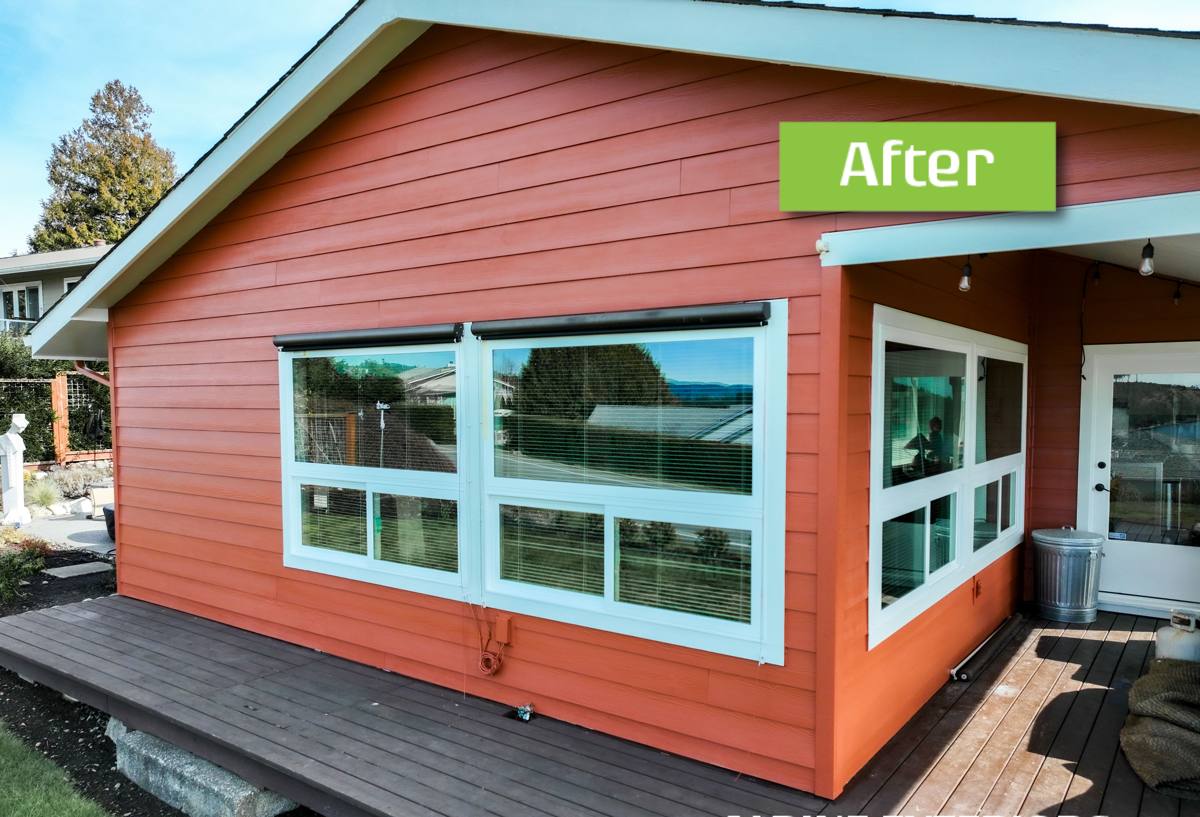
We install James Hardie fiber cement siding exclusively, and on a neighborhood like this one — with a mix of home ages, wall orientations, and existing conditions — getting the installation details right matters just as much as the material choice itself.
What Old Town Anacortes's Climate Actually Does to Siding
Salt Air
Anacortes sits on the water, and Old Town is close enough to it that salt-laden air is a constant here rather than an occasional visitor. Salt accelerates corrosion on exposed fasteners and hardware, and it keeps painted or coated surfaces damp longer than they'd stay in a drier, inland climate. Over years, that speeds up the breakdown of any finish that isn't built to handle sustained salt exposure, which is exactly why the type of finish on a home's siding matters as much as the substrate underneath it.
Driving Rain
Rain around here rarely falls straight down. Wind off the water pushes it sideways into laps, seams, and fastener points that a calmer, drier climate wouldn't test nearly as hard. On an older home, that means flashing and clearance details that were adequate when the house was originally built may not be holding up the way they once did. It's a big part of why re-siding an older Old Town home is rarely just a matter of swapping one material for another — the wall assembly behind it often needs attention too.
A Long Moss Season
Shaded walls, mature trees, and north-facing exposures are common throughout Old Town, and those conditions keep siding damp for extended stretches through fall, winter, and much of spring. That's exactly the environment moss needs to take hold. On wood-based or wood-look siding, sustained dampness isn't just a cosmetic problem that shows up as green staining — it's a durability problem, since ongoing moisture against an absorbent material eventually leads to softening and rot at seams and edges.
Why We Install Only James Hardie Fiber Cement
We don't install vinyl, LP SmartSide, Cemplank, Allura, primed spruce, or cedar. That's a professional standard we hold ourselves to, not a limitation on what we're able to install. In a climate that combines salt air, driving rain, and a long moss season, the materials that tend to struggle share a common thread: they either absorb moisture directly, rely on a field-applied coating to keep water out indefinitely, or expand and contract enough with humidity and temperature swings that seams gradually work themselves loose.
James Hardie fiber cement is engineered around that kind of exposure. It's non-combustible, it doesn't swell or feed moss the way wood-based products can, and its ColorPlus factory finish is baked on under controlled conditions and warrantied against the fading and chalking that constant moisture and UV cycling cause over time. Hardie also produces climate-specific HZ formulations — including its HZ5 line, engineered for regions like the Pacific Northwest — rather than one generic board sold everywhere. Installed to spec, it's backed by a strong transferable warranty, a real consideration for homeowners who may sell an Old Town property down the road.
| Material | Behavior in Old Town's Climate | Typical Long-Term Maintenance |
|---|---|---|
| James Hardie fiber cement | Non-combustible; doesn't absorb moisture or feed rot the way wood-based products can | Low — factory finish holds up well against sustained damp and salt exposure |
| Vinyl | Doesn't rot, but can warp, fade, or crack under temperature swings and wind-driven rain over time | Low upfront, but usually replacement rather than repair once panels fail |
| LP SmartSide / engineered wood | Wood-based core is more moisture-sensitive at cut edges and fastener holes | Moderate — edge sealing and coating upkeep matter more in sustained damp conditions |
| Primed spruce or cedar | Natural wood absorbs moisture readily and is a preferred surface for moss growth | Highest — regular repainting, caulking, and moss treatment needed to hold up |
This isn't a claim that every alternative fails on every home. It's why our own standard, for a neighborhood dealing with this specific combination of exposure, is one material installed correctly rather than a lower upfront cost that tends to shift maintenance burden back onto the homeowner within a decade or two.
What a Correct Fiber Cement Install Actually Involves
Fiber cement performs the way it's engineered to only when it goes on correctly. On an older Old Town home in particular, that starts before a single board is ever hung:
- Assessing the existing wall assembly for hidden rot or moisture damage before new siding goes over it
- House wrap or weather-resistive barrier installed and correctly lapped, shingle-style, so water sheds down and out rather than in
- Fasteners specified and spaced to Hardie's published requirements, not just "enough to hold the board up"
- Correct clearance above grade, roofing, decks, and hardscape so lower courses aren't sitting in standing moisture
- Flashing detailed and lapped at every window, door, corner, and penetration so wind-driven rain is directed out, not trapped behind the wall
- Boards cut face-down and any field-cut edges primed to protect the factory ColorPlus finish
- A ventilation gap or drainage plane built in behind the siding on walls where existing moisture or shade conditions call for it
Skip any one of these steps and a wall can still look right for a year or two. The problems that come from cutting corners — staining at seams, soft trim, paint failure, moisture trapped behind the cladding — take a few wet seasons to surface, which is exactly why they're easy for a rushed install to get away with until the homeowner is the one dealing with the consequences.
Our Process for an Old Town Anacortes Siding Project
Walkthrough and Assessment
We start by walking the property and looking at what each wall is actually dealing with — which faces take the brunt of wind-driven rain off the water, which stay shaded and slow to dry, and whether the existing wall assembly already has moisture or rot issues that need addressing before anything new goes up. On an older home, this step often turns up problems that aren't visible from the siding surface alone.
Planning Before Install Day
We work out fastening patterns, flashing details, and how the new siding will meet existing windows, trim, and rooflines before crews start cutting material. Older Old Town homes often have irregular framing or settled foundations that a generic install plan doesn't account for, so this step gets more attention here than it might on newer construction.
Installation to Manufacturer Spec
Every fastener, clearance, and flashing lap follows James Hardie's published requirements for this climate zone, not a generic national standard. That's what keeps the manufacturer's warranty intact, and it's what actually determines how the wall performs over the following decades, not just how it looks the day the crew leaves.
Final Walkthrough
We walk the finished job with you, explain what little ongoing maintenance the material actually needs, and make sure you know what a properly installed wall looks like so you can recognize the difference if you're ever comparing it to other work down the road.
Cost Factors for Fiber Cement Siding in Old Town
Every home in this neighborhood is a little different, but a few things consistently move the price on a fiber cement project here:
| Factor | Why It Matters |
|---|---|
| Existing wall condition | Rot or moisture damage found during tear-off needs repair before new siding goes on |
| Home age and framing irregularities | Older Old Town homes often need more custom fitting than newer, squarer construction |
| Wall height and architectural detail | More corners, dormers, and trim transitions mean more cuts and flashing work |
| Siding profile chosen | Lap, shingle, and board-and-batten profiles carry different material and labor costs |
| Access and site conditions | Narrow lots or limited equipment access can add labor time |
We'll walk your specific property and give you real numbers rather than a rough estimate based on square footage alone — two similarly sized homes in Old Town can carry very different costs depending on what's found once the old siding comes off.
Signs an Old Town Home Might Need New Siding
Most homeowners reach out because something specific caught their attention, not because they've been tracking every detail of their exterior. It's worth knowing what to look for before a small issue turns into a bigger one:
- Visible moss or green staining on shaded or north-facing walls
- Paint that keeps failing or peeling no matter how often it's redone
- Soft spots or slight give when pressing near window or door trim
- Siding that's cupping, warping, or separating at seams
- Rust streaks below fasteners or hardware
- A musty smell or visible staining on interior walls that share an exterior wall
Any one of these on its own doesn't necessarily mean a full replacement is needed. But on an older home in a climate like this, moisture-related damage tends to compound rather than stay static, so it's worth having a professional take an honest look rather than assuming it will resolve on its own.
Why Hire a Crew That Already Works Old Town Anacortes
A lot of what determines whether siding actually performs here comes down to details a generic, out-of-area crew tends to miss: how much wind-driven rain a given orientation actually takes on, where moss is likely to establish first based on shade and tree cover, how much clearance siding needs above grade given how consistently damp the ground stays through the wet season, and how an older home's settled framing needs to be accounted for rather than papered over.
A crew that works this specific neighborhood, house after house, starts to recognize these patterns instead of treating every job as a blank slate. That familiarity shows up in small decisions on site — where flashing is required instead of caulk, how fasteners are spaced given the wind exposure a particular wall actually sees, how an old wall assembly should be handled once it's opened up — decisions most homeowners never notice directly but absolutely feel in how the exterior holds up over the following years.
If your Old Town Anacortes home needs new siding, or you'd simply like an honest read on what your current siding is dealing with, we're glad to take a look. Reach out using the form below to schedule a free, no-pressure estimate.