 Anacortes Window
 Old Town Anacortes Puts Windows Through a Lot
Old Town Anacortes is one of the older, more established pockets of the city, and that shows in the housing stock — a mix of early-1900s cottages, craftsman-era homes, and mid-century infill, many with their original or first-generation replacement windows still in place. Add in a marine climate on Fidalgo Island, and you've got a neighborhood where windows work harder than they would inland. Salt-laden air off the water accelerates corrosion on hardware and fasteners. Driving rain, pushed sideways by wind off the water, tests every seal and flashing detail a window has. And the long, damp Pacific Northwest shoulder seasons feed moss and mildew growth on anything that stays wet too long — including window sills, frames, and the wood trim around them.
What This Means for Homeowners
None of this means your windows are doomed. It means the margin for error in materials and installation is smaller here than it would be in a drier, more sheltered inland town. A window or installation detail that would hold up fine in Skagit County's farmland east of I-5 can fail years earlier a few blocks from Anacortes's shoreline. That's the lens we use when we talk about "energy-efficient" windows for this neighborhood specifically — efficiency and durability aren't separate conversations here, they're the same conversation.
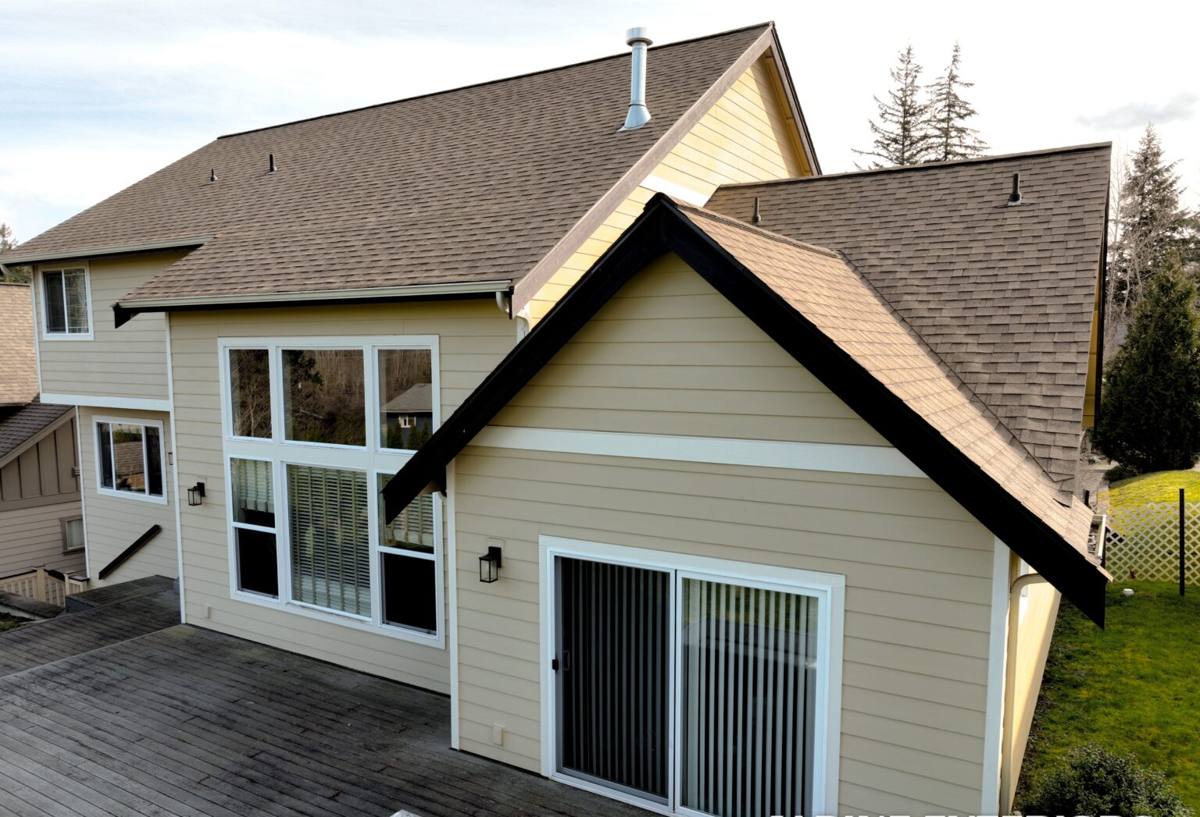
What "Energy-Efficient" Actually Means
The term gets used loosely in this industry, so it's worth being specific. A genuinely energy-efficient window is the product of three things working together: the glass package, the frame material and construction, and the quality of the installation. Weakness in any one of the three undercuts the other two.
The Glass
Modern residential windows use insulated glass units (IGUs) — two or three panes with a sealed gas-filled space between them, plus a low-E coating that reflects radiant heat while still letting light through. For most Old Town Anacortes homes, a quality double-pane low-E unit is enough to make a real difference over old single-pane glass. Triple-pane adds cost and weight for a smaller efficiency gain in our climate than it does in colder inland regions — it's worth discussing case by case, not defaulting to automatically.
The Frame
Frame material affects insulation value, but in a marine environment it affects something just as important: how the window ages. A frame that warps, corrodes, or lets moisture track into the wall cavity will lose its efficiency within a few years regardless of how good the glass was on install day.
The Installation
This is the part that's hardest to see and easiest to get wrong. Flashing, sill pans, backer rod, sealant selection, and shimming all determine whether water that hits the window ends up outside the wall or inside it. We've opened up plenty of window openings where the glass was fine but the installation had been letting water in behind the trim for years.
Signs Your Windows Are Underperforming
You don't need to be a contractor to spot the early warning signs. If you're noticing more than one or two of these, it's worth having the windows looked at before it turns into a bigger repair.
- Visible condensation or fogging between the panes (a sign the seal has failed and the gas fill is gone)
- Drafts you can feel near the frame even when the window is fully latched
- Wood trim or sills that feel soft, look discolored, or show moss/mildew growth
- Windows that are difficult to open, close, or lock — often a sign of frame warping
- A noticeable temperature difference near the window compared to the rest of the room
- Rising heating bills without a clear cause elsewhere in the home
- Peeling paint or bubbling on interior walls near a window opening
Choosing the Right Frame Material for This Climate
There's no single "best" window material — each has trade-offs, and the right call depends on your home's age, your budget, and how much upkeep you want to take on. Here's how the common options stack up specifically for a salt-air, high-moisture setting like Old Town Anacortes.
| Frame Material | Salt Air / Moisture Behavior | Maintenance | Good Fit For |
|---|---|---|---|
| Vinyl | Won't corrode or rot; performs well near the water | Low — occasional cleaning | Budget-conscious replacements, rental or secondary homes |
| Fiberglass | Very stable, resists warping and moisture intrusion | Low | Homes wanting long-term durability without wood upkeep |
| Aluminum-clad wood | Exterior holds up well; interior wood adds warmth | Moderate — watch cladding seams for water entry | Character homes wanting a wood interior look |
| Solid wood | Most vulnerable to moss, rot, and swelling near the coast | High — regular painting/sealing required | Strict historic restoration where wood is required |
| Aluminum (uninsulated) | Conducts cold and can corrode without proper coatings | Moderate | Generally not our first recommendation for this climate |
We steer most Old Town Anacortes homeowners toward vinyl, fiberglass, or aluminum-clad wood — not because solid wood windows are a bad product, but because they demand a level of ongoing maintenance (repainting, sealing, moss removal) that most homeowners underestimate when they're this close to the water. If preserving an all-wood look matters to you, we'll say so honestly and talk through what the upkeep actually looks like rather than talk you out of it.
Respecting an Older Home's Character
Matching Sightlines and Trim
A lot of the charm in Old Town Anacortes comes from original window proportions — sash patterns, trim width, and how the window sits in the wall. When we replace windows on an older home, we match sightlines and trim profiles as closely as the new window allows, so the house doesn't end up looking like a patchwork of eras. This matters more here than in a newer subdivision, where every window is already uniform.
When Full Replacement Isn't the Answer
Not every window needs full replacement. Sometimes a window is structurally sound but has failed weatherstripping, a worn sash lock, or glazing putty that's cracked and letting air through. We'll tell you when a repair or restoration makes more sense than tearing out a perfectly good original frame — full replacement is not always the more efficient choice once you account for the embodied materials already in a sound old window.
How We Approach the Job
1. On-Site Assessment
We look at each window individually, not just as a category. Age, current condition, how exposed that particular wall is to wind-driven rain, and any existing moisture damage all factor into the recommendation.
2. Opening Prep and Moisture Management
This is where most long-term failures start or get prevented. We check the sill pan and rough opening for existing rot, install proper flashing and a sloped sill pan where needed, and make sure water has a clear path out rather than into the wall cavity.
3. Installation
Windows get shimmed level and plumb, insulated around the frame (not just caulked at the edges), and sealed with materials rated for this climate — not a generic caulk that will crack and open a gap within a couple of seasons.
4. Exterior and Interior Finish
Trim gets reinstalled or matched, and every exterior seam gets checked before we consider the job done. We also walk the finished opening with you so you can see exactly what was done.
What Drives the Cost
Every window project is priced around a handful of real factors, not a flat per-window rate. In general, expect the total to move based on:
- Frame material chosen (vinyl typically costs less than fiberglass or clad-wood)
- Whether the existing opening has hidden rot or water damage that needs repair first
- Glass package — standard double-pane low-E versus upgraded coatings or triple-pane
- Custom sizing or shapes versus standard manufactured sizes
- Trim and finish work to match existing character
- Number of windows done at once — bundling a whole elevation is usually more efficient than one-off replacements
We give straightforward, itemized estimates so you can see what you're paying for, and we'll flag anything — like suspected rot behind a sill — before it becomes a surprise mid-project.
Why Local Experience in This Neighborhood Matters
A crew that mostly works newer construction inland doesn't run into salt-air corrosion, moss-driven rot, or century-old framing dimensions very often. A crew that regularly works Old Town Anacortes and the rest of Skagit County's coastal areas knows what to expect before the tape measure comes out — which openings are likely to have hidden moisture damage, which trim profiles are common on homes from a given era, and which materials actually hold up a block from the water versus twenty miles inland. That experience shows up in fewer surprises during the job and windows that still perform well ten and twenty years out.
If your windows are drafty, fogged, hard to operate, or just original to a home that's due for an upgrade, we're happy to take a look and talk through honest options. Use the form below to request a free, no-pressure estimate for your Old Town Anacortes home.