 Anacortes Window
 Board & Batten in a Neighborhood Built on Character
Old Town Anacortes has a look to it that most newer developments don't — a mix of older cottages, bungalows, and updated homes where the exterior details actually matter. Board and batten siding fits that character better than almost any other cladding style. The vertical lines, the shadow reveal at every batten, the way it reads as substantial rather than flat — it's a style choice as much as a siding choice, and it's one we see requested a lot in this part of Anacortes specifically.
But board and batten is also one of the least forgiving siding styles when the wrong material or the wrong install method goes into it. The same vertical battens that give it character also create dozens of extra seams, laps, and fastening points compared to standard lap siding. In a marine climate like Skagit County's, every one of those seams is a place water can get a foothold if the job isn't done right.
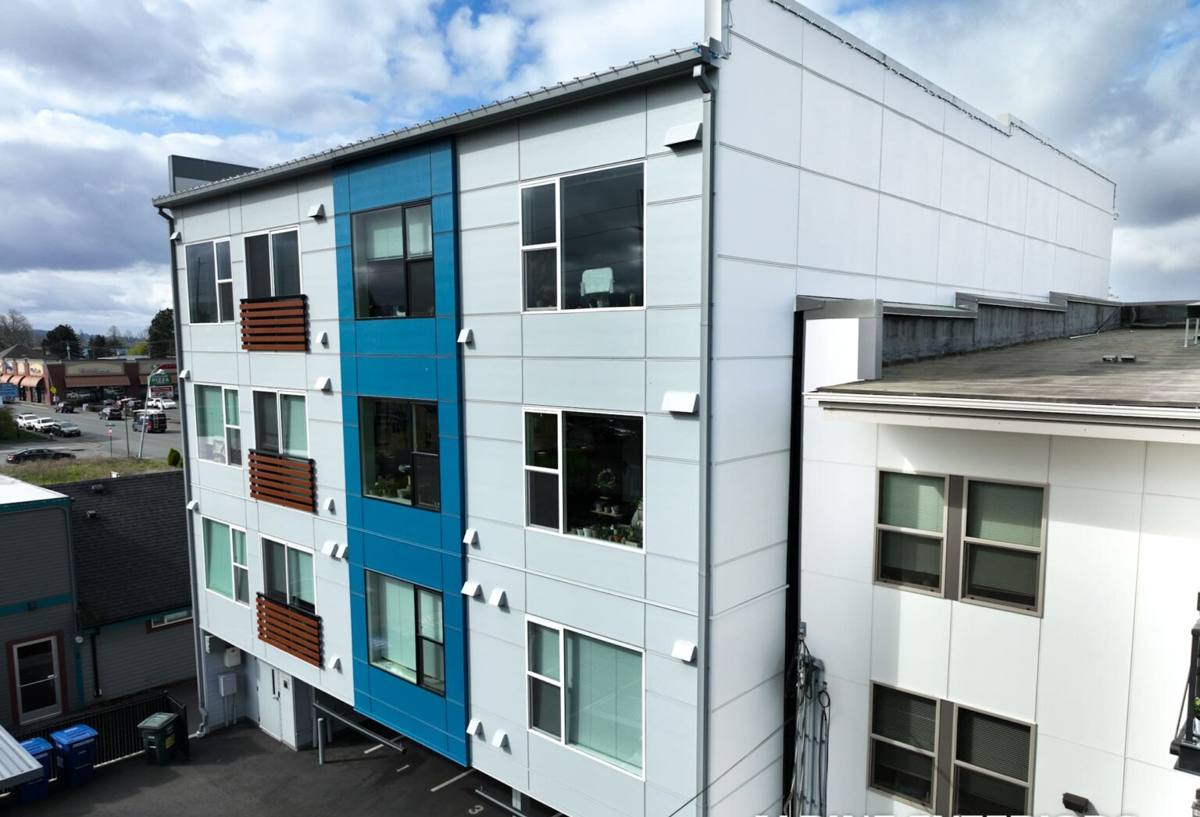
What Anacortes' Marine Climate Does to Board & Batten Siding
Anacortes sits right on the water, and that shapes everything about how siding ages here. Three things in particular work against board and batten more than they work against flat lap siding:
- Salt air: Airborne salt accelerates corrosion on fasteners and metal flashing, and it degrades paint and finish coatings faster than inland exposure. Board and batten has roughly twice the fastener count of standard lap siding, so corrosion-prone hardware is twice the liability.
- Driving rain off the water: Wind-driven rain doesn't just fall on a wall, it gets pushed sideways into it. Vertical battens create small ledges and laps where wind-driven water can be forced upward and behind the cladding if the flashing detail underneath isn't correct.
- A long moss season: The Pacific Northwest's damp, shaded months give moss and algae a long runway to establish themselves. Board and batten's vertical grooves and batten shadow lines are natural collection points for organic growth if the material doesn't shed water and dry quickly.
None of this means board and batten is a bad choice for Old Town Anacortes homes. It means the material and the installation detailing have to be matched to the exposure, not just picked for looks.
Why the Batten Seams Are the Real Test
On a standard lap siding job, water management is mostly about the horizontal laps and the weather-resistive barrier behind them. On board and batten, you add a second layer of complexity: every vertical batten strip is fastened through the field of the wall, which means every batten is a potential water entry point if it isn't backed correctly.
This is where a lot of board and batten installs — regardless of material — go wrong. Fasteners driven straight through both the batten and the underlying panel into the sheathing, with no gap for drainage, trap moisture right where it's hardest to inspect or repair later. On a home a few blocks from saltwater, that's not a hypothetical, it's a matter of when.
Why We Only Install James Hardie for Board & Batten
We install James Hardie fiber cement exclusively — no vinyl, no LP SmartSide, no cedar or primed spruce, no Cemplank or Allura. For a style like board and batten, where the material has to perform through dozens of extra seams and seasons of salt and rain, that standard matters even more than it does on a flat lap job.
Hardie's Board & Batten Systems
James Hardie offers board and batten in a couple of forms, and which one fits depends on the home:
- HardiePanel with Batten: Large-format fiber cement panels with vertical battens installed over the joints, giving the classic board and batten look with fewer horizontal seams than a board-by-board install.
- Artisan Board & Batten: A premium collection with a smoother, more refined reveal and deeper shadow lines, aimed at homes where the architectural detailing is a focal point.
Both are engineered fiber cement — a mix of cellulose fiber, sand, and Portland cement — pressed and cured into a rigid, dimensionally stable panel. It doesn't absorb water the way wood-based products can, it doesn't warp or buckle the way vinyl can in temperature swings, and because it's non-combustible, it doesn't feed a fire the way wood-based sidings do.
Climate-Engineered for This Coastline
Hardie manufactures its HZ5 and HZ10 product lines specifically for different climate zones, factoring in moisture exposure and temperature cycling for the region. Western Washington's marine climate is exactly the kind of environment that product engineering is built around — it's not a generic siding adapted to fit here, it's specified for conditions like Anacortes sees.
ColorPlus Factory Finish
Board and batten's extra seams mean extra edges where a field-applied paint job is prone to wearing thin first. Hardie's ColorPlus finish is baked on at the factory in multiple coats, backed by its own finish warranty, and holds color and mildew resistance far longer than a job-site paint job — which matters in a neighborhood with a long moss season working against every finish year-round.
What We Ruled Out, and Why
Board and batten is available in wood, vinyl, and engineered wood (LP SmartSide) as well as fiber cement. We don't install any of those, and it's worth explaining why in the context of this specific style:
- Solid wood or primed spruce board and batten looks great on day one, but with dozens of exposed fastener points and vertical seams, it needs a diligent repainting and caulking schedule to keep water out — a maintenance burden that only gets harder to stay ahead of in a wet, salty climate.
- Vinyl board and batten is low-maintenance but relies on snap-together panels that can show waviness on a wall this visually prominent, and it softens and can deform in direct summer heat against south- and west-facing walls.
- LP SmartSide is an engineered wood product with a resin-treated strand core. It performs well when detailed correctly, but any engineered wood product depends on its factory seal staying intact at every cut edge and seam — and board and batten simply has more of those edges than lap siding does.
None of these are bad products in every application. They're products whose trade-offs — maintenance load, moisture sensitivity at seams, or heat behavior — line up poorly with what a heavy-seam style like board and batten needs on a saltwater-adjacent home. That's why we standardized on Hardie fiber cement and don't install the alternatives.
What a Correct Board & Batten Install Actually Involves
The material is only half the equation. A board and batten job holds up in Anacortes' climate because of the details underneath the finish:
- Drainage plane behind the cladding: A weather-resistive barrier, installed and lapped correctly, so any water that does get past the surface has somewhere to go besides your sheathing.
- Rainscreen gap where called for: A small air gap behind the panel lets bulk water drain and lets the wall assembly dry, instead of trapping moisture flat against the sheathing.
- Correct fastener pattern: Hardie's fastening specs for board and batten differ from standard lap siding — batten spacing, fastener placement, and edge clearances all have to follow the manufacturer's requirements to keep the warranty valid and the wall watertight.
- Flashing at every penetration and transition: Windows, doors, corners, and roof lines all need proper flashing details — this is where wind-driven rain off the water finds the weak points first.
- Corrosion-resistant fasteners and hardware: Given the salt air here, using the right fastener material isn't optional — it's the difference between hardware that lasts the life of the siding and hardware that starts staining and failing in a few years.
Comparing Board & Batten Materials for This Climate
| Material | Moisture Behavior at Seams | Maintenance | Fire Rating |
|---|---|---|---|
| James Hardie Fiber Cement | Dimensionally stable, engineered for climate zone | Low — factory finish, occasional wash | Non-combustible |
| Wood / Primed Spruce | Absorbs moisture at cuts and joints if not maintained | High — regular paint and caulk upkeep | Combustible |
| Vinyl | Sheds surface water; can deform at seams in heat | Low, but limited repair options | Combustible |
| LP SmartSide | Good if factory seal stays intact at every edge | Moderate — edge sealing over time | Combustible |
Why a Crew That Already Works Old Town Anacortes Matters
Board and batten detailing isn't one-size-fits-all, and neither is this neighborhood's mix of home ages and styles. A crew that's already worked on homes in this part of Anacortes has a feel for how exposure varies block to block — which walls take the brunt of the wind off the water, where moss builds up fastest, where an older home's sheathing needs extra attention before new siding goes over it. That local pattern recognition shortens the guesswork and helps catch problems before they're covered up behind new siding.
Our process on a board and batten project starts with an on-site look at your home's specific exposure and existing wall condition, a written scope covering the Hardie system and detailing we'll use, and a install crew that follows Hardie's fastening and flashing specs to the letter — not a generic install, but one built around what this climate and this style demand together.
Signs Your Current Board & Batten Siding Is Falling Behind
- Persistent moss or algae streaking along batten lines that comes back quickly after cleaning
- Soft spots, bubbling, or dark staining at batten seams or panel edges
- Visible fastener corrosion or rust streaking below nail heads
- Paint that's peeling or chalking faster on battens than on the flat field
- Gaps opening up between battens and the panel behind them
- Warping or waviness along a south- or west-facing wall
If you're weighing a board and batten refresh for a home in Old Town Anacortes, we're happy to take a look and walk you through what it would actually involve — no pressure, no obligation. Fill out the form below for a free estimate.