 Anacortes Window
 Storm Damage Roof Repair Built for Oak Harbor's Weather
Oak Harbor sits exposed on Whidbey Island, a short run south across Deception Pass from Anacortes, and that exposure shows up on roofs. Winter storms come off the water with sustained wind and driving rain that hits shingles sideways instead of straight down, working its way under tabs and flashing that would stay dry in a calmer inland spot. Add in salt-laden air that accelerates corrosion on fasteners and flashing, plus a long stretch of the year when moss and moisture just sit on north-facing slopes, and you get a roof that ages differently than one 30 miles inland. Storm damage repair here isn't just patching a shingle back down — it's understanding why that shingle came loose in the first place and fixing the roof so the next storm doesn't repeat the problem.
We work on homes throughout Oak Harbor and the surrounding areas, and we see the same failure patterns repeat: wind-lifted shingle tabs along ridgelines and roof edges, flashing that's been quietly corroding for years before a storm finally pulls it loose, and moss mats that trap water against the roof deck until a heavy rain finds the weak spot. A correct repair addresses the specific damage, not just the visible symptom.
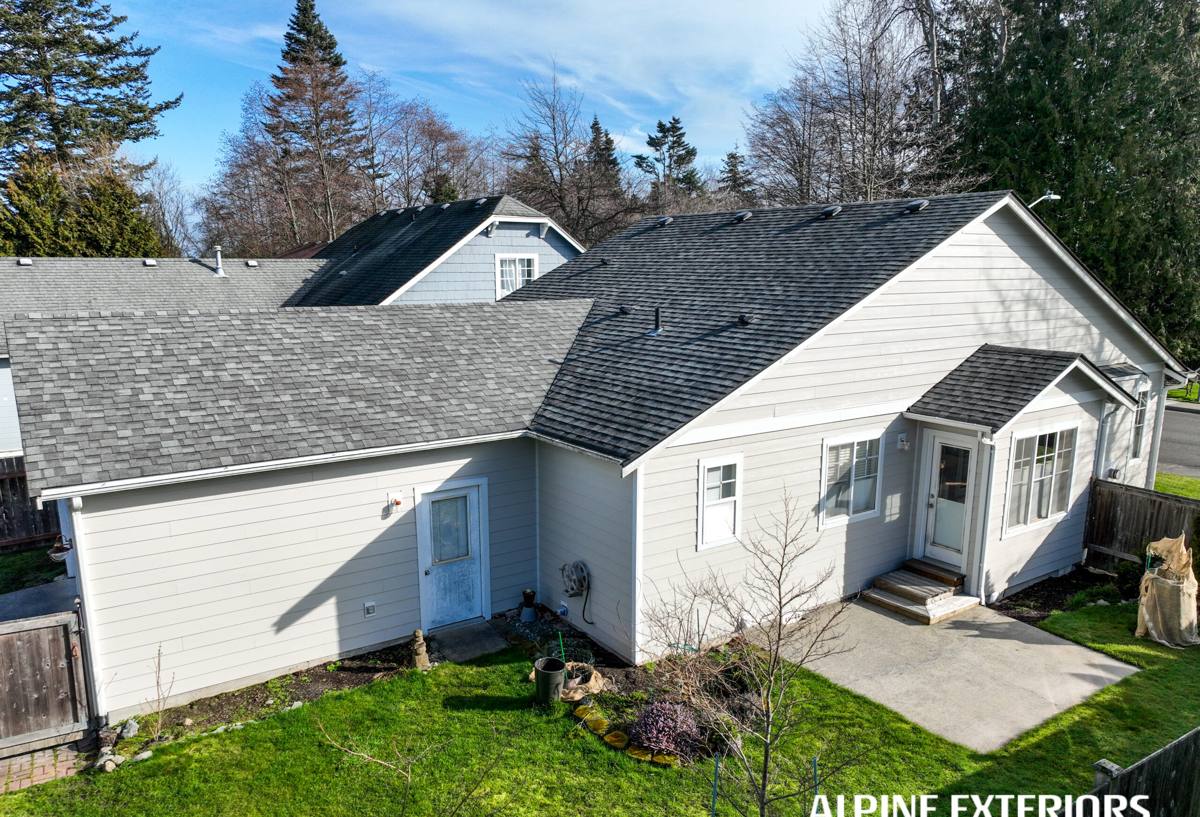
What Actually Counts as Storm Damage
Not every roof problem after a storm is storm damage in the insurance or repair sense, and it's worth knowing the difference before you start making calls.
Wind Damage
Wind damage usually shows up as creased, lifted, or missing shingle tabs, most often along the roof's edges, ridge, and any area where the roof line changes direction. Wind doesn't need to be extreme to do this — a roof with aging or under-sealed shingles can lose tabs in gusts that a newer roof shrugs off.
Wind-Driven Rain Intrusion
This is the damage that's easy to miss from the ground. Rain pushed sideways by wind can get up under flashing, around vent boots, and into gaps that never see water in a normal vertical rainstorm. The result is interior staining or attic moisture days after the storm has passed, with no obvious missing shingles to explain it.
Debris Impact
Branches and blown debris can bruise or puncture shingles and dent metal flashing or gutters. Impact damage is sometimes subtle on asphalt shingles — a bruise doesn't always break the surface right away, but it compromises the granule layer and shortens the shingle's life.
Storm-Accelerated Pre-Existing Wear
Sometimes a storm is just the final straw for a roof section that was already failing — old flashing, brittle shingles past their service life, or a moss-damaged area that finally gave way under heavy rain. This isn't always covered the same way by insurance, and an honest contractor will tell you which category your damage falls into rather than labeling everything "storm damage" to simplify a claim.
Signs You May Have Storm Damage
Some damage is obvious from the driveway. A lot of it isn't. After any significant wind or rain event, it's worth a look for these:
- Shingles that look lifted, curled, or creased, especially near the ridge, edges, or valleys
- Granules collecting in gutters or at downspout outlets — a sign of impact or accelerated wear
- Bent, lifted, or missing flashing around chimneys, vent pipes, and skylights
- New water stains on ceilings or upper interior walls, even small ones
- Damp or musty smell in the attic that wasn't there before
- Visible gaps or daylight through the roof deck from inside the attic
- Sagging or soft spots underfoot on a roof inspection (a sign water has reached the decking)
- Debris — branches, moss clumps, gravel from shingle wear — collected in valleys or gutters
If you see any of these, the priority is stopping active water intrusion first and diagnosing the full extent second. Waiting through another rain cycle almost always turns a repair into a bigger repair.
What a Correct Storm Damage Repair Involves
Full Diagnosis, Not Just the Visible Spot
A storm rarely damages just one shingle. Wind that lifted one tab likely stressed the row around it, and water that got in at one flashing point may have traveled under the underlayment before showing up somewhere else entirely. A correct repair starts with checking the surrounding area, not just the spot the homeowner noticed.
Matching the Roof Deck Underneath
Shingles are the visible layer, but the decking and underlayment beneath them are what actually keep water out long-term. If water reached the decking, that wood needs to be assessed for soft spots or rot before new shingles go back down — covering damaged decking with new shingles just hides a problem that will resurface.
Flashing Gets Replaced, Not Just Resealed
Flashing around chimneys, vents, and roof-to-wall transitions is the most common failure point in wind-driven rain events, and it's also the piece most often "fixed" with a bead of sealant instead of a proper replacement. Sealant is a short-term patch. In an area with this much salt air and rain exposure, flashing that's already corroding or loose needs to be replaced with new material, not caulked over.
Material Matching
When we're patching a section rather than replacing a full roof, matching the existing shingle style, profile, and as close a color match as available matters for both appearance and performance — mismatched shingle thickness or granule wear can create an uneven surface that sheds water differently than the surrounding roof.
Ventilation Check
Storm repair is also a good moment to check attic ventilation. A roof that traps moisture from poor ventilation ages faster and is more vulnerable to wind and moss damage in the first place — it's worth confirming intake and exhaust venting are working while the roof is already open.
Our Process for Oak Harbor Storm Repairs
1. Inspection and Documentation
We start with a full roof inspection, not just a look at the reported problem area, and document what we find with photos. This matters both for giving you an honest picture of the roof's condition and for supporting an insurance claim if you're filing one.
2. Emergency Protection When Needed
If there's active water intrusion, stopping it comes before anything else — that can mean temporary tarping or sealing an exposed area to prevent further interior damage while a full repair plan is worked out.
3. Repair Plan and Straight Talk on Scope
We tell you plainly whether you're looking at a targeted repair or whether the damage — or the roof's overall condition — points toward a larger fix. We're not going to talk you into more work than the roof needs, and we're not going to underscope a repair just to keep the number low if it means you're back dealing with the same leak in a year.
4. The Repair Itself
Old and damaged material comes off, decking gets checked and repaired if needed, new underlayment and flashing go in where required, and matching shingles are installed and properly sealed.
5. Cleanup and Final Check
Debris and old material are cleared from the property and gutters, and we do a final check of the repaired area and its surroundings before calling the job done.
Insurance Claims: What to Know
Many storm damage repairs go through homeowners insurance, and having clear documentation of the damage — including photos taken before repair work starts — makes that process smoother. We can provide documentation to support a claim, but the claim itself is between you and your insurer; we won't promise a specific claim outcome or inflate a damage assessment to fit a number. An honest scope of work protects you if the insurer's adjuster has questions later.
What Affects the Cost of a Storm Repair
| Factor | Why It Matters |
|---|---|
| Extent of decking damage | Rotted or soft decking has to be cut out and replaced before new shingles go down — this is the biggest cost variable in most repairs |
| Roof pitch and access | Steeper roofs and limited access points take longer and require more safety setup |
| Flashing condition | Full flashing replacement around chimneys or vents costs more than a shingle-only patch but prevents repeat leaks |
| Shingle age and availability of matching material | Older roofs may need a wider patch area if exact-match shingles are hard to source |
| Interior damage | Ceiling, insulation, or drywall repair from water intrusion is separate from the roof work itself |
| Size of the affected area | A single flashing repair is a very different job than damage spread across a full slope |
Because of this range, we give real numbers after an in-person inspection rather than a phone estimate — a roof that looks like a simple shingle patch from the ground sometimes has decking damage that only shows up once the old material is pulled up, and we'd rather tell you that honestly than guess low.
Why a Crew That Already Works Oak Harbor Matters
Roofing in this part of Skagit and Island County means working with materials and details suited to salt air exposure, consistent wind-driven rain, and a moss season that runs long. A crew that works here regularly knows which flashing details tend to fail first in this climate, how much moss buildup on a north-facing slope is a maintenance issue versus a sign of trapped moisture already damaging the decking, and how local wind patterns tend to concentrate storm damage on specific roof faces. That local pattern recognition is the difference between a repair that addresses the actual cause and one that just patches what's visible and waits for the next storm to prove the fix wasn't enough.
It also means faster response after a storm. When a wind event affects the area, a local crew already scheduled nearby can get to an active leak sooner than a company dispatching from farther out — and with roof leaks, the hours between the damage happening and the repair starting are often what determines whether you're dealing with a shingle repair or a shingle-plus-drywall repair.
After the Repair: Keeping the Next Storm From Doing the Same Damage
A storm repair is a good time to think about what made that section vulnerable in the first place. If moss contributed to the failure, a moss treatment and gutter cleaning schedule suited to this area's long moss season will help protect the repaired section and the rest of the roof. If the damage was concentrated on one wind-exposed face, that's worth flagging for extra attention during your next roof inspection, since it's likely to take the brunt of future storms too.
Get a Free, No-Pressure Estimate
If a recent storm left you with damage, or you're just not sure whether what you're seeing needs attention, we're happy to take a look and give you a straight answer — no pressure, no inflated scope. Use the form below to request a free estimate for storm damage roof repair in Oak Harbor.