 Anacortes Window
 Getting Windows Right the First Time in Oak Harbor
New construction is the one chance to install windows correctly before the building is closed in. Once siding, trim, and interior finishes go on, fixing a bad rough opening or a missed flashing detail means tearing into finished work. That's true anywhere, but it matters more in a place like Oak Harbor, where the window opening has to hold up against wind off Puget Sound, sideways rain, and salt-laden air moving across Whidbey Island year-round. Anacortes Window Co works new-construction jobs across Skagit County and crosses the Deception Pass Bridge regularly to work on Whidbey Island, so we know the difference between a window install that's built for this exposure and one that's just built to pass a rough-in inspection.
This page is specifically about installing windows during new construction in Oak Harbor — not replacing existing windows in a finished home. The products, sequencing, and inspection points are different, and getting them right up front is a lot cheaper than correcting them later.
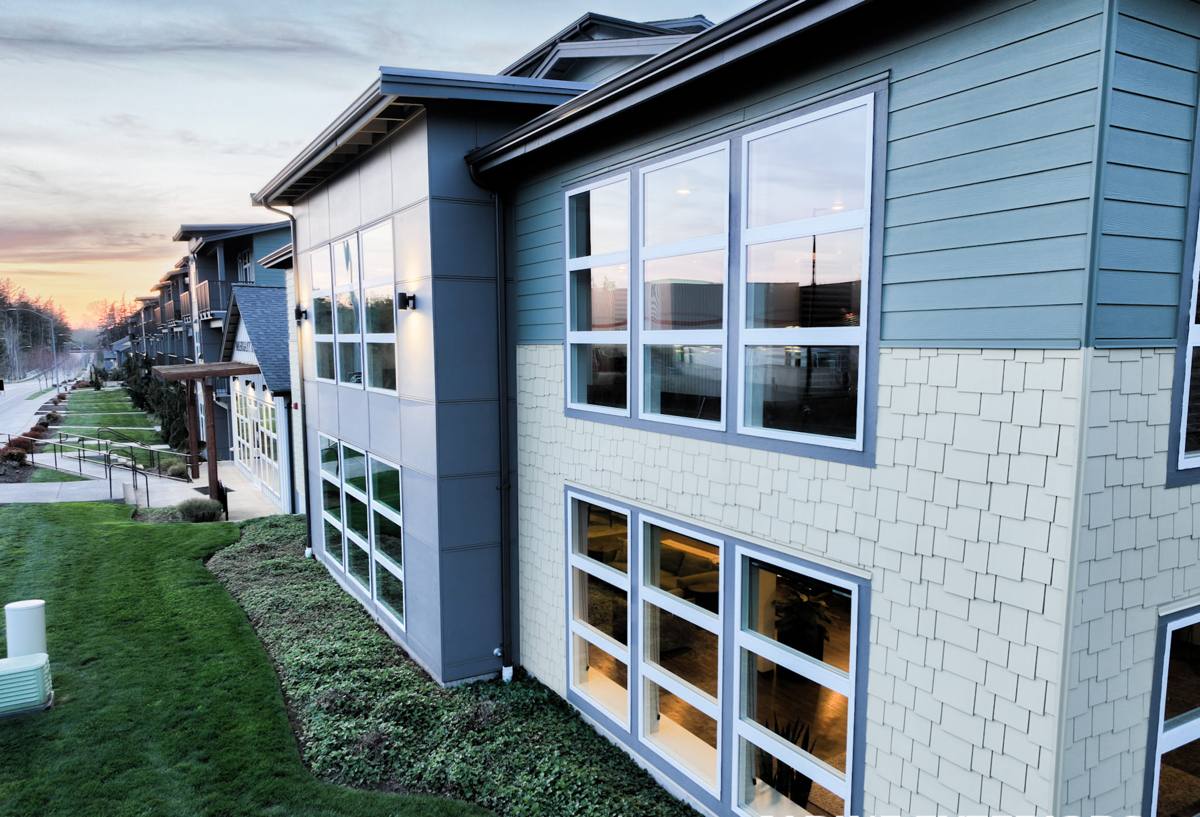
What Oak Harbor's Climate Actually Does to a Window Opening
Oak Harbor sits close to open water, and homes here take a different kind of weather load than a house a few miles inland. Three things drive most of our decisions on a new-construction window job:
- Salt air corrosion. Hardware, fasteners, and even some frame finishes degrade faster this close to Puget Sound. We pay attention to what a window's cladding, screws, and cranks or locks are actually made of, not just how they look on the showroom sample.
- Driving, wind-driven rain. Storms here don't fall straight down — wind pushes rain sideways and up under trim, which is exactly where a weak flashing detail fails. A window can be perfectly sealed on all four sides and still leak if the water management above and around it isn't built correctly.
- A long moss and damp season. Extended periods of dampness feed moss and mildew growth on anything that stays wet, including sills, trim, and cladding around a poorly flashed window. Once moisture gets behind the weather barrier, it has months of damp weather to do damage before anyone notices.
None of this means a house in Oak Harbor needs exotic materials. It means the installation details — the ones nobody sees once the siding is up — have to be done correctly the first time.
What a Correct New-Construction Window Install Involves
Before the Windows Arrive
We confirm rough opening sizes against the actual window schedule, not just the plans, because framing tolerances shift on site. We also check that the weather-resistive barrier and any self-adhered flashing membranes are ready to integrate with the window, and that sill pans can be built before the window ever goes in the opening. A sill pan — essentially a small dam and drainage path at the bottom of the rough opening — is one of the cheapest, most effective things we do to keep incidental water from reaching the framing.
Setting the Window
For new construction, most windows go in with a nailing flange (also called a nail fin) that fastens to the sheathing, or as a block-frame unit set into masonry or specific wall assemblies. Either way, the window has to be shimmed level, plumb, and square before it's fastened — a window that's slightly out of square will bind, leak, or fail its warranty terms even if it looks fine from across the room.
Flashing and Sealing
The flashing sequence matters more than the caulk. Water management around a window follows a specific order — sill pan first, then jamb flashing, then head flashing lapped correctly with the weather barrier above — so that any water that gets past the window is directed back out, not trapped behind the siding. Spray foam or backer rod and sealant fill the gap between the frame and rough opening for air sealing and comfort, but they are not a substitute for proper flashing.
Final Checks
Every window gets operated, checked for square, and inspected against the flashing details before we move on to the next opening. On new construction, this usually happens in coordination with the builder's rough-in inspection, so problems get caught before drywall or siding closes everything up.
Choosing a Window Line for New Construction Here
There's no single "best" window for every new-construction project — the right choice depends on budget, the home's design, and how much ongoing maintenance the owner wants to take on. For homes exposed to salt air and driving rain, we weigh frame material against maintenance and corrosion resistance more heavily than we would inland.
| Frame Material | Coastal Durability | Maintenance | Typical Cost Position |
|---|---|---|---|
| Vinyl | Good — won't corrode or rust; UV-stable formulations hold up well | Low — no painting, occasional cleaning | Most affordable |
| Fiberglass | Very good — dimensionally stable, resists warping in temperature swings and damp | Low to moderate | Mid to upper-mid |
| Aluminum-clad wood | Good exterior protection, but interior wood needs to stay dry and sealed | Moderate — exterior is low-care, interior may need attention over time | Upper range |
| Bare aluminum | Prone to corrosion and pitting in salt air without a quality anodized or powder-coat finish | Higher — finish maintenance matters | Varies widely |
We don't push one brand or material as the answer for every job. We do steer builders and homeowners away from finishes and hardware that historically struggle in salt air, and we're upfront about the maintenance trade-off that comes with wood components on a home this close to the water.
Energy Code and Performance in a Washington New Build
Washington's state energy code sets minimum performance requirements for new-construction windows, typically expressed as a maximum U-factor (how well the window resists heat loss) and sometimes a solar heat gain coefficient depending on orientation and glazing. Every window we install carries an NFRC label showing its actual tested performance, and we confirm those numbers meet the project's code path before ordering — not after the windows show up on site.
Beyond the code minimum, a few performance factors matter more on a windy, water-exposed lot in Oak Harbor than they would elsewhere:
- Higher structural (design pressure) ratings for windows on exposed elevations facing open water or prevailing wind
- Double or triple weatherstripping to resist wind-driven rain intrusion at the sash
- Low-E glazing coatings suited to the amount of direct exposure a given elevation actually gets
How We Work With Builders and Homeowners on New Construction
Most of our new-construction work in Oak Harbor comes through coordination with a general contractor or the homeowner acting as their own GC. Either way, the sequence looks similar:
- Review the window schedule and plans, and verify rough openings against actual framing once walls are up
- Confirm product selections, sizes, and performance ratings, then place orders with realistic lead times
- Coordinate delivery and installation around the builder's dry-in schedule, so windows go in when the opening is ready, not before or after
- Install with correct flashing sequencing, documenting details that will be covered by siding or trim
- Walk the completed openings with the builder before the project moves to the next phase
Timing coordination matters more than it sounds like it should. Windows installed too early sit exposed to weather without finished flashing tie-ins; installed too late, they hold up the rest of the schedule. A crew that's done this sequence with Oak Harbor builders before knows how to keep it moving without cutting corners on the water management details.
Why a Crew That Already Works Oak Harbor Makes a Difference
Oak Harbor sits on Whidbey Island, across Deception Pass from our home base in Anacortes, and the permitting and building department relationships on that side of the water aren't identical to Skagit County's. A crew that already works there knows the local inspection expectations, has already dealt with the site access and logistics of getting materials onto the island, and isn't learning the area's wind and rain exposure for the first time on someone's new build. That familiarity shows up in fewer surprises — around scheduling, around inspections, and around how a window opening actually needs to be built for this specific stretch of coastline.
Before You Sign Off on a New-Construction Window Package
- Confirm each window's U-factor and design pressure rating against your project's actual code requirements and site exposure
- Ask how sill pan flashing and head flashing will be sequenced with your weather-resistive barrier, not just whether caulk will be used
- Check hardware and fastener materials for salt-air resistance, especially on elevations facing open water
- Get delivery lead times in writing and confirm they align with your dry-in schedule
- Walk the rough openings with your installer before windows are set, and walk them again after
If you're building in Oak Harbor and want a straight answer on window selection, sizing, or how the install will handle this area's wind and rain, we're glad to take a look at the plans. Reach out for a free, no-pressure estimate — there's a form right below this page.