 Anacortes Window
 Why Mount Vernon Homes Need Siding Built for This Climate
Mount Vernon sits in the Skagit River valley, close enough to Puget Sound to pick up salt-laden marine air and far enough inland to trap valley fog and dampness against tree lines and low-lying yards. That combination is tough on a home's exterior. Wood-based siding products absorb moisture, swell, and eventually rot at seams and end cuts. Vinyl can warp in temperature swings and never fully seals against wind-driven rain. And almost anything with exposed wood fiber becomes a food source for the algae and moss that thrive in this region's long wet season, which typically runs from October well into May.
We install James Hardie fiber cement siding exclusively, and we do it because it is engineered to handle exactly this kind of exposure. It does not absorb water the way wood or wood-composite products do, it will not rot, and it holds its factory finish far longer than field-painted materials. For a Mount Vernon home, that means fewer callbacks for peeling paint, fewer soft spots at the bottom courses, and a siding system that still looks right after a decade of Skagit Valley winters.
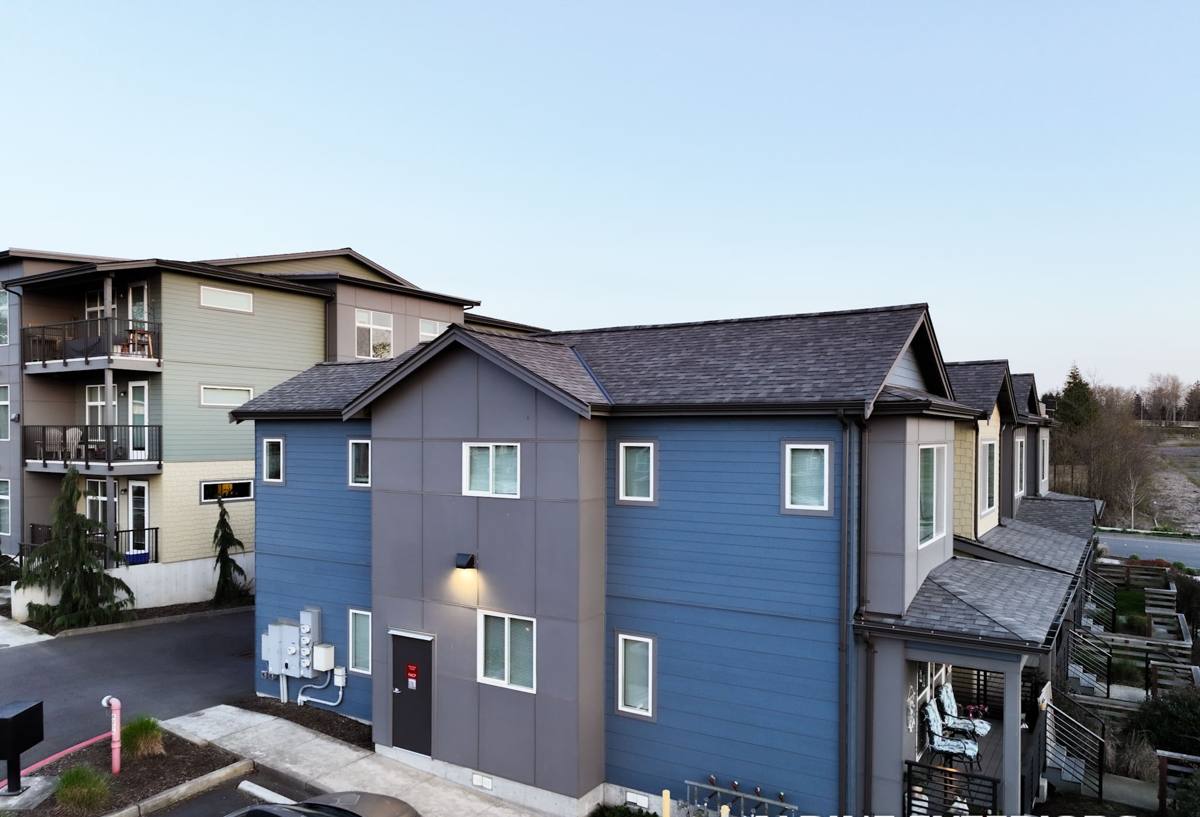
What a Correct James Hardie Installation Actually Involves
James Hardie siding performs the way it's supposed to only when it goes on correctly. This is not a forgiving product to install carelessly — most of the "Hardie failures" homeowners hear about trace back to installation shortcuts, not the material itself. In a wet climate like ours, the details matter even more than they do in drier parts of the country.
Clearances and Flashing
Hardie's own installation specifications call for minimum clearances between siding and grade, decks, roofing, and other horizontal surfaces where water can pool or wick upward. Skipping these clearances is one of the most common shortcuts we see on homes that come to us for a redo. We also flash every window, door, and penetration properly before siding goes on, since the siding itself is a rain-screen layer, not a waterproof membrane on its own.
Fastening and Joints
Every board gets fastened at the spacing and pattern James Hardie specifies, into solid framing or properly furred sheathing, not just tacked to whatever is behind the wall. Butt joints get treated correctly — caulked and backed, or fitted to a manufactured joint system — so water can't work its way behind the plane of the siding at the seams.
Factory Finish Integrity
Hardie's ColorPlus finish is baked on at the factory under controlled conditions, which is a big part of why it resists fading and cracking better than a field-applied paint job. Cut edges and any exposed fiber cement need to be sealed with the correct touch-up product so that finish integrity isn't compromised at the one place it's most vulnerable — the cut end of a board.
James Hardie Product Lines We Install
James Hardie makes several distinct product lines, and the right one depends on the home's architecture and how it needs to perform. We walk Mount Vernon homeowners through the options rather than defaulting to one look for every house.
| Product | Best For | Notes |
|---|---|---|
| HardiePlank lap siding | Traditional and craftsman-style homes | The most common choice; available in several exposure widths and textures |
| HardiePanel vertical siding | Modern facades, gable accents, shop-style buildings | Often paired with battens for a board-and-batten look |
| HardieShingle | Accent gables, cottage-style homes | Mimics a shingled look without the maintenance of cedar shingles |
| HardieTrim | Corners, window and door surrounds, fascia | Matches the siding's durability at high-exposure edges |
All of these are manufactured to James Hardie's HZ5 formulation, which is engineered for regions like ours that see significant moisture and freeze-thaw cycling rather than extreme heat. That's not a marketing detail — it's the reason the product is built the way it is for Pacific Northwest homes specifically.
Why We Standardized on James Hardie
We used to get asked why we don't offer vinyl, LP SmartSide, or other fiber cement brands as lower-cost alternatives. The honest answer is that we stopped installing them because we were tired of seeing them fail in this climate faster than they should. Wood-based composite sidings can perform well for a while, but they depend heavily on perfect installation and ongoing homeowner maintenance to keep moisture from finding the wood fiber inside. Vinyl is low-maintenance but it flexes, fades, and can crack in cold snaps, and it was never designed to hold a factory-baked finish the way Hardie's ColorPlus system is.
James Hardie is non-combustible fiber cement with a strong, transferable warranty and a finish warranty that holds up when the installation is done to spec. Standardizing on one product means our crews install it constantly, we know its quirks cold, and we're not learning a new manufacturer's spec sheet on your house.
Our Process for a Mount Vernon Siding Project
The steps are the same whether we're re-siding an older home or working on new construction, but the sequencing matters a lot in a wet climate.
- Assessment: We inspect the existing siding, sheathing, and any areas with visible moisture staining, moss buildup, or soft trim before quoting anything.
- Moisture and sheathing check: If old siding comes off and we find damaged sheathing underneath — common on homes that have had wood siding failing quietly for years — we address that before anything new goes up.
- Weather-resistive barrier and flashing: A proper water-resistive barrier goes on first, followed by flashing at every window, door, and penetration.
- Installation to spec: Siding is installed with correct clearances, fastening patterns, and joint treatment, following James Hardie's published installation guidelines.
- Trim and detail work: Corners, window surrounds, and fascia are finished to shed water away from seams rather than into them.
- Final walkthrough: We go over the finished job with the homeowner, including basic care and what to watch for going forward.
What Drives the Cost of a Hardie Siding Job
Every home is different, so we don't quote firm numbers without seeing the house, but these are the main factors that move a project's cost up or down.
| Factor | Why It Matters |
|---|---|
| Existing siding removal | Tear-off and disposal adds labor, especially if multiple layers are present |
| Sheathing or framing repair | Hidden moisture damage found during tear-off needs to be fixed before re-siding |
| Home shape and trim detail | Cut corners, dormers, and multiple gables take more time than a simple rectangular footprint |
| Product line and texture | Lap widths, shingle accents, and panel-and-batten details vary in material and labor cost |
| ColorPlus color selection | Factory-finished colors eliminate a paint step but are chosen from Hardie's available palette |
| Access and site conditions | Tight lots, mature landscaping, or multi-story sections affect staging and labor time |
Living With Hardie Siding in the Skagit Valley
One advantage of fiber cement over wood-based products is how little ongoing maintenance it actually needs — but "little" isn't "none," especially with moss season lasting most of the year here. A short annual routine keeps a Hardie installation looking like new.
- Rinse siding with a garden hose or low-pressure wash once or twice a year to clear pollen, road film, and early moss growth before it takes hold.
- Trim back shrubs and tree branches that keep siding shaded and damp longer than the rest of the house.
- Check caulking at trim joints and window surrounds annually; recaulk if it's cracked or pulling away.
- Watch gutters and downspouts for overflow points that dump extra water directly onto a siding section.
- Avoid pressure washing directly into joints or under lap edges, which can force water behind the siding plane.
Why Hiring a Crew That Already Works in Mount Vernon Matters
Siding installation isn't just about following a spec sheet — it's about applying that spec sheet correctly to the conditions a specific house actually faces. A crew that regularly works Skagit County homes knows which sides of a house tend to hold moisture longest, how valley fog settles differently than it does closer to the water in Anacortes, and which older Mount Vernon homes are more likely to have hidden sheathing damage under original siding. That local pattern recognition shows up in fewer surprises mid-project and a finished installation that's tuned to how this valley actually behaves through a wet winter, not just to a generic install manual.
Local experience also means knowing the practical realities of scheduling exterior work around this region's weather windows, coordinating with local permitting where required, and having a crew that isn't learning the quirks of Pacific Northwest siding work on your home for the first time.
Signs Your Current Siding May Already Be Failing
Because moisture damage often hides behind the siding itself, it's worth knowing what to look for before a small problem becomes a sheathing or framing repair.
- Paint that's peeling, bubbling, or chalking heavily, especially on north- and west-facing walls
- Soft or spongy spots when you press on siding near the bottom courses or below windows
- Persistent dark streaking or thick moss growth that returns quickly after cleaning
- Visible gaps, warping, or cupping at board seams
- Musty odors or moisture staining on interior walls that back up to exterior siding
If a Mount Vernon home is showing any of these signs, it's worth having someone look at it before deciding what kind of replacement makes sense. We're happy to take a look, tell you honestly what we find, and put together a no-pressure estimate — no obligation, and no pressure to sign anything on the spot.