 Anacortes Window
 March Point's Exposure Is Its Own Microclimate
March Point sits out on the peninsula between Fidalgo Bay and Padilla Bay, which puts homes here in a different exposure category than a house tucked into central Anacortes. Wind comes off open water with fewer buildings and trees to break it up, salt-laden air travels further inland than most homeowners expect, and driving rain hits siding at an angle instead of straight down. Add in the long stretches of low cloud and drizzle that define a Skagit County winter, and you get a wall assembly that's wet, or damp, far more of the year than siding sees in drier parts of the state.
None of that is a reason to panic about siding — it's a reason to be specific about what you install and how it's installed. Some products handle that combination well. Some don't, no matter how carefully they're put up. That's the lens we bring to every March Point estimate.
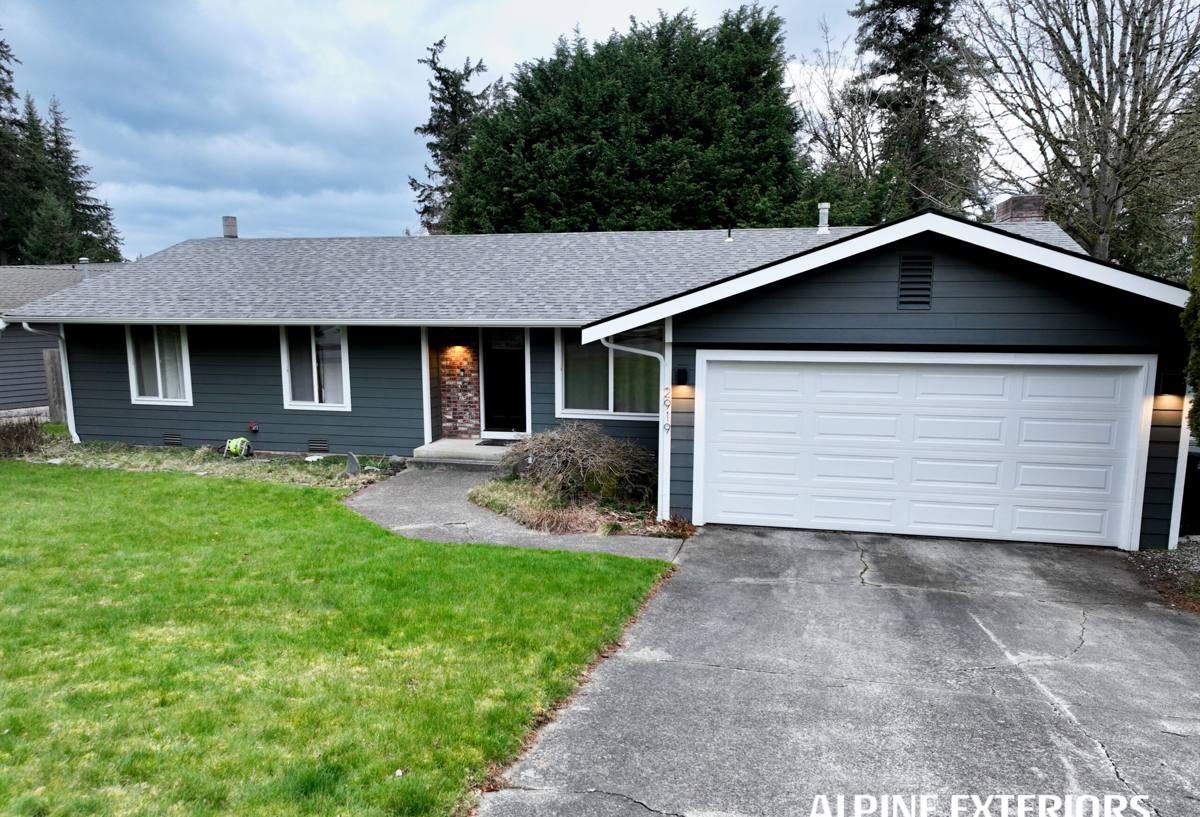
What Salt Air, Rain, and Moss Actually Do to Siding
Salt Air and Slow Corrosion
Airborne salt doesn't just sit on the surface — it works into fasteners, flashing, and any exposed metal over time, speeding up corrosion in ways that inland homes never have to deal with. Siding systems that depend on a lot of exposed metal trim or that use fasteners not rated for coastal exposure show wear years before a comparable inland installation would.
Driving Rain and Water Intrusion
Wind-driven rain doesn't behave like a normal rainstorm. It gets pushed sideways and upward into laps, seams, corner boards, and anywhere a window or door meets the wall. A siding system with good water-shedding lines and correct flashing detail sheds that water. A system installed with shortcuts, or a material that swells and gaps as it takes on moisture, lets water find its way behind the cladding — and once water's behind the siding, the real damage happens to the sheathing and framing you can't see.
Moss and Trapped Moisture
Shaded, tree-lined lots around March Point hold moisture longer than open waterfront exposures, and that's exactly where moss and algae take hold on north-facing walls and anything under heavy tree cover. Moss itself doesn't eat siding, but it holds water against the surface for months at a time, which is hard on any material that isn't dimensionally stable and rot-resistant underneath.
Why James Hardie Is the Only Siding We Install Here
We standardized on James Hardie fiber cement for every home we side, and a peninsula exposure like March Point is exactly the kind of climate that decision is built around. Fiber cement is non-combustible and dimensionally stable — it doesn't swell, cup, or rot the way wood-based and some engineered wood products can when they take on repeated moisture. James Hardie's ColorPlus factory finish is baked on under controlled conditions and holds color and adhesion far longer than a field-applied paint job has to fight salt exposure and UV on its own.
We don't install vinyl, LP SmartSide, cedar, or other fiber cement alternatives, and we're upfront about why: each of those products asks a coastal homeowner to accept a trade-off — more frequent maintenance, more sensitivity to correct installation, or a finish that won't hold up as long against this specific combination of salt, rain, and moss — that we don't think is worth it once you're paying for a full re-side. Hardie's HZ10 formulation in particular is engineered for wetter, more humid climates, which describes March Point about as well as any product spec can.
Which James Hardie Products Fit This Exposure
| Product | Best Use | Why It Works on March Point Homes |
|---|---|---|
| HardiePlank Lap Siding | Primary wall cladding, most home styles | Classic lap profile sheds wind-driven rain efficiently; widest color and texture selection |
| HardiePanel Vertical Siding | Modern facades, accent walls, gable ends | Clean lines for contemporary waterfront-style homes; fewer horizontal laps for water to find |
| HardieShingle Siding | Accent gables, dormers, Craftsman detailing | Adds texture without the maintenance burden of real wood shakes in a moss-prone climate |
| HardieTrim Boards | Corners, window and door trim, fascia | Resists the swelling and cracking that drives moisture into corner and window details |
What a Correct Installation Actually Involves
Fiber cement siding is only as good as the installation behind it. On an exposed peninsula site, the details that get skipped on an easy job are exactly the ones that matter most:
- Proper clearance — siding held up from grade, roof lines, decks, and patios per Hardie's minimum clearances, so splash-back and standing water don't wick into the bottom edge
- A continuous, correctly lapped water-resistive barrier behind the siding, with every window, door, and penetration flashed before a single board goes up
- Corrosion-resistant fasteners, hand-driven or gun-set to Hardie's depth and spacing specs — not just "close enough"
- Butt joints and trim details flashed or gapped and sealed exactly per manufacturer instructions, not caulked over as a catch-all fix
- ColorPlus touch-up product used for any field nicks, rather than a mismatched field-paint blend that fades at a different rate
Skip any one of these on a normal inland lot and you might not see the consequences for years. Skip them on a March Point exposure and the water finds the gap much faster.
Our Process on a March Point Job
We start with an on-site assessment that looks at more than the visible siding — we check the sheathing underneath for existing moisture damage, note which elevations take the worst of the wind and rain, and account for tree cover that's contributing to moss and staining. From there:
- Tear-off of the existing siding and inspection of the sheathing and framing underneath, with repairs made before anything new goes up
- Installation of a correctly lapped water-resistive barrier and flashing at every window, door, and penetration
- Hardie siding installed to manufacturer spec, adjusted for the specific exposure of each elevation of your home
- Trim, corner, and joint detailing finished and sealed per Hardie's published installation guidelines
- A final walkthrough where we point out exactly what was done and why, so you know what's behind your new siding
Why a Crew That Already Works March Point Matters
A siding crew that mostly works dry, sheltered lots doesn't automatically think about which wall is going to take the brunt of the weather off the water, or how much more aggressively moss builds on a shaded, tree-covered March Point lot compared to an open one a few miles away. We've worked enough homes in this specific pocket of Skagit County to know that the answer isn't the same for every house — a waterfront-facing wall and a tree-shaded side of the same home can need different attention.
Access and permitting can also look different out here than they do in the middle of Anacortes — depending on exactly where a property sits, the permitting path may run through Skagit County or the City of Anacortes, and lot access can range from a straightforward driveway to a longer, narrower approach. We sort that out during the estimate, not after a crew and a load of material show up and can't get to the house.
Cost Factors for a March Point Siding Project
| Factor | Why It Matters |
|---|---|
| Tear-off vs. installing over existing sheathing | Removing old siding lets us inspect and repair hidden moisture damage before it's covered again — often necessary on wetter, tree-shaded lots |
| Home size and wall complexity | More corners, dormers, and trim details mean more cut, flashing, and labor time |
| Site access | Waterfront and rural lots can mean longer material carries or tighter equipment access |
| Current damage extent | Rot or moisture damage found during tear-off adds repair scope beyond the siding itself |
| Product line and profile chosen | Lap width, shingle accents, and trim detailing all affect material and labor cost |
Keeping Your Hardie Siding Performing Long-Term
Correctly installed James Hardie siding is low-maintenance, but "low" isn't "none" — especially in this exposure. A few habits go a long way:
- Rinse salt residue and general grime off the siding once or twice a year with a garden hose and soft brush — avoid high-pressure washing directly into laps and seams
- Trim back tree limbs and shrubs that are shading walls and keeping them damp, which slows moss and algae growth
- Walk the exterior yearly and check caulked joints, trim seams, and flashing for cracking or gaps
- Make sure gutters and downspouts discharge water away from the foundation and siding base, not against it
- Address any moss buildup on siding promptly with a gentle wash rather than letting it sit against the surface for a full wet season
If you're weighing a full re-side or just want an honest read on what your March Point home's siding needs, we're happy to walk the exterior with you and lay out exactly what we'd do and why. There's no pressure and no cost to get that estimate — the form below gets you started.